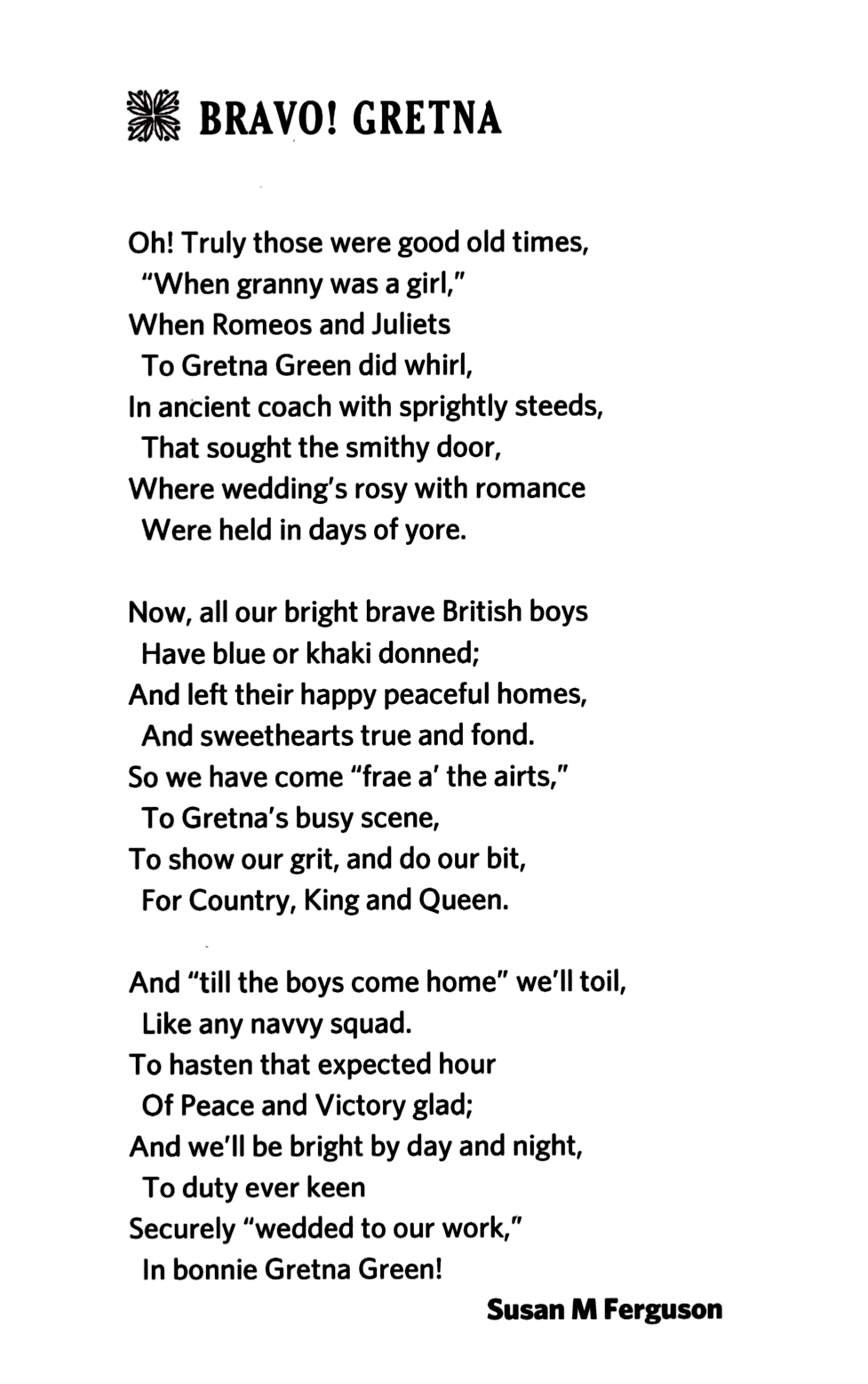
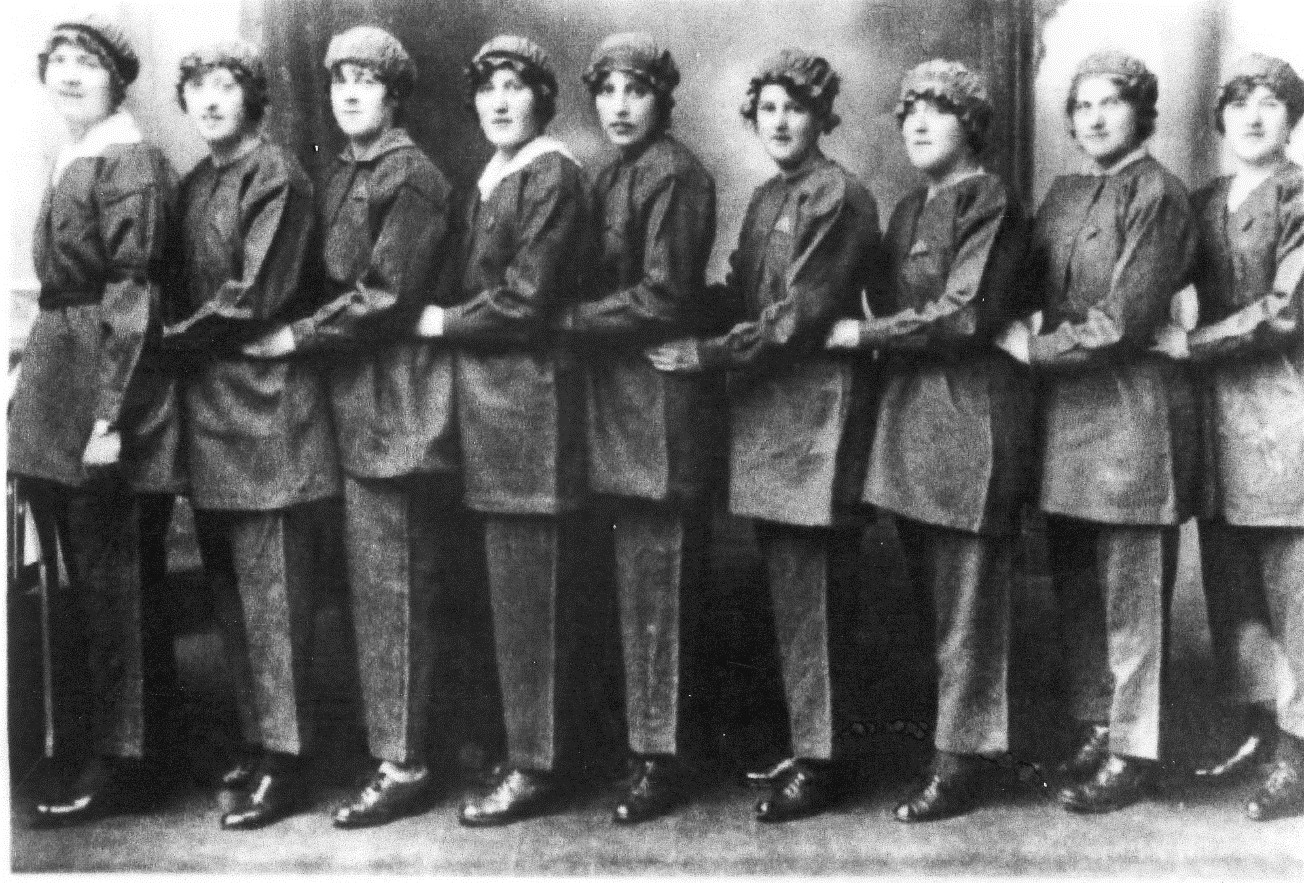
The Devil’s Porridge Museum’s main focus is on HM Factory Gretna, the greatest factory on earth in World War One. It employed 30,000 people in the production of cordite (aka the devil’s porridge). 12,000 of these workers were women.
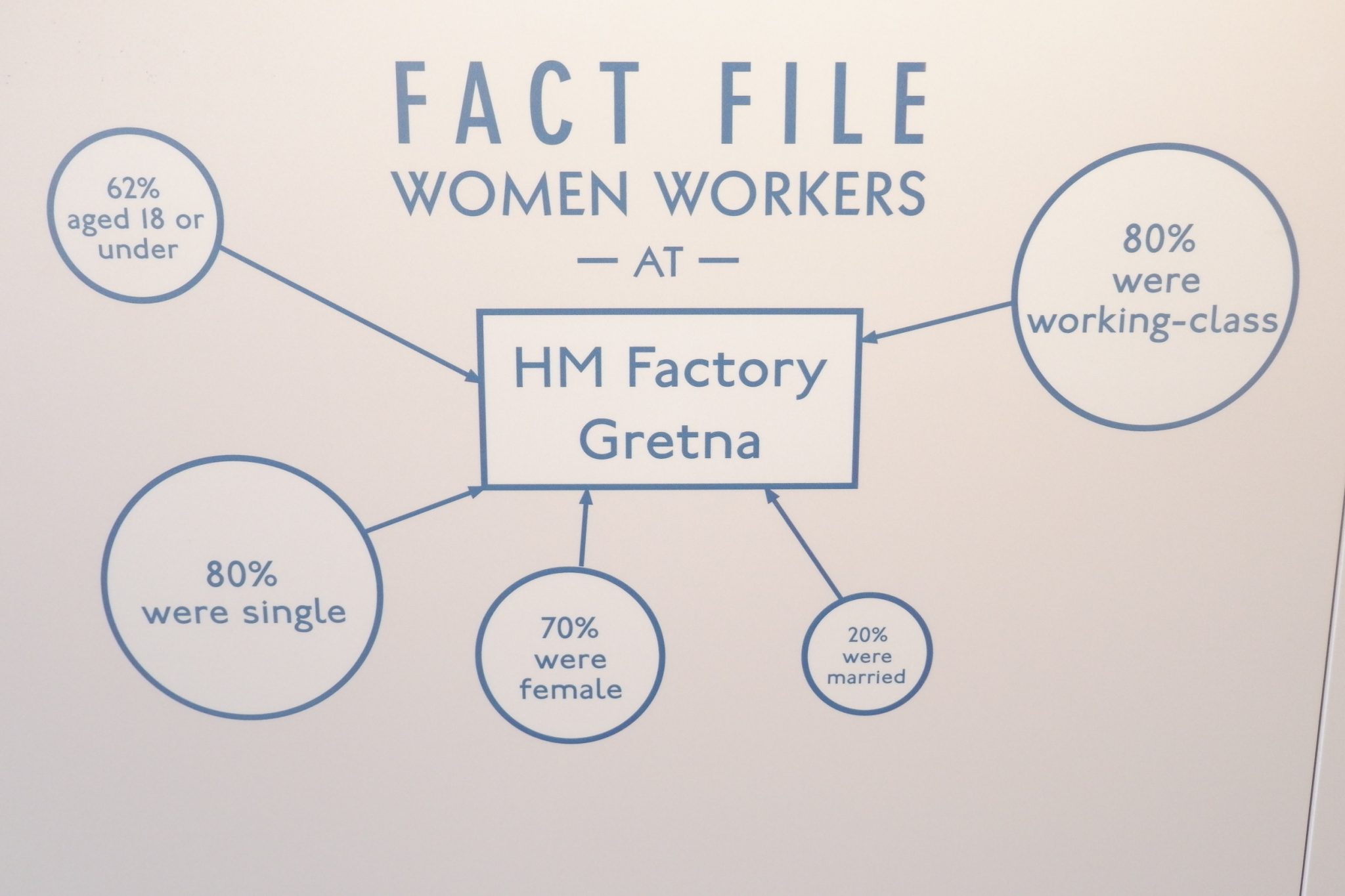
A display within the Museum.
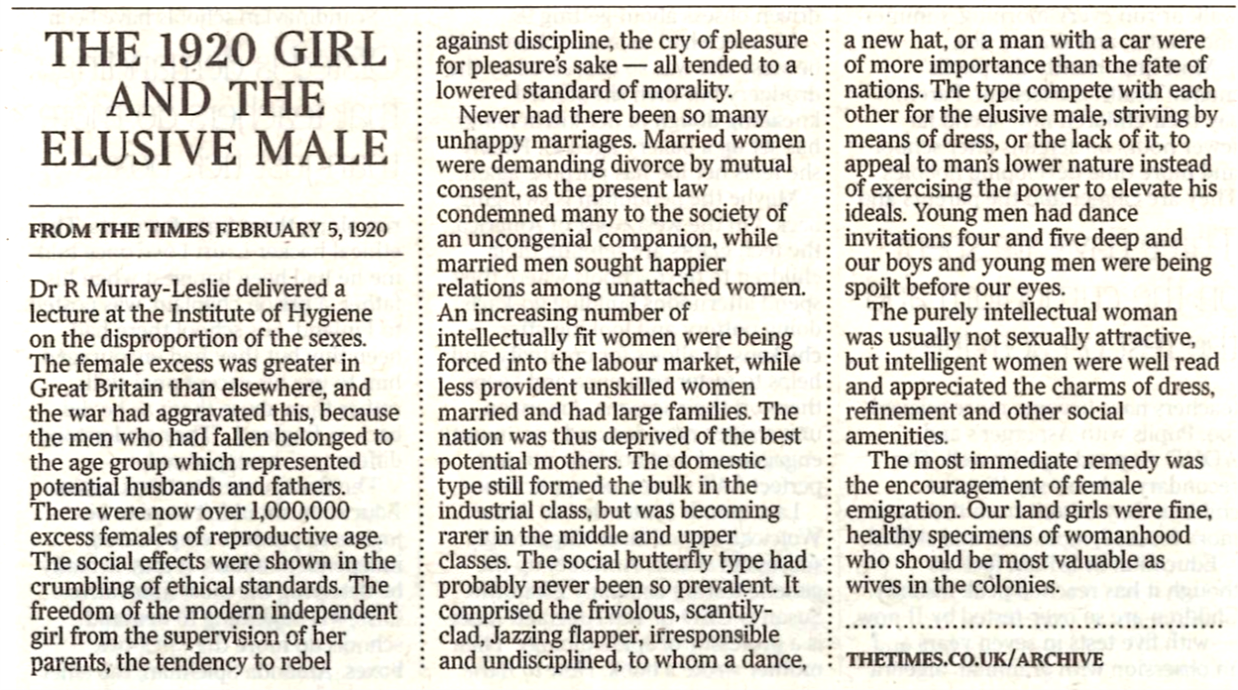
The majority of female workers were single and young. We know that some women married while they working at Gretna and there were married women and those who had been widowed due to the War working at the Factory but the majority of the girls were probably affected by the post-War shortage of men. The ‘lost generation’ i.e. the young men who died in the War meant that a lot of women remained unmarried and single women were perceived as a ‘problem’.
This article from the Times Newspaper in 1920 (published recently in their archive section), makes the point clear. One cannot help but think of the 12,000 ‘Gretna Girls’. They did so much to help win the War and it continue to impact on their lives in the decades to come.