All Posts By

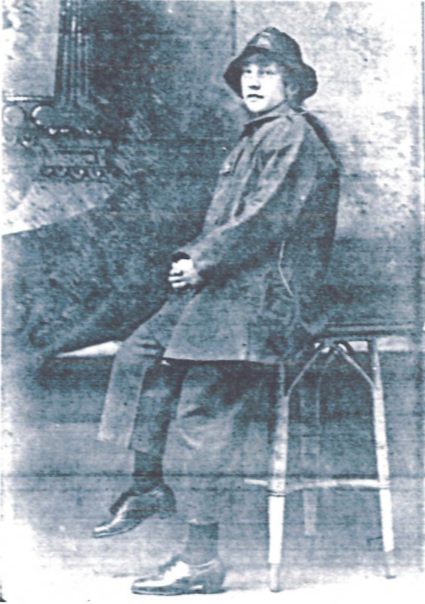
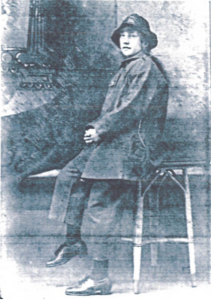
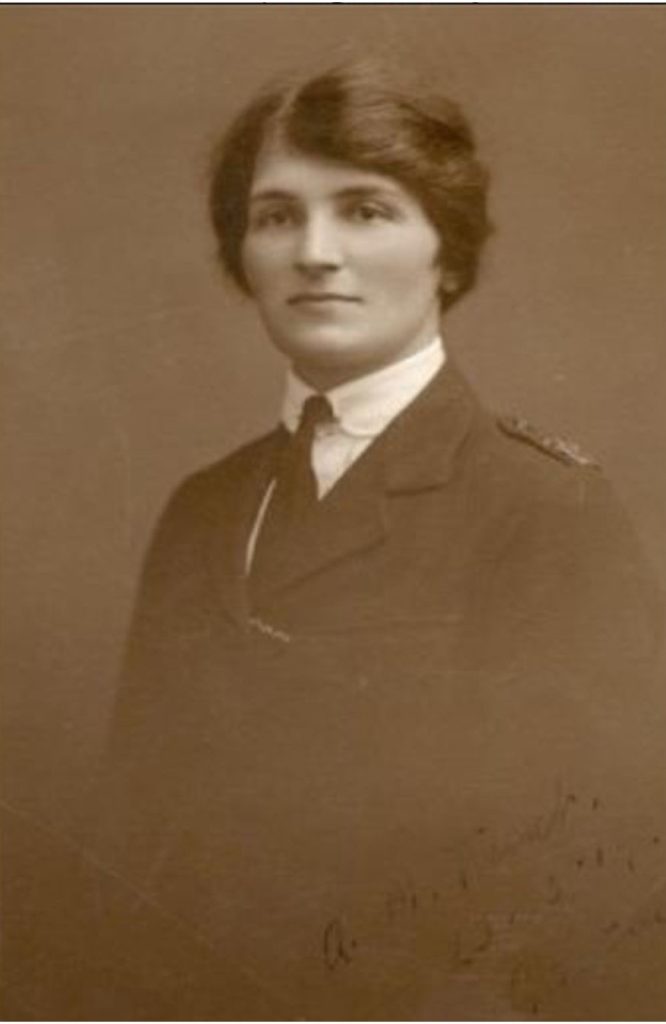
Alice Maud Trent in a police uniform. We think this is the uniform she would have worn at H.M. Factory Gretna. This is a black and white photo from Ancestry Public Member Tree.

Worker of the Week: Alice Maud Trent

By Collections blog

Worker of the Week is a series of blog posts which highlights the workers at H.M. Factory Gretna that our volunteers researched for The Miracle Workers Project. This project aimed to centralise all of the 30,000 people who worked at the factory during World War One and, although it may be over, our amazing research volunteers are continuing to uncover more stories about H.M. Factory Gretna workers to be added to this database. We are always looking to learn more about H.M. Factory Gretna workers. If you know anything about a H.M. Factory Gretna worker please feel free to get in touch with us by contacting info@devilsporridge.org.uk  

This week’s Worker of the Week is Alice Maud Trent. We think she went from a domestic servant to a police officer! A huge thank you to our volunteer Nigel for this research on this one and another thanks goes to all our research volunteers.

Early Life

  • Firstly, Alice was born on 9th July 1887 in Dorset.
  • Her parents were William and Arabella Trent.
  • Additionally, she nine siblings that we have come across.


  • Following this, the 1891 census shows the family still to be living in the same Dorset village, Winfrith Newburgh.

Domestic Servant

  • When she was 14 years old, Alice was employed as a domestic servant.
  • According to the 1901 census, she was working at Silverdale Boarding House on Gilbert Road, Swanage in Dorset.


Life During World War One

  • During World War One, we know one of Alice’s brothers Arthur William Trent was serving with the 7th Battalion, Devonshire Regiment.
  • Sadly, Arthur died on 22nd February 1916 in the isolation hospital, Weymouth.
  • Could this have helped to inspire Alice to join the police? We have no evidence for this either way.
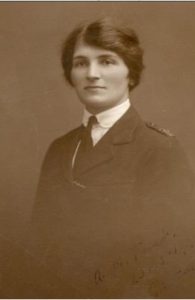
Alice Maud Trent wearing a police uniform. We think this could be her H.M. Factory Gretna Women's Police Force Uniform. This is a black and white photo from Ancestry Public member tree.

We think Alice could be wearing her Women’s Police Force Uniform from H.M. Factory Gretna in this uniform. What do you think? This photo is from Ancestry Public member tree.

  • We know she was in the Women’s Police Force at H.M. Factory Gretna, as her name appears on the Valuation Roll for the factory site, which is dated 1918 to 1919.
  • According to the valuation roll, “Miss Alice M. Trent, police” was living at Number 2 Women’s Police Barracks in Gretna.
  • It seems that she would have started in the Women’s Police Force in 1917.


  • As a member of the Women’s Police Force at H.M. Factory Gretna, Alice would have helped ensure the smooth running of the factory and helped to keep the work force out of mischief.
  • It was not unheard of for members of the Women’s Police Force to check the back row of the cinema for instance… [1]
  • Additionally, they would have also searched munitions workers on their way in and out of the factory to make sure they didn’t smuggle in any contraband such as matches by mistake or become a bit too fond of any of the cordite they were making. [1]
  • Not only that, but it seems that they used to patrol and guard certain areas of the factory and two townships built for it (that’s Eastriggs and Gretna by the way, but the actual site of the factory stretched from Dornock all the way to Longtown on the other side of the border). [2]
  • Members of the Women’s Police Force also had to escort unwell munitions workers home after their shift (the fumes inside some areas of the factory could be very strong).  [2]


Womens Police badge.

Ministry of Munitions Women’s Police Service badge from the Museum collection. This would have been used at H.M. Factory Gretna.


  • It seems that the Women’s Police Force might have even helped to keep an eye on the crowds of factory workers when King George V and Queen Mary came to visit in 1917.
  • Plus, some members of the Women’s Police Force were presented to the royals too. Admittedly, we don’t know if Alice would have been among them.
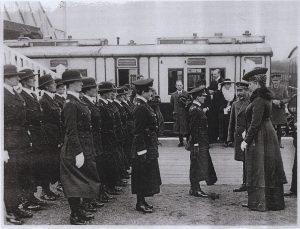
 

The woman's police force lined up at a train station. King George V and Queen Mary stand before them. This is a black and white archive photo.

Travels

  • Where next? Well, it seems Alice continued to work in the police!
  • By 1921 she was a member of the Walsall Brough Police, according to the census records.
  • However, by the October of the same year she was living in Barking, Essex.
  • According to the passenger lists for the SS Commonwealth on 20th October 1921, she is still described as a policewoman and was set to travel to Sydney in Australia.


  • Following this, we’ve found evidence that suggests that she moved to Utah in 1923. [3] [4]
  • It seems she used the Canadian Pacific Railroad to travel from Regina in Canada to the USA.


Marriage and Later Life

  • On the 19th May 1924 she married George Galbraith in Farmington City, Utah.
  • They had two children.
  • The first was born in 1925 and sadly died that same year.


  • Lastly, Alice died on 14th March 1937.


Sources and Further Reading

  1. Members of the Women’s Police Force at H.M. Factory Gretna – https://www.devilsporridge.org.uk/members-of-the-womens-police-service-at-hm-factory-gretna
  2. Women’s Police Service at H.M. Factory Gretna – https://www.devilsporridge.org.uk/womens-police-service-at-hm-factory-gretna
  3. Alice M. T. Galbraith, Ogden Standard – Examiner Newspaper, March 1937.
  4. Funeral Wednesday for Mrs. Galbraith, The Ogden Standard – Examiner Newspaper, March 1937.

Mabel Alice Trent Photo Source: Ancestry Public Member Tree.


Find Alice Maud Trent’s online database entry by clicking here>

Do you have a relative who worked at H.M. Factory Gretna? We would love to hear from you! Please feel free to contact us by emailing info@devilsporridge.org.uk. You never know maybe your relative could feature in a future Worker of the Week blog post! You can also have a look at some more H.M. Factory Gretna workers on our online database here>
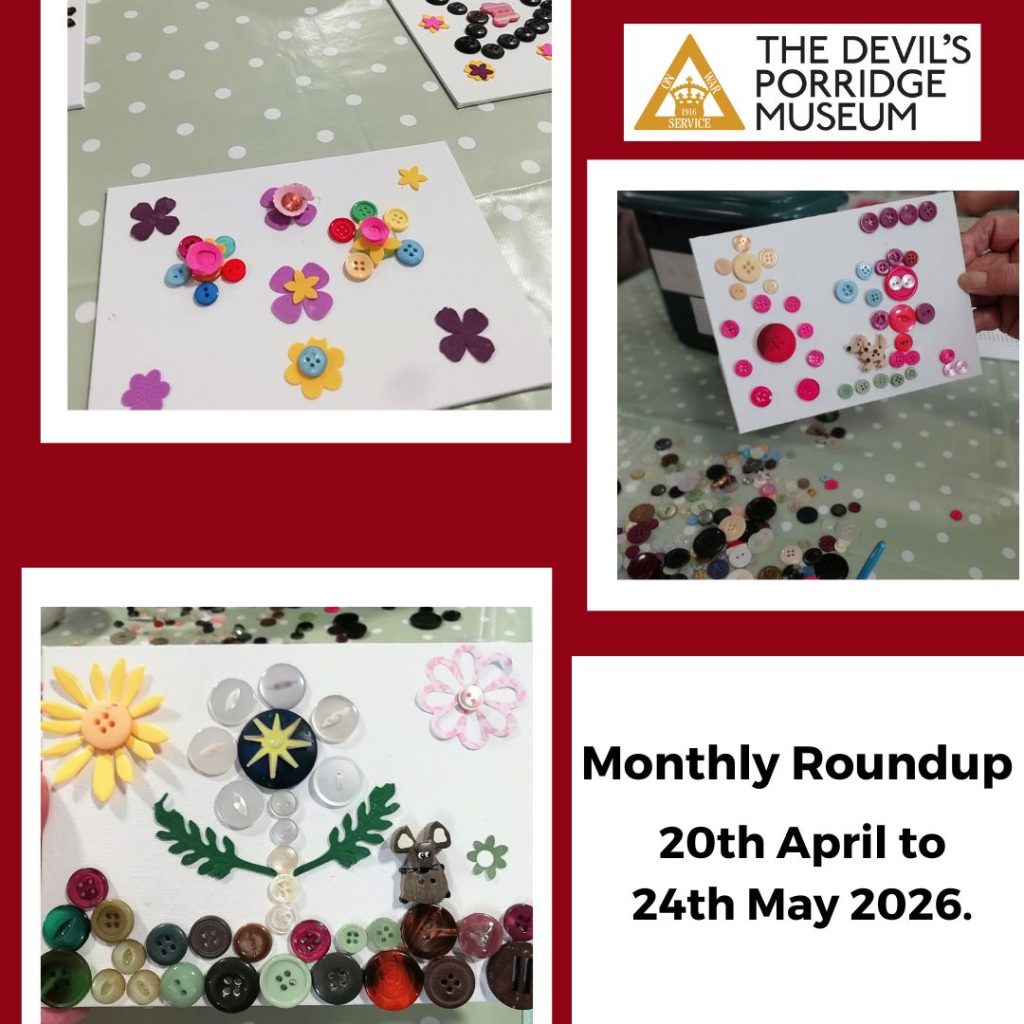
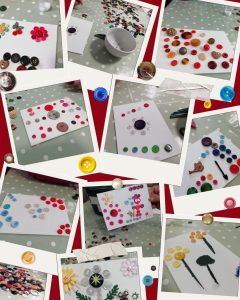
Monthly Roundup 20th April to 24th May 2026. This includes three photos of artwork. The first features flowers made out of buttons, the second is of a dog walker made out of buttons and a flower in a garden made out of flowers.

Monthly Roundup 20th April to 24th May 2026

By Archive

Here’s our Monthly Roundup 20th April to 24th May 2026.

Before we begin can we just take a moment to say it happened again!

The green TripAdvisor owl logo with 2026 on it. Underneath are the words "Traveller's Choice."

We’re proud to have been awarded a TripAdvisor Travellers Choice Award again for 2026! 🥳

This means our museum is in the top 10% of properties on the whole of… planet Earth according to TripAdvisor and that’s all thanks to YOU!

(More specifically it comes from our visitors reviews and ratings on TripAdvisor over the past 12 months.)

So, we would like to say is a huge THANK YOU to everyone who supports The Devil’s Porridge Museum and all who take the time to leave a review of their visit!

Now on with this month’s Roundup…

***

Monday 21st April

This Monthly Roundup starts with Arts and Crafts Club.

***

Tuesday 21st April 2026

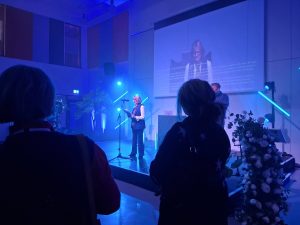
Some of our team had a fab afternoon at The Holywood Trust’s Spring Gathering today. This wonderful organisation supports young people across the region through funding projects and creative opportunities. They have been wonderful supporters of the Devil’s Porridge Museum and our work with young people. It was fantastic to be part of their celebration of the dazzling talent, art and creativity and amazing young people in Dumfries and Galloway. A really inspiring event, which has prepared us for our next exciting projects.

Below are some photos from this.


Later on we had our Warhammer Club at The Devil’s Porridge Museum.

***

Wednesday 22nd April 2026

Our Youth and Community Engagement Officer headed out to give a talk about our museum at The Usual Place in Dumfries for Veterans with Sight Loss.  It was lovely to be invited to do this. We hope you all enjoyed the talk and it was nice to meet you all.

***

Thursday 23rd April

Today we had the first group visit of this Monthly Roundup. Thank you to them for taking the opportunity to come along and visit us and it was great to meet you!

***

Monday 27th April

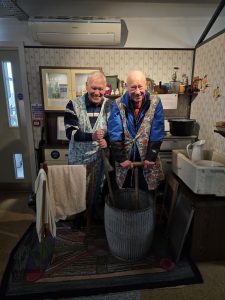
We started the week with another group visit to The Devil’s Porridge Museum. A huge thank you to them for taking the time to come and visit us. It was fantastic to have them and lovely to see all their happy faces! Want a look for yourself? We’ll leave a photo they kindly let us take and share below.


Two men dressing up in 1940s style aprons and posing as though they are washing clothing in The Devil's Porridge Museum's 1940s house display.


After-school Arts and Crafts Club was on today too.

***

Tuesday 28th April

Tuesday’s mean Warhammer Club in the evening at The Devil’s Porridge Museum.

Lately, we’ve also had Gaelic Lessons on Tuesdays too.

***

Monday 3rd May

Monday’s means it’s time to get creative with Arts and Crafts Club.

***

Tuesday 4th May

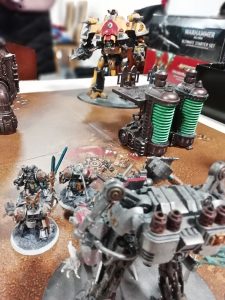
An arrangement of Warhammer miniatures on a table.


Warhammer Club was on again this week.

So were Gaelic Lesson!

***

Friday 8th May

Brilliant to have our Tom invited to Annan Day Centre to give a talk about our museum. Thanks for having us and it was fantastic to meet everyone who came along.

This was a fab way to spend the anniversary of VE Day this year!

***

Saturday 9th May

At the weekend we had a group visit to The Devil’s Porridge Museum. We hope you all enjoyed your time at our museum and thanks for coming along!

***

Monday 11th May

Cordite Club was back! This week they heard all about some dairy stories and had a go at making their own butter (even though it did take rather a lot of shaking).

They also had soup and sandwiches to enjoy. Delicious!

In the afternoon we had Arts and Crafts Club.

***

Tuesday 12th May

Warhammer Club is happening on Tuesdays.

All this week we had a young person join us for work experience at The Devil’s Porridge Museum. Wondering what she got up to?

She kindly took a blog post about her week, which you can read by clicking here>

Thanks to her for writing this and joining us!

***

Monday 18th May

This week’s Cordite Club had:

  • Baked potato with beans or cheese;
  • Followed by meringue nests and tinned fruit salad;
  • Card Bingo;
  • And a brilliant Button Craft.

If you want to take a look at their beautiful creations, take a look at the photos below.


Arts and Crafts Club was also on later. This weeks craft activity involved some messy shaving foam and food colouring artwork!

A shutout goes to our volunteers Shelia and Wendy for all their help today.

( Interestingly, today also marked the 109th anniversary of when King George V and Queen Mary visited H.M. Factory Gretna in 1917! )

***

Tuesday 19th May

Next, we were delighted to welcome another group visit to The Devil’s Porridge Museum.

Warhammer Club is on Tuesdays too! Remember you can find more about our regular activities at the end of this blog.

So is Gaelic Lessons.

***

Wednesday 20th May

We were excited to be participating in Bang Goes D & G event today. This is a STEM event for many school across the county.

Our Tom and our volunteer and trustee Alice represented The Devil’s Porridge Museum at this event. It was fantastic to see so many enthusiastic young people there!

***

Thursday 21st May

Fantastic to have a school visit at The Devil’s Porridge Museum today. We hope they all enjoyed their visit to our museum and the hands on activities we had, including having a go at using some old fashioned toys.

***

Friday 22nd May

Today marked the 111th anniversary of Quintinshill Rail Accident.

To mark the occasion we had an illustrated talk exploring Britain’s worst railway disaster at our The Devil’s Porridge Museum. This presentation was given by Grant Cullen, a historian of railways and the Great War, explained how the disaster unfolded and shared some of the personal stories of those involved.

We were proud to be joined by so many people for this talk. This is many more than any previous evening event at our museum and what we expected. We’re looking to see if there is a way we can repeat for those who may not have been able to see and hear it on this first occasion. Thank you to everyone who took the time to join us and Grant Cullen for giving the talk.

***

Conclusion

To round-off our Monthly Roundup we would like a thank you to everyone who has made our activities and more run smoothly! You’re all stars, even if we don’t have time to mention everyone.

Another thank you to everyone who joined us for any of our activities or visited us throughout the course of this Month’s Roundup. We really apricate your support!

Wondering what else we have coming up at The Devil’s Porridge Museum, or want more details about anything mentioned in this Roundup? See our list below.


Finally, if you fancy stepping back in time you can check out our previous Monthly Roundup by clicking here>

See you next time. 👋

A wooden cut out of Sherlock Holmes holding a pipe and wearing a hat

A Busy Week at The Devils Porridge Museum

By Archive

I have been lucky enough to enjoy a weeks work experience at the Devils Porridge museum, where I have been able to work with many people who have been extremely kind and enthusiastic about the museum, who have also helped me to learn a lot about working in a museum.

I started my week with helping to photograph and log some of the museums collection of medals from both World War One and World War Two. This was particularly interesting as I was able to see these parts of history up close.

Another exciting activity I was able to be involved in was painting a wooden cut out of Sherlock Holmes. Now, you might be thinking, what does Sherlock Holmes have to do with a museum about local munitions factories and the World Wars? Well, Sir Arthur Conan Doyle was a war correspondent and had visited the HM Factory in Gretna during the first World War. This led him to coin the phrase “devils porridge” to describe the material that the people at the factory worked with to make cordite and has been a widely used nickname for the the mixture since then.

I have also really enjoyed working in customer service areas of the Museum such as on the front desk or in the café, where I have been able to talk to many lovely customers and friendly staff. I’ve also learnt so much about the marketing and social media aspect of the museum, and have been able to see how clubs such as the Cordite Club run.  This was extremely fascinating to see how hard-working the staff here are to deliver the best possible activities, posts and events.

There is so much you can learn from just one visit to The Devil’s Porridge Museum, so I think its safe to say I will be leaving my week of work experience with heaps of new knowledge and a much greater understanding of the history of the area and about the behind the scenes of a museum.

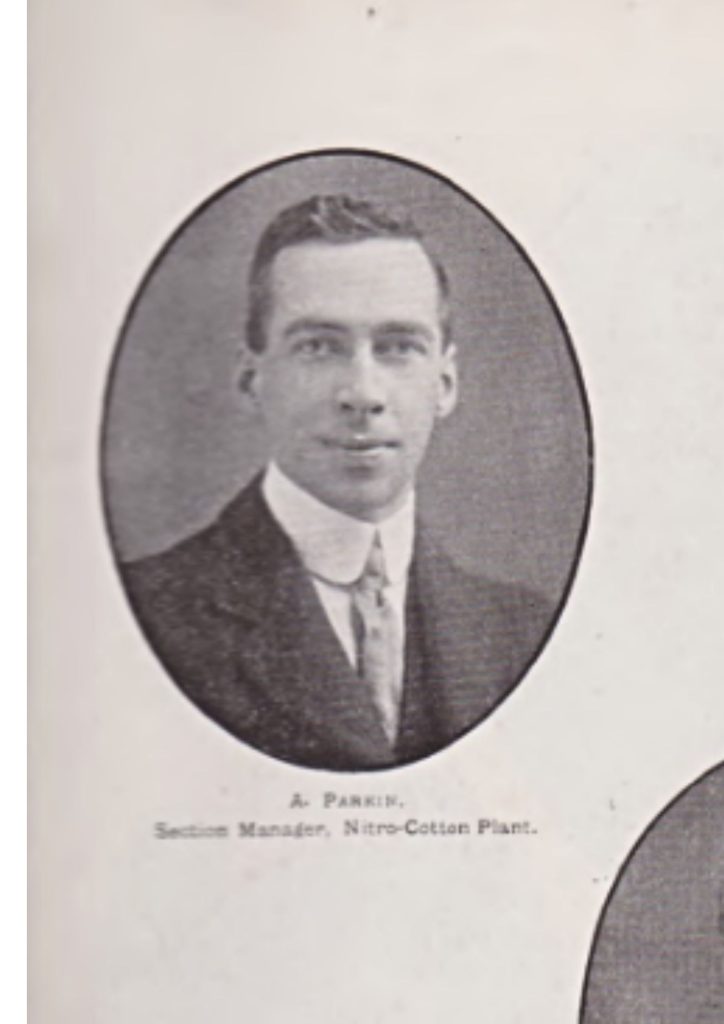
An oval shaped portrait of Arthur Parkin from the Dornock Souvenir Magazine. He is wearing a suit and looks happy.

Worker of the Week: Arthur Parkin

By Collections blog

Worker of the Week is a series of blog posts which highlights the workers at H.M. Factory Gretna that our volunteers researched for The Miracle Workers Project. This project aimed to centralise all of the 30,000 people who worked at Gretna during World War One and, although it may be over, our amazing research volunteers are continuing to uncover more stories about H.M. Factory Gretna workers to be added to this database. We are always looking to learn more about H.M. Factory Gretna workers. If you know anything about a H.M. Factory Gretna worker please feel free to get in touch with us by contacting info@devilsporridge.org.uk  Thanks as always to our research volunteers for helping to make this possible.

This week’s Worker of the Week is Arthur Francis Parkin, who came from Australia to work at the factory and it seems as though the local area inspired the name for his eldest daughter!

Early Life

  • Firstly, Arthur Francis Parkin was born in Victoria, Australia in 1891.
  • His parents were Arthur Coulson Parkin and Elizabeth Parkin.
  • We know Arthur Coulson Parkin, was a manufacturing chemist. Could this have helped to inspire his son and namesake, Arthur Francis Parkin?
  • Additionally, Arthur Francis Parkin had 5 siblings (including another Arthur, who was the eldest child).

Work and Marriage

  • Next, we know Arthur Francis studied a Masters Degree at Melbourne University.
  • What was his degree in? It was science and he went on to work as a chemist like his father.


  • On 12th November 1915, Arthur Francis Parkin married Grace Lillian Griffiths in Melbourne, Victoria Australia.
  • However, this wasn’t the only significant event that we have come across in their life in 1915…
  • Indeed it could have been possible that they had some idea of the next move prior to their marriage, but we can’t know this for certain.

From Australia to Scotland

  • Arthur and Grace travelled from Australia to Plymouth according to incoming passenger lists, but why did they come to Britain?


  • The best way to explain this is to start with another Australian Arthur, Arthur Edgar Leighton. [3]
  • Now, Arthur Edgar Leighton (to make things as clear as possible we’ll refer to him as Leighton from here on in) travelled the Britain via India to learn more about munitions manufacture for the Australian Government. [1]
  • While working on this, The Ministry of Munitions appointed Leighton to be a technical adviser on the manufacture of explosives. [2]
  • As part of this, Leighton organised a scheme for Australian chemists and engineers to travel to Britain and work with munitions. Not only did this help provide the workforce, but it helped Australians learn new skills in relation to the manufacture of munitions. [2]

(Interestingly, Leighton appears to have been involved in the running of “the huge Gretna Works” during World War One, but we’ll save the rest for another Worker of the Week blog… [1] [2] )


  • Therefore, Arthur Francis Parkin seems to have to travelled to Britain to work as part of this scheme.
  • He could have worked in several locations in relation to munitions.
  • The one we probably know most about at The Devil’s Porridge Museum is of course H.M. Factory Gretna.

Life at H.M. Factory Gretna

  • According to the Dornock Souvenir Magazine, Arthur Parkin ( or rather A. Parkin ) worked as the “Section Manager, Nitro-Cotton Plant.” [5]
  • Although, the rural site of the factory stretched from Dornock in Scotland to Longtown in England, there were two main sites known as Dornock and Mossband (near Longtown).
  • Seemingly, Arthur worked in the Dornock section of the factory, as this magazine is made by those who worked in this section to remember their time working there.


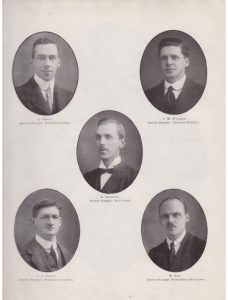
A page from The Dornock Farewell magazine featuring portraits of five gentlemen in suits. Arthur Parkin is in the photo to the top left and he looks happy.

Arthur Parkin and some of his colleagues photographed on a page of the Dornock Souvenir Magazine.


  • Eastriggs was one of the two key townships (the other being Gretna) built to serve those who came to work at the factory.
  • The Factory Manual describes Eastriggs as being built “for the accommodation of those workers chiefly engaged on the Dornock section.”[4]
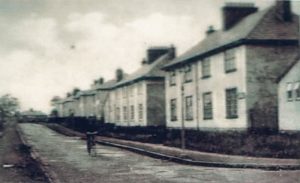
  • In light of this, perhaps it’s no surprise to find Arthur and Grace living in on The Ridge, Eastriggs. Below is a photo of The Ridge from the past.


A out of focus black and white photo of a street of houses. A cyclist is moving down the middle of the road in front of the houses.


  • Naturally, he’s not the only Australian to work at the factory.
  • The most notable example is that we’ve come across so far is probably Cyril Callister. Have you heard of him? For those of you that haven’t, just know that the future inventor of Vegemite once worked at H.M. Factory Gretna! [6]

Gretna

  • On 5th September 1917, Arthur and Grace’s first daughter was born. [8]
  • At this time Arthur was still working at the factory.
  • What did they call their daughter? Well, they named her Gretna Margaret Parkin. [8]
  • Is it just us or does the name Gretna seem familair? We’re sure we’ve heard that somewhere else before…
  • Later, Gretna became a renowned scientist, specialising in botany. [7]


  • Following this, their second child Griffiths Coulson Parkin was also born in Scotland in October 1918.
  • Sadly, Griffiths died during World War Two in 1943, while serving with the Royal Australian Naval Volunteer Reserve. [9]


Life After the Factory

  • In the Dornock Souvenir Magazine, Arthur Francis Parkin left his forwarding address as:

“A. F. Parkin.

Studley Avenue, Kew,

Melbourne, Australia.”

-Staff Addresses, page 68, The Dornock Souvenir Magazine. [5]

  • Therefore, it seems that the family returned to Australia.


  • Additionally, we know Arthur and Grace’s third child, Frances Gibson Parkin was born in Australia.
  • Later, Frances went on to become a medical practitioner.


  • Lastly, in July 1971, Arthur died in Australia.


Sources and Further Reading

  1. Australian Dictionary of Biography, Arthur Edgar Leighton by L. W. Weickhardt – https://adb.anu.edu.au/biography/leighton-arthur-edgar-7165
  2. Anticipating Tomorrow’s Defence Needs – A century of Australian Defence Science by Peter Donovan published 2007 by The defence Science and Technology Organisation, Canberra, Australia.
  3. Roy M. MacLeod (1989) The ‘Arsenal’ in the strand: Australian chemists and the British munitions effort 1916–1919, Annals of Science, 46:1, 45-67
  4. The Factory Manual from H.M. Factory Gretna.
  5. The Dornock Farewell Magazine from H.M. Factory Gretna. 1918- 1919.
  6. Worker of the Week: Cyril Callister – www.devilsporridge.org.uk/cyrilcallister
  7. Gretna Margaret West Wikipedia – https://en.wikipedia.org/wiki/Gretna_Margaret_Weste
  8. Weste, Gretna Margaret, The Encylopdiea of Women & Leadership in Twentieth-Century Australia – www.womenaustralia.info/leaders/biogs/WLE0492b.htm
  9. Sub-Lieutenant Griffiths Coluson Parkin, Commonwealth War Graves – www.cwgc.org/find-records/find-war-dead/casualty-details/2485607/griffiths-coulson-parkin/


Find Arthur Francis Parkin’s online database entry by clicking here>


Do you have a relative who worked at H.M. Factory Gretna? We would love to hear from you! Please feel free to contact us by emailing info@devilsporridge.org.uk. You never know maybe your relative could feature in a future Worker of the Week blog post! You can also have a look at some more H.M. Factory Gretna workers on our online database here>

Some wooden hostel buildings in Gretna next to a road. Some text at the bottom of the photo reads "21. Gretna - Edith Cavell Hostel." This is a black and white archive photo from the past.

Worker of the Week: Maria Armstrong

By Collections blog

Worker of the Week is a series of blog posts which highlights the workers at H.M. Factory Gretna that our volunteers researched for The Miracle Workers Project. This project aimed to centralise all of the 30,000 people who worked at Gretna during World War One and, although it may be over, our amazing research volunteers are continuing to uncover more stories about H.M. Factory Gretna workers to be added to this database. We are always looking to learn more about H.M. Factory Gretna workers. If you know anything about a H.M. Factory Gretna worker please feel free to get in touch with us by contacting info@devilsporridge.org.uk   A huge thank you to all our amazing research volunteers for continuing to make this possible.

This week’s Worker of the Week is Maria Armstrong, who once had too much to drink during her time working at H.M. Factory Gretna.

Early Life

  • Firstly, on 23rd April 1879 Maria was born in Carlisle.
  • Her parents were Christopher and Isabella Armstrong.
  • Maria was one of eight children, although only six survived.


  • According to census records the family lived in Botchergate, Carlisle in 1881 and Maria’s father, Christopher, worked as a printer compositor.
  • Following this, the family had moved to Hexham by 1891. At this point Christopher worked as a printer and stationer.


  • Census records show us that the family continued to live in Hexham.
  • However, by the 1911 census Isabella is described as a widow.
  • Meanwhile, Maria is working as a Stationer, similarly to her father in years gone past.


Time at H.M. Factory Gretna

  • After this, that we have found a record of a Maria Armstrong working as a munition worker at H.M. Factory Gretna.*
  • Is this the same Maria? What do you think?


  • Although we don’t know exactly when this Maria started at the factory we do know that she was working there in January 1917.
  • This is because she appears in the local newspaper in court at Dumfries, after having too much to drink.
  • Seemingly:

“Maria Armstrong, a munition worker, pleaded guilty to committing breach of the peace.”

– The Dumfries and Galloway Standard newspaper, Wednesday 17th January 1917. [1]

  • Now, it is important to note that we don’t have too much information about Maria Armstrong and it’s hard to know the full context of what led to this situation.
  • According to the newspaper it took place in one of the factory hostels, which seemingly Maria would have been staying at during this time.


  • However, according to the report in the Dumfries and Galloway Standard, Maria Armstrong…

“was the worse of drink and used very threatening language towards the matron.”

– The Dumfries and Galloway Standard newspaper.[1]

  • From what the newspaper report suggests this “threatening language” appears to have been violent threats concerning murdering the matron.
  • Naturally, this behaviour wasn’t something that wouldn’t go unpunished.
  • Ultimately, Maria Armstrong was given a £3 fine or “the alternative of fourteen days’ imprisonment.” [1]
  • According to the bank of England inflation calculator, this would be equivalent to aproximatly £182.32 as of February 2026. [5]


Messroom inside one of the hostels at Gretna from the past. Some people are sitting at tables.

Messroom inside a Hostel.

  • Hostel matrons were supposed to look after those who lived in the hostel.
  • One example of a hostel matron that we know more about is Christina Muddie Thom. [2]
  • Significantly, we have no evidence to suggest that Christina was the matron who was threatened in this instance though.


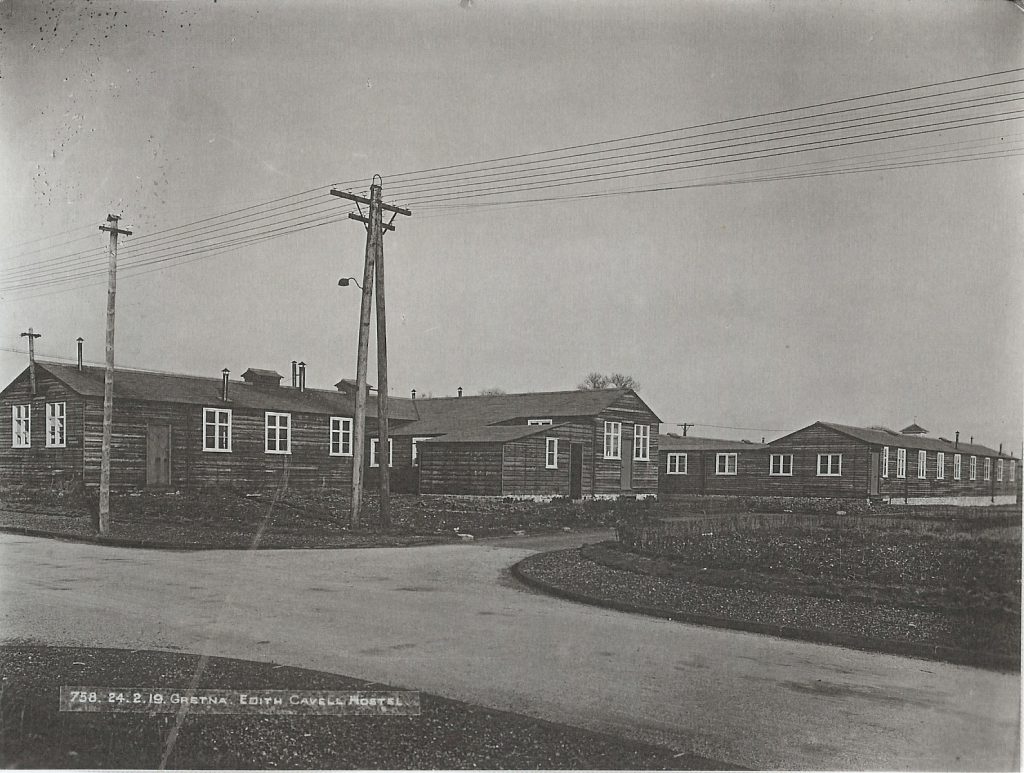
Some wooden hostel buildings in Gretna next to a road. Some text at the bottom of the photo reads "21. Gretna - Edith Cavell Hostel." This is a black and white archive photo from the past.

We don’t know which hostel this happened in.  Many of the hostels were named after well-know people, like the one shown above.


  • Additionally this case led…

“The Sheriff said they must put a stop to this disgraceful conduct.”

– The Dumfries and Galloway Standard. [1]

Another ‘Threatening’ Incident at the Factory


  • Indeed, this was not the first threatening incident that a happened at the factory.
  • Notably, James Cecil Wallace Auld [4] and Robert Wotherspoon [3] were threatened with a knife in a local cemetery after this in May 1917.
  • However, neither Maria Armstorng or any hostel matrons appear to have been involved in this incident.


Life After the Factory

  • In 1939, we have found a census record showing a Maria Armstrong went to live with her sister in Hexham.
  • By this point she is described as a retired stationer.


  • Unfortunately, we don’t know much more about Maria Armstrong.
  • Do you know more about Maria or anyone else who worked at H.M. Factory Gretna? We would love to hear from you! Find out how to get in touch at the end of this blog.


Sources and Further Reading

  1. “Woman Munition Worker Fined,” Wednesday  17th January 1917, The Dumfries and Galloway Standard newspaper.
  2. Worker of the Week: Christina Muddie Thom –  www.devilsporridge.org.uk/worker-of-the-week-christina-muddie-thom
  3. Worker of the Week: Robert Wotherspoon – www.devilsporridge.org.uk/worker-of-the-week-robert-wotherspoon
  4. Worker of the Week: James Auld – www.devilsporridge.org.uk/worker-of-the-week-james-auld
  5. The Bank of England Inflation Calculator – www.bankofengland.co.uk/monetary-policy/inflation/inflation-calculator

Find Maria Armstrong’s online database entry by clicking here>


*Although, the factory was named H.M. Factory Gretna by the government at the time, it is important to note that the rural site actually went from Dornock in Scotland to Longtown in England. It’s namesake, Gretna (not to confused with separate Gretna Green, which already existed prior to this) and Eastriggs were the two townships built to house and facilitate the influx of people who came to work at the munitions factory during World War One. Both these townships played a vital role to the factory and would have been an integral part in the lives of many of those who worked there.


Do you have a relative who worked at H.M. Factory Gretna? We would love to hear from you! Please feel free to contact us by emailing info@devilsporridge.org.uk. You never know maybe your relative could feature in a future Worker of the Week blog post! You can also have a look at some more H.M. Factory Gretna workers on our online database here>

First page of Dornock Souvenir Magazine from 1916 to 1919. It features an illustration of a man and munition worker either side of an house in a circle. There is an illustrated frame with buildings or a gate at each corner.

Worker of the Week: Norman Taylor Fox

By Collections blog

Worker of the Week is a series of blog posts which highlights the workers at H.M. Factory Gretna that our volunteers researched for The Miracle Workers Project. This project aimed to centralise all of the 30,000 people who worked at Gretna during World War One and, although it may be over, our amazing research volunteers are continuing to uncover more stories about H.M. Factory Gretna workers to be added to this database. We are always looking to learn more about H.M. Factory Gretna workers. If you know anything about a H.M. Factory Gretna worker please feel free to get in touch with us by contacting info@devilsporridge.org.uk  Thanks to our research volunteers, past and present, for their help with this!

This week’s Worker of the Week is Norman Taylor Fox who worked as a chemist at H.M. Factory Gretna and lived in Eastriggs. Find out more about him below.

Early Life

  • Firstly, on 23rd October 1888, Norman was born in Longsight, Lancashire.
  • His parents were Charles Edward Fox and Mary Jane Bowker.
  • Initially, Charles worked as a Cotton Linen Dryer.
  • However, he later went on to travel for a Chemical Works.


  • Accordingly, we know the family must have moved to Lisburn, Ireland.
  • This is because, Norman’s younger brother, Edward Bowker Fox, was born there in 1893.
  • Sadly, Edward died when he was 7 years old in 1901.
  • At this point the family was living in  Dunmurry, Ireland.


  • After this, the 1911 census the family returned to Lancashire.

Time at H.M. Factory Gretna

Fox, Norman T, chemist, 100 -102 Vancouver Road. Electoral Roll entry.

  • According to the local electoral role, ‘Norman T. Fox’ worked as a chemist at the factory.
  • Additionally, he lived at 100 – 102 Vancouver Road in Eastriggs.


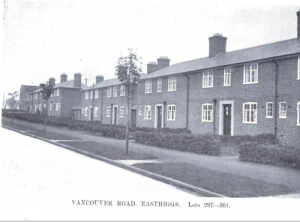
Vancouver Road, Eastriggs as shown in an Auction Book from 1924.

Vancouver Road as shown in an Auction Book from 1924 (when the Factory and townships were sold).

  • Eastriggs was one of the two townships (the other being Gretna) built to house and facilitate all those who came to work at the factory.
  • Notably, the rural site of the factory actual stretched from Dornock to Longtown (with the two main sections being Doronock and Mossband, near Longtown), but these two townships were vital to the factory and those who worked there.
  • The Factory Manual describes Eastriggs as being built “for the accommodation of those workers chiefly engaged on the Dornock section.” [4]
  • Significantly, this is not the only reference we have found to Norman working in this section of the factory.

The Dornock Farewell Magazine

  • The Dornock Farwell Magazine was created by people who worked at the H.M. Factory Gretna to remember and commemorate their time working at the factory at the end of the war.
  • Similarly, The Mossband Farewell magazine was created by those who worked at the other section.
First page of Dornock Souvenir Magazine from 1916 to 1919. It features an illustration of a man and munition worker either side of an house in a circle. There is an illustrated frame with buildings or a gate at each corner.

Front page of The Dornock Farewell Magazine.

  • A forwarding address for an N. T. Fox appears among the staff addresses in The Dornock Farewell Magazine.
  • This is given as ” “Lyndale.” Greenleach Lane, Worsley, Manchester.” [1]
  • However, we think it’s possible that this is not the only occasion that Norman appears in this Magazine.


N. T. Fox "Lyndale" Greenleach Lane, Worsley, Manchester.


The 11.20 “Up Express”

  • We think he could have written an article for it titled “The 11.20 “Up Express.” [2]
  • Significantly, only the initials of the author (“N. T .F”) are given, but it does seem to be written from the perspective of the chemist.
  • Do you think that N. T. F could be Norman?


  • The article itself records a local train journey “on a dark, unhealthy September night” with the

“Chemists recline[ing] in luxuriously-upholstered carriages, critising the latest war position, whereas all others aboard sit on hard, cold, rigid seats. These latter compartments, it is expected, will be sold under the hammer of the Minister of Munitions for hen-roots or ice cream vans, if the Minister can find a speculative party of buyers.”

– The Dornock Farewell Magazine. [2]

  • However, this train journey is interrupted when it reached:

“The line at this point bridges a gully, and this becomes the scene of a terrible smash… The first coach has left the rails, with one end in the bottom of the gully and the other resting against the bridge, the following two are over on their sides, and the fourth has jumped the metals.”

-The Dornock Farewell Magazine. [2]

  • The article continues to describe the “confusion” after this and describes “the scene as a whole would have insured good running for a Cinema film.”
  • Fortunately “four Dornock Chemists proceed to give assistance” who:

“become heroes – and are told a hundred and one in confidences.”

  • Ultimately, the chemists retire to their wooden huts.


  • After this, what is described as an “extract from the press at the time” is quoted.
  • This reads:

“The Minister of Munitions makes the following announcement:—
“ A statement has appeared in the Press that, as a result of a Railway Accident
at a Scottish Munition Factory, several lives were lost.
The accident in question was of a minor character. No lives were lost, but nine
persons sustained cuts and contusions.”

– The Dornock Farewell Magazine.[2]

  • The contradictory nature of this “extract from the press at the time” has lead us to wonder if it could be satirical comment on the way The Ministry of Munitions reported on at the time.
  • Often they would want to downplay the impact of any accident.
  • For example, when Roberta Robertson was sadly killed as a result of an explosion and nine others were injured, The Ministry of Munitions made a point of empathising “no serious damage was done.”[3]


  • So far we have come across no further accounts of this incident on the way to “Rigg Power House.”
  • Additionally, with those “four Dornock chemists” becoming “heroes” rescuing “trembling damsels” with “beautiful silvery voices” and “diamond tiaras” it does perhaps seem more like a “Cinema” story than a factual account…
  • What do you think?


  • Notably, the Quintinshill Rail accident happened locally only around three years prior on 22nd May 1915.
  • Would N. T. F. have been aware of this?

Married Life

  • After working at the factory we know Norman returned to Lancashire.


  • He married Evelyn Gasquoine there in 1918.
  • Following this, Norman and Evelyn went on to have three children.
  • Meanwhile, Norman became the manager of a chemical works in Lancashire.


  • Lastly, in May 1954, Norman died in Lancashire.
  • He is buried alongside his wife and daughter in Heaton Cemetary, Bolton Lancashire.

Sources and Further Information

  1. Page 66, Staff Addresses, The Dornock Farewell Magazine from H.M. Factory Gretna. 1918- 1919.
  2. Page 42 -43, The 11.20 “Up Express,” The Dornock Farewell Magazine from H.M. Factory Gretna. 1918- 1919.
  3. Worker of the Week: Roberta Robertson – https://www.devilsporridge.org.uk/worker-of-the-week-roberta-robertson
  4. The Factory Manual for H.M. Factory Gretna.


Read Norman Taylor Fox’s online database entry here>

Do you have a relative who worked at H.M. Factory Gretna? We would love to hear from you! Please feel free to contact us by emailing info@devilsporridge.org.uk. You never know maybe your relative could feature in a future Worker of the Week blog post! You can also have a look at some more H.M. Factory Gretna workers on our online database here>
Annie Corrin sat on a chair. This is a black and white photo from the past.

Worker of the Week: Annie Corrin

By Collections blog

Worker of the Week is a series of blog posts which highlights the workers at H.M. Factory Gretna that our volunteers researched for The Miracle Workers Project. This project aimed to centralise all of the 30,000 people who worked at Gretna during World War One and, although it may be over, our amazing research volunteers are continuing to uncover more stories about H.M. Factory Gretna workers to be added to this database. We are always looking to learn more about H.M. Factory Gretna workers. If you know anything about a H.M. Factory Gretna worker please feel free to get in touch with us by contacting info@devilsporridge.org.uk  

This week’s Worker of the Week is Annie Corrin. A huge thank you to Annie’s granddaughters for their kind assistance with our research project and another thank you to all our research volunteers!

Early Life

  • Firstly, Annie  Woods was born on 1st April 1897  in Port St.Mary, Isle of Man.
  • At this point, Annie was the youngest of five children.
  • Her parents were Richard Wilkinson Woods and Ann Jane Radcliffe.
  • Additionally, her father, Richard, worked as a miner.

Time at H.M. Factory Gretna

  • When Annie was 19 she left the Isle of Man to go and work at H.M. Factory Gretna.
  • Although, the government at the time chose to call the factory H.M. Factory Gretna, it is worth noting that the rural site of the factory ran from Dornock to Longtown. Additionally, the two townships of Eastriggs and Gretna were built to serve and facilitate those who worked there.


According to an interview with Annie about her time at the factory [2]:

  • Originally, she stayed in the Central Hotel in Carlisle (now demolished) as this used to house munition workers.
  • After this hotel becoming a hospital for the wounded, the munitions workers living there were sent to live in hostels in Gretna.
  • Many of the factory hostels were named after famous people, such as the Florence Nightingale Hostel where Annie then lived.
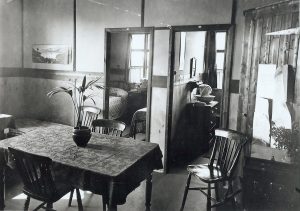
  • Below is a photo of inside of a hostel. Could where Annie stayed have looked like this?


A table with doorways into a bedroom. This is inside a hostel for H.M. Factory Gretna in the past.

  • At the start, Annie worked at the Cordite section of the factory.
  • Here:

“Her job was to separate large trays of cordite, by taking a handful and smashing the end, to separate the strands the strands. The strands were then put into boxes… and weighed.”

Interview with Mrs Annie Corrin, Stranraer Museum Gretna Girls Booklet, E. Ritchie [2]

  • After this, the boxes were sealed with lids.
  • To do this work she was provided with a “mop cap, tunic and trousers.” [2]


  • Next, Annie changed to working at the loading sheds outside.
  • Here she loaded boxes of cordite onto a tuck.
  • After this she would have:

“pushed these trucks outside on rail tracks, for about a mile to another shed.”

Interview with Mrs Annie Corrin, Stranraer Museum Gretna Girls Booklet, E. Ritchie [2]

  • Notably, she is recorded as not knowing what happened inside the sheds, but:

“does remember there were usually a couple of girls lying outside in what appeared to be a drunken state, caused by exposure to cordite.”

Interview with Mrs Annie Corrin, Stranraer Museum Gretna Girls Booklet, E. Ritchie [2]

  • Consequently, she was given “oilskin coat and sou’wester hat” [2] for working outside. Could this be what she is wearing in the photo below? What do you think?

Annie Corrin sat on a chair. This is a black and white photo from the past.

  • Additionally, a man called Geordie appears to have given the munitions workers some direction on the best way to load the trucks.

Life After the Factory

  • Next, near the start of 1919 Annie returned to the Isle of Man.


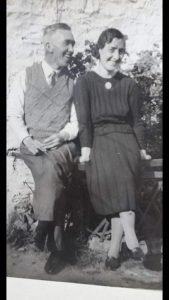
Charles and Annie Corrin sat together on a bench. They look happy. This is a photo from the past.

Charles and Annie Corrin. This photo was kindly shared with us by their granddaughters. A huge thank you to them.

  • On the 5th November 1921 Annie married Charles Corrin.
  • Following this, they went on to have three children.
  • Lastly, Annie died in March 1993.

Sources and Further Reading

  1. Annie Corrin – https://www.devilsporridge.org.uk/annie-corrin-gretna-girl
  2. Interview with Mrs Annie Corrin, Isle of Man (Aged 88) from Stranraer Museum The Gretna Girls booklet, E. Ritchie produced as result of Falkirk and Stranraer Museum Services joint exhibition “Women at War.”

Read Annie Corrin’s online database entry by clicking here>


Do you have a relative who worked at H.M. Factory Gretna? We would love to hear from you! Please feel free to contact us by emailing info@devilsporridge.org.uk. You never know, maybe your relative feature in a future Worker of the Week blog post! You can also have a look at some more H.M. Factory Gretna workers on our online database here>
Reginald Keen wearing a suit sat on a chair. He has a moustache.

Worker of the Week: Reginald Keen

By Collections blog

Worker of the Week is a series of blog posts which highlights the workers at H.M. Factory Gretna that our volunteers researched for The Miracle Workers Project. This project aimed to centralise all of the 30,000 people who worked at Gretna during World War One and, although it may be over, our amazing research volunteers are continuing to uncover more stories about H.M. Factory Gretna workers to be added to this database. We are always looking to learn more about H.M. Factory Gretna workers. If you know anything about a H.M. Factory Gretna worker please feel free to get in touch with us by contacting info@devilsporridge.org.uk  As always a huge thank you goes to all our awesome research volunteers! 

This week’s Worker of the Week, is Reginald Keen, who you can read more about below.

Early Life

  • On the 4th June 1889, Reginald was born in Meare, Somerset.
  • Notably, he had seven siblings including a twin sister.
  • His parents were Robert John Kelway Keen and Emily Rachel Burrough.
  • According to census records his father was a farmer.

Time at H.M. Factory Gretna

  • During World War One, we know that Reginald worked as a Fireman at H.M. Factory Gretna.
  • How do we know this? Well, he appears on a photo kindly shared by relative of fellow factory worker Wilfred Edmonson. [1]
  • This photo was taken in April 1918 according to the information on the back, so it seems as though Reginald must have been working at the factory from at least that point.
  • Additionally, it was taken in Frank Holbrook, Alexander Studios, Dumfries and Annan.
A group of ten men, including Wilfred Manson Edmondson wearing suits.

Photo kindly donated by Wilfred Edmondson’s relative. [1] Wilfred is on the far right of this photo.

  • In the photo above, Reginald is sat fourth from the left in the front row.

Farmer and Fireman

  • Notably,  Reginald is the only munition worker described with another occupation in addition to working at the factory on the photo.
  • This reads “Reginald Keen (farmer) fireman.”
  • If you fancy leaning more about Firefighting at the factory and the fire stations in the two town townships built for it (these were Eastriggs and Gretna with the rural factory site running from Dornock to Longtown) we can recommend watching a recording of an online talk about this on our You Tube. [3]
A group of ten men sat and stood for a photo wearing suits.

Photo kindly donated by Wilfred Edmondson’s relative. [1]

  • Interestingly, when conscription was introduced in 1916 during World War One, farming was considered to be a reserved occupation, as it was thought to be essential for the war effort.[3]
  • However, it is highly likely that Reginald would have had to apply for an exception certificate on the grounds of his work to qualify for this, but we have found no evidence to suggest that he ever did so far. [4]
  • Also, it doesn’t seem to have been unusual for farm labours to be conscripted. [5]


  • Indeed, Bonnie White’s article concerning the impact of the war on a neighbouring county, highlights the impact this had on agriculture and cited a 1923 study by T. H. Middleton, which “estimated that between August 1914 and April 1918 approximately 273,000 men between the ages of 18 and 41 left agriculture for military service or munitions work.” [6]
  • Could Reginald have been one of these? What do you think?

Marriage

  • Following this, we know Reginald did indeed return to Somerset and farming.
  • In fact, he married Amy Look in the Wells district on the region in 1919.
  • Reginald and Amy went on to have two children.
  • Both of these appear to have gone on to become farmers.

Later Life

  • Later it seems that Reginald was living in Weston-Super-Mare.
  • Lastly, Reginald died in July 1955.

Sources and Further Reading

  1. Worker of the Week: Wilfred Edmondson – https://www.devilsporridge.org.uk/worker-of-the-week-wilfred-manson-edmondson
  2. Nearly a decade! Fires and Firefighting at H.M. Factory Gretna YouTube online talk recording. – https://youtu.be/TrKHKzIKztA?si=cdFefSFOOiaBREpF
  3. World War One: Military Service Tribunals and Those Who Did Not Fight, 9th November 2014, BBC News – https://www.bbc.co.uk/news/uk-england-29954113
  4. WW1 – Applications for Exemption from Service website, Thornbury Roots in Partnership with Thornbry and District Museum  – https://www.thornburyroots.co.uk/war/ww1-exemptions-a-m/
  5. World War One – Agriculture and Industry, Historic UK website – https://www.historic-uk.com/HistoryUK/HistoryofBritain/World-War-One-Agriculture-Industry/
  6. Feeding the war effort: Agricultural experiences in First World War Devon, 1914–17 by Bonnie White, page 95 – 95. (Quote cited in this essay as T. H. Middleton, Food production in war (1923), p. 266). An extract can be found on the British Agricultural History Society’s website as a PDF – https://bahs.org.uk/AGHR/ARTICLES/58_1_5_White.pdf

Find Reginald Keen’s Miracle Worker’s Database Entry here>

Do you have a relative who worked at H.M. Factory Gretna? We would love to hear from you! Please feel free to contact us by emailing info@devilsporridge.org.uk. You never know maybe your relative could feature in a future Worker of the Week blog post! You can also have a look at some more H.M. Factory Gretna workers on our online database here>
Monthly Roundup to 23rd March to 19th April 2026 graphic with the museum Logo. This includes photos of a munitions worker and soldier craft activity, a trench Lego model and a separate display of assorted Lego models in The Devil's Porridge Museum's education room.

Monthly Roundup 23rd March to 19th April 2026

By Archive

Time for our next roundup. This Monthly Roundup is for 23rd March to 19th April 2026. Expect lots of Lego and an a couple of egg-citing craft workshops too!

***

Monday 23rd March

A huge shout-out goes to our amazing volunteer Wendy. Every term-time Monday she runs our free term-time Arts and Crafts Club for young people at The Devil’s Porridge Museum and this week was no different.

***

Tuesday 24th March

You may be this week we have Warhammer Club.


A table set up with paints , water and paintbrushes for Warhammer miniatures.

***

Thursday 26th March

Excellent to welcome a group of ten to The Devil’s Porridge Museum today. It was fantastic to meet you all! We were delighted with your kind feedback about The Devil’s Prorridge Museum too. Thank you for taking the time to come and visit us.

***

Tuesday 31st April

Warhammer Club is continuing all the way through the Easter school holidays. It’s free and runs 6pm to 8pm.


***

Wednesday 1st April

It was lovely to be joined by some families and young people for some Spring and Easter themed crafts in the afternoon. We loved meeting you all and seeing what you created!

This was at our free Easter Craft Activities workshop.

***

Tuesday 7th April

Warhammer Club was running at The Devil’s Porridge Museum today. Thanks to those who help to make this possible every week.

***

Wednesday 8th April

Those who visited us today could make poseable cardboard munitions workers or soldiers during their visit as part of a drop-in activity. Thanks to all those who took the time out of their visit to join us for some Wartime Character Crafts.

***

Thursday 9th April

In the afternoon, we were delighted to have some young people join us for our fully booked free Lego Interactive Robots Workshop.


Three robots made out of Lego. One is humanoid in shape with two legs and eyes. One has wheels and another is snail like. The robots are on a white circle shape. Some Lego is in the background.

***

Saturday 11th April and Sunday 12th April

Our Lego Weekend took place on Saturday 11th and Sunday 12th April 2026!

It was fantastic to have so many people visit us over the course of the weekend. We’re delighted to have received excellent feedback for this event, with some people suggesting that we do this again next year. Will we? Let’s wait and see, we still have a few more ideas for events 2026 first…

We’ve taken the chance to extend our Lego minifigure trail, so even if you didn’t have the opportunity to join us for the weekend you can still search for the historical Lego minifigures around The Devil’s Porridge Museum (at the time of writing that is).

In addition to the trail, it was brilliant to see what everyone built during the weekend and we also had a awesome selection of Lego models on display.

Thank you to everyone who loaned and donated Lego models. Plus, we would like to say a huge thank you to all our volunteers for helping to make this event run smoothly!

***

Monday 13th April

Our Cordite Club of retirees and Arts and Crafts Club returned after the Easter school holidays.

***

Tuesday 14th April

This week we had Warhammer Club on in the evening again.

A selection of Warhammer miniatures arranged on a table.

***

Wednesday 15th and Thursday 16th April

We were proud to have our Office Manager and Curator representing The Devil’s Porridge Museum at Visit Scotland’s Travel Expo this year.

***

Conclusion

That’s it for this Monthly Roundup! It was fantastic to have so many people join us for our Easter school holiday activities and thank you to everyone who helped to make these possible. Keep an eye on our socials and check our list below. We always have something happening at The Devil’s Porridge Museum.

Want to find out more about any of the events mentioned in this blog, or wondering what else is coming up soon? We’ve compiled a list for you to find out more.


Lastly you can find out what happened in our previous Monthly Roundup by clicking here>

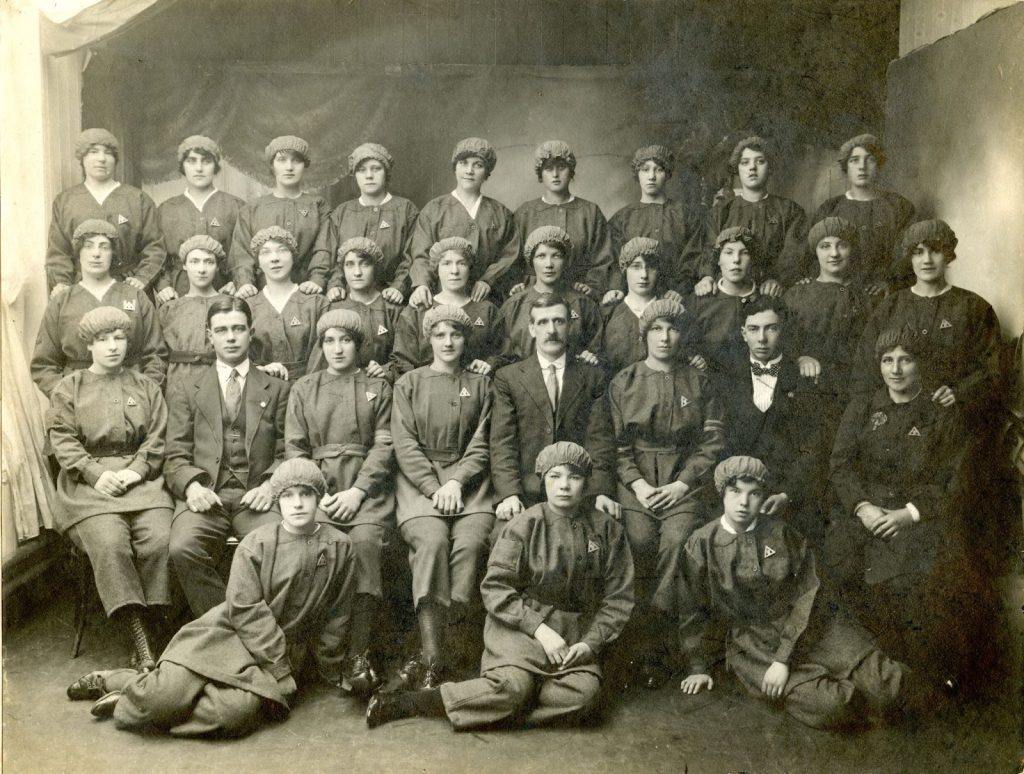
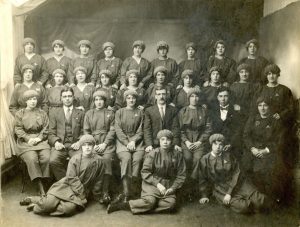
Munitions workers in uniform stood and sat in four rows. This is a black and white photograph from the past.

Worker of the Week: Lily Bruce

By Collections blog

Worker of the Week is a series of blog posts which highlights the workers at H.M. Factory Gretna that our volunteers researched for The Miracle Workers Project. This project aimed to centralise all of the 30,000 people who worked at Gretna during World War One and, although it may be over, our amazing research volunteers are continuing to uncover more stories about H.M. Factory Gretna workers to be added to this database. We are always looking to learn more about H.M. Factory Gretna workers. If you know anything about a H.M. Factory Gretna worker please feel free to get in touch with us by contacting info@devilsporridge.org.uk  

This week’s Worker of the Week, is Lily Bruce, who features in a group photograph of munitions workers at the factory. Keep reading to find out more about Lily’s life.

Early Life

  • On 28th March 1901 Lily was born in Cordon, Durham.
  • In total, Lily appears to have had 10 siblings.
  • Additionally, her parents were Thomas and Emma Bruce.
  • According to the 1911 census, Thomas was a miner.

Life at H.M. Factory Gretna

  • Although, we don’t know exactly when Lily would have started working at the factory, it seems that she would have been a munitions worker.
  • This is because she appears in a photograph of a group of munitions workers who worked there.
  • Information on the back of the photo suggests that she could have been part of the “Cotton Prep Dept.  A Shift.”

Munitions workers in uniform stood and sat in four rows. This is a black and white photograph from the past.


  • Interestingly, there are many more names of munitions workers also on the back of this photo.
  • For instance, the back of the photo suggests that Maud Bruce (of no relation to Lily) is sat in third row, 4th from the left.
  • We know Maud Bruce definitely worked at H.M Factory Gretna and even was awarded a medal for her bravery during her time working there. [1] [2]
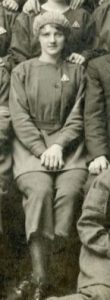
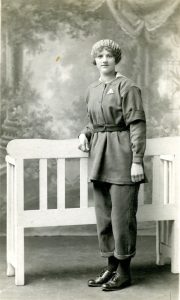
  • Additionally, we have other photos of Maud Bruce. Do you think the two photos below look like the same person?
  • Meanwhile, Lily is described as being the second from the right in the first row of the photo.


  • Unfortunately, we don’t have any more information about Lily’s time working at H.M. Factory Gretna.
  • We don’t have a comprehensive list of everyone who worked at H.M. Factory Gretna and sometimes all the evidence we have is a name on the back of a photograph… What do you think of this source?
  • Ideally, a relative of Lily’s might come across this blog post and kindly get in touch with us (or someone might come along and loan us a time machine), until then this is the information we have found about Lily Bruce…

Marriages and More

  • After her time working at the factory, Lily seems to have returned to Durham.
  • This is because she married there!
  • More specifically, it appears that Lily married in Auckland, Durham in September 1927 to James Henry Lee.
  • Following this, James and Lily had three children all born in the Durham area.


  • Sadly, in March 1933 James passed away.
  • In June of that same year James and Lily’s last child was born.


  • It seems that Lily and her children continued to live in the Durham area.
  • Similarly, Emma, Lily’s mother lived there right up to her death in 1962.


  • However, prior to that Lily married again.
  • On 9th September 1950 Lily appears to have married Henry Kipling in Durham.
  • We’ve also found that their wedding was witnessed by Robinson and Sarah Kell.
  • Additionally, their vicar was Hector Stanley Horobin.


  • Lastly, Lily died on the 7th February 1971.

Sources and Further Information

  1. The Marvellous Miss Maud: From Gretna Girl to Aycliffe Angle. – https://www.devilsporridge.org.uk/the-marvelous-miss-maud-from-gretna-girl-to-aycliffe-angel
  2.  Maud Bruce Online Database Entry – https://www.devilsporridge.org.uk/hm-factory-gretna-workers-database/name/maud-bruce

Find Lily Bruce’s online database entry by clicking here>

Do you have a relative who worked at H.M. Factory Gretna? We would love to hear from you! Please feel free to contact us by emailing info@devilsporridge.org.uk. You never know maybe your relative could feature in a future Worker of the Week blog post! You can also have a look at some more H.M. Factory Gretna workers on our online database here>
Translate »
BOOK NOW