All Posts By

A pair of boots without any shoelaces.

Worker of the Week: Valentine Duffy

By Collections blog

Worker of the Week is a series of blog posts which highlights the workers at H.M. Factory Gretna that our volunteers researched for The Miracle Workers Project. This project aimed to centralise all of the 30,000 people who worked at the factory during World War One and, although it may be over, our amazing research volunteers are continuing to uncover more stories about H.M. Factory Gretna workers to be added to this database. We are always looking to learn more about H.M. Factory Gretna workers. If you know anything about a H.M. Factory Gretna worker please feel free to get in touch with us by contacting info@devilsporridge.org.uk  Thanks to everyone who makes this possible, including our research volunteers

This week’s Worker of the Week, Valentine Duffy seems to have put their foot in it and got in some trouble while working at the factory. Read on to find out how and more about his life.

Early Life

  • Firstly, Valentine Duffy was born on 24th January 1900 in Dublin, Ireland.
  • His parents were Charles and Catherine Duffy ( nee Core ).
  • Valentine had four siblings.


  • By the 1901 census, the family were living at Emerald’s Terrace, Merchant Quay in Dublin.
  • Valentine’s father Charles was an electrical engineer.
  • Following this, the 1911 census shows the family to still be living in the same area.
  • It seems the family did move house, as they were living at 5 Millmount Cottage in Merchant’s Quay by this point.
  • Meanwhile, Charles was continuing to work as an electrician.


  • Perhaps, Charles occupation inspired Valentine.
  • Being too young to join active service until 1918, Valentine worked as apprentice election.
  • Can anyone guess where he did so?

H.M. Factory Gretna

  • We know you’ve probably worked it out by now, but Valentine was an apprentice engineer at H.M. Factory Gretna.
  • Once again we don’t know exactly when Valentine came to work at the factory (if your a frequent reader of our Worker of the Week blog post, you may well have come across that line before and probably will again.)
  • However, we do know he was working there by 18th June 1917.
  • In fact, he had been “employed at Gretna for some time” by then. [1]


  • This is because, Valentine kind of put his foot in it and got into some trouble which ended up in the newspaper.
  • It all involved some boots, which Valentine Duffy pleaded guilty to stealing.
  • According to the newspaper solicitor Mr I. F. Edgar (he tends to pop up a lot in these cases at the factory) explained on Valentine’s behalf…

“Boots were served out to the workers where the acid destroyed their own boots. Accused got a pair and as he had had a pair of his own boots destroyed, he thought he was entitled to walk out with the books belonging to the factory.”

– The Dumfries and Galloway Standard newspaper, June 1917. [1]

  • However, it was argued that Valentine had not been given the boats “and they must have been taken from the store.”[1]
  • Ultimately…

“The Sheriff remarked that smarter supervision should be kept at the store. Certainly people ought not to be able to go into a store and pick things up like that.”

– The Dumfries and Galloway standard newspaper. [1]

  • Perhaps, Valentine’s guilty plea helped, for the Sheriff only “dismissed the accused with an admonition.”
  • This seems a much more lenient result than Sarah Carter received when she was accused of stealing another munitions workers hat. [2]
  • In March 1917, she was given 10 days imprisonment after pleading guilty to the crime. [2]
  • On the other hand, George Bradly and John Irving who both plead guilty to a theft involving 10 stones of potatoes from the factory kitchen, were both “given a fine or 14 days imprisonment” earlier that very same month. [3]
  • Bertha Bradly was acquitted of this same crime. [3]


  • From this article Valentine’s address was described as “Eastriggs, Dornock.”
  • Eastriggs was one of the two townships built to house and facilitate the factory (with the other being Gretna).
  • Meanwhile, the actual rural site of the factory stretched from Longtown in England to Dornock in Scotland.

Marriage and More

  • It seems that Valentine moved about a lot following his time at the factory.
  • By the 1921 census, Valentine is living in Tredeagar, Monmouthshire in Wales.


  • After this, Valentine returned to Ireland.
  • We know this because, in January 1934, Valentine married Mary Ellen Turner in Dublin.


  • Next, in 1939, Valentine had moved again.
  • He was living at 19 Middleton Square, Finsbury, London working as an electrician.


  • Later it seems that he must have moved to Liverpool.
  • It was here Valentine died in 1987.

Sources and Further Reading

  1. “Theft Gretna,” Wednesday 20th June 1917, The Dumfries and Galloway Standard Newspaper.
  2. Worker of the Week: Sarah Carter – https://www.devilsporridge.org.uk/worker-of-the-week-sarah-carter
  3. Worker of the Week: Bertha and George Bradley – https://www.devilsporridge.org.uk/worker-of-the-week-bertha-and-george-bradley

Find Valentine Duffy’s online database entry by clicking here>

Do you have a relative who worked at H.M. Factory Gretna? We would love to hear from you! Please feel free to contact us by emailing info@devilsporridge.org.uk. You never know maybe your relative could feature in a future Worker of the Week blog post! You can also have a look at some more H.M. Factory Gretna workers on our online database here>
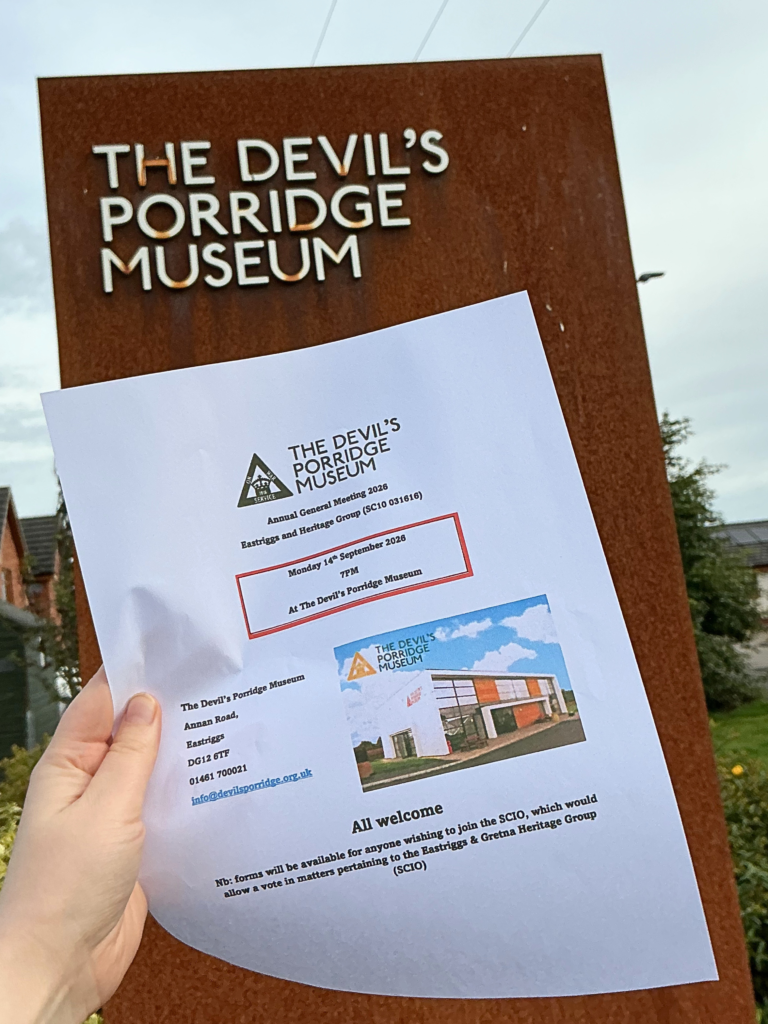
A poster for The Devil's Porridge Museum's Annual General Meeting 2026. This is happening on Monday 14th September 2026 at 7pm at The Devil's Porridge Museum. All welcome. Forms will be available for anyone wishing to join the SCIO, which would allow a vote in matters pertaining to the Eastriggs and Gretna Heritage Group (SCIO). This poster is held up in someone's hand in front of a sign which reads "The Devil's Porridge Museum."

Annual General Meeting 2026

By Events

When is the Annual General Meeting 2026?

Our Annual General Meeting 2026 will take place on Monday 14th September at 7pm.

What is the Annual General Meeting?

The AGM takes place once a year to elect the trustees of the Eastriggs & Gretna Heritage Group, which manages the strategic development of The Devil’s Porridge Museum. 
This meeting will be held at The Devil’s Porridge Museum and help to shape the museum’s future.

Who Can Come to the Annual General Meeting?

We warmly invite all of our members and friends to attend our Annual General Meeting held at The Devil’s Porridge Museum. If your not a friend or member yet, you’re still welcome to join us and we would be happy to have you!
 
If you would like to become a member of the Museum please email info@devilsporridge.org.uk to register your interest. There will also be forms available at the meeting for anyone who would like to join, which will allow you to vote in the proceedings.
 
We look forward to meeting with you!
If you have any further questions about our Annual General Meeting please feel free to contact info@devilsporridge.org.uk 
Annual General Meeting 2026 at The Devil’s Porridge Museum.
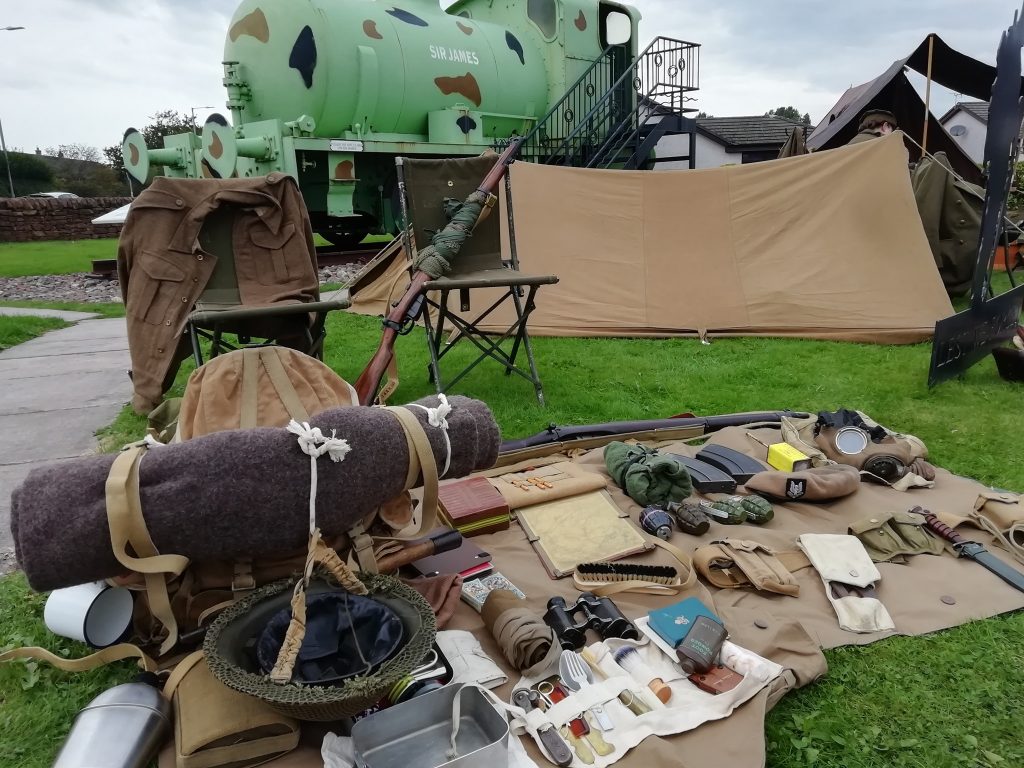
World War Two military items displayed on the grass in front of Sir James. Sir James is a World War One fireless locomotive.

Wartime Weekend 2026

By Events

When is Wartime Weekend 2026?

Saturday 19th to Sunday 20th September 2026.

10am to 4.30pm

Activities are included in usual entry price into The Devil’s Porridge Museum.

What to expect from Wartime Weekend 2026?

Discover stories of the Second World War in the local area with living history displays, artefact handling, and crafts.  Meet soldiers and discover their equipment, get ready for an air raid with the ARP warden, play some 1940s games, explore our wartime kitchen and see if you could live on the ration, make your own gas mask and help us build a model of RAF Annan.

A man dressed as an Air Raid warden holding a shovel and an envelope stood in front of an Anderson shelter outside The Devil's Porridge Museum.

Remember all of this is included in your usual admission price into The Devil’s Porridge Museum. (If you gift aid your admission into The Devil’s Porridge Museum we offer you free entry back into our museum for a whole year too!)

Below are some photos from one of our previous World War Two themed events at The Devil’s Porridge Museum. This time we are hoping to have a few different activities, so it may vary from the photos.

Some things to remember…

  • Dry, well-behaved dogs on a lead are allowed inside The Devil’s Porridge Museum on Sundays and Thursdays. (Pet dogs are welcome to sit outside the Cafe, but not inside please.)
  • Guide and assistance dogs are welcome every day into The Devil’s Porridge Museum and our Cafe.
  • Our usual opening hours and admission prices do apply. Find our opening hours and prices by clicking here> 

If you have any more questions about this event, you’d be welcome to get in touch!

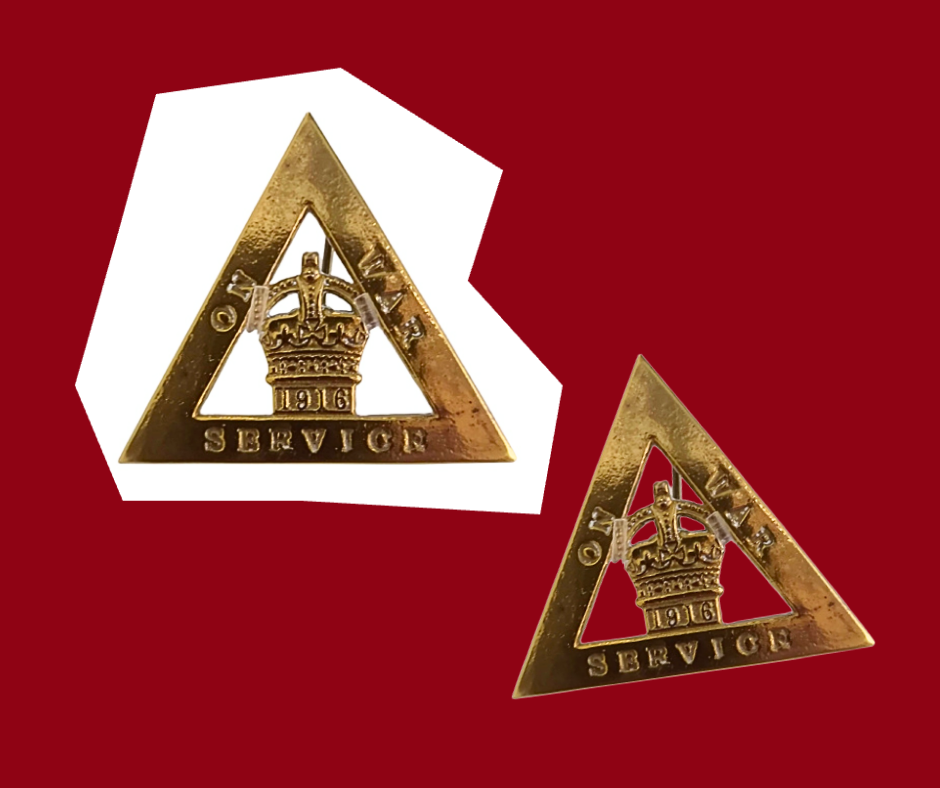
Two triangle shaped brass On War Service badges. These badges each have a crown inside a triangle.

Worker of the Week: Dorothy Mary Champness

By Collections blog

Worker of the Week is a series of blog posts which highlights the workers at H.M. Factory Gretna that our volunteers researched for The Miracle Workers Project. This project aimed to centralise all of the 30,000 people who worked at the factory during World War One and, although it may be over, our amazing research volunteers are continuing to uncover more stories about H.M. Factory Gretna workers to be added to this database. We are always looking to learn more about H.M. Factory Gretna workers. If you know anything about a H.M. Factory Gretna worker please feel free to get in touch with us by contacting info@devilsporridge.org.uk  As always thanks to our research volunteers!

This week’s Worker of the Week, is Dorothy Mary Champness who was born in Manchester.

Early Life

  • Firstly, Dorothy Mary Champness was born on the 20th November 1890.
  • You might already know this if you read the introduction, but she was born in Manchester, in Longsight to be exact.
  • Dorothy was the only child of Charles Henry and Lizzie Champness (nee Tansley).
  • We also know that Dorothy was baptised in Dickenson Road, Rusholme Wesleyan chapel.


  • According to the census record for the following year, Charles was working as a mercantile clerk.
  • Following Dorothy’s birth, the family are still living in Manchester (in 58 Stanley Grove).


  • However, the 1901 census record shows they moved to 32 Wellington Grove in Stockport.
  • After this, they must have moved again, as by the 1911 census they are living in 101 Buxton Road in Stockport.
  • By this point Charles is a coal merchant.

H.M. Factory Gretna?

  • We think that at some point after this Dorothy worked at H.M. Factory Gretna.
  • How come? Well, her occupation is recorded as an ex Gretna worker on the 1921 census.
  • Although, we should probably mention, that Dorothy’s date of birth is misprinted as 1895…
  • So… could we have the wrong Dorothy Mary Champness?
  • The fact that her parents Charles and Lizzie also appear on this census record alongside her would make this an awfully big coincidence! What do you think?


  • Either way we don’t know exactly what Dorothy would have done in relation to her employment as an ‘ex Gretna worker.’
  • Could she have worked at the factory itself (the rural site of which actually stretched from Dornock in Scotland to Longtown in England) or would she have worked in one of the two townships built for it (namely Eastriggs or Gretna)?
  • Perhaps she could have worked alongside Maud Bruce [1]? Could she have heard all about the antics of a group munitions workers who stole from a Gretna ‘fried fish’ shop [2] ? Would she have worked in a hostel and if so would she have know Christina Muddie Thom [3] ? We have more questions than answers.
  • What do you think? The only answer we have for now is we don’t know for sure, but if you do happen across anything we would love to hear from you.

Life After the Factory

  • Next, we know Dorothy returned to Stockport.
  • The 1939 census records her as living at 134 Sandown Road, Stockport with her mother, Lizzie.
  • Dorothy is working as a milliner at this point.


  • Unlike many of the H.M. Factory Gretna workers that feature in our Worker of the Week blogs, we don’t think Dorothy married ( or at least we have not come across any indication that she did).
  • Whether this be through choice, circumstances, events in her personal life or some other reason, we can’t know for sure but we would like to think that it suggests she was a strong woman who was unafraid to defy society’s expectations of marriage.


  • Finally, on the 13th April 1963, Dorothy died in Stockport. She was 73 years old.

Sources and Further Reading

  1. The Marvelous Miss Maud: From Gretna Girl to Aycliffe Angle – https://www.devilsporridge.org.uk/the-marvelous-miss-maud-from-gretna-girl-to-aycliffe-angel
  2. Worker of the Week: Minnie Turnbull. – https://www.devilsporridge.org.uk/worker-of-the-week-minnie-turnbull
  3. Worker of the Week: Christina Muddie Thom. – https://www.devilsporridge.org.uk/worker-of-the-week-christina-muddie-thom

Find Dorothy Mary Champness’ online database entry by clicking here>


Do you have a relative who worked at H.M. Factory Gretna? We would love to hear from you! Please feel free to contact us by emailing info@devilsporridge.org.uk. You never know maybe your relative could feature in a future Worker of the Week blog post! You can also have a look at some more H.M. Factory Gretna workers on our online database here>

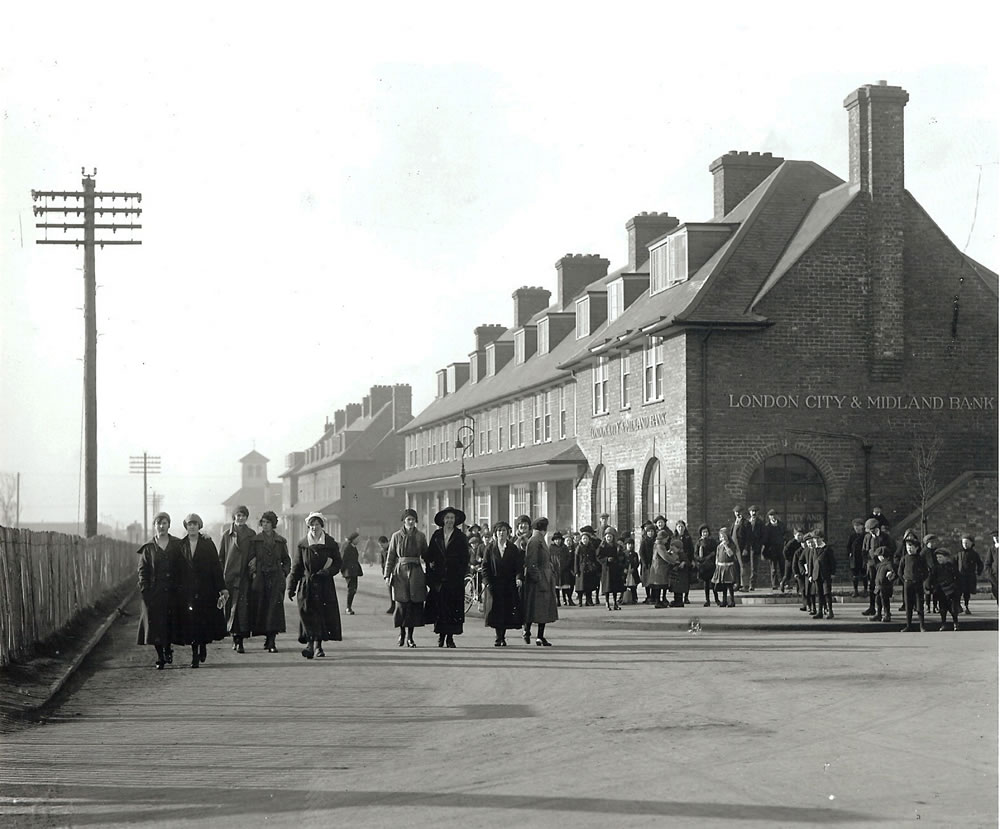
A selection of shops in Gretna with the bank no the near end. Crowds of people are walking down the road and street. This is a black and white photo from the past.

Worker of the Week: John Harkness

By Collections blog

Worker of the Week is a series of blog posts which highlights the workers at H.M. Factory Gretna that our volunteers researched for The Miracle Workers Project. This project aimed to centralise all of the 30,000 people who worked at the factory during World War One and, although it may be over, our amazing research volunteers are continuing to uncover more stories about H.M. Factory Gretna workers to be added to this database. We are always looking to learn more about H.M. Factory Gretna workers. If you know anything about a H.M. Factory Gretna worker please feel free to get in touch with us by contacting info@devilsporridge.org.uk  A huge thank you goes to our reasearch volunteers and everyone who has helped to make this series possible.

This week’s Worker of the Week, is John Harkness who was the town manager for H.M. Factory Gretna.

Early Life

  • Although, we don’t know the exact date John was born in 1879.
  • His parents were John Harkness (his father had the same name) and Grace McKie Harkness.
  • We also know that the older John worker as a farmer.
  • It seems likely that young John was born in Dumfriesshire and there’s a possibility he could have lived at Rae Street in Dumfries as suggested by his probate record. [8]

Married Life

  • Next, we know John married Margaret Gilmour Ferguson on 20th September 1905.
  • They married at Parish Church Kilmun.


  • Following this, John and Margaret lived at Park Terrace, Edinburgh.
  • Interestingly, this was also John’s address prior to his marriage.
  • This was their address when their first child was born in 1906. We know they later had three more children together. [1] [8]


  • Meanwhile, John’s career seems to be an interesting mix of roles and responsibilities.
  • According to a local newspaper article, in 1910 he began his association “with the valuation department.”[1]
  • However, prior to this:

“he was an assistant engineer in the office of Public Works, Glasgow, and was for some time assistant assessor of railways and canals for Scotland.”

– The Dundee Evening Standard Newspaper, August 1923. [1]

  • Admittedly, we’re perhaps most interested in his work during World War One…

Time at H.M. Factory Gretna

“During the war he [John Harkness] was town manager at H.M. Factory Gretna.”

– The Dundee Evening Standard Newspaper, August 1923. [1]

  • We don’t know exactly when he took on this role as Town Manager, but we do know his predecessor was another John, John Malcom Aitken.
  • As described in The Scotsman newspaper John Malcom Aitken was:

“entrusted… with the task of acquiring land for the Gretna Munitions Factory and when he had completed this he was commissioned to also design the lay-out of the factory. He acted also for a time as town manager, but was forced to relinquish this position on account of ill health, being succeeded by the late Mr John Harkness.”

– The Scotsman, 11th October 1935. [2]

  • Interestingly, this article claims that Mr Aitken “was retained as horary consulting manager” “for some years” and even organised “the arrangements for the visit of the King and Queen to the Gretna factory.” [2]
  • Therefore, it seems likely that John Harkness, would have worked with his predecessor at and was in position by the time of King George V and Queen Mary’s visit to the factory on 18th May 1917.

(Although, referred to as “the Gretna factory” in these newspaper articles, we should probably highlight that the rural site of H.M. Factory Gretna actually stretched from Dornock in Scotland to Longtown in England. Importantly, the two townships of Eastriggs and Gretna were built to house and facilitate all those who worked at the factory.)


King George walking past a row of cheering, excited munitions workers. This is a black and white archive photo.

  • Initially, we thought that John and Margaret both lived at Thornhill during his time as town manager.
  • However, we have since found both of them on them in the Gretna electoral role for 1918 to 1919 living at Surrone, Annan Road.

"Harkness, John, town manager, Surrone, Annan Road. Harkness Mrs Margaret G, Surrone, Annan Road."


What did the Town Manager Do?

  • So what exactly would John Harkness have done as the township manager for H.M. Factory Gretna?
  • We’ve found newspaper records which suggest the town manager would have been involved in the recruitment of teacher’s and the letting of local township shops.
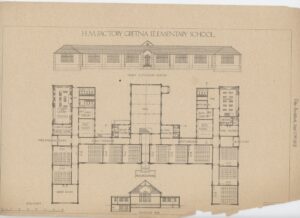
  • In fact a recruiting advert for “Eastriggs School, H.M. Factory Gretna” in September 1918 gives details “to apply with one copy of testimonials to the Clerk, Managers of Schools, Town Manager’s Dept. H.M. Factory Gretna.” [3]
  • It seems that Mr Harkness could have been in charge of a whole department according to this job advert.
Internal and external architectural plan for "H.M. Factory Gretna Elementary School."

Plan for one of the local schools, where the town manager would have overseen staffing.


  • Prior to this, another record from the British Newspaper archive from June 1917, regarding shops to let has similar instructions.
  • Namely, that “these shops are to be Let by Public Tender and applications should be made to the Town Manager, Central Officers, Gretna, Dumfriesshires from whom particulars can be obtained.” [4]


  • However, that’s not all the John would have been involved in as a factory manager!
  • It seems he was also involved in the suppling of provisions and even expected to attend local events.
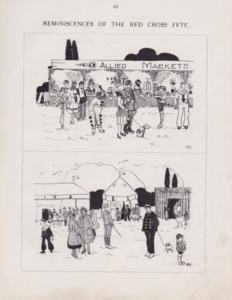
  • In 1918, he was invited as an honorary guest at the Annan Fête, which was raising money for the Scottish Red Cross, according the the Dumfries and Galloway Standard. [5]


Illustration of people including two people walking a dog and a clown stood in front of a long market stall table labeled "Allied Markets." Underneath this is an illustration of some people wondering around a fete with some tents in the background.

Illustrations of “Reminiscences of the Red Cross Fete” from The Dornock Farewell Magazine. Could these be based on the same fete that John Harkness attended?

  • John Harkness, even got involved in a military tribunal. [6]
  • Seemingly, Annan solicitor Mr Robert F Browne was accused of avoiding national service.
  • Mr Browne claimed that this was due to the importance of his “work in his department in secretarial work in connection with committees for the management of the factory schools and in connection with the local government.”[6]
  • We know that John worked with these schools, so it seems likely that he could have known and worked with Robert and perhaps this explains his involvement, as John Harkness created a letter in support of the accused.
  • Ultimately, Robert’s appeal was refused. [6]

Life After the Factory

  • After his time as town manager, John and family moved to Ayr. [1]
  • Later records suggest that John lived in “2 Barnes Terrace there [in Ayr], thereafter of 5 Drumlanrig Street Thornhill, late of 19 Park Circus, Ayr.” [8]
  • Following his work at the factory, it seems:

“Mr John Harkness, F.S.I district valuer under the Inland Revenue for the Ayr district, covering the countries of Ayr, Dumfries, Kirkcubright and Wigtown.”

– The Dundee Evening Telegraph Newspaper. [1]

  • By 1923, it seemed that John Harkness “had recently resigned his appointment and was about to begin practice as a charted surveyor and valuer in Ayr and Glasgow.” [1]
  • Sadly, John never had the opportunity to do so.
  • On the 22nd August 1923,

“He was taken ill while dressing and expired with a few minutes. He had not previously been complaining.”

-The Dundee Evening Telegraph Newspaper. [1]

  • John was 45 years old when he died.

Sources and Further Information

  1. Death of Scottish Inland Revenue Official, The Dundee Evening Telegraph Newspaper, Thursday 23rd August 1923.
  2. Designed Lay-Out of Gretna Munitions Factory, The Scotsman Newspaper, October 1935.
  3. Eastriggs Township School, Southern Reporter Newspaper, July 1918.
  4. Southern Reporter Newspaper, June 1917.
  5. Annan Fete, Dumfries and Galloway Standard Newspaper, 26th June 1918.
  6. Dumfries and Galloway Standard Newspaper, Wednesday 9th October 1918
  7. John Harkness, Probate from Scotland National Probate Index.

Find John Harkness’ online database entry by clicking here>


Do you have a relative who worked at H.M. Factory Gretna? We would love to hear from you! Please feel free to contact us by emailing info@devilsporridge.org.uk. You never know maybe your relative could feature in a future Worker of the Week blog post! You can also have a look at some more H.M. Factory Gretna workers on our online database here>
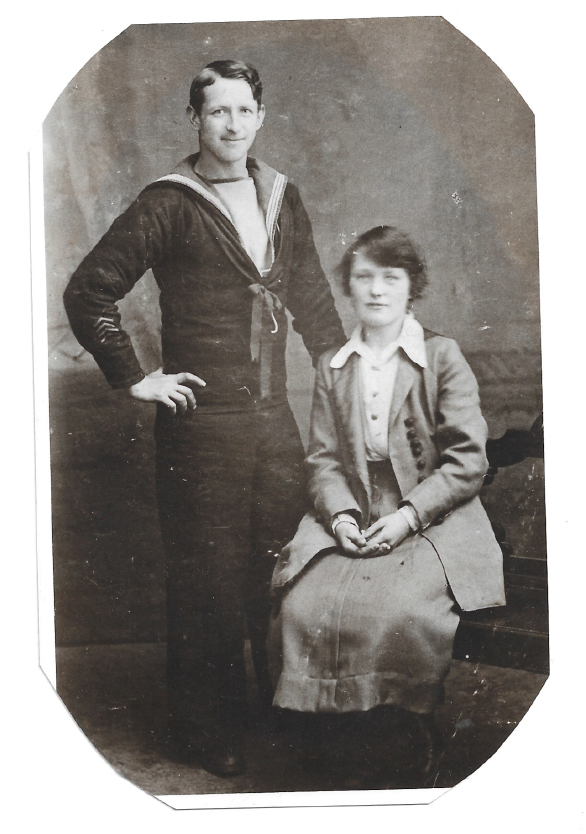
Margaret Orman sat on a chair. A man in a sailors uniform is stood to her left. This is a black and white photo from the past, which has kindly been shared by Margaret's relatives.

Worker of the Week: Margaret Orman

By Collections blog

Worker of the Week is a series of blog posts which highlights the workers at H.M. Factory Gretna that our volunteers researched for The Miracle Workers Project. This project aimed to centralise all of the 30,000 people who worked at the factory during World War One and, although it may be over, our amazing research volunteers are continuing to uncover more stories about H.M. Factory Gretna workers to be added to this database. We are always looking to learn more about H.M. Factory Gretna workers. If you know anything about a H.M. Factory Gretna worker please feel free to get in touch with us by contacting info@devilsporridge.org.uk  

This week’s blog has once again been created thanks to a relative who kindly took the time to get in touch with us! A huge thank you to them Margaret Orman is this Week’s Worker of the Week and you can read more about her life below.

Early Life

  • Firstly, Margaret Orman was born on 17th September 1896 in Edinburgh.
  • Her parents were George and Margaret Orman (nee Moffat).
  • From what her relatives have kindly shared with us, we know Margaret had three siblings all born in Edinburgh.
  • They also shared that her father worked as a picture frame maker.


  • Margaret’s relatives have also kindly taken the time to share with us that the children’s…

“mother died in 1906, aged just 34 years and the children were removed to Industrial Schools in Edinburgh in 1908 (boys to one and girls to another) to stay until they reached 16 years. Both girls then went into service.”

  • Therefore, Margaret’s first job would have been in domestic service.
  • Next, we find Margaret Orman, or Maggie as she was known in 1917…

Life at H.M. Factory Gretna

  • During World War One Maggie worked at H.M. Factory Gretna.
  • Kindly her relative shared that:

“In 1917 Margaret (known as Maggie) was working as a Munitions Worker at the factory at Gretna. She gave birth to a daughter, also Margaret, on 27th May, 1917 at 0 East 7 Township, Gretna. The birth was registered by Margaret Snr on 28th June, 1917, when the child’s name was given as Margaret Sweeny Orman. No details of the father. When Margaret Jnr grew up her mother told her the name “Sweeny” was in tribute to the midwife who delivered her but the family suspect it may have been the name of the father. However, Margaret Jnr was told that her father had died during the First World War.”


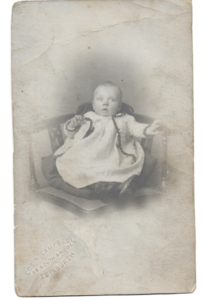
Margaret Orman Jnr or Peggy as a baby. This is a black and white photo from the past.

Margaret Orman Jnr or Peggy. Thanks to her relatives for kindly sharing the photos in this blog.


  • We know Gretna was one of the two townships (the other being Eastriggs) built to serve the factory and those who worked there.
  • Unlike what the name suggests, the rural site of the factory stretched from Dornock in Scotland to Longtown in England.
  • According to the factory manual, the township where Margaret lived, “Gretna has been laid out immediately to the South of the old village of Gretna Green.” [4]
  • It also describes “the Central Administrative Offices for the whole Factory, consisting of timber buildings of a temporary nature,” which were also in Gretna. [4]

After World War One

  • After her time at H.M. Factory Gretna we know, Maggie returned to Edinburgh with her daughter.
  • Although, we don’t know exactly when she returned we do know it must have been before 1921.
  • This again, is thanks to her relatives who kindly shared with us that:

“At some point after that both mother and child returned to Edinburgh where Margaret Snr married George Cowan on 2nd April 1921. Her occupation then was listed as “Restaurant Cook”. Presumably it was this wedding which prompted the request for a birth certificate for Margaret Jnr (who was known as Peggy) which was issued on 24th January 1922. Apparently, the original certificate was lost.


George took Margaret Jnr on as one of his own and he and Margaret Snr went on to have three more daughters. They stayed together until George’s death in 1959.”

Sources and Further Reading

Most of the information in this blog post has kindly been provided by the family of Margaret Orman. A huge thank you to them for sharing this and the lovely photographs with us.

  1. The Factory Manual for H.M. Factory Gretna.

Find Margaret Orman’s online database entry by clicking here>

Do you have a relative who worked at H.M. Factory Gretna? We would love to hear from you! Please feel free to contact us by emailing info@devilsporridge.org.uk. You never know maybe your relative could feature in a future Worker of the Week blog post! You can also have a look at some more H.M. Factory Gretna workers on our online database here>
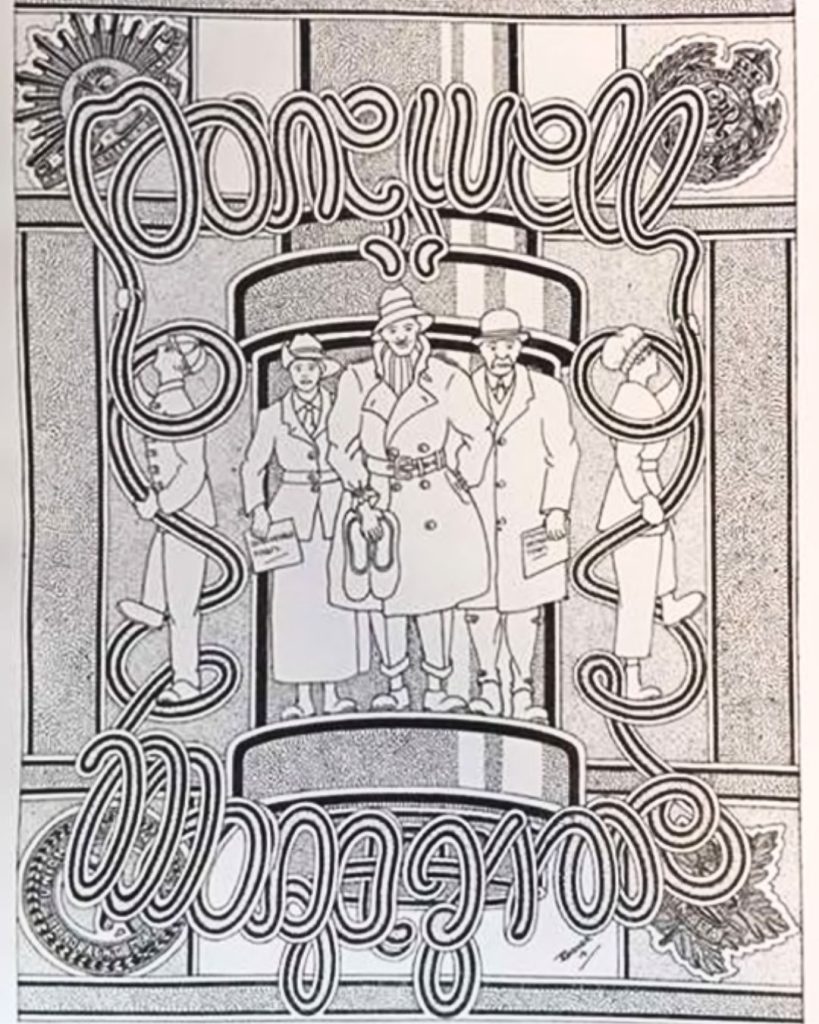
An illustration with three factory workers in the middle and two additional munitions workers either side. A ribbon curls decoratively around the two munitions workers and forms the words "Farewell Mossband."

Worker of the Week: Sydney Bertram Abbot

By Collections blog

Worker of the Week is a series of blog posts which highlights the workers at H.M. Factory Gretna that our volunteers researched for The Miracle Workers Project. This project aimed to centralise all of the 30,000 people who worked at the factory during World War One and, although it may be over, our amazing research volunteers are continuing to uncover more stories about H.M. Factory Gretna workers to be added to this database. We are always looking to learn more about H.M. Factory Gretna workers. If you know anything about a H.M. Factory Gretna worker please feel free to get in touch with us by contacting info@devilsporridge.org.uk  Thanks to all those who make this possible!

This week’s Worker of the Week, is Sydney Bertram Abbot. Perhaps, it won’t surprise you to learn that he was born in Australia. Read more about his life and time at H.M. Factory Gretna below.

Early Life

  • Firstly, Sydney was born on 9th November 1889 in Richmond, Victoria, Australia.
  • His parents were called Sydney Abbot (he had the same name as his father, as is not uncommon) and Susan Margaret Ball.
  • We know that Sydney the son had one older brother.


  • According to the rate books in 1897 for the city of Kew, Sydney’s father worked as a clerk.
  • By 1921 electoral roll, he was still working as a clerk.


  • Meanwhile, in 1914, we know that Sydney married Isabel Beryl Victor.

Life at H.M. Factory

  • During World War One that the younger Sydney travelled from Australia to work at H.M. Factory Gretna.
  • We know he worked at the factory, as he appears in the Mossband Farewell magazine. [1]
  • This magazine was compiled by workers in the Mossband section of H.M. Factory Gretna to remember their time working at the factory.


  • The rural site of the factory stretched from Dornock in Scotland to Longtown in England, with the Mossband section being located near Longtown.
  • Two vital townships were also built to accommodate and facilitate the munitions workers who came to work there. These were Eastriggs and Gretna, with the latter being where the central officers were located. Perhaps this could be one reason why the government at the time chose to name the site H.M. Factory Gretna (another could include not wishing to give away the exact location of the munitions factory.)


An illustration with three factory workers in the middle and two additional munitions workers either side. A ribbon curls decoratively around the two munitions workers and forms the words "Farewell Mossband."

The Mossband Farewell Magazine.

  • We don’t know Sydney’s address for while he worked at the factory (maybe, he could have been familiar with Sydney Road in Eastriggs, which is named after the Australian original), but he does leave a forwarding address in The Mossband Farewell Magazine. [1]
  • Under “Cordite Staff, Mossband 1916 to 1918” is an “S. B. Abbott,” who we have reason to believe is Sydney, and his address is given as 71 Sydney Road, Parkville, Melbourne, Australia.

S. B. Abbott, 71 Sydney Road, Parkville, Melbourne, Austraila.


  • He’s not the only chemist who came to work at H.M. Factory Gretna. Some memorable examples include future inventor of Vegemite, Cyril Callister, [2] and Arthur Parkin, who named his daughter after Gretna township [3].
  • Perhaps, this is due at least in some part, to Arthur Leighton Edgar, who, organised a scheme for Australian chemists and engineers to travel to Britain and work with munitions. The intention was to help provide a workforce and help Australians to learn new skills. [4]
  • It’s possible that Sydney came as part of this scheme.

Return to Australia

  • Further evidence of Sydney’s time at the factory can be found in his records on leaving it.
  • He is recorded as a chemist, when he boards the SS Devanha ship in Devonport in May 1919.
  • At this point, he is 26 and Sydney is given as where he is from (we doubt this is a reference to the Road in Eastriggs though!).


  • After his time at the factory, it appears Sydney went to Melbourne University.
  • It’s possible that his studies were interrupted during World War One and he returned to them afterwards.
  • As it was, Sydney appears in a list of Melbourne University graduates and undergraduates published in a university magazine in July 1920.
  • Considering he only boarded the SS Devanha in May 1919, this is just over a year.


Later Life

  • We know Sydney and Isabel had three children, born after Sydney’s return to Australia.
  • In 1921, their eldest, Sydney Charles Bertram Abbot, was born.
  • During World War Two, Sydney Charles sadly died in an air crash in Norfolk. [5]


  • On his roll of honor, his father’s occupation is given as “assistant manager, explosives factory, Maribyrnong, Vic.” [5]
  • This is interesting it seems to suggest that Leighton’s scheme met with some success, at least in this instance.


  • Seemingly, the Maribyrnong site was used in both World War One and World War Two. [9]
  • We don’t know exactly when Sydney started working at the site, but perhaps it could have been after he finished at university. What do you think? So far we’ve found no further evidence to give us more details.
  • We DO know that Sydney appears to have worked there during World War Two.
  • His son, Sydney Charles, also seems to have worked their prior for being called up and serving with R.A.A.F. [5]


  • During World War Two, there was an increase in demand for Australian munitions.
  • The already established Maribyrnong site seemed to play a vital role here, as the staff were already trained and therefore, could help to upskill others at least initially. [6]
  • However, they also produced munitions and worked on new processes to create them.
  • One interesting example, given that H.M. Factory Gretna worked on the production of cordite in World War One, was that the Maribyrnong Explosive Factory developed a new process of making cordite. [6] Could Sydney have been involved in this given his prior cordite-related experience? What do you think?
  • It also seems as though some part of the Australian factory was involved in the manufacture of cordite during World War One. [9]


  •  Sadly, in 1943, the same year as their eldest sons death, their second eldest son, David Abbot also died. [5]
  • David was 16 years old when the ship he was on was torpedoed. [5]
  • This must have been an unimaginably hard time for their remaining family.


  •  What we do know is that Sydney and Isabel returned to visit England in 1950.
  • On this occasion Sydney’s occupation is given as a civil servant.


  • Later, Sydney returned to Australia.
  • On the 3rd May 1976 he died in Victoria, Australia.


  • As for the Maribyrong Explosive Factory, this specific site closed in the late 20th to early 21st century (we’ve found a couple different dates online ranging from 1994[6] or 2000 [8] to 2005 [7], while the biography of Les McLean states 1989 [9]).
  • The site has been historically listed, but has been left dormant. Perhaps in part due to the asbestos in some parts of the Maribyrong Explosive Factory building. [6] [7] [8]
  • In more recent years there appear to have been some fires at the site. [7] [8]

Sources and Further Information

  1. Cordite Staff, Mossband 1916 to 1918, page 13, The Mossband Farewell Magazine from H.M. Factory Gretna.
  2. Worker of the Week: Cyril Callister – https://www.devilsporridge.org.uk/cyrilcallister
  3. Worker of the Week: Arthur Parkin – https://www.devilsporridge.org.uk/worker-of-the-week-arthur-parkin
  4. Anticipating Tomorrow’s Defence Needs – A century of Australian Defence Science by Peter Donovan published 2007 by The defence Science and Technology Organisation, Canberra, Australia.
  5. Virtual War Memorial for Sydeny Charles Betrum Abbot – https://vwma.org.au/explore/people/617648
  6. Defence Explosive Factory Maribyrnong Wikipedia  – https://en.wikipedia.org/wiki/Defence_Explosive_Factory_Maribyrnong
  7. Defence Site Maribyrnong, Australian Government Defence Website – https://www.defence.gov.au/about/locations-property/delivering-future-estate/defence-site-maribyrnong
  8. Defence Site Maribyrong, GML Heritage – https://gml.com.au/projects/defence-site-maribyrnong/
  9. History of the Munitions Factories by Les McLean (was a manager at the Maribyrong Ordinance Factory in 1945. Could Sydney have worked with him?), Living Museum – https://livingmuseum.org.au/history-of-the-munitions-factories-by-les-mclean/

Find Sydney Bertram Abbot’s online database entry by clicking here>

Do you have a relative who worked at H.M. Factory Gretna? We would love to hear from you! Please feel free to contact us by emailing info@devilsporridge.org.uk. You never know maybe your relative could feature in a future Worker of the Week blog post! You can also have a look at some more H.M. Factory Gretna workers on our online database here>
Agnes Renton in her munitions workers uniform sat on a table. This is a black and white photo from the past.

Worker of the Week: Agnes Renton

By Collections blog

Worker of the Week is a series of blog posts which highlights the workers at H.M. Factory Gretna that our volunteers researched for The Miracle Workers Project. This project aimed to centralise all of the 30,000 people who worked at the factory during World War One and, although it may be over, our amazing research volunteers are continuing to uncover more stories about H.M. Factory Gretna workers to be added to this database. We are always looking to learn more about H.M. Factory Gretna workers. If you know anything about a H.M. Factory Gretna worker please feel free to get in touch with us by contacting info@devilsporridge.org.uk  A huge thanks to our research volunteers.

This week’s Worker of the Week, is Agnes Renton, who we think might have been one of the longest living H.M. Factory Gretna workers that we have come across so far! All this information was kindly shared with us by her relatives, who also kindly popped in to visit us.

Early Life

  •  Agnes was born on 4th October 1895.
  • Her friends and family knew her as Aggie.
  • Her parents were John McPhail and Alice McPhail (nee Telford).
  • John worked as an Iron Moulder.


Agnes Renton in her munitions workers uniform sat on a table. This is a black and white photo from the past.


  • Her family have shared a photo of Agnes in her munitions workers uniform with us, but that’s not the only insight into Agnes apperance that they’ve given us.
  • She had bright read hair and they also shared that:

“She was very petite 4ft 10 if I remember.
Her grandchildren named her “Tiny Nana” but she was a strong lady in character.”

  • Prior to working at the factory, she had lived on the Cannongate in Edinburgh.

Time at H.M. Factory Gretna

  • When she was 22 years old Aggie working at H.M. Factory Gretna.

(Contrary to what the name of the factory suggests the factory site actually stretched all the way from Dornock in Scotland to Longtown in England. The townships Gretna and Eastriggs were also vital to the factory. They were built to serve and facilitate those that worked there.)

  • From what her family have kindly shared with us she was a munitions worker and used to work at the nitrating pans.
  • This is were nitroglycerine was mixed with gun cotton in a paste, which Sir Arthur Conan Doyle once described as “devil’s porridge.”

Two munitions workers mixing the cordite in large nitrating pans.

  • Interestingly, the mixture Aggie worked with stained her hands yellow, but it washed off eventually.


  • She didn’t mind talking about her time working at the factory with her family.
  • Something else that she told her family about was an explosion which happened in one of the nearby huts while she worked at the factory and the women who delt with it receiving a medal.


  • Sadly, we know George Henry Pike (3), Roberta Robertson (4) and Martha Hannah Beech (5) died as result of separate explosions at the factory.


  • However, we are also aware of tremendous acts of bravery during incidents at the factory.
  • The first that springs to mind is Maud Bruce (1), during a fire at the factory she calmly stopped the blaze from spreading further.
  • As result of her bravery, she went on to be awarded an OBE. (1)
  • Could Maud be the munitions worker Agnes remembered receiving a medal after dealing with an explosion?


  • Another medal winner is Nora Morphet, who alongside two other munitions workers from the factory was awarded a British Empire Medal. (2)
  • The reason for their receipt of this medal is only given as “for courage and high example in continuously working long hours in poisonous atmosphere which habitually affected her health” in the the Yorkshire Post and Leeds Intelligencer of Thursday 2nd May 1918. (2)
  • Although, we have found no further information as to why these three munitions workers were chosen above all others for this honor. Could it be that they also helped during an explosion at the factory? If so why wouldn’t their brave actions have been reported in the newspaper in more detail? Or have we just not come across it yet? What do you think?

Married Life

  • Following World War One, Agnes married Alexander Renton.
  • Alexander had been in the Battle of the Some and had been shot in the head at Ypres, but survived!
  • After this, Alexander returned to working as a famer. This was his occupation when he married Aggie.
  • Later, Alexander went on to become a railway porter.


  • During World War Two, Aggie worked in the North British Hotel in Edinburgh.
  • Wealthy and important people stayed at this hotel, but Aggie wasn’t otherwise involved in War work.

Further Travels

  • That’s far from all that Agnes did though!
  • She travelled widely.
  • We know she went to Canada, America and Australia to visit relatives.
  • As well as that she went on several cruises, “the last when she was 80 years old” according to the information her relatives have kindly shared.


  • During one of these cruises, she was involved in a cruise line version of “What’s My Line?” (6)
  • This is a game show were a panel were challenged to guess the job Agnes did.
  • Can you guess what? Aggie won!
  • No one could work out Aggie’s clues of her stirring the devil’s porridge.
  • Although, “What’s my Line? was a TV game show (6), Aggie only appeared in the cruise ship version, but we don’t think she needs to be on TV to be a star. (One core thing our museum focuses on is H.M. Factory Gretna and the people who worked there, so maybe we’re slightly biased on that point… but she still sounds like a star to us! )


  • Not only that, but in 1995 Agnes celebrated her 100th Birthday!
  • Off the top of our head, we’re only aware of one other munitions worker in connection to H.M. Factory Gretna who did that.
  • Maud Bruce lived until 100 years old, after her time working at the factory and later at Aycliffe in World War Two. (1)


  • Meanwhile, Agnes Renton lived until she was 102 years old.
  • Could she be the longest living person who worked at H.M. Factory Gretna? Quite possibly.
  • What do you think? Is there anything you’ve spotted we’ve missed?
  • Ultimately, we don’t have a comprehensive list of all those who worked at the factory. This means there’s some things we might never know for sure, but that makes us all the more grateful for relatives like Agnes’ who kindly share information with us and for their patience in the meantime.

Sources and Further Information

A huge thank you must go to Aggie’s relatives for kindly taking the time to share this information and photograph with us! Most of the information in this blog comes from them.

  1. The Marvelous Maud Bruce: From Gretna Girl to Aycliffe Angel – www.devilsporridge.org.uk/the-marvelous-miss-maud-from-gretna-girl-to-aycliffe-angel
  2. Worker of the Week: Nora Morphet – www.devilsporridge.org.uk/noramorphet
  3. Worker of the Week: George Henry Pike – www.devilsporridge.org.uk/worker-of-the-week-george-henry-pike
  4. Worker of the Week: Roberta Robertson – www.devilsporridge.org.uk/worker-of-the-week-roberta-robertson
  5. Worker of the Week: Martha Hannah Beech – www.devilsporridge.org.uk/worker-of-the-week-martha-hannah-beech
  6. What’s My Line? History of the BBC website – www.bbc.com/historyofthebbc/anniversaries/july/whats-my-line

Find Agnes Renton’s Online Database Entry by clicking here>

Do you have a relative who worked at H.M. Factory Gretna? We would love to hear from you! Please feel free to contact us by emailing info@devilsporridge.org.uk. You never know maybe your relative could feature in a future Worker of the Week blog post! You can also have a look at some more H.M. Factory Gretna workers on our online database here>
Some cotton blouses folded up on a wooden chair. This chair dates from World War One. There is a dark green curtain in the background.

Worker of the Week: Margaret Alice Laidlaw

By Collections blog

Worker of the Week is a series of blog posts which highlights the workers at H.M. Factory Gretna that our volunteers researched for The Miracle Workers Project. This project aimed to centralise all of the 30,000 people who worked at the factory during World War One and, although it may be over, our amazing research volunteers are continuing to uncover more stories about H.M. Factory Gretna workers to be added to this database. We are always looking to learn more about H.M. Factory Gretna workers. If you know anything about a H.M. Factory Gretna worker please feel free to get in touch with us by contacting info@devilsporridge.org.uk  

This week’s Worker of the Week, Margaret Alice Laidlaw was accused of stealing a pillow (and a few more things). Find the full story below and thanks to our research volunteers for their help!

Early Life

  • Firstly, on 29th December 1899, Alice was born in Spittal, Berwick on Tweed, Northumberland.
  • Her parents were Robert and Isabella Mosely Laidlaw (nee Wood).
  • Robert worked as a fisherman.


  • By the 1901 census record the family were living on Princes Street in Spittal.
  • However, by the 1911 census they have moved to 2 Sandstell Road, Spittal.
  • This also shows us that Margaret has 10 siblings.
  • Meanwhile, her father is still working as a fisherman.

Time at H.M. Factory Gretna

  • Next, we know she worked as a munitions worker at H.M. Factory Gretna.
  • We don’t know exactly when Margaret started working at the factory, but we do know that she must have worked there from early 1917.
  • How do we know this? Well, Margret was accused of theft!
  • In fact, 18 year old Margaret…

“was charged with stealing two cotton blouses, the property of Madge Thomson, a fellow-worker; a cotton pillow belonging to the Ministry of Munitions; and a gold ring, the property of Jeanie Simpson.”

– The Dumfries and Galloway Standard newspaper, 1917. (1)

  • Do you think Margaret was planning on making a scarecrow? (Of course, that’s just a complete guess. We haven’t found a time machine to check yet, but if you do know more about any H.M. Factory Gretna workers like Margaret please feel free to get in touch!)
  • Anyway, at the time Margaret…

“pleaded not guilty, and was remanded until to-day, bail being fixed at £2.”

– The Dumfries and Galloway Standard newspaper, 1917. (1)

  • According to Bank of England’s Inflation Calculator £2 in 1917 would be approximately £123.42 in May 2026. (2)


  • Around this time, Margaret’s address is listed in the Gretna electoral roll as “2 F East.”

Marriage and Later Life

  • After this, we know that Margaret returned to Berwick on Tweed.
  • This is because, she got married there!
  • In 1920, Margaret married Alexander Johnstone.
  • The following year they were still living in the area.
  • They had six children together.


  • In 1939, the family were living at 6 Farne Avenue, Berwick on Tweed.
  • Also Alexander worked as a colliery.


  • Lastly, Margaret died in 1956.

Sources and Further Information

  1. “Charge Against Munition Worker,” The Dumfries and Galloway Standard newspaper, Saturday 3rd February 1917
  2. The Bank of England’s Inflation Calculator – www.bankofengland.co.uk/monetary-policy/inflation/inflation-calculator


Find Margaret Alice Laidlaw’s Online Database entry by clicking here>

Do you have a relative who worked at H.M. Factory Gretna? We would love to hear from you! Please feel free to contact us by emailing info@devilsporridge.org.uk. You never know maybe your relative could feature in a future Worker of the Week blog post! You can also have a look at some more H.M. Factory Gretna workers on our online database here>

A postcard of Botchergate in Carlisle. There are some tall buildings with people stood on the road between them and some tram lines. This is a black and white photo. Underneath this is a handwritten note which reads "how do you like this view? One you collecting?"

Worker of the Week: William Boustead

By Collections blog

Worker of the Week is a series of blog posts which highlights the workers at H.M. Factory Gretna that our volunteers researched for The Miracle Workers Project. This project aimed to centralise all of the 30,000 people who worked at the factory during World War One and, although it may be over, our amazing research volunteers are continuing to uncover more stories about H.M. Factory Gretna workers to be added to this database. We are always looking to learn more about H.M. Factory Gretna workers. If you know anything about a H.M. Factory Gretna worker please feel free to get in touch with us by contacting info@devilsporridge.org.uk  

This week’s Worker of the Week, is William Boustead, who seems to have spent most his life living in Carlisle. Thanks to all who help to make this possible blog possible!

Early Life

  • Firstly, William was born in 1879, in Carlisle.
  • His parents were William and Elizabaeth Jane Boustead (nee Gibson).
  • Additionally, we know William was the second eldest of seven siblings.


  • By the 1881 census the family have moved to live at 15 Barrack Street, Carlisle.
  • The census gives William’s father, who was also William, occupation as a railway signalman.


A postcard of Botchergate in Carlisle. There are some tall buildings with people stood on the road between them and some tram lines. This is a black and white photo. Underneath this is a handwritten note which reads "how do you like this view? One you collecting?"

Botchergate in Carlisle from a postcard in our archive. Do you think it might have looked like this when William lived there?


  • After this, the 1891 census gives the family address as 39 Close Street, Botchergate in Carlisle.
  • Meanwhile, the older William, was still working as a railway signalman.


  • The next census shows that the younger William had moved away from Carlisle.
  • In 1901 he was boarding at 14 John Street, Gateshead.

Marriage

  • However, this move doesn’t appear to have lasted long!
  • We know that William returned to Carlisle by December 1904.
  • This is because, he married Hannah Fisher there on Boxing Day in 1904.
  • William’s occupation is described as a clog maker.


  • Following his marriage, the 1911 census shows that Hannah and William continued to live in Carlisle.
  • They were living in in 82 Harrison Street, Carlisle.
  • William worked as a boot repairer.
  • Also shown on the census record, William and Hannah had four children, but sadly only two survived.
Entrance to English Street Carlisle. A road with historic brick buildings on either side of a road. There is a bus and a van driving on the road. Some pedestrians are walking on the left pavement. This is a black and white photo from the past.

Do you think William would recognize Carlisle from this photo?


H.M. Factory Gretna and Life Beyond

  • Next it seems the William worked at H.M. Factory Gretna.

(It’s important to note that the rural site of H.M. Factory Gretna actually stretched from Dornock in Scotland to Longtown in England, unlike what the name given to it by the government at the time suggests. The two townships of Eastriggs and Gretna were built to house and facilitate those that came to the area to work at the factory. Both townships were also vital to the factory and those who worked there.)

  • Currently, we do not know exactly what William did at the factory.
  • We do think it’s likely that he was still living at his Harrison Street address while working there though.


  • The reason why we know William worked at the factory is because,  he is described as an ex or retired H.M. Factory Gretna Worker in the 1921 census.
  • Perhaps unsurprisingly, William, Hannah and family were still living in Carlisle.


  • Lastly, William died in 1932, in Carlisle.


A colourised postcard featuring three photos of Carlisle in years gone by. One is of a statue in front of part of a castle, the second is of castle and the third is of a street.

A 19th century colourised postcard of Carlisle. Do you think William would be able to recognize the places in this postcard?

Sources and Further Reading


Read William Boustead’s online database entry by clicking here>


Do you have a relative who worked at H.M. Factory Gretna? We would love to hear from you! Please feel free to contact us by emailing info@devilsporridge.org.uk. You never know maybe your relative could feature in a future Worker of the Week blog post! You can also have a look at some more H.M. Factory Gretna workers on our online database here>

Translate »
BOOK NOW