All Posts By

WW1 Fireless Locomotive

By Archive

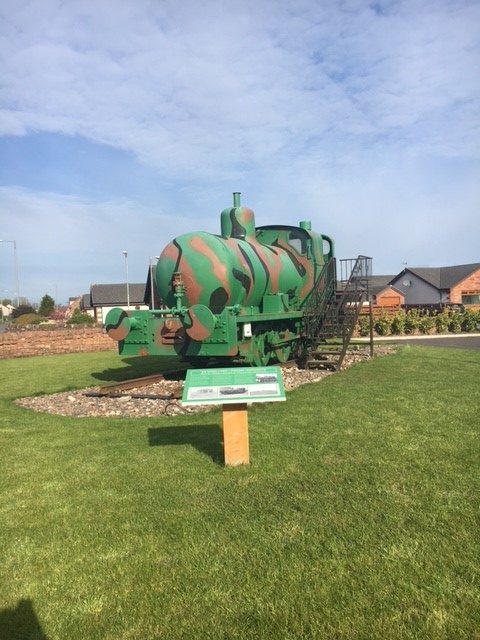
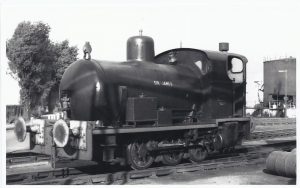
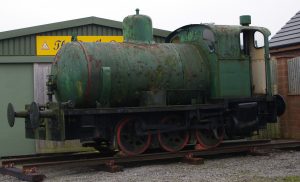
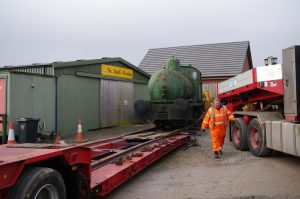
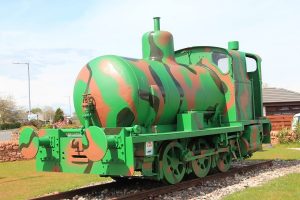
Outside The Devil’s Porridge Museum there stands a train, a fireless locomotive called Sir James, which was built and used in World War One. By the time it came to the Museum, it was in a rusty and poor state of repair.  The Museum spent a lot of time and money restoring the engine and it is now one of our most popular displays.


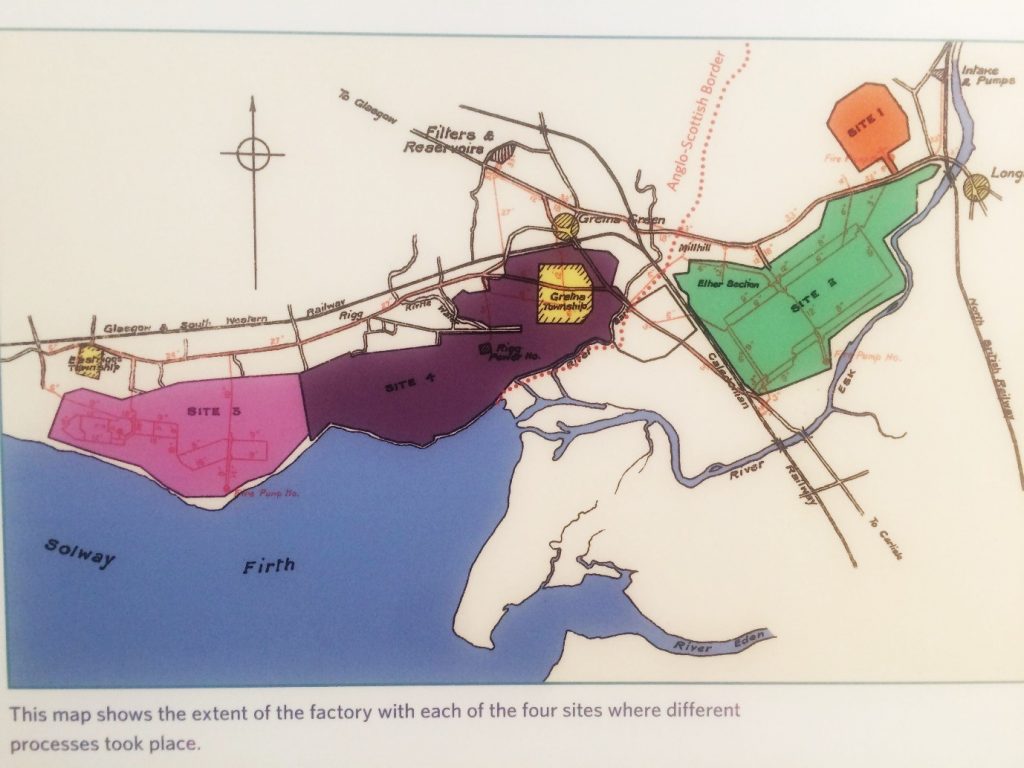
This engine was used to transport the ‘devil’s porridge’ paste through HM Factory Gretna (the greatest munitions factory on earth at that time, it stretched nine miles from Dornock in Scotland to Longtown in England).  The paste was made into cordite, a propellant in the English side of the Factory.  Cordite went inside all the bullets and shells used in World War One.


Sir James is an unusual locomotive.  It is powered by steam but there is no fire inside.  This was a safety precaution as the Factory produced explosive material and the train was used to transport it.  There was a genuine concern that there might be a major explosion (there were several fires and explosions here during World War One but the safety record was remarkably good given that 30,000 people worked at the Factory in total and we know of only twelve deaths directly attributable to accidents).


Sir James was built by Andrew Barclay of Kilmarnock, Scotland and in World War One, it would have been charged up with steam from an external boiler before setting off.   For these locomotives to work, it was necessary to have three charging stations en route to maintain pressure.  These ‘crazy green and brown patchwork’ camouflaged fireless locomotives could pull ten loaded wagons and return the empty wagons on one charge of steam.

At the end of the War, the Factory eventually closed and much of the machinery was sold off.  Sir James was sold in 1924 to the Metropolitan Electric Power Supply Company at Brimsdown Generating Station and then in 1975 to the Lakeland and Haverthwaite railway before joining us at the Museum and being restored to its former glory in 2011.

If you enjoyed this article you might be interested in the following items from our online shop…

HM Factory Gretna’s Unique Railway System Booklet

Sir James Postcard

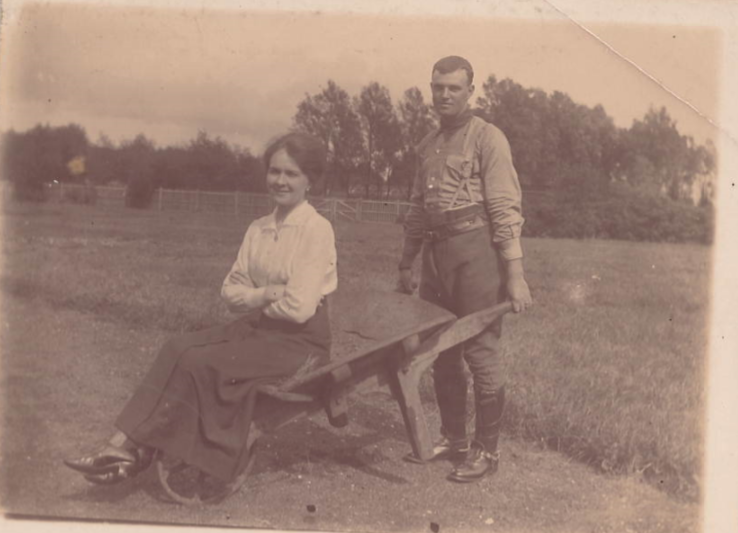
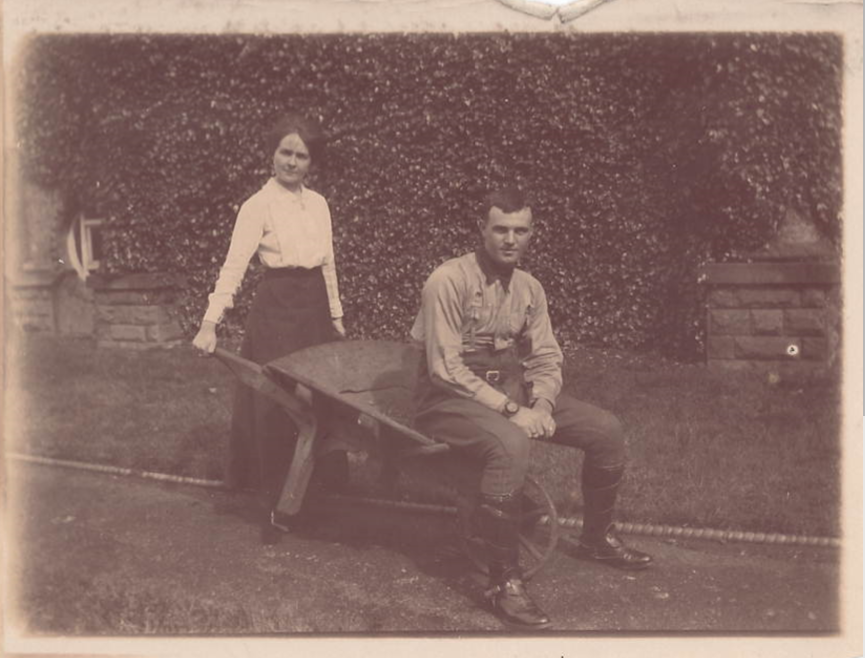
A lady sitting in a wheelbarrow with a man pushing it. This is an archive photo.

Mystery Photos 2

By Collections blog

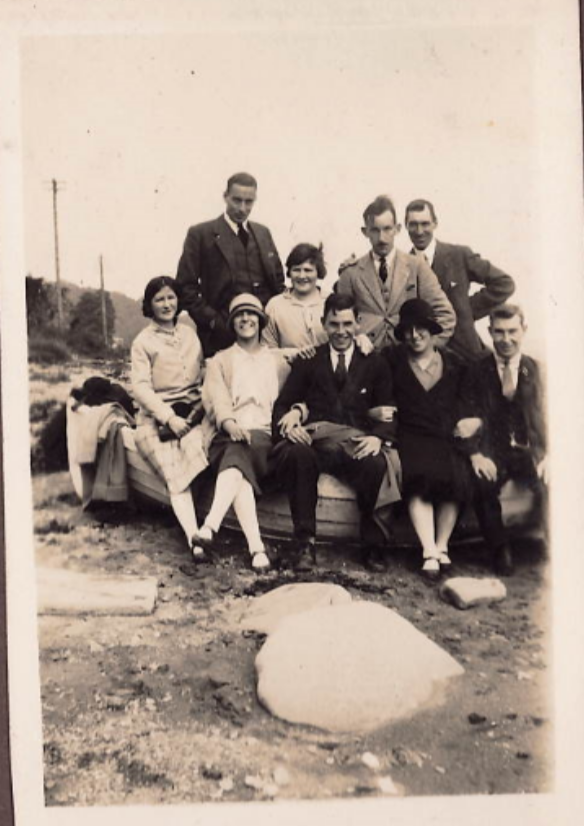
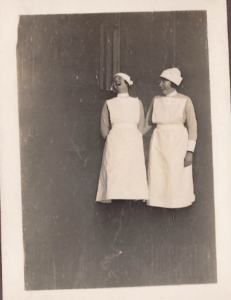
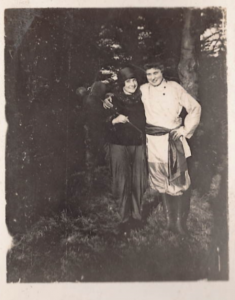
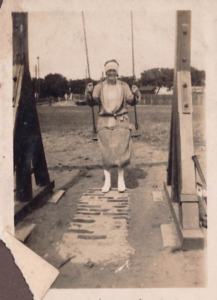
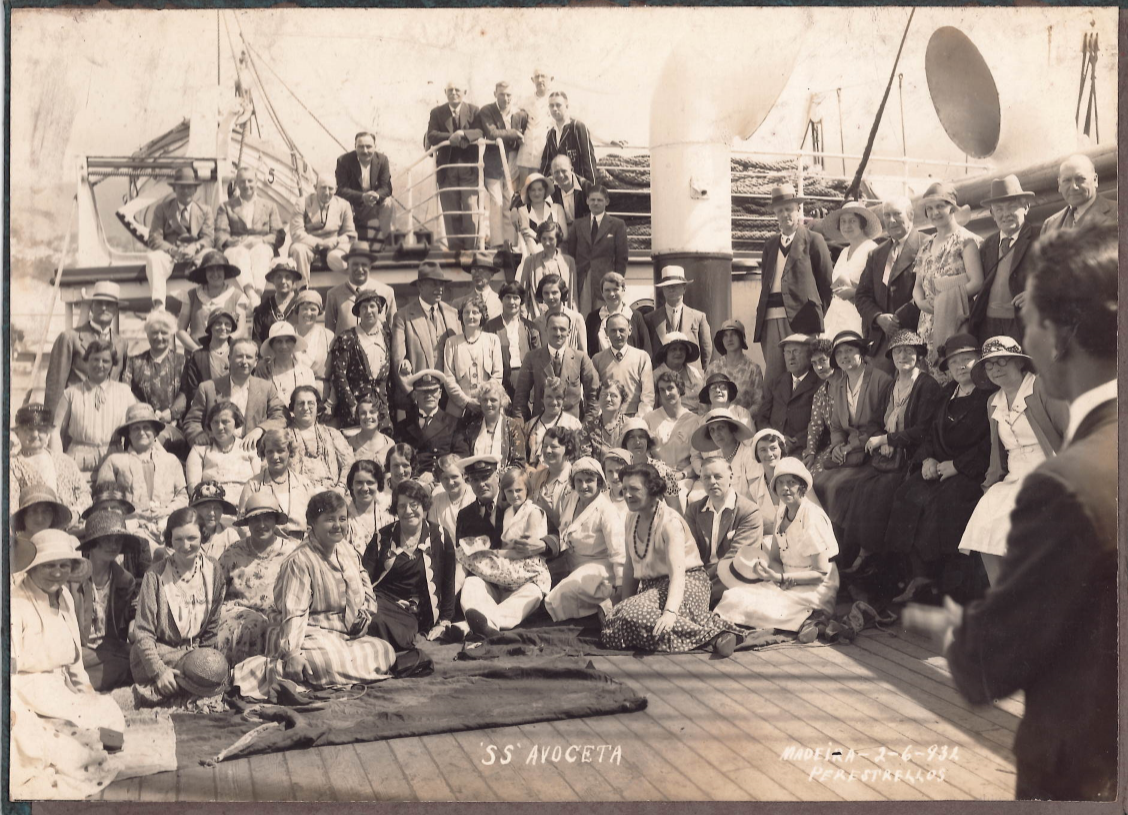
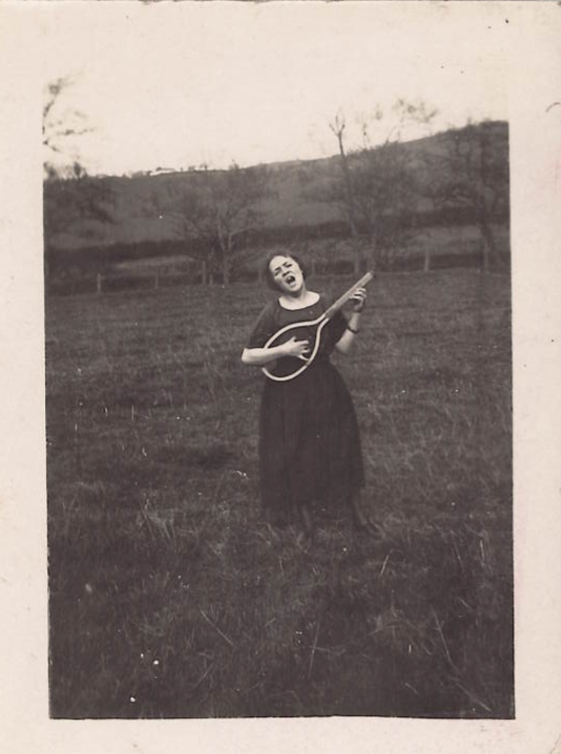
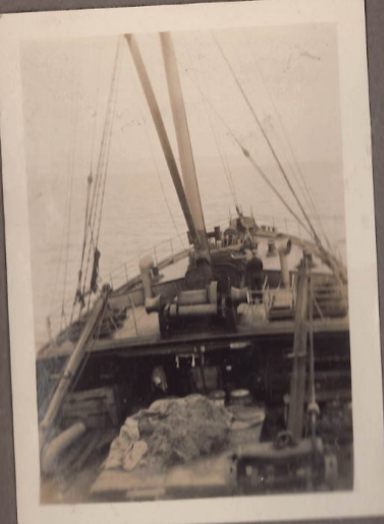
This is the second part of the mystery photos which the Museum has in its store which we know nothing about as we don’t know who is in the pictures or where they came from. The only thing we know about the photos is that the boat which they are occasionally pictured on is called the SS Avoceta.


One of our Volunteers Desray found these photos interesting while she was adding them to the Museums collections database. Desray chose this selection and said “They must have meant a lot to someone as they were put into an album and they are very nice”.


If you would like to see the last group of photos we made an article on see: https://www.devilsporridge.org.uk/mystery-photos

HM Factory Gretna map

Kenneth Bingham Quinan Part 2

By Collections blog

Kenneth Bingham Quinan  “The great KBQ.”

1878-1948

KBQ was probably the most important person behind the construction and successful operation of HM Factory Gretna (the greatest munitions factory in World War One, The Devil’s Porridge Museum tells its story).

Part 2: KBQ goes to war

“There is Q an American by nationality, a South African in experience, a man with a drive like a steam piston.”  Sir Arthur Conan Doyle wrote this after visiting HM Factory Gretna

On December 19th 1914 a cable sent from the High Commission for South Africa in London stating that K B Quinan was urgently required in Britain.

The High Commissioner immediately cabled De Beers in Kimberley.

“Quinan required urgently in London – can he catch mail steamer leaving Cape Town this afternoon?”

Quinan cabled back, “Yes.”  He packed up his life, made arrangements for the management of the factory and steamed out of Cape Town at 4.30pm that same day.  He was 36 years old, a bachelor and said to have ‘an arresting personality.’

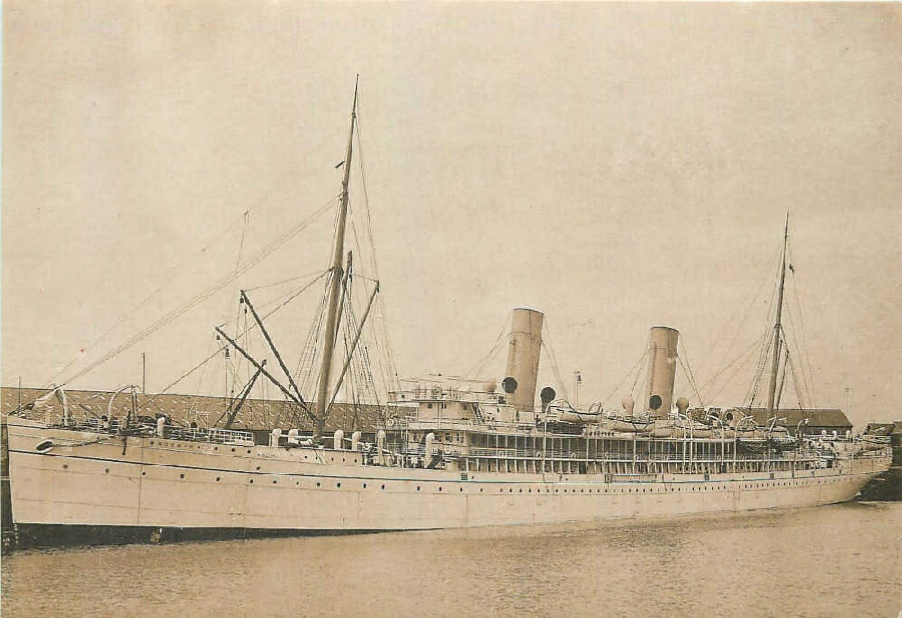
Steam ship Norman

It is said that the steamship, Norman (pictured left), delayed its departure for an hour to enable the man of the moment to board (this was a very unusual occurence and suggests how valuable KBQ was to the British Government).

“For the next four years Quinan’s inspiration, personality and indefatigable labour earned him a wide reputation as one of the greatest organisers and men of genius who had worked in Britain during the War.”  Quote from an article in The Chemical Engineer Journal, 1966.

Quinan was put in charge of the Factories Branch of the Ministry of Munitions (about 20 factories in total).

He worked seven days a week throughout the War and was mainly based in London in his offices at Storey’s Gate.

KBQ brought several of his colleagues with him from South Africa and trained many people who went on to become key figures in the teaching of Chemistry and in Chemical Engineering.

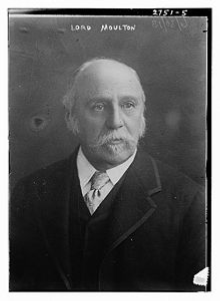
Lord Moulton

Above: Lord Moulton was the Chairman of the Committee on High Explosives.  He observed that British explosives experts were working 16 hours a day and that help was needed from the Empire.  He reached out to KBQ.

He oversaw all the munitions factories in World War One including:

3 Ammonium nitrate factories

2 Calcium nitrate factories

1 Ammonium perchlorate factory

1 Synthetic Phenol factory.

Quinan was also involved in several notable projects including:

the design and construction of a plant for the production of TNT near Chance & Hunt works, Oldbury

the dismantling of distillation units at Rotterdam and for their re-erection at Barrow in Furness and near Avonmouth, Bristol

In 1918, KBQ was put in charge of the Experimental Chemical Warfare and was involved in the building of a phosgene plant in Calais.  Phosgene was a poison gas used in World War.

“KBQ then turned his attention to the design and construction of the big factories at Queen’s Ferry, Sandycroft and Gretna.  These were to produce 600 tons of TNT, 15 tons of tetryl, and 800 tons of cordite weekly, and it is doubtful whether any larger factories for these products have ever been built in Europe.  They were completed in astonishingly quick time – Queen’s Ferry and Sandycroft were operating very early in 1916, and Gretna several weeks later.”

Quote from an article in The Chemical Engineer Journal, 1966.

Part 3 coming soon…

If you found this article interesting, you might like:

Gretna’s Secret War

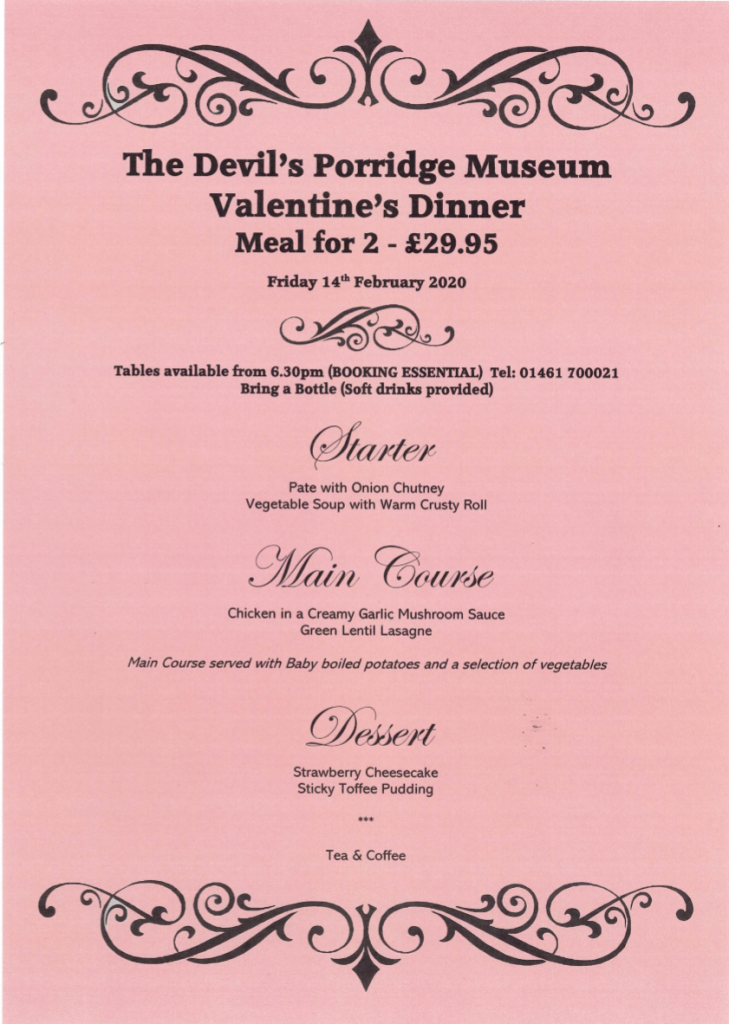
Menu for The Devil's Porridge Museum's Valentine's Dinner at The Devil's Porridge Museum on Friday 14th February 2020.

Valentines Day at the Museum

By Archive

Romantic Valentine’s Meal at the Museum


Fancy a romantic Valentine’s Dinner in intimate surroundings in our 5 star Museum?. Our top chef, Lynne-Marie will create a scrumptious three course meal for only £29.95 per couple. Each loving twosome will have their own dedicated space within the displays to provide a relaxed atmosphere where you can enjoy your evening.


With only six tables to book at 6.30pm and 8pm, you can expect a really personal service. Tables can be booked by ringing the Museum on 01461 700021 or emailing: info@devilsporridge.org.uk. Booking is essential!!


Our menu us below. Couples should bring their own Prosecco/Champagne etc. Free soft drinks will be provided. Please ask about a personalised tour of the Museum conducted by one of out Expert Guides.

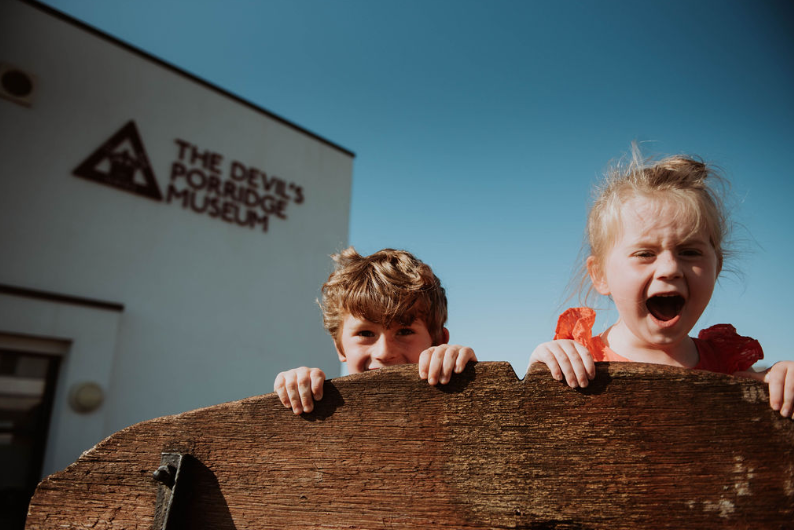
Two happy children outside The Devil's Porridge Museum.

Events at the Museum in February

By Archive

Events taking place at the Museum from Monday 17th of February to Sunday 23rd February. All of these activities are free and only the trip to the Riverside Museum in Glasgow on Saturday the 22nd requires booking. If you wish to book phone: 01461 700021, email: info@devilsporridge.org.uk or pop into the Museum during our opening hours. Drop in sessions can be joined at any time while the session is running and last as long as the activity takes.


Monday 17th February (11am – 2pm)

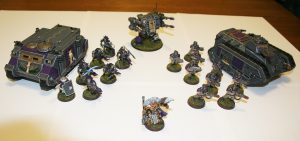
Warhammer Workshop and Painting Competition


Come along and find out all about Warhammer. We will have mini-games set up for beginners to learn and play as well as space for more experienced players to set up their own epic battles.

Paint and take home one of our Space Marines as part of the painting competition. All paints and models will be provided! There will also be space and paint for anyone looking to paint their own models.

Tuesday 18th February (11am – 2pm)

Pop in Poetry


Local artist and published poet Hugh McMillan will be running a series of drop in poetry workshops aimed at all ages.

Find out about WW1 poets and try your hand at writing some poetry of your own inspired by the Museums collection.


Wednesday 19th February (11am – 2pm)

Historical Arts and Crafts


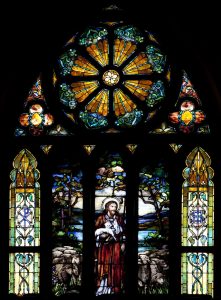
Running along-side our imitation stained-glass project designing panels for our café renovation, drop into the learning zone and join Alison and Wendy to create your own imitation stained-glass window scene to take home and proudly display at home.

The imitation stained-glass project is a separate event and aimed at older crafters and adults.


Thursday 20th February (11am – 2pm)

Time Bandits Living History


Historical re-enactors from Time Bandits Living History will be visiting The Devils Porridge on this day.

With live performances throughout the day and a larger range of objects to be handled and explored the Time Bandits will be providing an insight into life on the home front and the roles of Women during World War One.


Friday 21st February (11am onwards)

Warhammer 40k Kill team Porridge Championship


The first ever Porridge Championship! Build your 40k kill team and battle your way through a series of missions against the other competitors. Prizes for the best painted army and most enjoyable competitor as well as our overall champion!

A painting area will also be provided for anyone adding any finishing touches to their army.


Saturday 22nd February (All day events)

Games Club


Our regular Devils Porridge Games Club will be running this day (10am – 11am for primary 6 and above 11am – 12noon open to all ages) but there will be different traditional games set up for families to play throughout the rest of the day.

Riverside Museum Trip to Glasgow (bus departs at 9.30 and returns at 4pm)


Join us for a free family day out to the Riverside Museum in Glasgow. Free return travel to the Museum and entry to the Museum is also free!

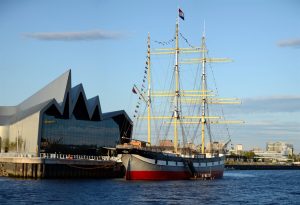
Riverside Museum is Glasgow’s award winning transport Museum. With over 3000 objects on display there’s everything from skateboards to locomotives, paintings to prams and cars to a Stormtrooper.

https://www.glasgowlife.org.uk/museums/venues/riverside-museum

lukasz work experience student

Polish Guide to the Museum

By Archive

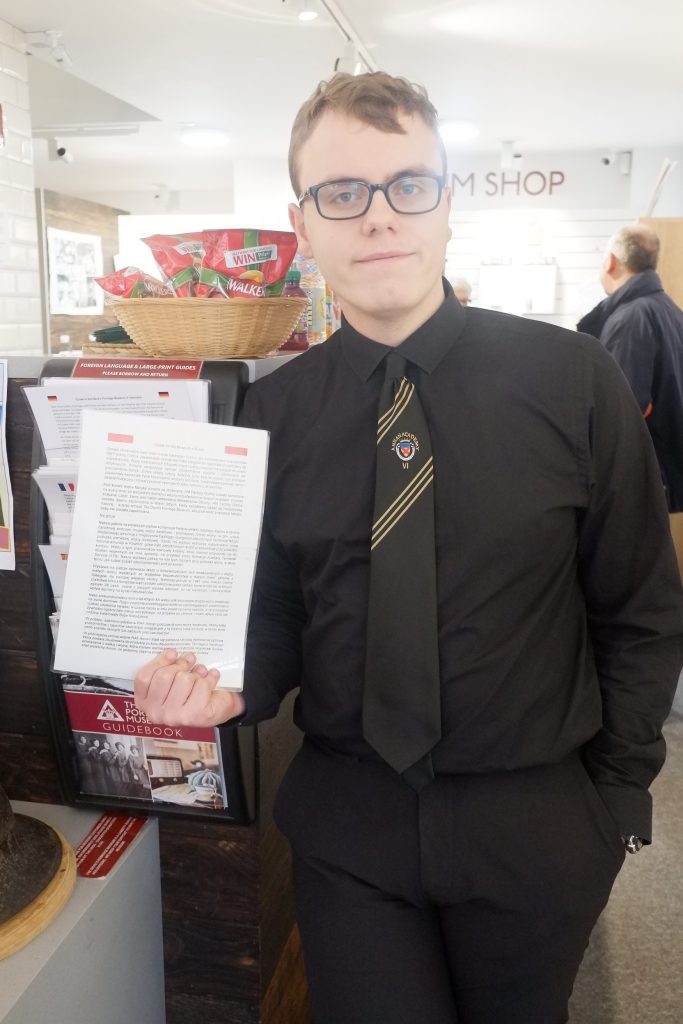
The Museum has several guides in foreign languages for visitors to use.  We now have a guide in Polish.  Łukasz Walkusz, who does work experience with us each Thursday from Annan Academy, writes…

“I believe that Polish is a important language to have at this Museum because Polish is the number one most spoken immigrant language in Britain and has become the most spoken language after English in England and Wales also it is about the same amount as Welsh speakers in the country. In the local area of the museum Polish speakers are very common so it will be helpful that Polish speakers with difficulty with English to have Polish as an option as a guide to the Museum. Polish has more of a right of having a guide than German, French and Spanish because of the amount of speakers in Britain.”

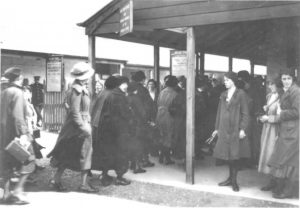
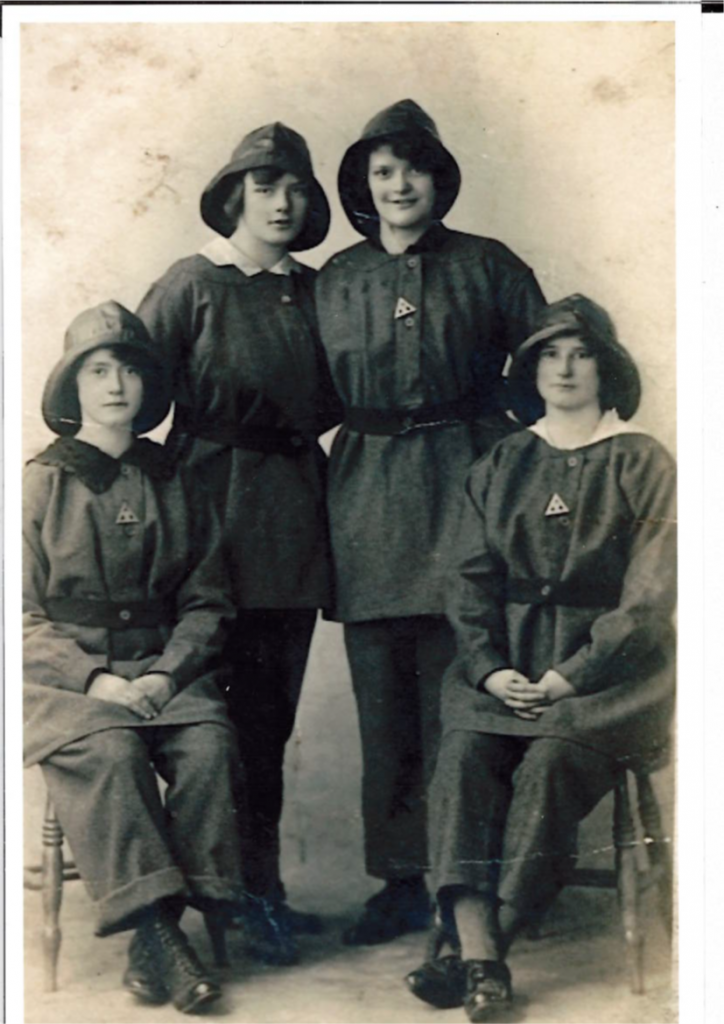
A group of munition workers in there uniforms.

Carlisle Girls

By Collections blog

People may think that The Devil’s Porridge Museum is just about Scotland but it isn’t as the women who worked there (and there were 12,000 of them) came from across Britain especially from Northern England including Carlisle and Cumbria.
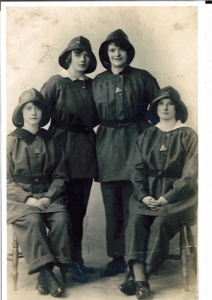
A group of girls in their factory uniforms including Jane Jackson born 1899 from Carlisle

We have dozens of accounts and photos of the so-called ‘Gretna Girls’ mainly provided by family members. Lots of friends and sisters seem to have travelled to HM Factory Gretna to seek work together. Two such sisters were Grace and Margaret Hodgson from Carlisle.
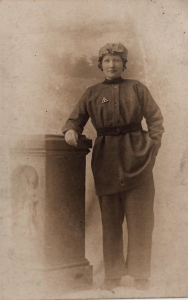
Grace Hodgson aged 21 from Morton Street Carlisle

In 1916, Grace worked in the laundry at HM Factory Gretna. She would have cleaned the uniforms of the girls but also their bedding, towels and other household items. The Factory didn’t just provide work, it also housed many of the girls in purpose built hostels in Eastriggs and Gretna.
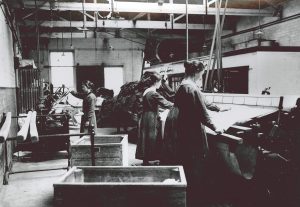
Girls working in the laundry at HM Factory Gretna

Grace’s sister, Margaret, aged 19, also obtained a job at the Factory for a number of months. She was employed in the sewing room where she mended the worker’s uniforms. The sewing room also doubled up as a welfare or rest room so Margaret would have seen girls passing out as a result of the toxic fumes they inhaled. One writer described girls rolling around on grass as though drunk because of their exposure to the chemicals needed to produce cordite (also known as the devil’s porridge).
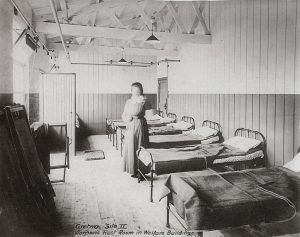
A rest room for the female workers in the factory

In later years, Margaret spoke of seeing girls working at the Factory who had yellow skin, sometimes their skin was a very bright yellow which is why they came to be nicknamed ‘The Canary Girls’.
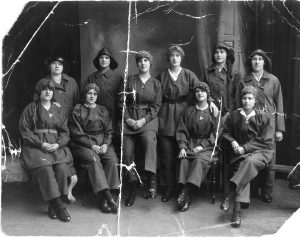
Group of female factory workers including Ada Annie Thompson from Carlisle

At the start of the War, Margaret had worked at The Atlas Works in Carlisle. She was employed to make shirts for the army. She and fifteen of her friends left after a dispute about pay. They left to work at HM Factory Gretna as it was offering higher wages. The owner of the Atlas works had to increase the wages he was paying because he couldn’t fulfil orders – so many girls were leaving to work at the Factory just a few miles away. This is just one of the fascinating accounts the Museum has.
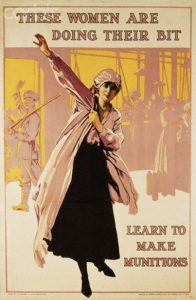
A lot of women were attracted to munitions work for the pay and because they were patriotic

If you would like to find out more about the lives of women working at HM Factory Gretna, this publication is available from our online shop:

Lives of Ten Gretna Girls booklet

ICI Powfoot group photo.

World War Two photo of ICI Powfoot

By Collections blog

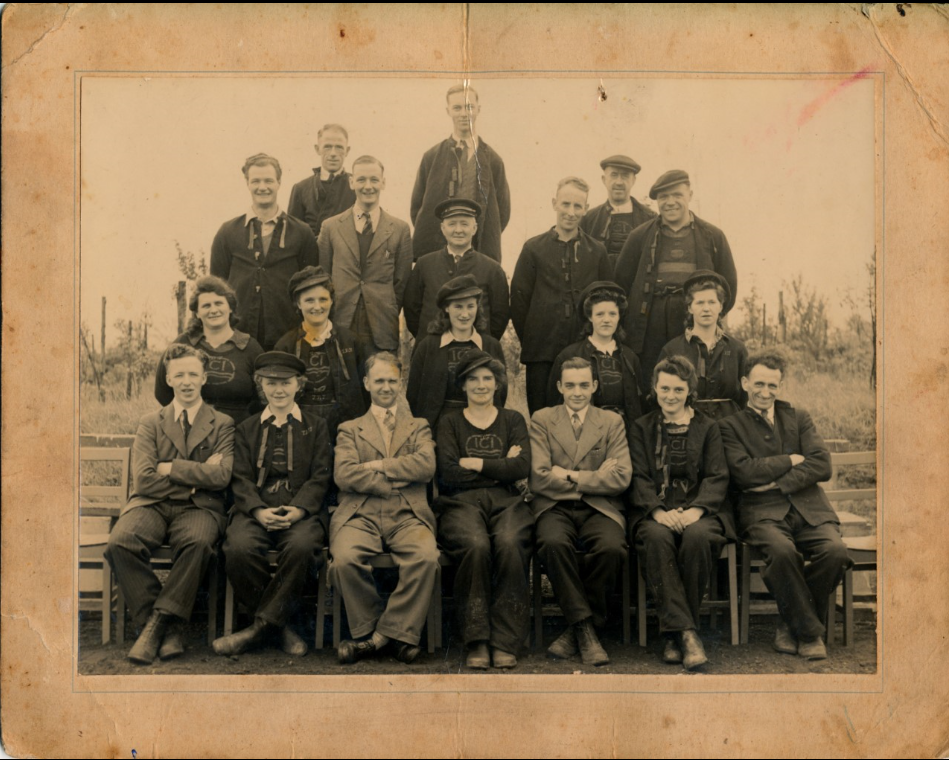
A couple (Ron and Morag) recently contacted the Museum and sent us a photo of Morag’s mother who worked at ICI Powfoot during the Second World War.  She is pictured in the photograph below (front row, second from left) with other people who also worked in the Factory.

Morag’s mother was Mary Taylor Napier (maiden name Dirom) who worked at ICI Powfoot during the Second World War.  She was born on the 11th May 1921 in Templand, Dumfriesshire. She then married on 2nd February 1940 at Dryfesdale, Lockerbie to James Ross Napier (who was on leave from the army). She lived in Lockerbie during World War Two.

After the War, James and Mary moved to Templand in a ‘prefab’ where they had their first child Morag (who gave us this information). Mary and James, with three children and a fourth on the way, emigrated to Australia in 1956 and this is where they lived until Mary passed away on the 16th July 2000 in Murwillumbah, New South Wales, Australia.

The couple would also be very interested to know if anyone  knew any of the other people in the photo and see if they can identify them. They don’t really know much more information about the photo or who is in it which is why they would like some more information if anyone can help.  Please email: manager@devilsporridge.org.uk if you have any information you would like to share with us.  We have a large collection of objects and material relating to the Second World War in our region and are always keen to know more.

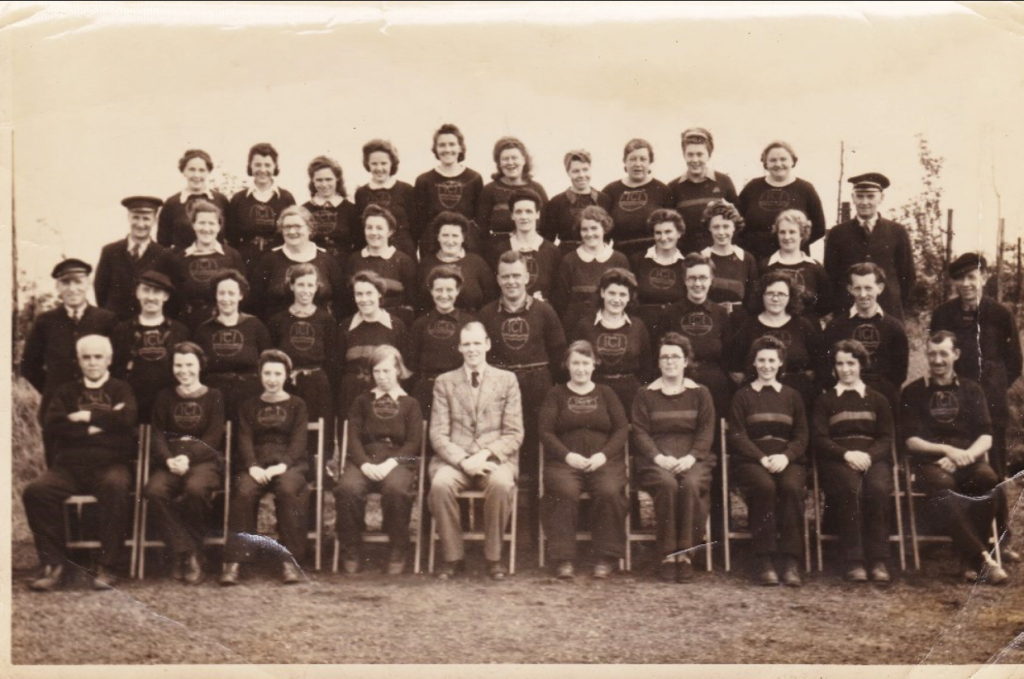
Photo on display of ICI Powfoot workers

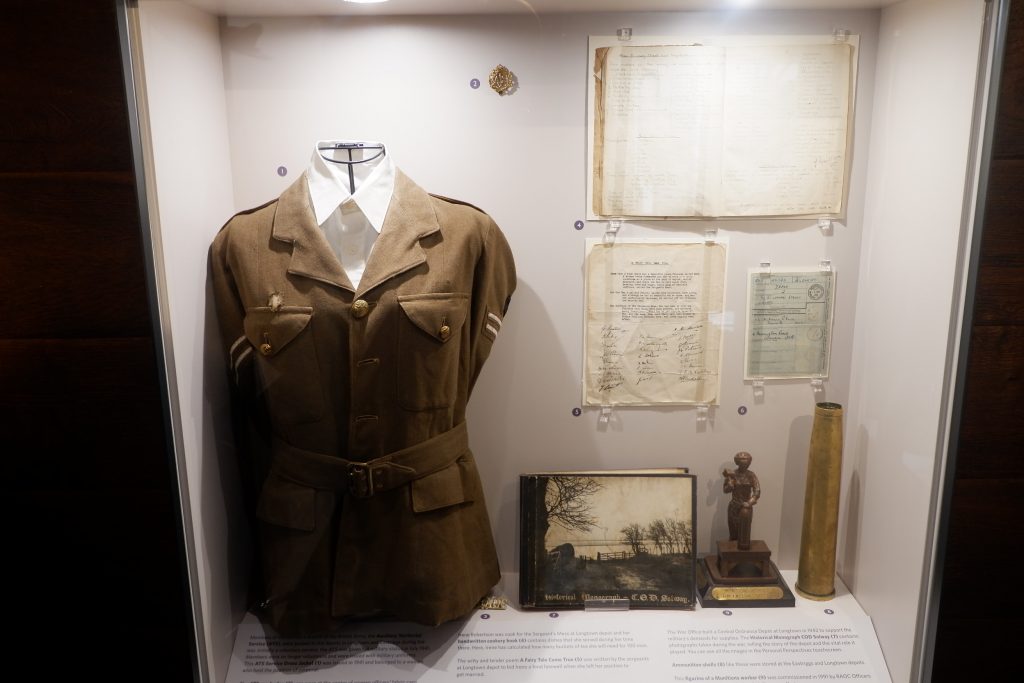
This display (photographed below) is on the First Floor of the Museum and focuses on the work done at ICI Powfoot.

A few years ago, the Museum researched and published a book called ‘The Solway Military Coast.’  It contains lots of information about World War Two in Dumfries and Galloway and can be purchased from our online shop (and shipped worldwide): https://www.devilsporridge.org.uk/product/the-solway-military-coast-book

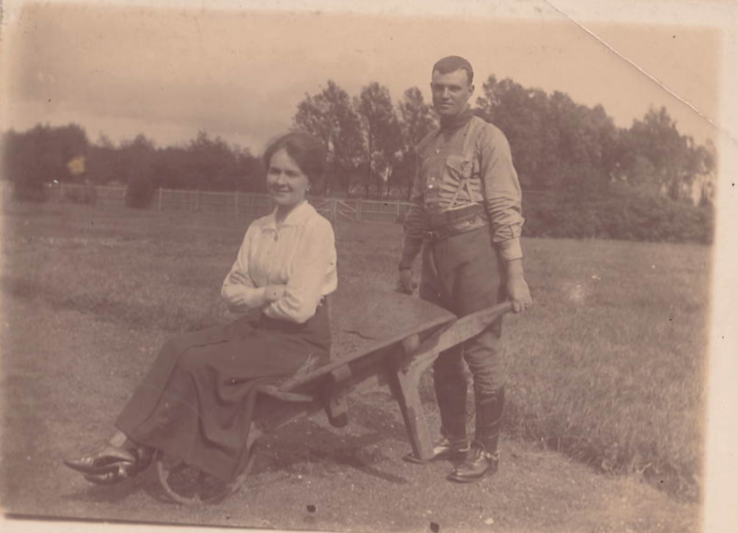
A women sat in a wheelbarrow with a man pushing it. This is an archive photo.

Mystery Photos

By Collections blog

Desray, one of our digitalisation volunteers has been adding these photos to our database and we found them interesting. Desray chose this selection and said “They must have meant a lot to someone as they were put into an album and they are very nice”.


These photos are currently being kept in the Museum’s store but we have no idea where they came from or who any of the people in the photos are. The only information we have about the family is that they had links to the SS Avoceta which was a boat that they were pictured on.  We think they show a different side of life in the early 20th Century. We will share some more of these photographs soon.


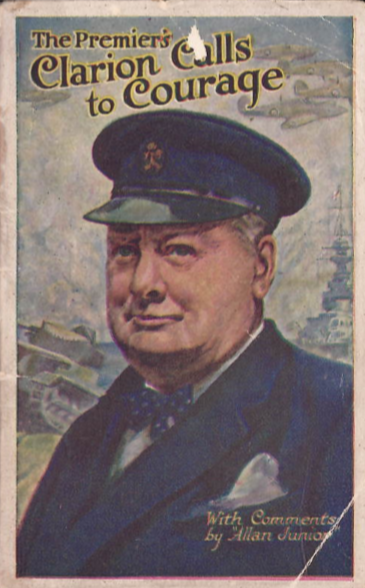
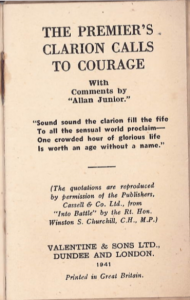
The front cover of a book titled "The Premier's Clarion Calls to Courage" with an illustration of Winston Churchill.

World War Two Donation to the Museum

By Collections blog

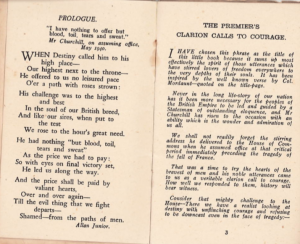
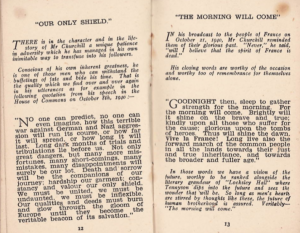
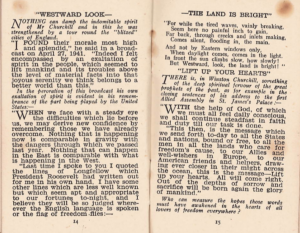
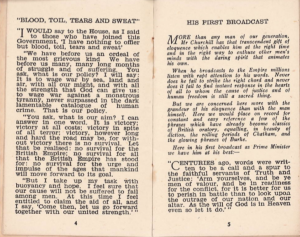
We don’t know much about this recently donated booklet. It was printed in 1941 and contains some of Churchills most inspiring speeches. It is pocket sized so could have been taken anywhere in World War Two. You can imagine soldiers, airmen, sailors, air raid wardens, ATS workers and anyone involved in the war either in service or in the public reading it to raise their morale in their darkest hours. We hope this pamphlet brought the courage it was intended to stir and that you are enjoying reading it.

The booklet was made by a company called Valentine and Sons who were a printing company founded in Dundee in 1851 and grew to become Scotland’s leading manufacturer of picture postcards. The company was then purchased by John Waddington Limited in 1963 who then sold it to Hallmark Cards in 1980. Operations at the Dundee factory ceased in 1993.
The Devils Porridge Museum has two floors. The ground floor focuses on World War One and the first floor focuses on World War Two and the Cold War in our area. Hope you can visit us soon to explore both galleries. To find out more about what’s in the Museum before visiting check out the Guidebooks which we have in our shop: https://www.devilsporridge.org.uk/product/the-devils-porridge-museum-guidebook

Here are a couple of pages from the book below:

Translate »
BOOK NOW