Category

Archive

A poster for a Young Reporters' Challenge from March 2021.

Young Reporter’s Challenge

By Archive

Fancy yourself a budding journalist? Enjoy creative writing or research? Then we have a challenge for you.


To mark the end of Women’s History Month, we’re running our Young Reporter’s Challenge for young people aged 12-18. This activity requires you to think about the lived experience of the women working at Gretna during the First World War.


We’re asking you to complete the following activity and send it to us at devilsporridgechallenge@gmail.com


All entries will be formatted to create a vintage newspaper, a PDF of which will be sent out to you all as a memento to print at home. We will also display your work online so it gets the attention it deserves!


Write a short newspaper article of at least 350-500 words (longer articles are welcome too) based around one of the incidents detailed in the Google Drive folder below: Young Reporters’ Challenge – Google Drive


So long as you make some use of this material, you are free to use your imagination to fill in any gaps!


Your article might take on the following forms, or you might have another idea of your own.


  • An interview with a woman involved in one of the incidents

  • An account of life as a women at HM Factory Gretna

  • An interview with a Gretna Girl about life at the Factory

  • A report on one of the accidents at the Factory

  • An obituary for someone killed in an accident at HM Factory Gretna

  • A report on the dangers of working at the Factory


The closing date for entries is 6pm on Sunday 18th April.


Please include your name, age and location in the email with your entry!

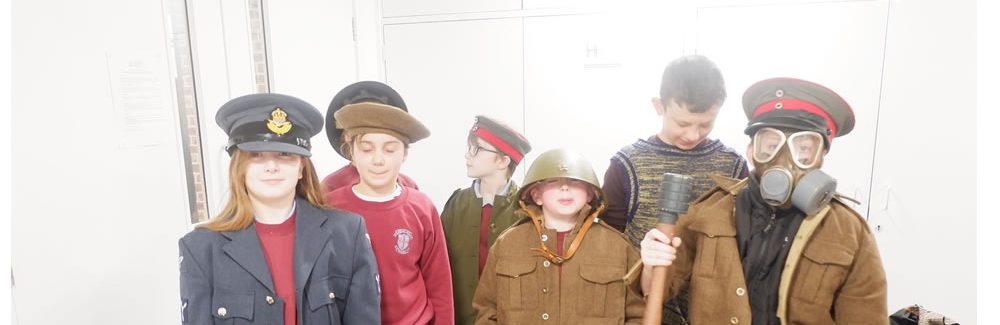
School children wearing dressing up clothes.

Women’s History Month: #TheFutureIsFemale

By Archive

To celebrate Women’s History Month, we’re taking part in a month-long celebration of women using items from our collections alongside other heritage sites/organisations across Scotland! If you want to join in visit Go Industrial  for more info. This week we’re sharing a photo that shows the girls and women of today engaging with the past through our collections!


Over the last year we’ve missed many things–none more so then welcoming children and young people to our museums. Luckily, using the power of the internet we’ve still managed to share interesting items from our collections, but we can’t wait till we can host school visits again! Here’s a throwback photo of school children who visited the museum after studying World War Two.

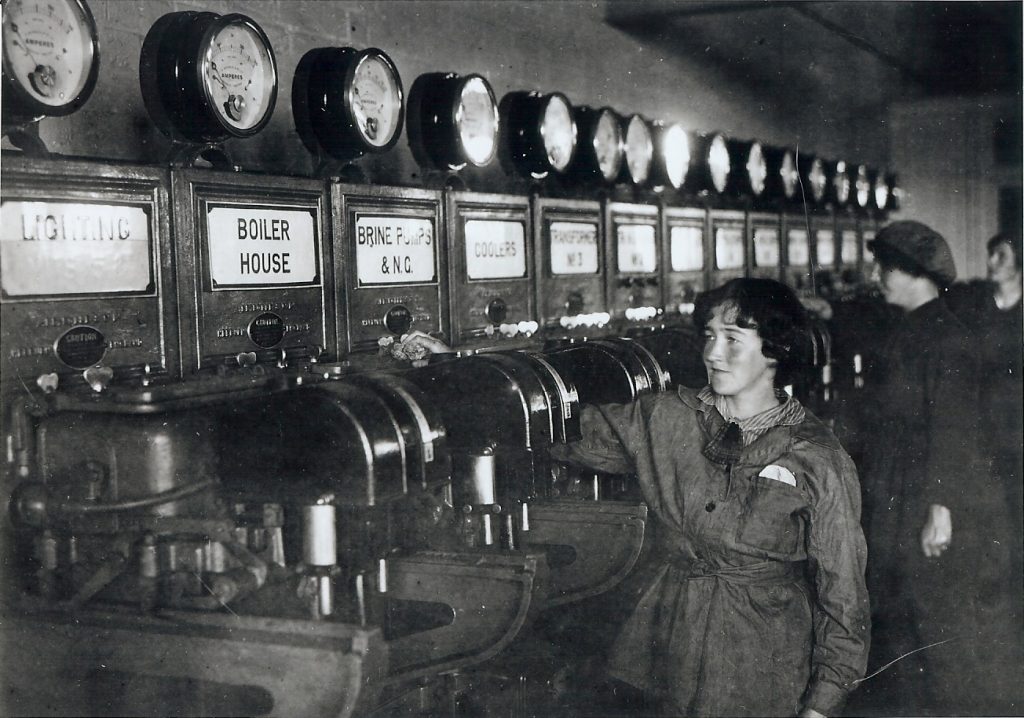
The Powerhouse Switchboard at HM Factory Gretna.

Women’s History Month: #ThisGirlCan

By Archive

To celebrate Women’s History Month, we’re taking part in a month-long celebration of women using items from our collections alongside other heritage sites/organisations across Scotland! If you want to join in visit Go Industrial  for more info. This week, to demonstrate that #ThisGirlCan, we’re sharing a photo from our collection that shows a woman who was a pioneer in taking on a new challenge.

The above image shows one of the munition workers at H. M. Factory Gretna operating the powerhouse switchboard. During WW1, women took on a wider variety of work roles as more and more men were being called up to fight. Women worked with complex machinery, acids and chemicals, and performed arduously heavy labour. Many of these works had previously been considered unsuitable for women.

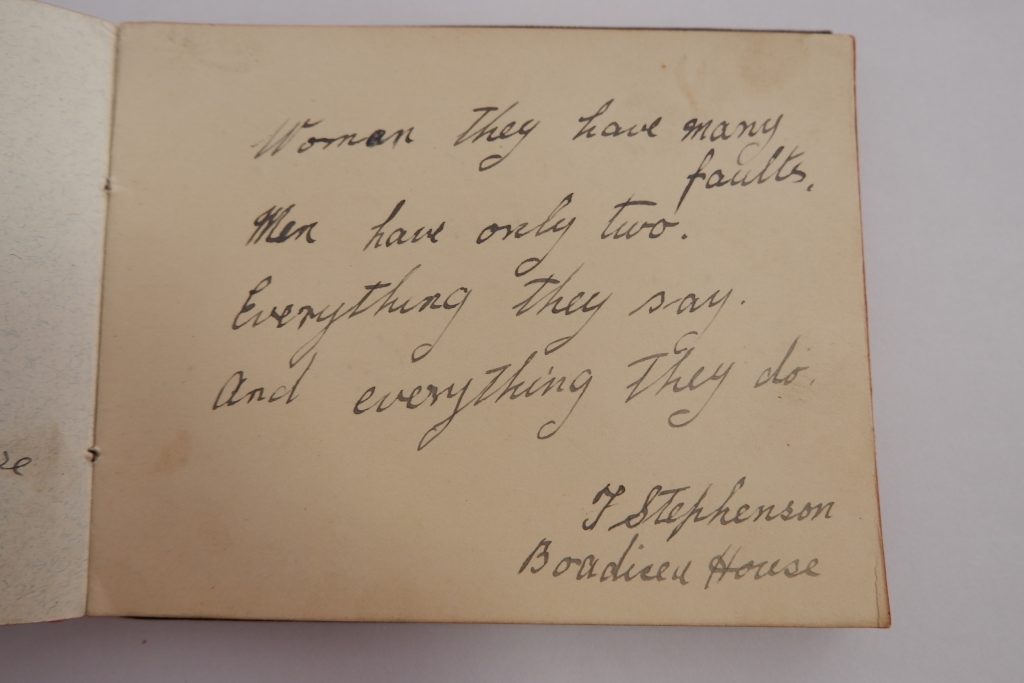
A page from an autograph book at H.M. Factory Gretna. This reads: "Women they have many faults. Men have only two. Everything they say. and everything they do. J Stephenson. Boadicea House."

Women’s History Month: #ChooseToChallenge

By Archive

To celebrate Women’s History Month, we’re taking part in a month-long celebration of women using items from our collections alongside other heritage sites/organisations across Scotland! If you want to join in, visit Go Industrial  for more info. This week, in honour of this year’s International Women’s Day, theme, we’re sharing an item from your collection where a woman challenges the status quo.

The attached photo is from one of the autograph books we hold in our collection. Autograph books were a popular way for friends and acquaintances to write verses, draw sketches, and comments. These books were often kept as a memory keepsake, and we’re lucky enough to have some from H.M. Factory Gretna. It says:

Women they have many faults,

Men have only two.

Everything they say,

and everything they do.

It was written by a J. Stephenson of Boudica House (one of the hostels that women munition workers lived in), and I’m sharing it as part the #ChooseToChallenge prompt for Women’s History Month. I think it’s a really witty poem that pokes fun in a gentle but astute way, and takes gender as a point of analysis. It also shows that some munition workers choose to challenge the status quo, even if they did that through poems like this.

Happy International Women’s Day!


If you’d like to know more about the 12.000 women who worked at HM Factory Gretna, you might enjoy this booklet (available from the Museum’s online shop):

Lives of Ten Gretna Girls booklet

A graphic with someone reading a book and the words "National Careers Week. Research Assistant. What's Your Story?"

National Careers Week: How I became a Research Assistant at the Devil’s Porridge Museum

By Archive


National Careers Week happens every year from 1st – 6th March. It provides support for young people who are deciding on a career and free resources for everyone embarking on a career! As someone who has just recently finished with formal education, I thought it would be a good idea to talk a little about my route into the heritage and museum sector. As World Book Day coincides with National Careers Week, I thought I’d hop on the trend and design my own Research Assistant book cover!


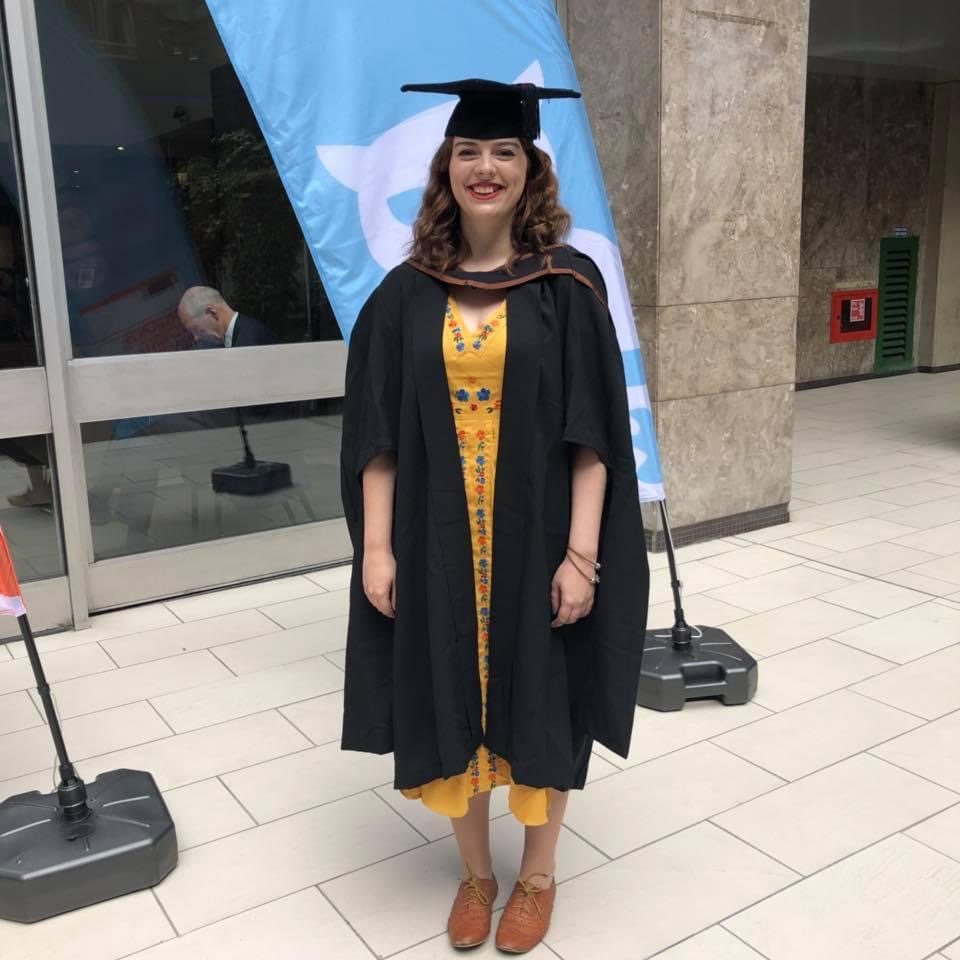
My story begins with my education. After GCSE’s and A-Levels, I went to University and studied Law. Midway through my law degree I realised that I was far more interested in the history of law than actually practicing it. After I completed my first degree, I studied for an MA in Historical Research. I loved studying for my MA–I learnt so much about historical approaches and archival research, and it made me realise that I wanted to work in history.

Me at my Masters graduation.

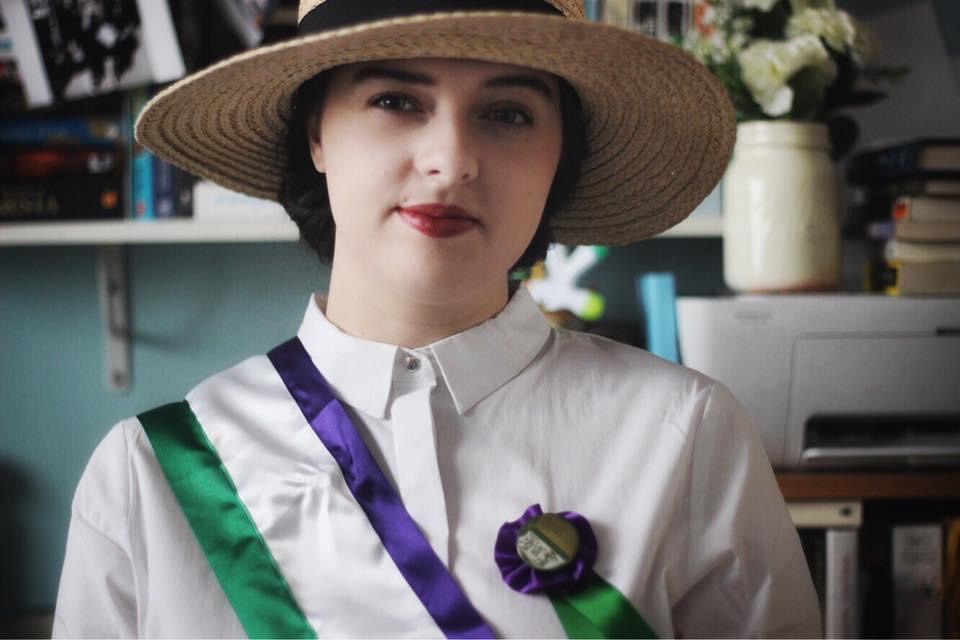
After my MA, I began my PhD at the Open University in Legal History. My research was all about two women who were early women barristers and suffrage activists. I had THE BEST time researching and writing my thesis. I gave talks to academic conferences, wrote blogposts and articles for websites and was even interviewed by the National Gallery.

I even dressed up as a suffragette to deliver a talk to my local Rainbow group!

Whilst I was doing my PhD, I also volunteered to get some more experience in the heritage sector. I used the skills I’d acquired through my PhD research and also learnt more, like how to conduct oral history interviews. All of my volunteering was so so rewarding on top of being great for my CV. I even did an interview on local Radio to promote the Market800 project, which celebrates the 800th anniversary of Loughborough’s market charter!

I think the other aspect of my journey to becoming a Research Assistant that was integral was a passion for history. I love learning about the past, and I love sharing new things I’ve found. I find it endlessly interesting! A big part of my job is reading old books and looking at artefacts and documents in the archive, and every time I find a new tidbit of information that wasn’t known before I get a little buzz.

I hope sharing my story of my career so far is helpful in some way, if you have any questions, I’d be happy to answer them. Either put them in the comments below or email me at laura@devilsporridge.org.uk.

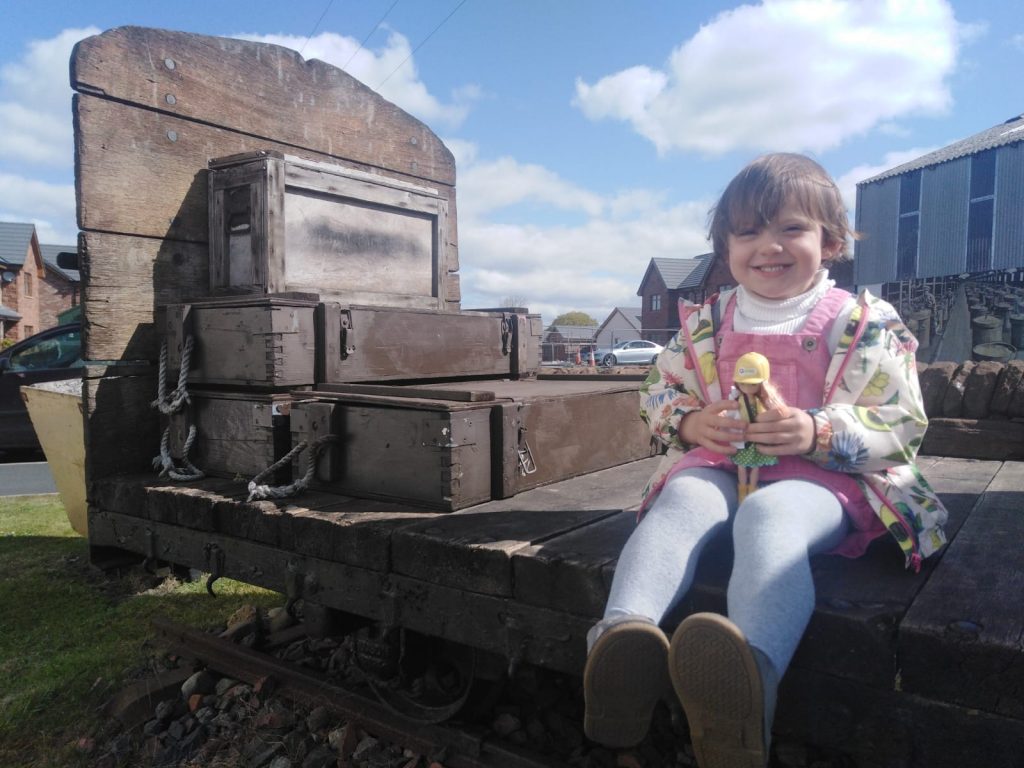
A child next to the railway bogie outside The Devil's Porridge Museum.

Introduce a Girl to Engineering Day 2021

By Archive

Introduce a Girl to Engineering Day is celebrated every year. Its name pretty much says it all: the day aims to show girls a route into engineering and inspire them to consider it as a career! A very worthy cause if I say so myself.

An engineer is defined as: ‘a person who designs, builds, or maintains engines, machines, or structures.’[1] Traditionally, the profession has been dominated by men, and this gender imbalance continues to this day. Only 12.37% of all engineers in the UK are women, and less than half of girls between the ages of 11 and 14 would consider a career in engineering.[2] In order to address this gender balance, days like Introduce a Girl to Engineering and organisations like the Women’s Engineering Society play a crucial role in promoting engineering to women and girls. At the Devil’s Porridge Museum, we’re very proud of the role women engineers played in H.M. Factory Gretna, so today, to (hopefully) inspire you, we’re going to delve into their history.

Women munition workers at Gretna played a crucial role in using, checking and maintaining the machines at the Factory. H.M Factory Gretna was a cordite factory, an explosive that was crucial to the war effort. Mary Ellen Hind began working in the Dornock section of the Factory aged 19 in 1916. She recalled ‘I was put in the screening shed at first and the gun-cotton came to us in big lumps, shaped like a loaf, and we put them through a machine and graded them down to sheds.’[3]
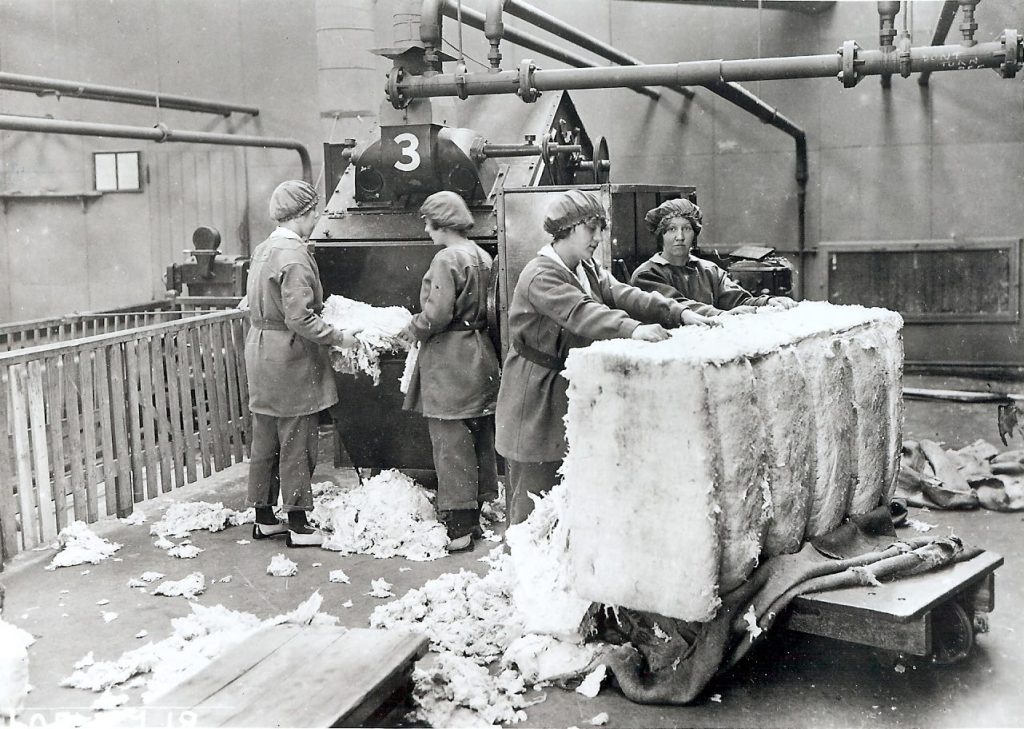
The Bale Breaking Machine that Mary Ellen is describing.

Later on, Mary Ellen was transferred to the engine house. There she worked with the machine that dried the gun-cotton. A crucial aspect of her work was checking the temperature gauge; ‘if it was too high we had to open the door and put a wedge in it, to cool down the building, if it was the opposite then we had to close it.[4] This was a potentially dangerous task, if the temperature got too hot, the building could have blown up!
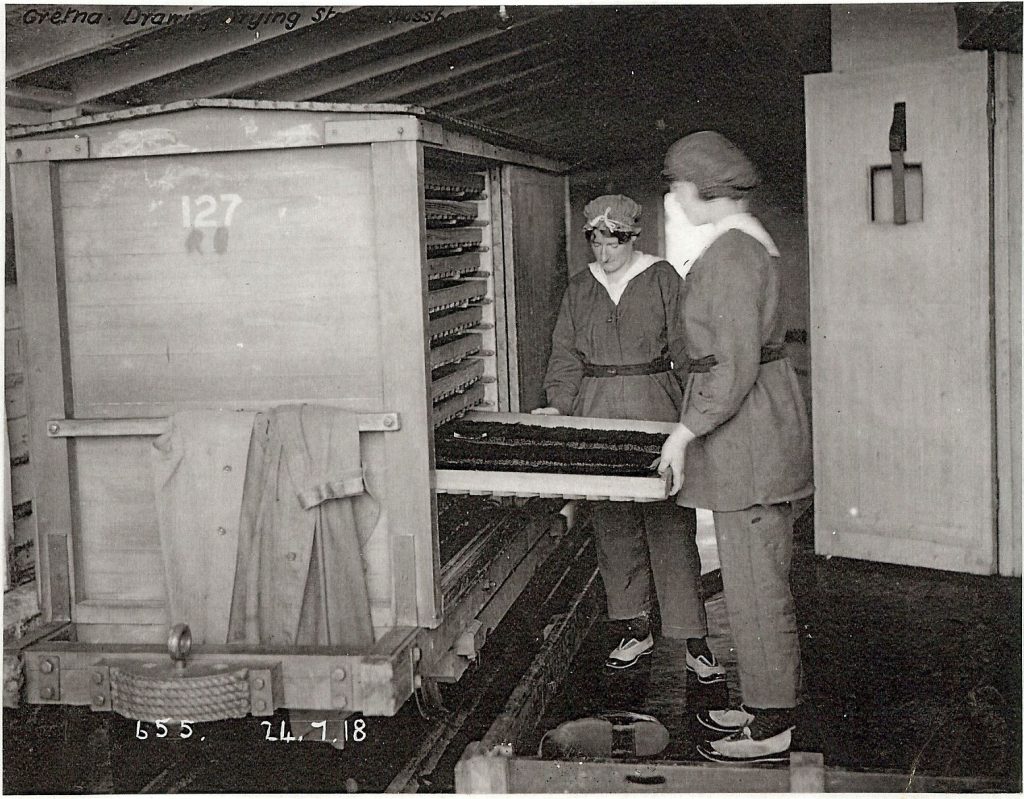
The Drying Stove at Mossband where gun-cotton was dried.

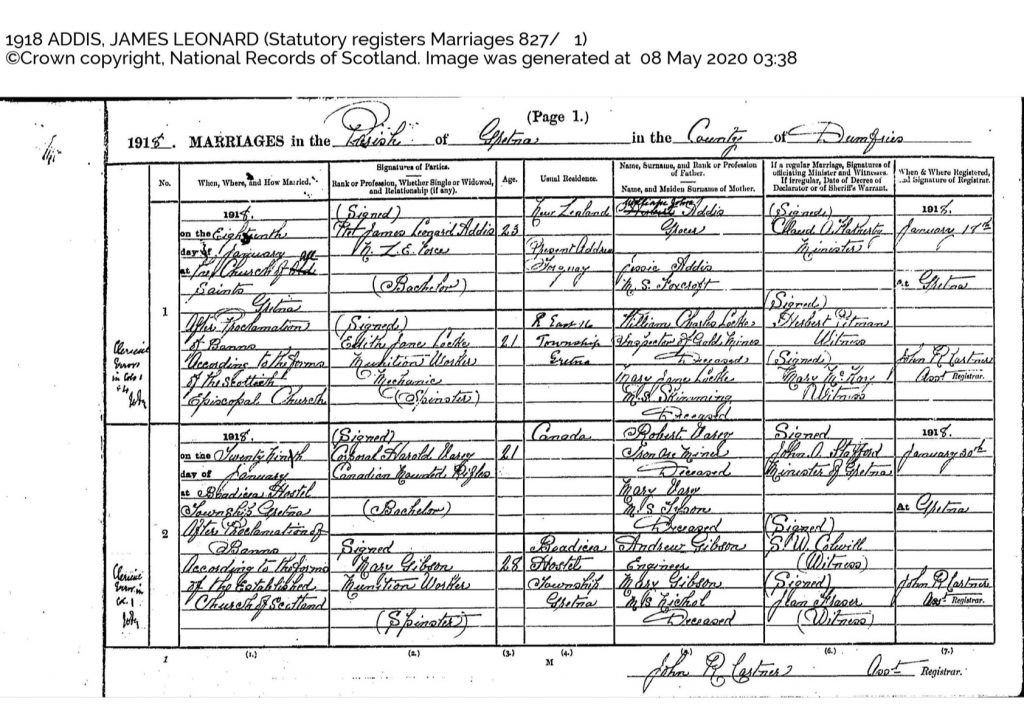
We also know that women self-identified as engineering professionals. Edith Locke put down her occupation as ‘Munitions Worker – Mechanic on her marriage certificate in 1918. In this, Edith is acknowledging the level of skill and the specialised knowledge required for her job.
This is just a brief glimpse into the many and varied engineering roles women undertook at H.M. Factory Gretna. And over one hundred years on, women are still being pioneers in engineering. The WES have highlighted current female engineers who work in defence, education, law, energy, entertainment, healthcare, infrastructure, manufacturing, software and transport—a HUGE diversity of jobs and skills.

Every year, Lottie the Engineering Doll tours the country to inspire girls to become engineers. The Devil’s Porridge Museum was lucky enough to host Lottie last year for a visit (see photographs below where she explored the Museum’s industrial objects with Agnes, the Museum Manager’s daughter).

Thanks to Neve from ‘We The Parents’ website for sharing this infographic with us putting the pioneering women at HM Factory Gretna in context.  Find out more about her work here: https://wetheparents.org/

See the complete post here: https://wetheparents.org/inspiring-engineering-women

Here’s to women engineer’s past, present, and future!

[1]https://www.lexico.com/definition/engineer

[2] https://www.engineeringuk.com/research/engineering-uk-report/

[3] G Routledge, Gretna’s Secret War (Bookcase, 1999), p. 61

[4] G Routledge, Gretna’s Secret War (Bookcase, 1999), p. 61

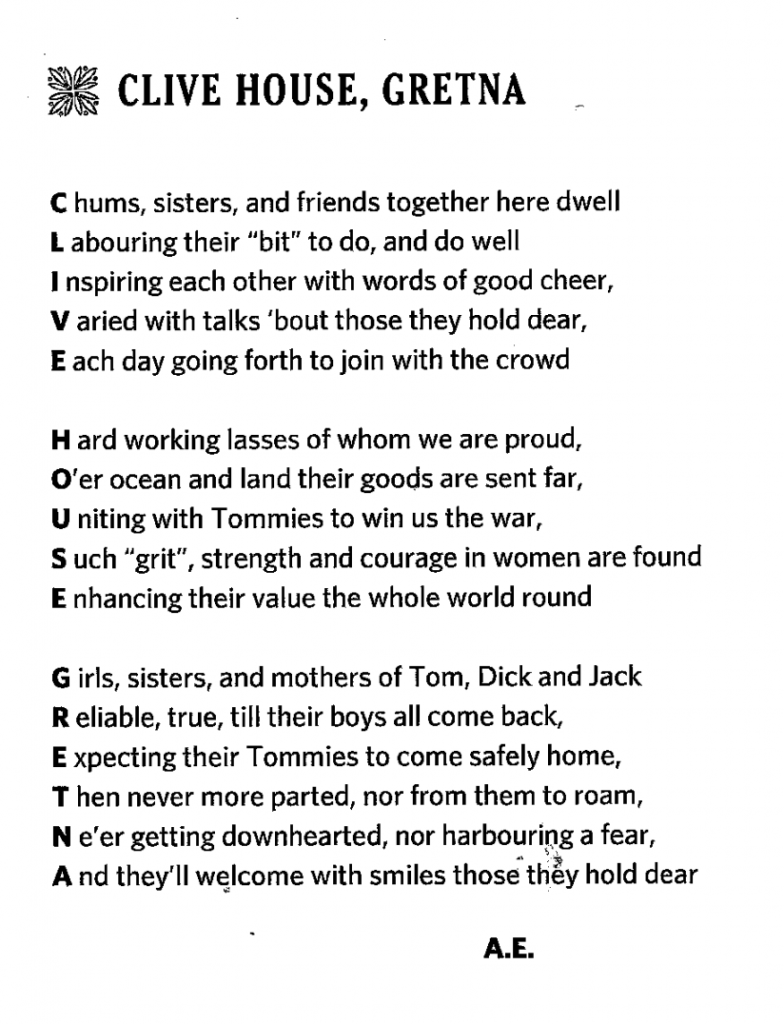
A Clive House, Gretna poem, which reads: "Chums, sisters, and friends together here dwell Labouring their "bit" to do, and do well Inspiring each other with words of good cheer, Varied with talks 'bout those they hold dear, Each day going forth to join with the crowd Hard working lasses of whom we are proud, O'er ocean and land their goods are sent far, Uniting with Tommies to win us the war, Such "grit", strength and courage in women are found Enhancing their value the whole world round Girls, sisters, and mothers of Tom, Dick and Jack Reliable, true, till their boys all come back, Expectation their Tommies to come safely home, Then never more parted, bor from them to roam, Ne'er getting downhearted, nor harbouring a fear, And they'll welcome with smiles those they hold dear." A.E

Workers Poem’s

By Archive

Lots of wonderful poems were written by munitions workers at HM Factory Gretna such as this one about one of the hostels. Each hostel was named after someone famous (such as Mary Queen of Scots, Walter Scott or in this case, Clive of India).


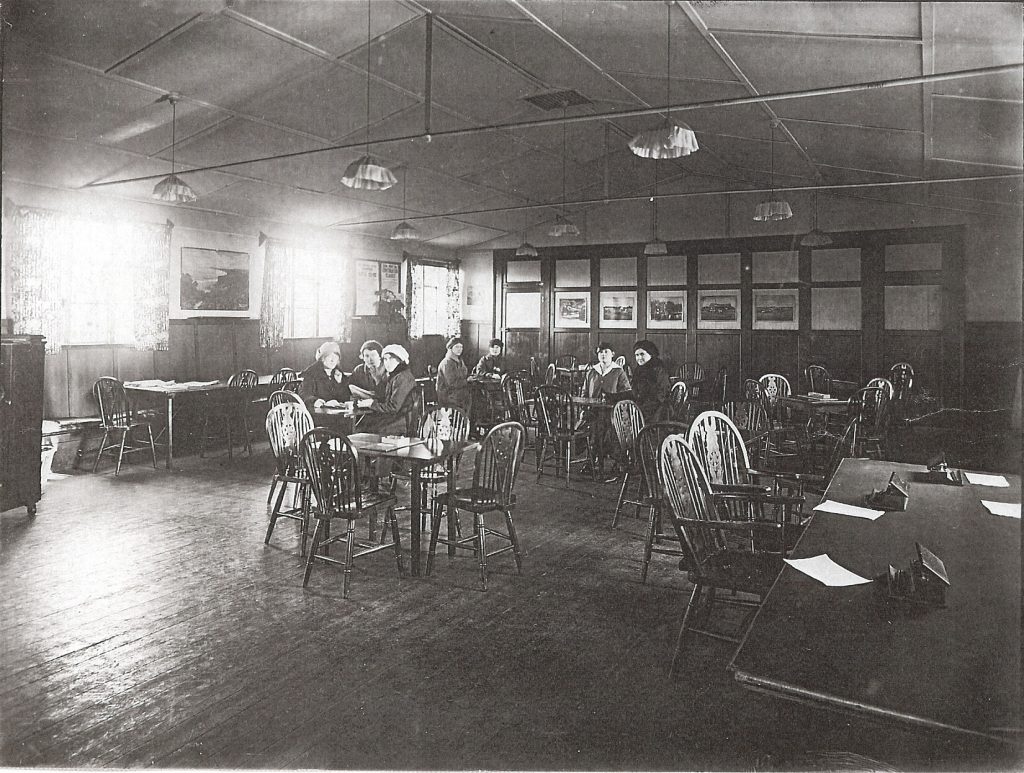
This photo shows some of the workers in the dining room of one of the hostels.


Many workers wrote poems to share their experiences of working in the factory and what living in the hostels was like. If you would like to see the many poems written by people who worked at the factory then you may be intersted in our Munitions Workers Poems booklet which is for sale in the Museums online shop and is linked below.


Munition Workers’ Poems – Devils Porridge Museum

Some words and a drawing of a cross written on a wall.

World War One Wall Painting Discovered

By Archive

Our thanks to Callum Boyd for sharing this account of his discovery.

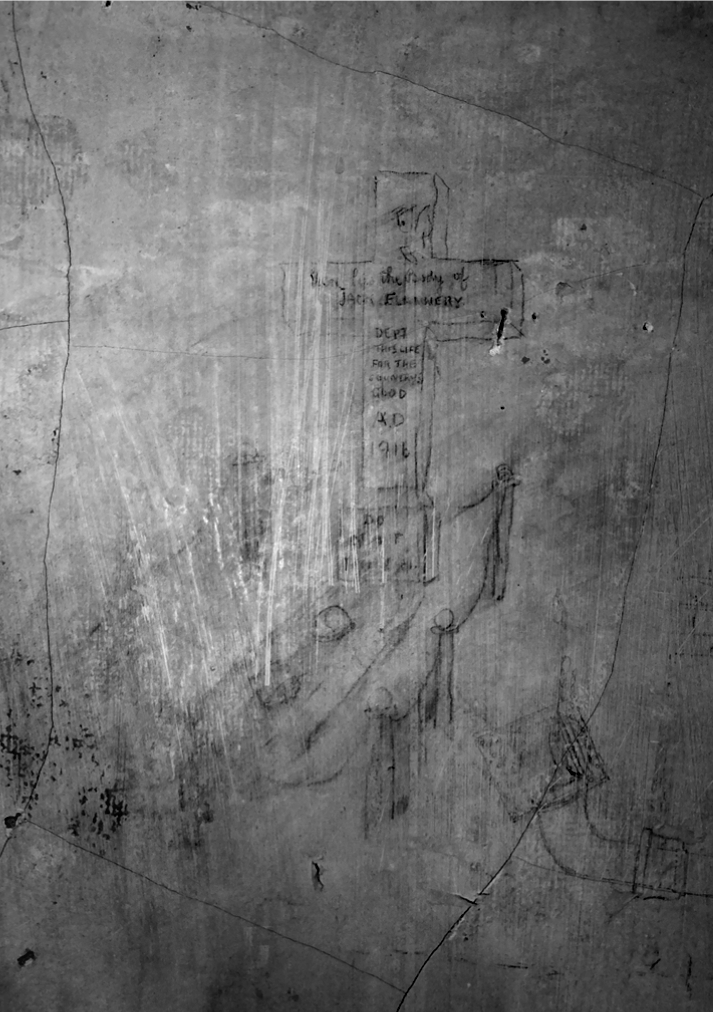
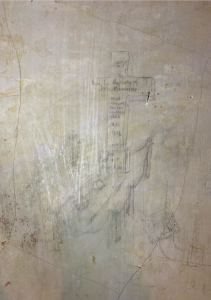
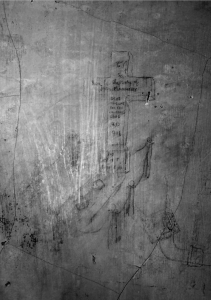
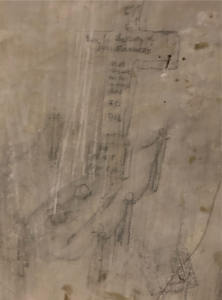
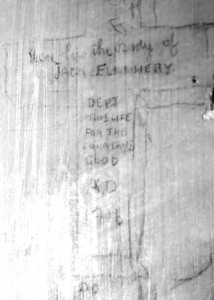
An amazing survival, believed to be from World War One, has been discovered in Victory Avenue, Gretna.  Callum was doing some maintenance work to his house, he peeled back the wallpaper and discovered a wall painting showing a grave with a cross on it and the following text: “Here lies the body of Jack Ellmenery or Elmenwery (?) Departed this life for the country’s good AD 1916”

The picture is quite difficult to see on the wall.

Close up view of the picture.

Close up view of the picture in black and white.

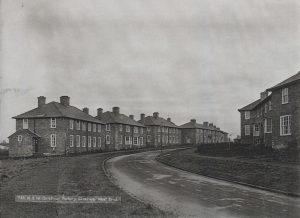
Callum’s house is one of the original World War One houses built to home the 30,000 workers at HM Factory Gretna.  This drawing could have been done by one of the builders of the houses (the Factory and townships of Eastriggs and Gretna were built by 10,000, mainly Irish, navvies) or it could have been drawn by one of the workers who stayed in the hostel during the War (12,000 of these workers were women).
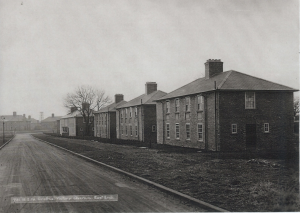
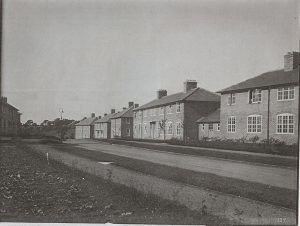
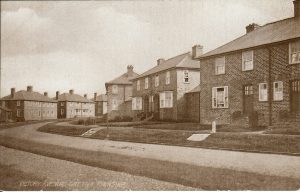
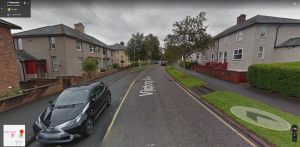
Gretna was built in World War One, many of the houses built for workers at HM Factory Gretna are still occupied today.

Victory Avenue today.

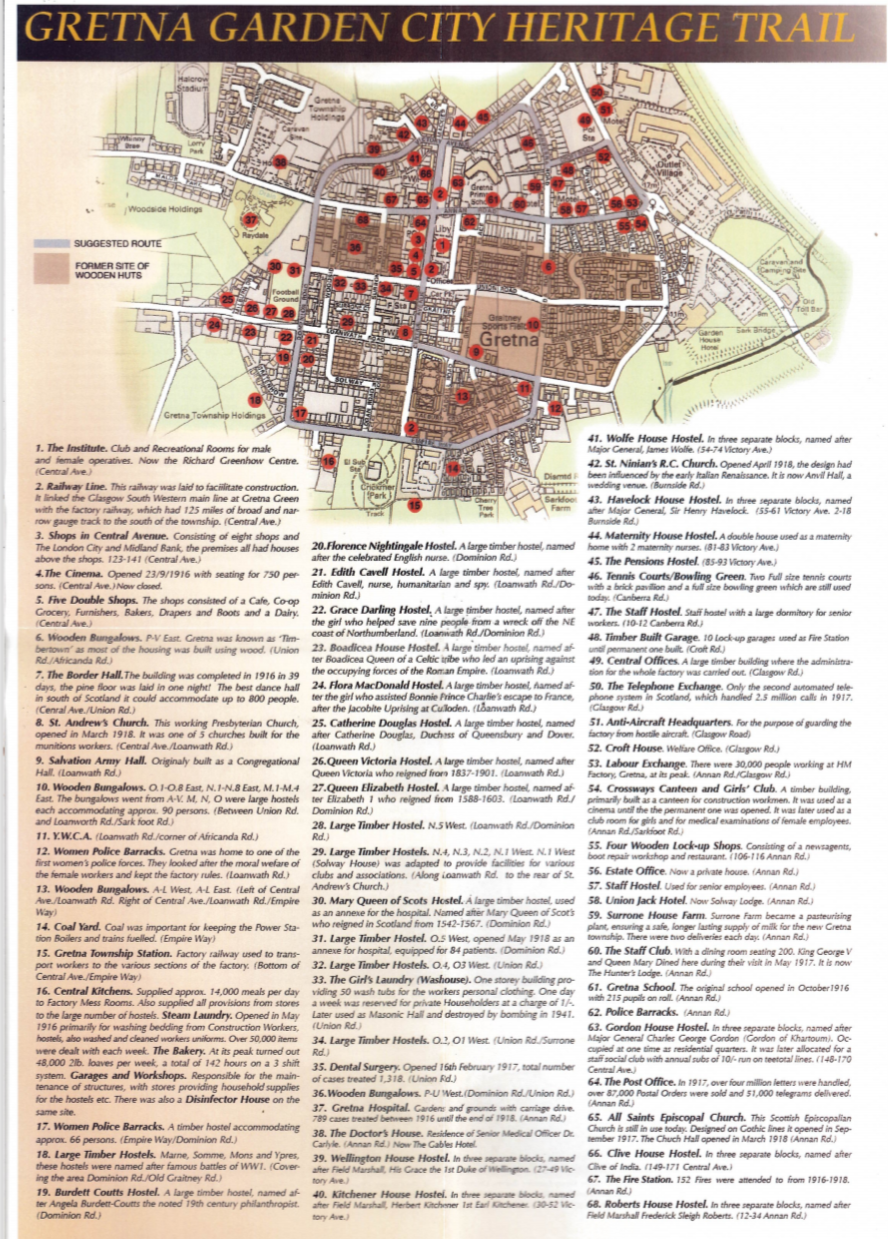
This map shows historic Gretna and the uses of the different buildings which still stand today.

We have begun to look into this but if anyone knows any more or is able to track down Jack and his connection to Gretna – we would love to know!  It is incredible to think of all the history that lies hidden right under our noses!

Unfortunately, the picture was destroyed when Callum tried to remove it to donate to the Museum but we are very grateful to have the photographs and information he provided.

If you would like to know more about HM Factory Gretna, the following items from our online shop may be of interest:

The Devil’s Porridge Museum Guidebook – Devils Porridge Museum

Gretna’s Secret War – Devils Porridge Museum


Mossband House with the Mossband Clock. This is an archive photo.

Mossband Clock Unveiling

By Archive

Look out for a Facebook live event happening Wednesday November 11th at 9.15am unveiling the new Mossband Clock display.


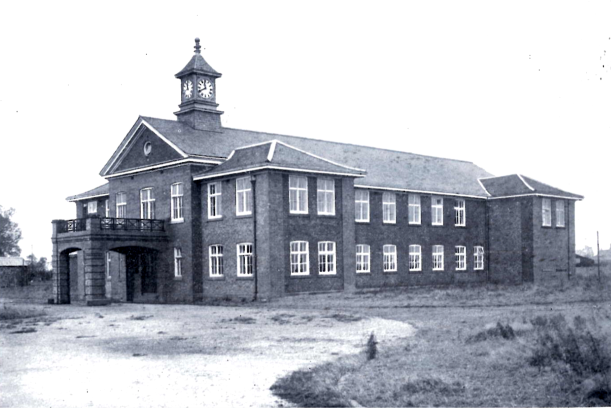
Last week the Museum was closed to install a major new display, the Mossband Clock. You might remeber seeing this clock on Mossband house until its demolition several years ago. Mossband House was the central HQ of HM Factory Gretna. The clock was the only part of the building that was saved when the house was demolished.


The Facebook live event will start at 9.15am on Wednesday morning, if you are interested in watching this event the link to our Facebook page is below:

https://www.facebook.com/devilsporridge/

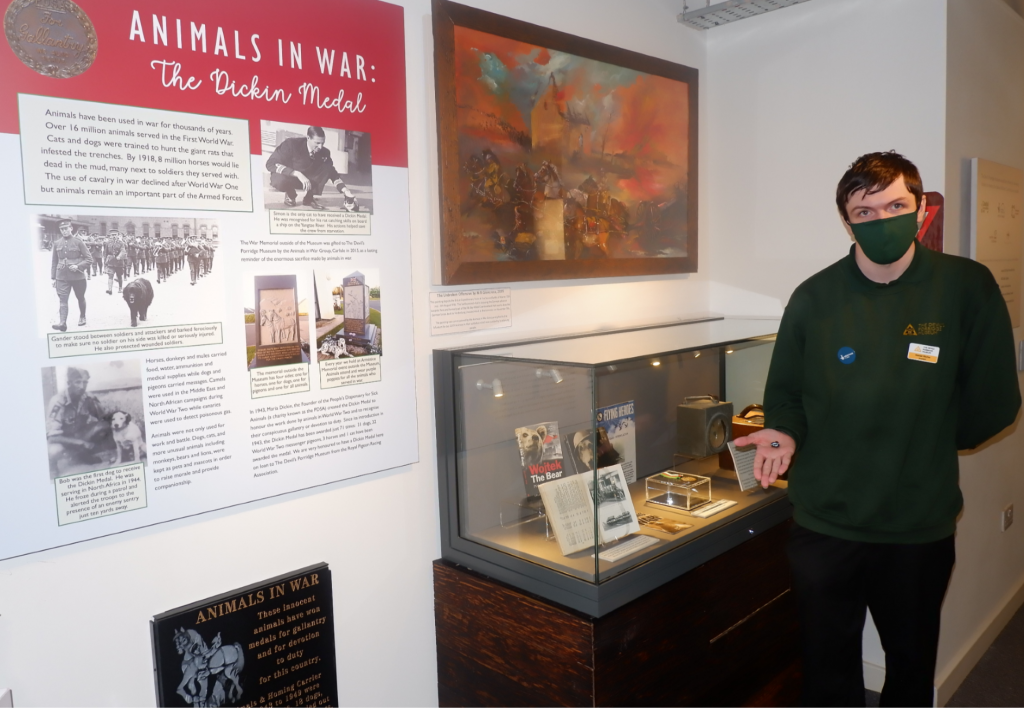
A young person holding a badge in front of The Animals in War display.

Loan of Pigeon Service badge

By Archive

We’re very grateful to Stephen Glencross of the Carlisle Animals in War organisation for loaning the Museum this object.  It will go on display shortly with the Dickin Medal (currently on loan from the Royal Pigeon Racing Association) which can be seen in our First Floor Animals in War display.  Alastair Ritchie, one of the young people completing an SVQ in Museums and Galleries Practice at the Museum did a little research to find out more about this object, this is what he discovered…

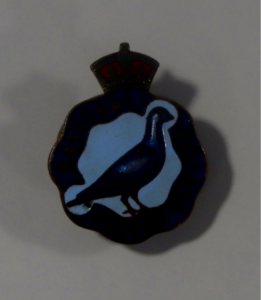
National Pigeon Service badge.

The badge has the symbol of the NPS (National Pigeon Service) on it. This organisation was founded in 1938 by Major W.H.Osman to look after and continue to breed pigeons for use in military communication. As a result between 1939-1945 it supplied 200,000 to the RAF, British Army, Intelligence Service and the Special Section of Army Pigeon Service.

Including one called, Commando, a red chequer cock bird that became a recipient of the Dickin Medal for having flown more than ninety trips into and out of France all during the occupation, carrying confidential messages including the location of German troops, industrial sites and injured British soldiers.

(above Commando served 1939-1945)

The Official issue number on our badge is 15093 with silver plate and enamel.  Stephen Glencross told us it belonged to Mr Chamkin who was in the World War Two Signal Corps.

It is also engrained with J.R Grant London a company that sadly closed in 2016 after 71 years of business.


Translate »
BOOK NOW