Category

Archive

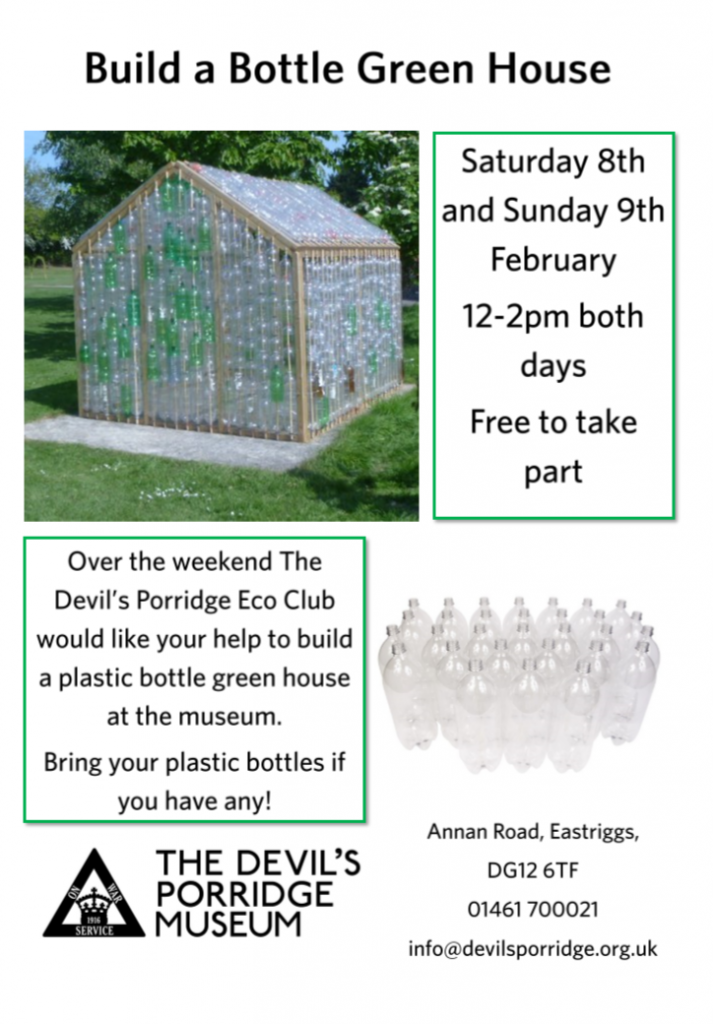
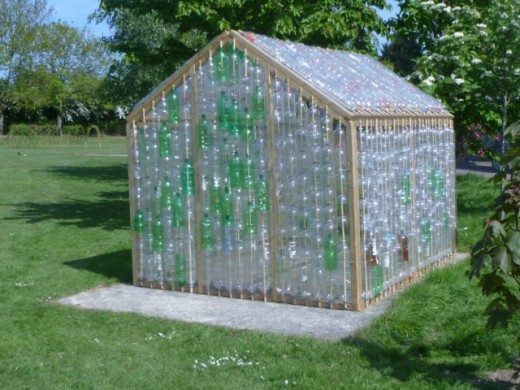
A green house made out of plastic bottles.

Eco Greenhouse

By Archive

Over the weekend February 8th and 9th The Devils Porridge Eco Club would like your help to build a bottle green house at the Museum.

Many hands make light work so whether you can help over both days or just have a spare half hour to come along 12 till 2 on Saturday and Sunday.


The green house will be made using empty 2 litre plastic juice bottles so if you have any empty bottles between now and the even bring them along or drop them off at the Museum. (we will need a lot).


As well as building the green house there will be plenty of other gardening jobs to be done as we strive to get our Dig for Victory garden ready for Spring.

WW1 Fireless Locomotive

By Archive

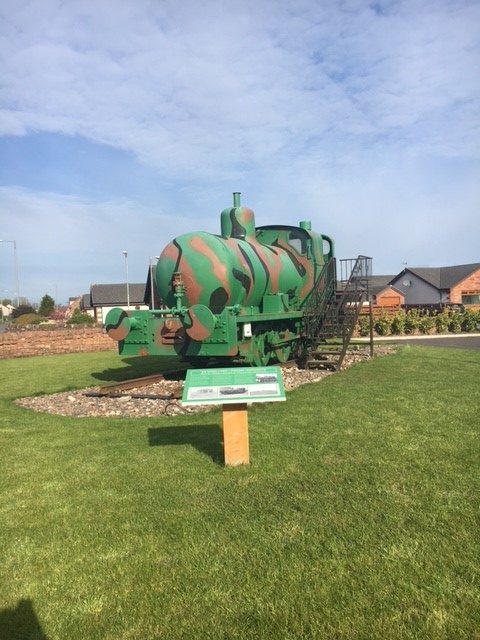
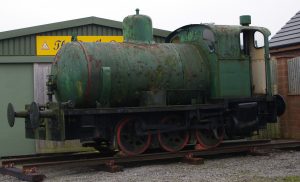
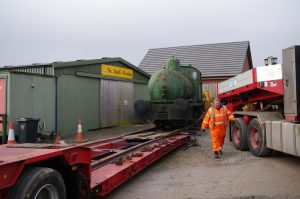
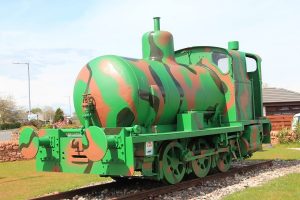
Outside The Devil’s Porridge Museum there stands a train, a fireless locomotive called Sir James, which was built and used in World War One. By the time it came to the Museum, it was in a rusty and poor state of repair.  The Museum spent a lot of time and money restoring the engine and it is now one of our most popular displays.


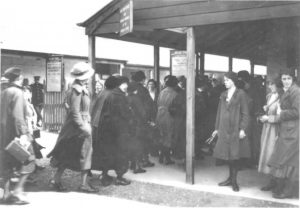
This engine was used to transport the ‘devil’s porridge’ paste through HM Factory Gretna (the greatest munitions factory on earth at that time, it stretched nine miles from Dornock in Scotland to Longtown in England).  The paste was made into cordite, a propellant in the English side of the Factory.  Cordite went inside all the bullets and shells used in World War One.


Sir James is an unusual locomotive.  It is powered by steam but there is no fire inside.  This was a safety precaution as the Factory produced explosive material and the train was used to transport it.  There was a genuine concern that there might be a major explosion (there were several fires and explosions here during World War One but the safety record was remarkably good given that 30,000 people worked at the Factory in total and we know of only twelve deaths directly attributable to accidents).


Sir James was built by Andrew Barclay of Kilmarnock, Scotland and in World War One, it would have been charged up with steam from an external boiler before setting off.   For these locomotives to work, it was necessary to have three charging stations en route to maintain pressure.  These ‘crazy green and brown patchwork’ camouflaged fireless locomotives could pull ten loaded wagons and return the empty wagons on one charge of steam.

At the end of the War, the Factory eventually closed and much of the machinery was sold off.  Sir James was sold in 1924 to the Metropolitan Electric Power Supply Company at Brimsdown Generating Station and then in 1975 to the Lakeland and Haverthwaite railway before joining us at the Museum and being restored to its former glory in 2011.

If you enjoyed this article you might be interested in the following items from our online shop…

HM Factory Gretna’s Unique Railway System Booklet

Sir James Postcard

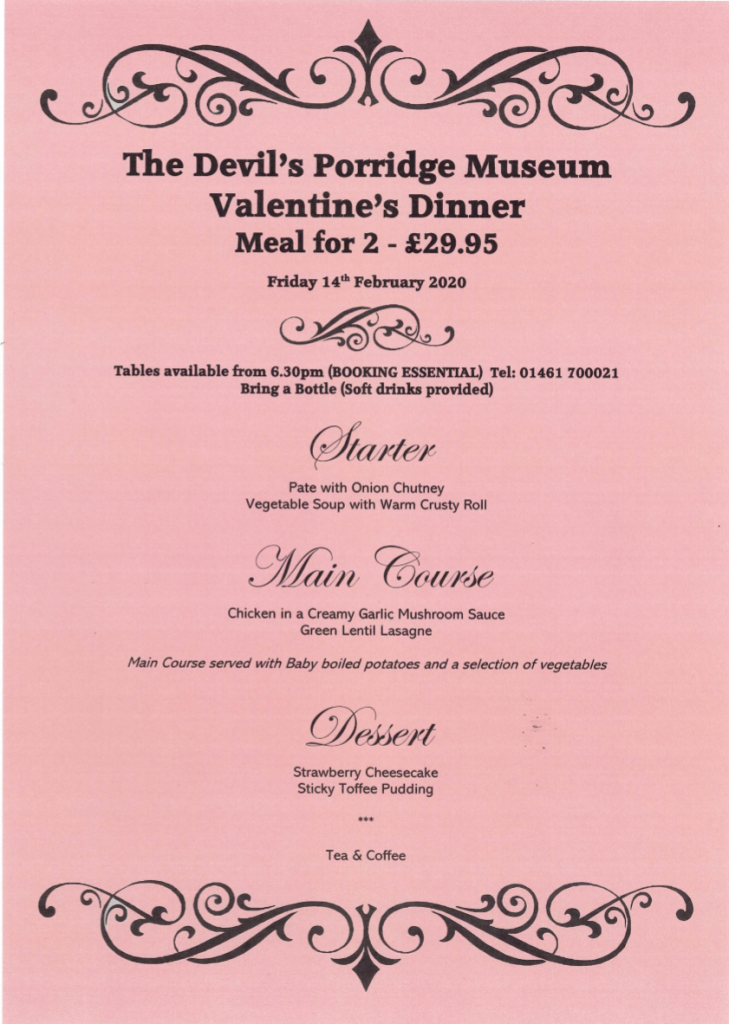
Menu for The Devil's Porridge Museum's Valentine's Dinner at The Devil's Porridge Museum on Friday 14th February 2020.

Valentines Day at the Museum

By Archive

Romantic Valentine’s Meal at the Museum


Fancy a romantic Valentine’s Dinner in intimate surroundings in our 5 star Museum?. Our top chef, Lynne-Marie will create a scrumptious three course meal for only £29.95 per couple. Each loving twosome will have their own dedicated space within the displays to provide a relaxed atmosphere where you can enjoy your evening.


With only six tables to book at 6.30pm and 8pm, you can expect a really personal service. Tables can be booked by ringing the Museum on 01461 700021 or emailing: info@devilsporridge.org.uk. Booking is essential!!


Our menu us below. Couples should bring their own Prosecco/Champagne etc. Free soft drinks will be provided. Please ask about a personalised tour of the Museum conducted by one of out Expert Guides.

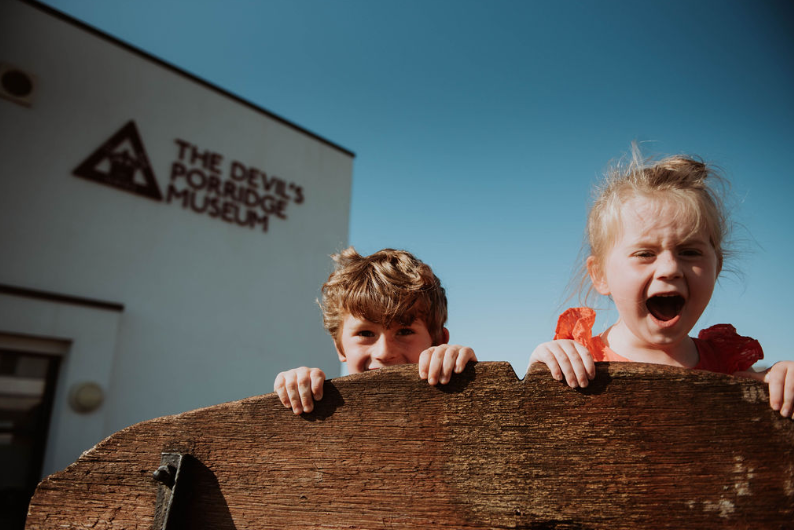
Two happy children outside The Devil's Porridge Museum.

Events at the Museum in February

By Archive

Events taking place at the Museum from Monday 17th of February to Sunday 23rd February. All of these activities are free and only the trip to the Riverside Museum in Glasgow on Saturday the 22nd requires booking. If you wish to book phone: 01461 700021, email: info@devilsporridge.org.uk or pop into the Museum during our opening hours. Drop in sessions can be joined at any time while the session is running and last as long as the activity takes.


Monday 17th February (11am – 2pm)

Warhammer Workshop and Painting Competition


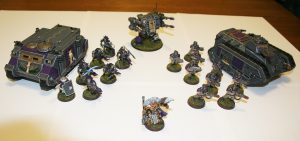
Come along and find out all about Warhammer. We will have mini-games set up for beginners to learn and play as well as space for more experienced players to set up their own epic battles.

Paint and take home one of our Space Marines as part of the painting competition. All paints and models will be provided! There will also be space and paint for anyone looking to paint their own models.

Tuesday 18th February (11am – 2pm)

Pop in Poetry


Local artist and published poet Hugh McMillan will be running a series of drop in poetry workshops aimed at all ages.

Find out about WW1 poets and try your hand at writing some poetry of your own inspired by the Museums collection.


Wednesday 19th February (11am – 2pm)

Historical Arts and Crafts


Running along-side our imitation stained-glass project designing panels for our café renovation, drop into the learning zone and join Alison and Wendy to create your own imitation stained-glass window scene to take home and proudly display at home.

The imitation stained-glass project is a separate event and aimed at older crafters and adults.


Thursday 20th February (11am – 2pm)

Time Bandits Living History


Historical re-enactors from Time Bandits Living History will be visiting The Devils Porridge on this day.

With live performances throughout the day and a larger range of objects to be handled and explored the Time Bandits will be providing an insight into life on the home front and the roles of Women during World War One.


Friday 21st February (11am onwards)

Warhammer 40k Kill team Porridge Championship


The first ever Porridge Championship! Build your 40k kill team and battle your way through a series of missions against the other competitors. Prizes for the best painted army and most enjoyable competitor as well as our overall champion!

A painting area will also be provided for anyone adding any finishing touches to their army.


Saturday 22nd February (All day events)

Games Club


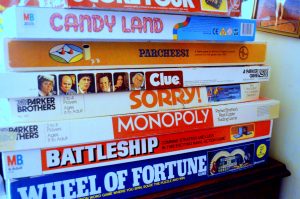
Our regular Devils Porridge Games Club will be running this day (10am – 11am for primary 6 and above 11am – 12noon open to all ages) but there will be different traditional games set up for families to play throughout the rest of the day.

Riverside Museum Trip to Glasgow (bus departs at 9.30 and returns at 4pm)


Join us for a free family day out to the Riverside Museum in Glasgow. Free return travel to the Museum and entry to the Museum is also free!

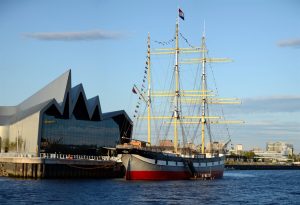
Riverside Museum is Glasgow’s award winning transport Museum. With over 3000 objects on display there’s everything from skateboards to locomotives, paintings to prams and cars to a Stormtrooper.

https://www.glasgowlife.org.uk/museums/venues/riverside-museum

lukasz work experience student

Polish Guide to the Museum

By Archive

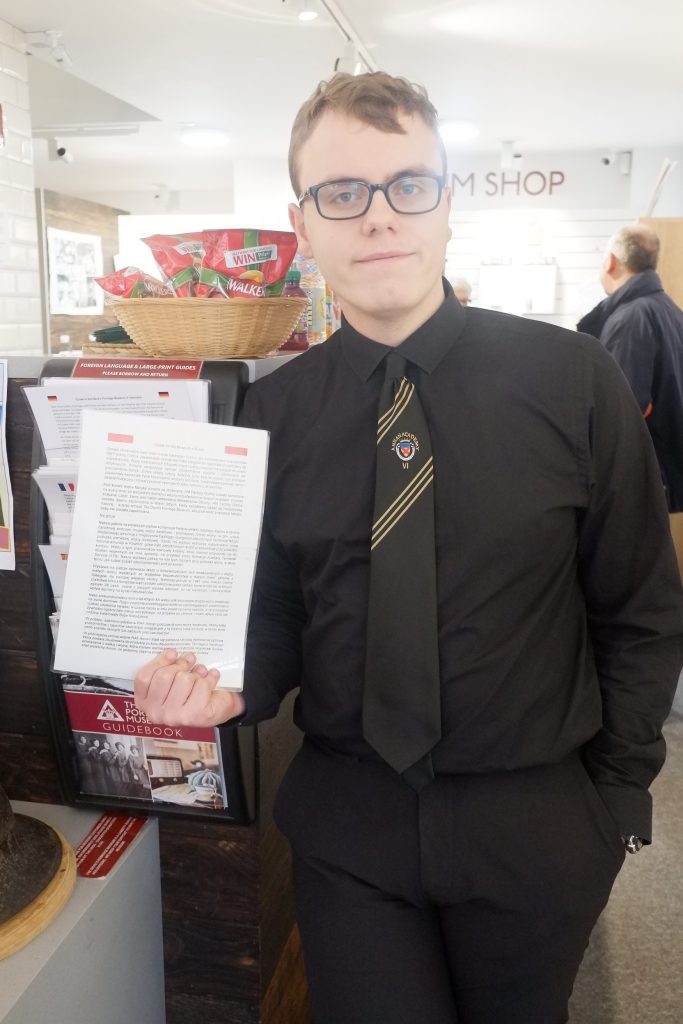
The Museum has several guides in foreign languages for visitors to use.  We now have a guide in Polish.  Łukasz Walkusz, who does work experience with us each Thursday from Annan Academy, writes…

“I believe that Polish is a important language to have at this Museum because Polish is the number one most spoken immigrant language in Britain and has become the most spoken language after English in England and Wales also it is about the same amount as Welsh speakers in the country. In the local area of the museum Polish speakers are very common so it will be helpful that Polish speakers with difficulty with English to have Polish as an option as a guide to the Museum. Polish has more of a right of having a guide than German, French and Spanish because of the amount of speakers in Britain.”

Munition girls bedroom at Devils Porridge Museum

Gretna Girls bedroom display

By Archive

Judith Hewitt, Manager of the Museum writes:

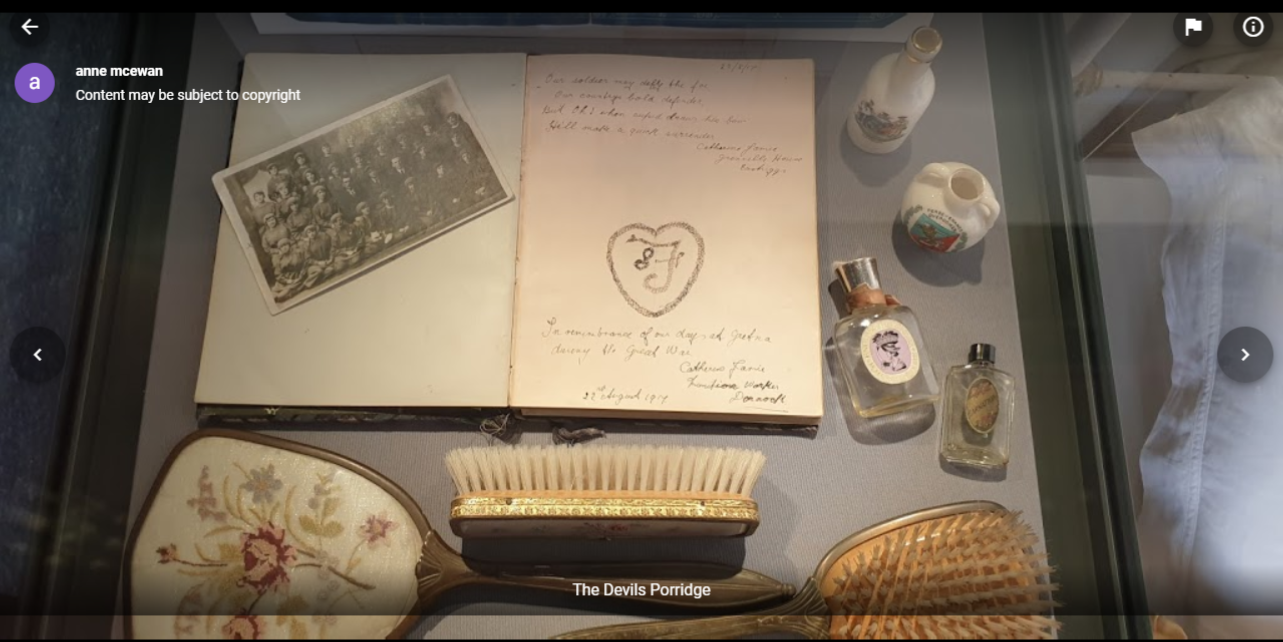
A recent visitor to the Museum posted a photograph they had taken during their website to our Google Business page, this is what it looked like:

Inside one of the cabinets on display in The Devil’s Porridge Museum.

Although I see this display a lot (pretty much every day), seeing it on Google photographed like this reminded me how much I like this area of the Museum.  This is what you can see in the photograph above (from top left):

-A photograph of workers in the Factory.  The Museum has lots of photographs like this, some posed for in Factory sections (I think this is one of those), some with friends or individually in studio portraits and some outside accommodation.  We don’t always know the names of the people in the photographs but each one is precious.

-An autograph book.  Lots of the ‘Grena Girls’ (the 12,000 women who worked at HM Factory Gretna during World War One) kept or compiled autograph books with signatures, poems, jokes, drawings and witticisms from the friends and acquaintances they made during the War.  We have several of these books in the Museum collection and they are amongst my favourite items in the Museum collection.

-Two pieces of Dornock souvenir china.  Small pieces of china such as this were extremely popular collectibles from the nineteenth century onwards (I remember my own grandfather’s collection fondly).  These pieces have heraldic devices on them (the Dornock shield) and the legend ‘Perseverance Overcomes’.  The shield is accompanied by a munition girl and soldier on some designs.  It is nice to think of women in war wanting a keepsake of this place to take with them when the left.

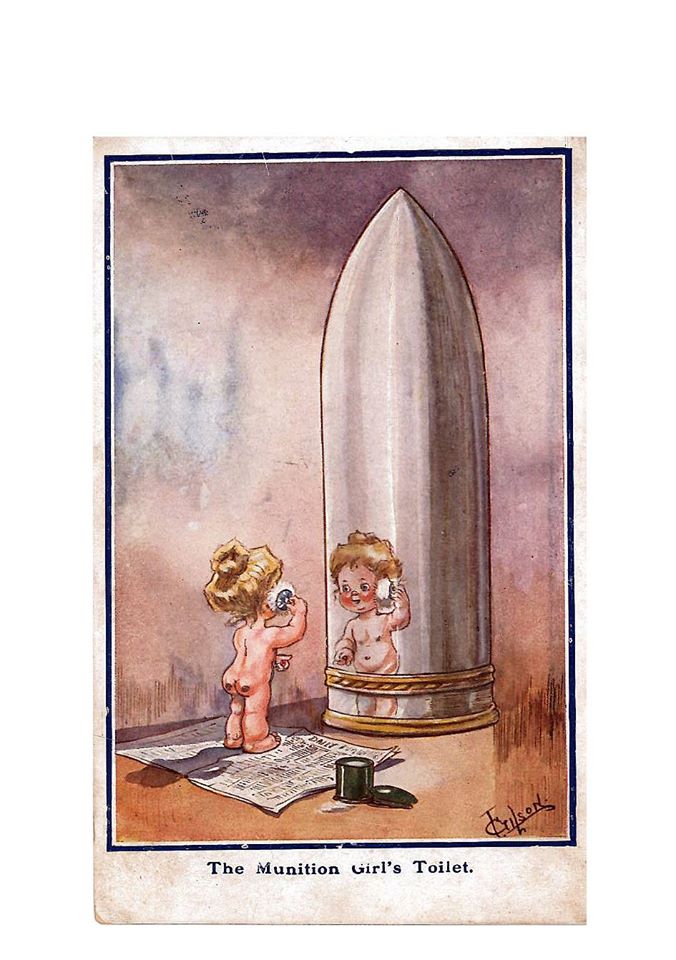
-Perfume bottles and hair brushes for the munition girl’s toilette (as gently mocked in the postcard in the Museum collection below).

munition girls toilette

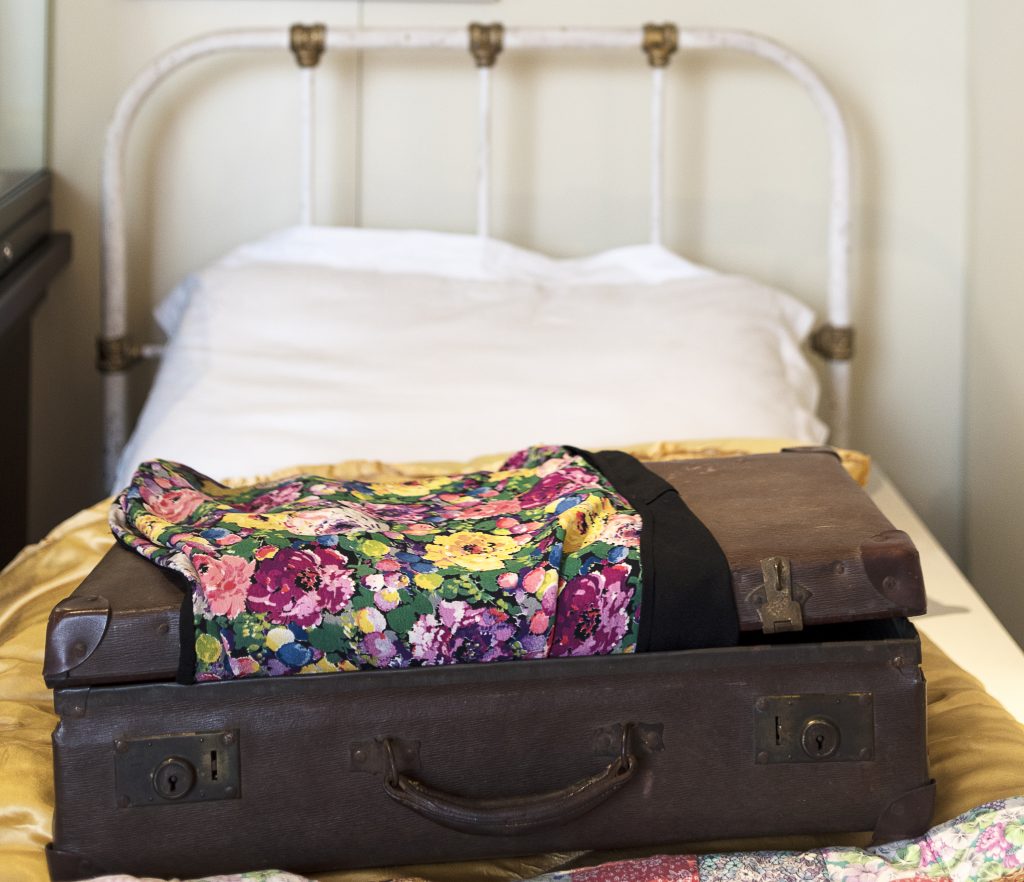
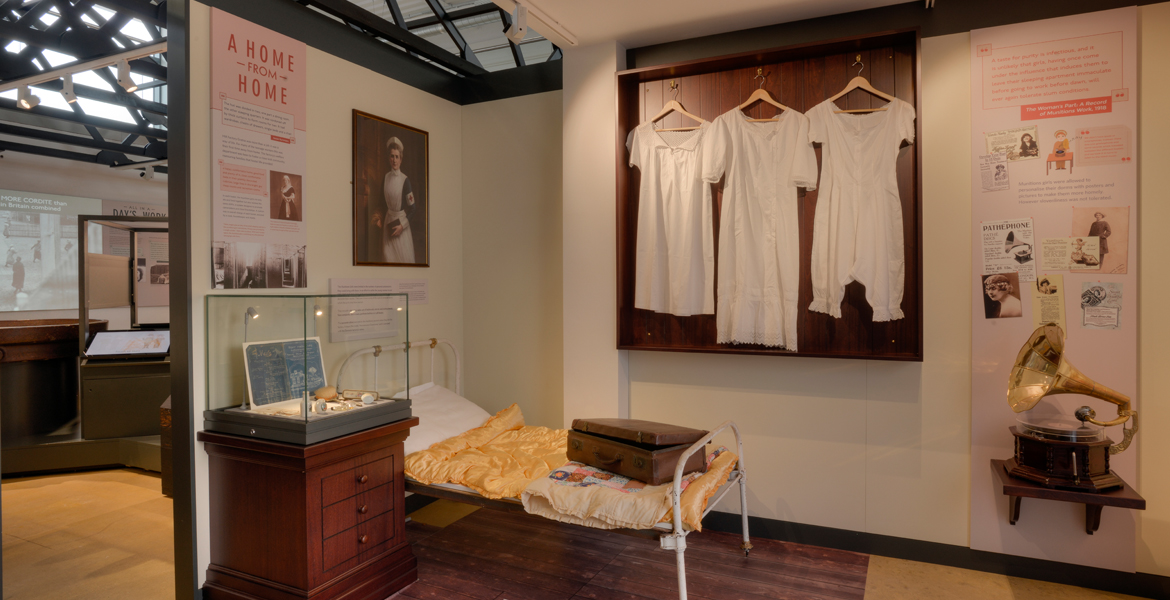
This case sits next to a bed, the carpeting represents the size of a munitions girls cubicle in one of the hostels built near here in World War One.  There is information about the hostels including hostel names, matrons, living conditions, entertainment and friendships.  You can also find out how the hostels were built and read through digital copies of other autograph books in the Museum collection.

gretna girls bedroom at the devils porridge museum

The re-imagined munition workers bedroom. Cabinet photographed on left.

We have the following booklets for sale from our online shop if you would like to know more about HM Factory Gretna and the female workforce:

Lives of Ten Gretna Girls booklet

The Devil’s Porridge Museum Guidebook

New Objects on Display

By Archive

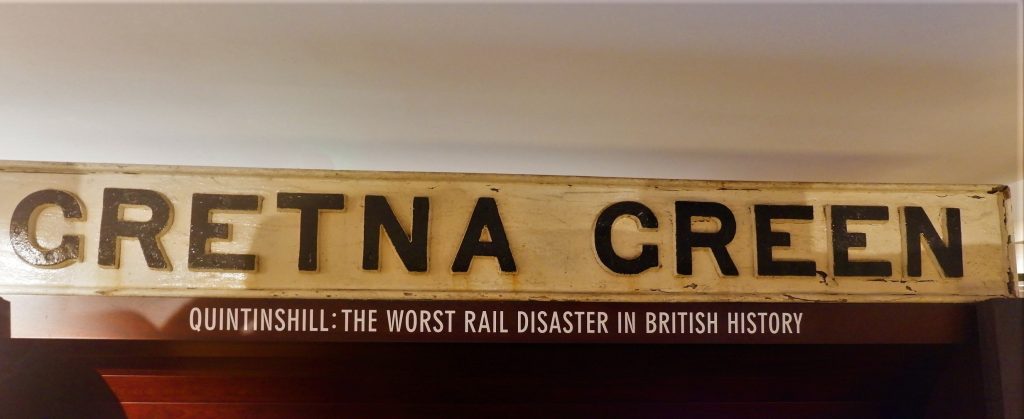
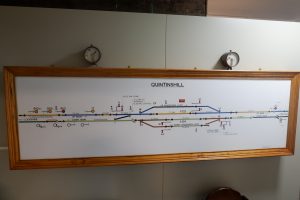
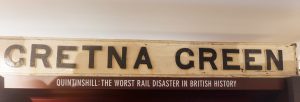
While the Museum was closed a couple of new items were added to the displays by our Vice Chairman Graham and our Secretary Neil these items are a Gretna Green sign which is above our Quintinshill display and a signal box which is placed on the wall before you enter the café showing the train routes for Quintinshill.

Signal Box

The Quintinshill rail disaster is the worst rail disaster in British history. It involved five trains and caused the deaths of over 229 soldiers. The crash was caused when a local train had been temporarily placed on the southbound mainline in the direct path of a troop train. at 6:55am, 21 carriages full of soldiers hurtled headlong into the stationary train.

Gretna Green sign at the Devils Porridge

The collision was so violent that the train, which had been 195 meters long, was compressed to just 61 meters. Minutes later with debris scattered all over the tracks the Northbound express from London approached Quintinshill. Weighing over 600 tonnes and travelling at full speed, it was powerless to stop and ploughed straight into the wreckage. The crash could be heard miles away. Within seconds a fire broke out and engulfed all three engines, of the 500 troops on board, fewer than 60 made it to roll-call the next day.

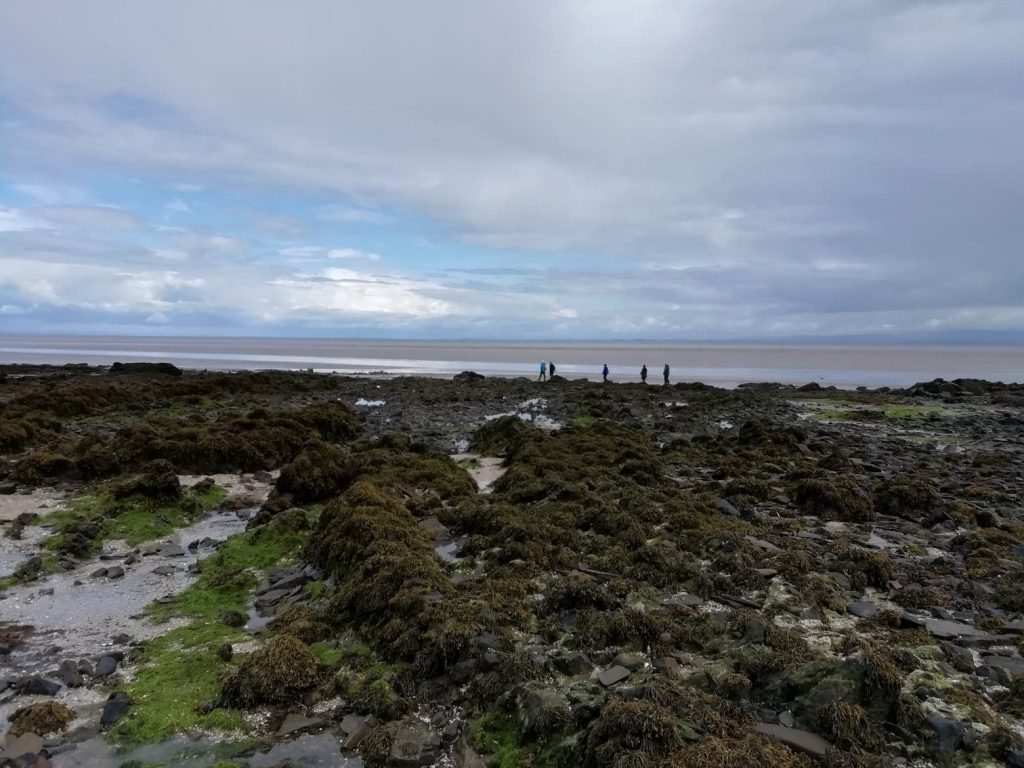
Some people on the beach in the distance.

Solway Firth Partnership SMILE project talk

By Archive

2020 is Scotland’s Year of Coasts and Waters.  The Devil’s Porridge Museum is located near the Solway Firth and we are part of the Solway Firth Partnership which works “to support a vibrant and sustainable local economy while respecting, protecting and celebrating the distinctive character, heritage and natural features of our marine and coastal area.”
On January 28th 2020, Georgina Reid from the Solway Firth Partnerhip’s SMILE project will be delivering a talk on the work of the Partnership with a particular emphasis on the SMILE project.

The talk will start at 7pm and the cost is £3 per person (payable on the door, no need to book).


SMILE Project

The aim of the Solway Marine Information, Learning and Environment (SMILE) Project is to update the 1996 ‘State of the Solway Review’, using innovative communication methods to gather pan-estuary information, learn from stakeholders and promote a better understanding of the Solway Firth ecosystem.   The update is required in the light of new demands made on the estuary’s resources and in the context of marine planning. The Review will provide some of the evidence by which a sustainable approach to planning and management may be achieved; thereby helping to deliver the ecosystem based marine planning frameworks developed for the Solway. The SMILE Project is a EMFF funded project running until the end of 2020.

Solway Firth Partnership Talk

Biographical information about the speaker

Georgina Reid, SMILE Project officer at Solway Firth Partnership

Studied for her master’s in Marine Spatial Planning and Management in Newfoundland, Canada 2016-18

Interned with the Coastal Zone Management Unit in Barbados in 2018.

For questions and enquiries, please contact Judith on 01461 700021 or email: manager@devilsporridge.org.uk

For more information on the Solway Firth Partnership see:

What is Solway Firth Partnership?

solway firth partnership

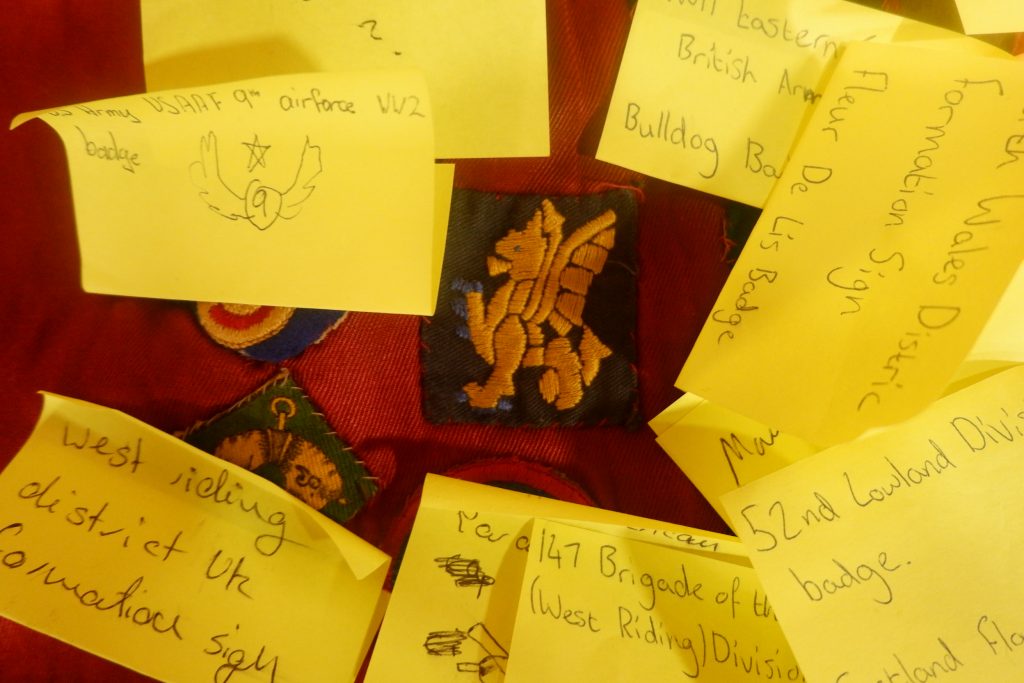
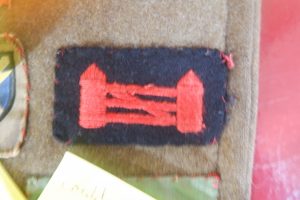
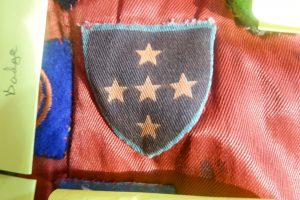
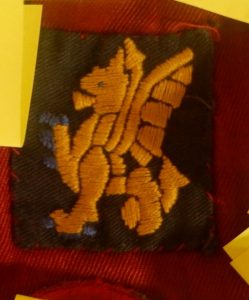
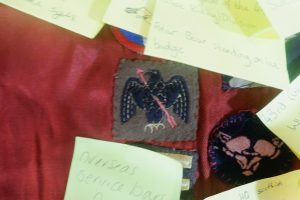
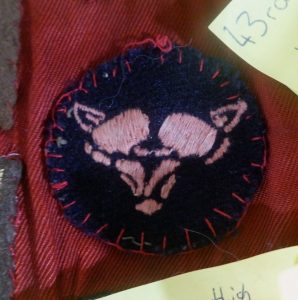
Fabric badge from World War Two.

Mystery World War Two fabric badges

By Archive

Are you an expert in World War Two fabric badges or know someone who is?

We need your help!

Recently a lady brought in an old trench coat which belonged to her mother who was a Land Girl in World War Two.

On the interior of the coat there was multiple fabric badges from many different regiments of both the British and American armed forces from World War Two.

Through careful analysis of these badges and help from our good friend google most of the badges have been identified, however there are a few badges that have not. This is where we need your help. Below there are pictures of these badges and if you recognise one, we would greatly appreciate it if you could get into contact with us.  Email: manager@devilsporridge.org.uk

(1)                                                                          (2)
fabric badge

fabric badge 2

(3)                                                                 (4)

fabric badge 3 fabric badge 4

(5)

fabric badge 5

We hope that someone can help us with this and if anyone knows any extra information or stories about the Land Girls and their badges in their coat’s then please get into contact with us.  Thank You.


A World War Two display in The Devils Porridge Museum.

A Look Inside The Museum

By Archive

In 1938 Britain took several steps to prepare its citizens for the likely event of war.


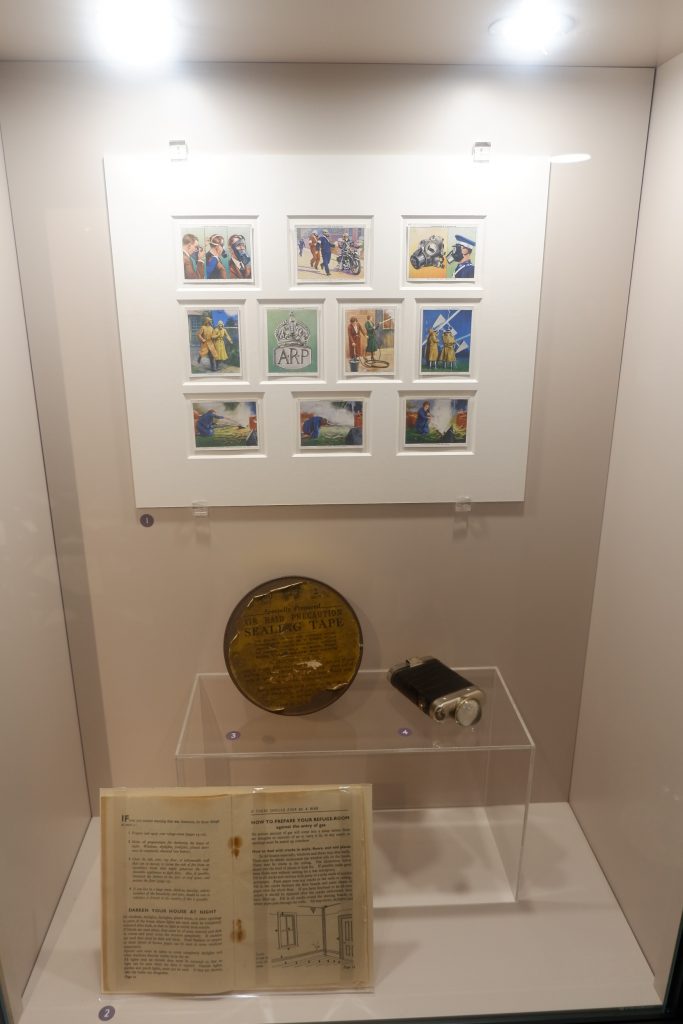
Cigarette cards that usually depicted sportsmen or film stars were replaced in 1938 with an air raid precautions series (1). In total 48 collectable cards were produced by WA and AC Churchmen to raise public awareness of how to act if the enemy attacked.


Devils Porridge Museum

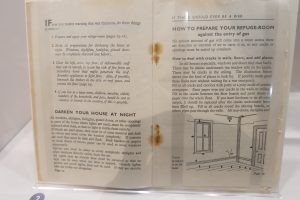
Protection of Your Home During Air Raids (2) gave government advice on how to prepare for an air attack. The booklet offered instruction on darkening the house at night and preventing dangerous gases from entering the home using Air Raid Precaution Sealing Tape (3) to seal gaps around doors and windows. The tape could be stuck to windows to reduce the danger of flying glass from an explosion.


The Devils Porridge

The Devils Porridge

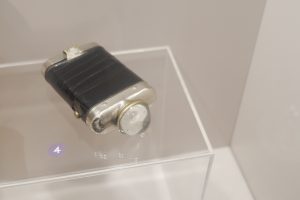
The total darkness of the Blackout resulted in hundreds of pedestrian accidents. Small pocket torches (4) were designed to help pedestrians see where they were going, but batteries were so expensive and scarce that they had limited use.


The Devils Porridge

Translate »
BOOK NOW