All Posts By

A volunteer stood next to the museum's object of the month display.

A Perfect Fit

By Archive

Finally, a placement for me!

My name is Andrew Dill I am 26 years old. I started volunteering in August of 2019 after months of looking for a suitable placement.

In my short time here I have already taken part in so many activities, exhibitions and other tasks. I helped to finish and dismantle the where’s wally trail (so had to find wally first). I help with the general day to day maintenance of checking lights and if tablets are working, helping in the café and meeting and greeting visitors to the museum.

I have frequently done research on different flags from around the world and helped to display these flags and give information for visitors about the flags.

My biggest involvement so far has been on the animals at war exhibition. I done a lot of research about animals at war, finding stories on cats, horses, pigeons and dogs that were shared in the exhibition. I helped to pick out objects like medals and photos that were used in the exhibition. I helped to design a leaflet that was use to tell people about the animals at war memorial that was taking place at the Devil’s Porridge to remember all the fallen animals that helped in the war. I also took part in the filming for iTV border life about the exhibition meeting Stephen Glenncross who told us all about the pigeons and their roll in the war

I love history and I love helping at the museum as I can share my knowledge and I learn new things all the time.

The staff here at the devils porridge have been great and very helpful they have played to my strengths and helped me when needed.

I would like to work in a museum as it involves a lot of my interests. After a couple of other placements that haven’t worked out for me I am now very settled and enjoy the work I do.

I love talking to people especially about history and love to take part in different exhibitions furthering my knowledge and interests.

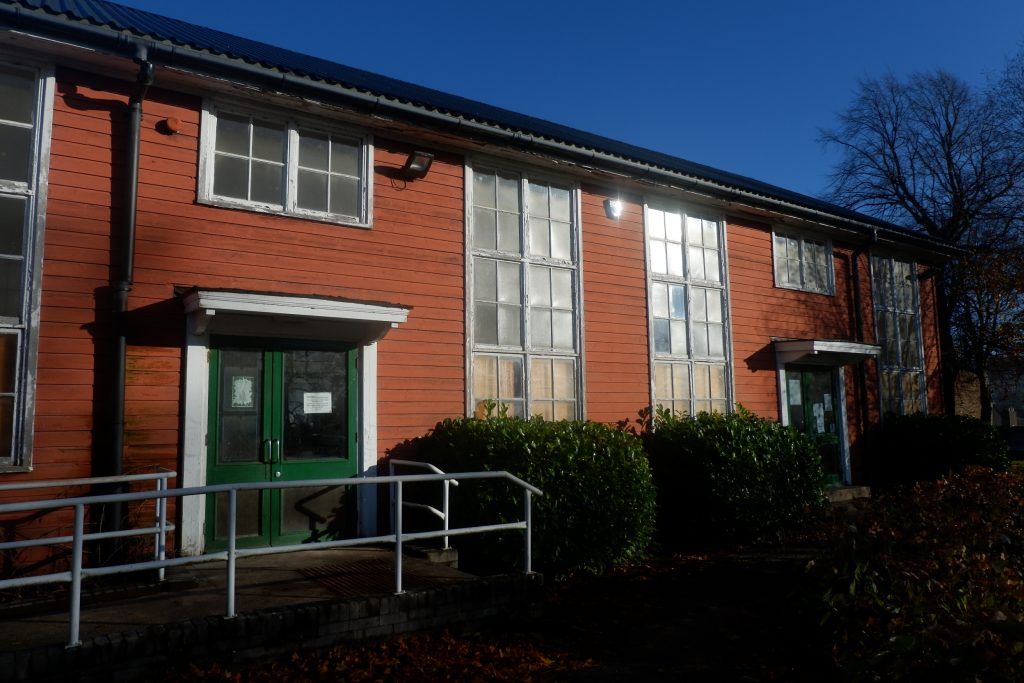
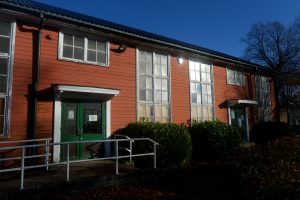
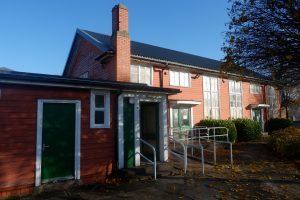
A large building with a blue sky.

Visit to World War One Gymnasium

By Archive

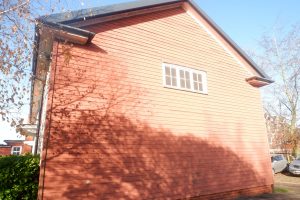
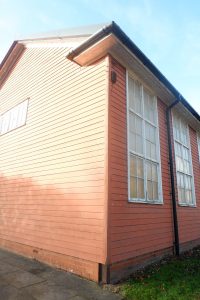
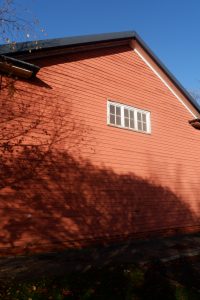
Judith, the Museum Manager and John, one of our Trustees had an interesting visit to Brampton in Cumbria on Monday.  John had heard on the grapevine that Brampton Community Centre was housed in an unusual historic building which it is said was the original Gymnasium for workers at HM Factory Gretna in World War One (the Devil’s Porridge Museum’s main focus is on this Factory and the 12,000 women who worked there).

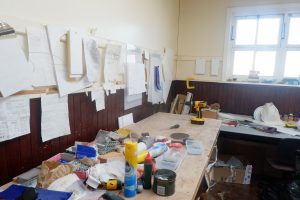
Photos above show the inside of the main building today.

Judith and John managed to contact the people at the Centre and arrange for a guided visit.  The building is very impressive and certainly would have been an excellent gymnasium.  It is now used for woodwork and art classes.  The Devil’s Porridge duo were shown around by two representatives from Brampton and an interesting discussion took place about the building: where was it located in the War (Gretna?  Eastriggs?), when was it sold and transported to Brampton (1918?  1921?  1924?) and how was it transported?  We will continue to explore these ideas and see what our research yields.

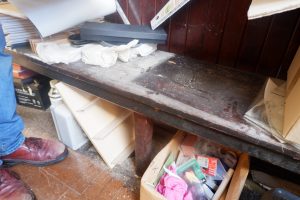
Below: these photographs show the corridor and inside the rooms which are said to have been the changing rooms for the Gymnasium (you can still see a bench which ran around the edge of the room).

It certainly is a well preserved and interesting building as these photographs testify.  Our thanks to Brampton Community Centre for being so welcoming and helpful.

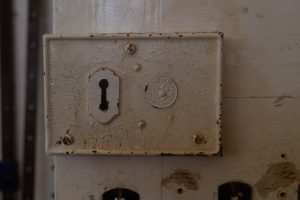
Below: this cupboard inside the building is certainly old, perhaps its lock will help us to date the building?

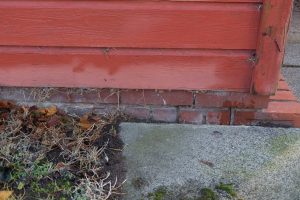
Below: photographs showing the building exterior including a photograph showing the building’s brick foundations.


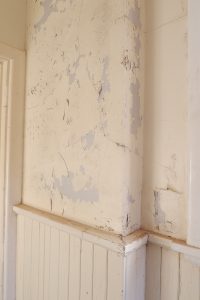
Below: some photographs of the building’s interior.

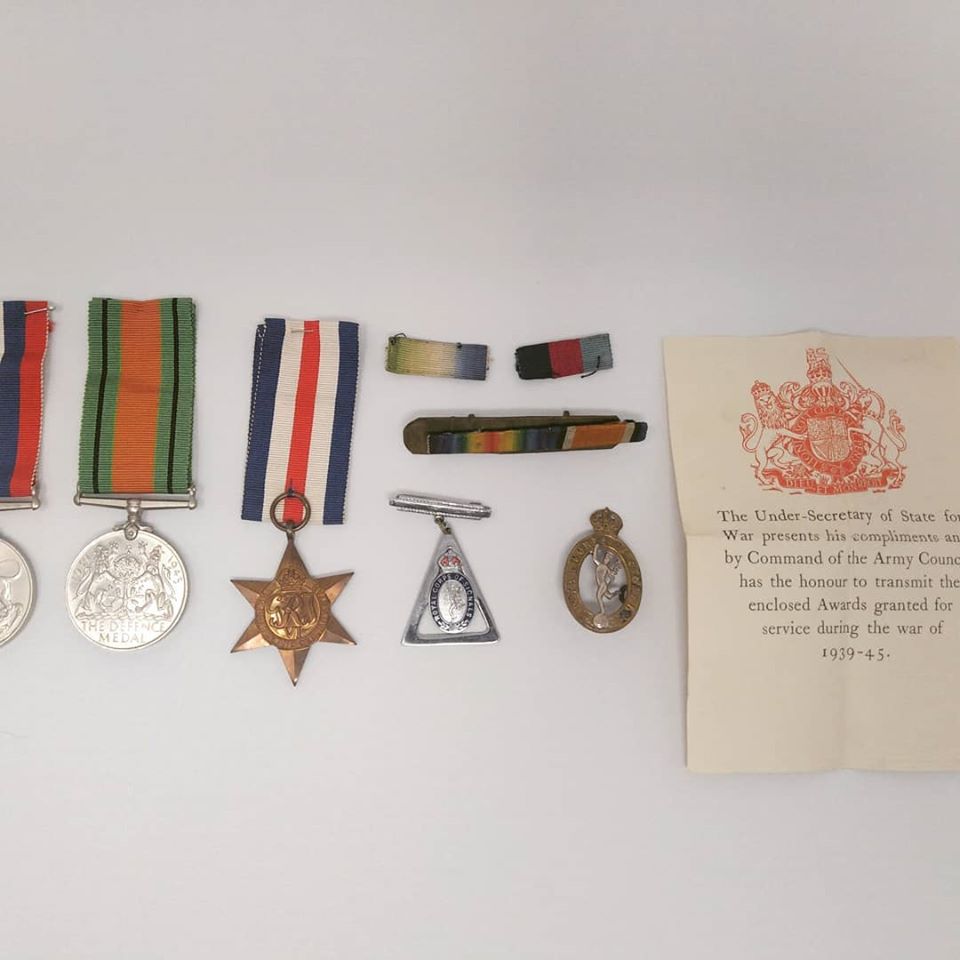
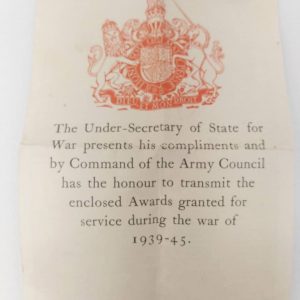
A selection of medals and a letter.

Donation of medals

By Collections blog

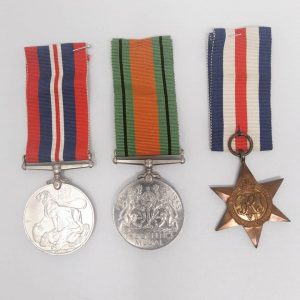
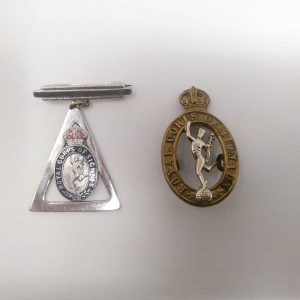
We had a lovely donation of medals from World War Two recently.  The medals were awarded to Molly (Mary) Leslie nee Nairn and were donated to the Museum by her son.

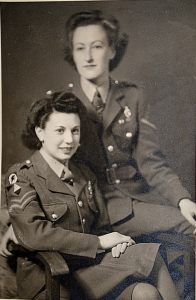
Molly joined up with her friend, May Matthews.  They were both from Annan and can be seen in this photograph below.

Molly’s son remembers, She told me that they both ran away together to join up but were then sent to different places! My mum spent time in France and Germany during her service. “

After the War, May didn’t return to Annan but lived in Walton on Thames.  Molly lived in Annan and May used to visit her.  May still has family living in Annan.

Molly lived at 14 Tweedie Terrace in Annan until she married and they moved to 12 Closehead Avenue until the 80s when they moved to 4 East Hecklegirth where she lived until shortly before her death in January 2018.  Molly’s son now lives in Cumbria.   

We thank him for this donation, the information provided and for giving us permission to share it.

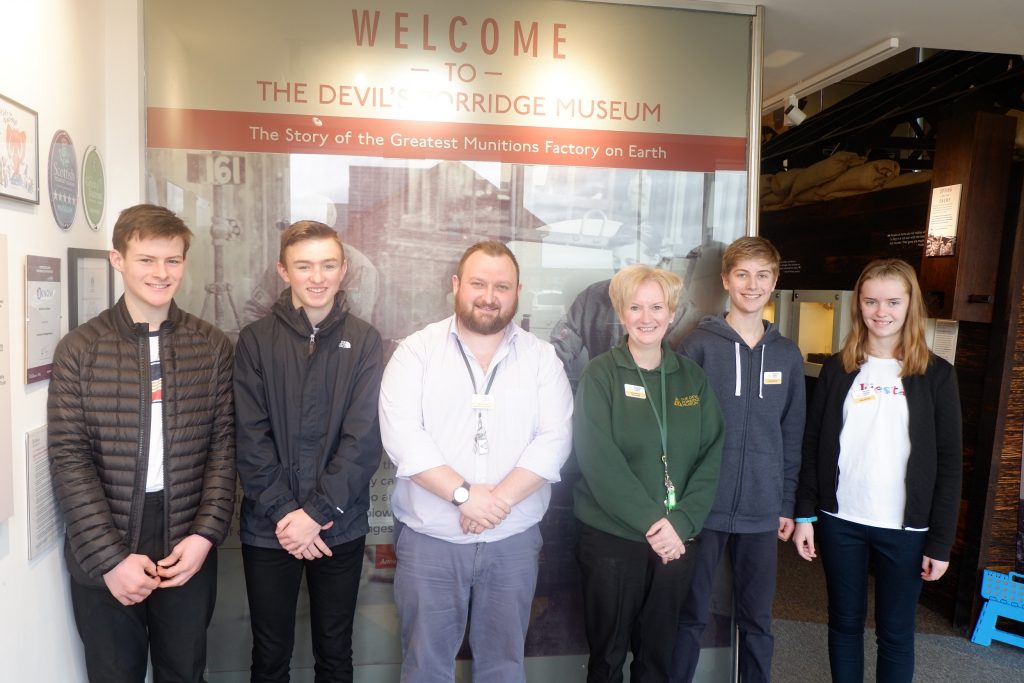
A group of museum volunteers and staff.

New Duke of Edinburgh volunteers

By Archive

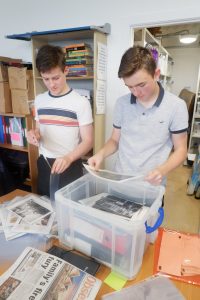
We were very happy to welcome some new young volunteers to the Museum yesterday.  Andy and Jake have both been volunteering with us for a few months now (Jake first volunteered with us when our Access and Learning Officer, Steven Bogle, organised our Social Media takeover day) but they have both decided they would like to volunteer with us more to achieve their Duke of Edinburgh Bronze Award.  They have been volunteering in the office with Judith, the Museum Manager, where they have been helping her to sort our paper objects into the correct acid free storage as part of a major re-organisation of the Museum’s object store.

Alana and Finn volunteered with us for the first time on Saturday.  Arna, our Office Manager, showed them the ropes in Front of House and she was impressed with how quickly they took to it and grasped how to operate the till and deal with customers.

We have another young Duke of Edinburgh volunteer starting with us today and we would always welcome the participation of more young people at The Devil’s Porridge Museum.  To inquire, email steven@devilsporridge.org.uk or phone 01461 700021.

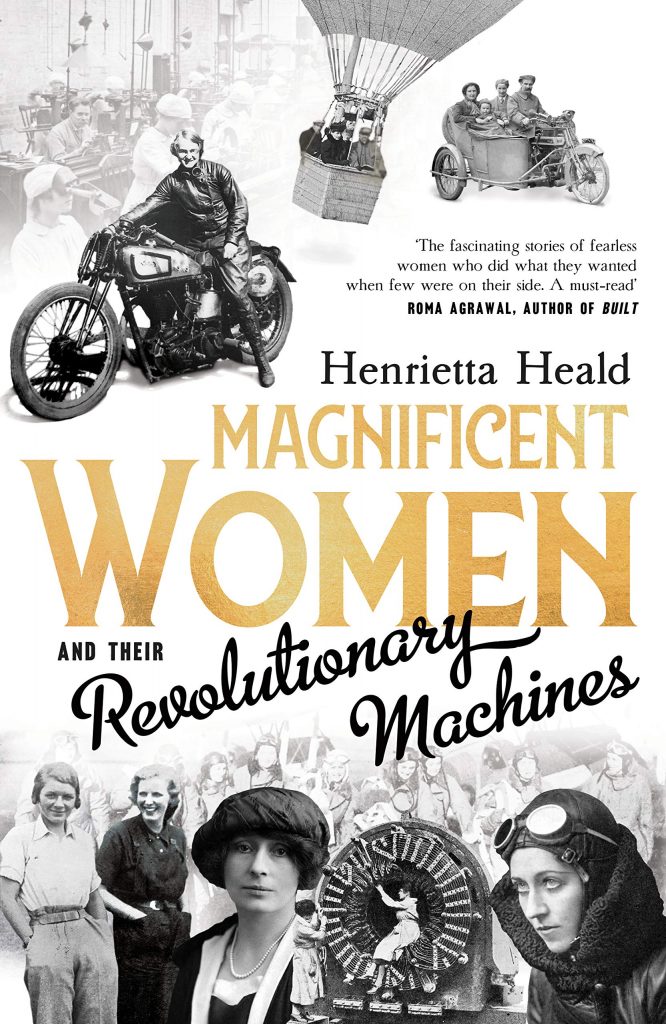
Magnificent Women and Their Revolutionary Machines by Henrietta Heald book front cover.

Donation from Women’s Engineering Society

By Archive

An interesting parcel appeared at The Devil’s Porridge Museum this week.  Inside it was a signed copy of a book called ‘Magnificent Women and their Revolutionary Machines’ by Henriette Heald.  The book chronicles the early days of the Women’s Engineering Society (or WES) and features biographical information about some of their influential early members (including women with local connections such as Dorothee Pullinger who built the first car ‘for ladies, by ladies’ in Dumfries and Galloway).

The book was donated to the Museum by Ceryl Evans who met Judith Hewitt, the Museum Manager in London in September at the Women’s History Network AGM.  This lady spoke at the conference about a brilliant project WES had organised to celebrate the centenary of their organisation.

WES was established in 1919 to preserve the work done by women in engineering in World War One and to ensure that the gains made in women’s technical accomplishments were maintained in the post War world.  We would be very interested to see if any of the women who worked at HM Factory Gretna were members and this is an area of research which we will be pursuing.

For more details on the History of WES see:

https://www.wes.org.uk/content/history

https://www.wes.org.uk/centenary-map

Twitter @WESCentenary

Instagram @wes_centenary
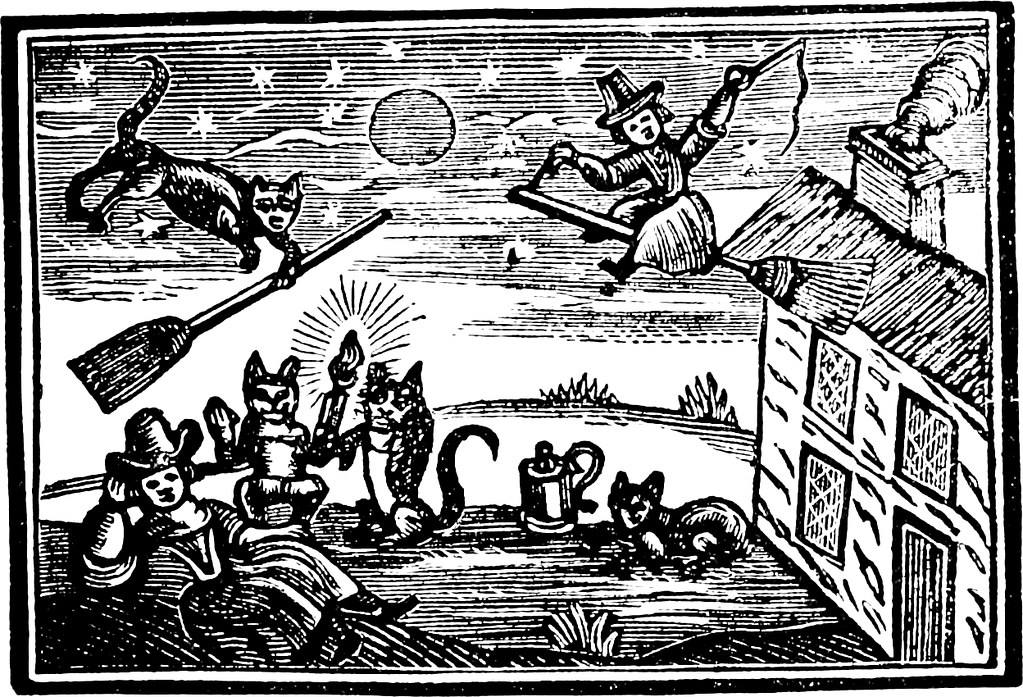
 

Illustration of a witches and cats.

Witchcraft: curses and protection

By Archive

A talk by Dr Peter Hewitt


There is a field in Cornwall which is said to have been cursed by a witch. Accounts date back to the sixteenth century and the legend of Mother Ivey. In the 20th century, the water company tried to dig into this field but were unable to through a series of unfortunate events. In this talk, Dr Hewitt will focus on places which are believed to have been cursed by witches, explore the origins of this particular ‘witch’s curse’. His talk will also feature on the methods people have taken to protect themselves from witchcraft. This might be carving protective symbols in the wall of their houses, hiding things in wall or roof spaces or creating elaborate witch bottles.

Dr Peter Hewitt is a Folklorist who completed a Masters and PhD exploring folklore, magic and ritual in Museum Collections. He now works for Dumfries and Galloway Museum Service and was previously employed by Museums Northumberland and worked for many years as Collections Researcher at the Museum of Witchcraft and Magic in Cornwall. His work has been published in various books and articles, he has delivered talks to different organisations and groups including the Folklore Society and the Hidden Charms conference, he is a regular writer for Paranormal Review and a collaborator with Folklore Tapes. His current research focuses on Holy Wells in Northumberland.

A munition worker.

Worker at HM Factory Gretna

By Collections blog

Worker at HM Factory Gretna

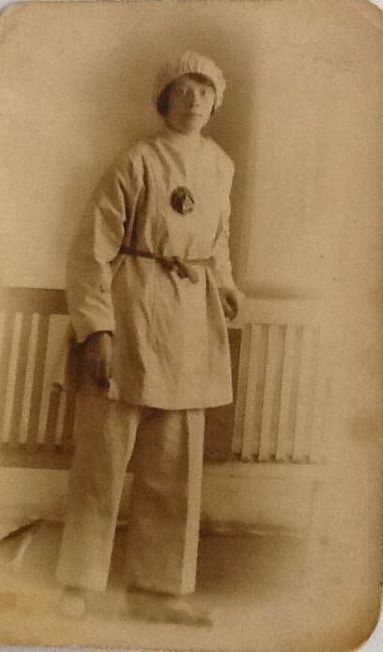
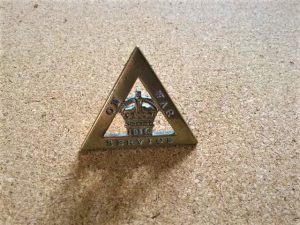
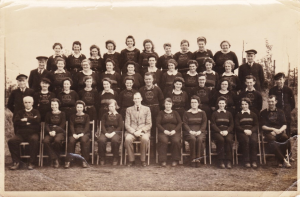
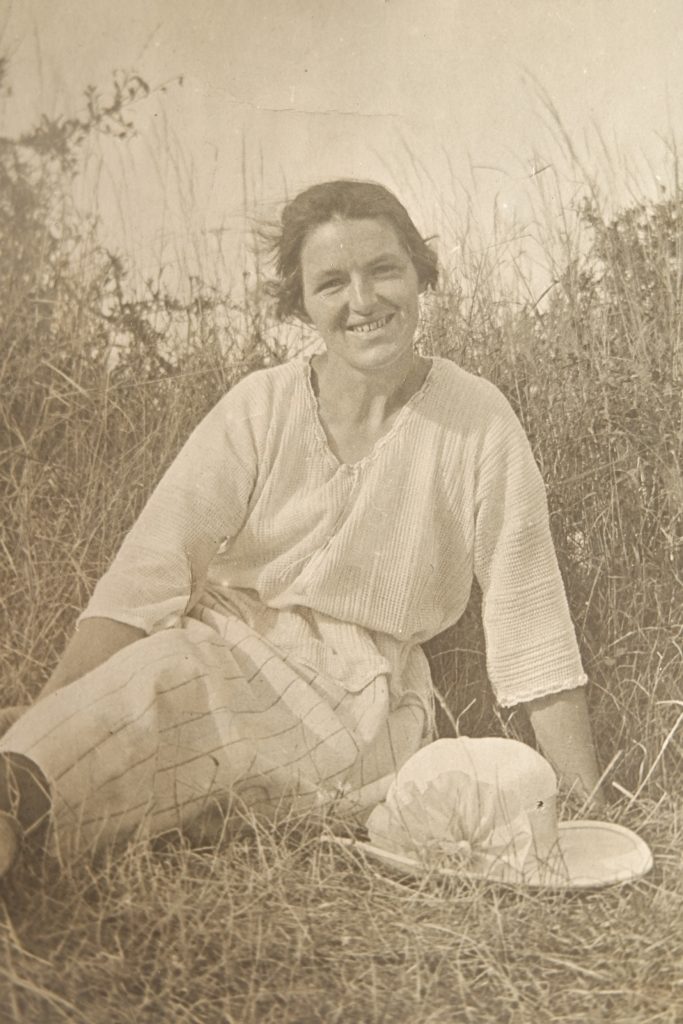
A visitor sent this to the Museum recently, it is a photo of her grandmother who was a munitions worker at HM Factory Gretna during the First World War. They also still have their grandmothers ‘On War Service’ badge which the munitions workers received when working at the factory, each one had its own unique identification number on it which means that every single badge is different.

On War Service Badge

This is a photo of her grandmother who was called Mary Ellen Fowler. The visitor was in Gretna recently and seen the ‘On War Service’ badge which is near the outlet village and thought of her grandmother. The visitors grandmother can be seen here in her factory uniform which all of the factory workers had to wear and could not include any metal in case a spark was created which would cause an explosion as the workers were dealing with highly explosive materials.

This is one of the ‘On War Service badges which were given to the munitions workers who worked in HM Factory Gretna. Every worker was given one and each one has its own unique number on it so that it was easier to identify the workers due to there being so many of them.


People holding their awards.

Object of the Month for November

By Object of the Month

Object of the Month for November

Items commemorating a munitions girl’s work in World War Two

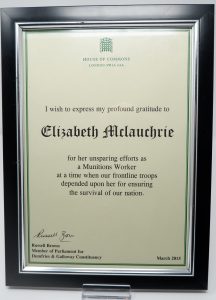
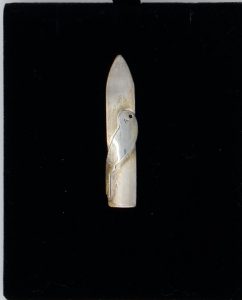
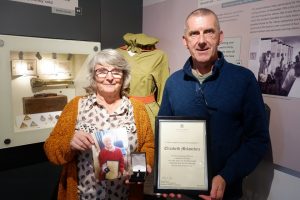
New Object of the Month for November is a certificate which was given to a lady called Elizabeth McLauchrie and a brooch also given to her for her services in munitions factories during World War Two.

certificateBrooch

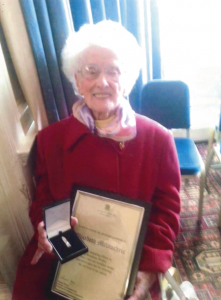
Recently a couple visited the Museum to share the account of a lady called Elizabeth who worked in the Powfoot Munitions works during World War Two. Her work was recognised by a campaign led by Russell Brown to get munitions workers recognition for their contribution to the war effort in both World Wars. Russell Brown was an MP in Dumfries and Galloway from 1997 to 2015 and previously worked in an Imperial Chemical Industries (ICI) plant as a plant operative and started to campaign for the government to give surviving Scottish factory workers some recognition for the work that they did during the Second World War.

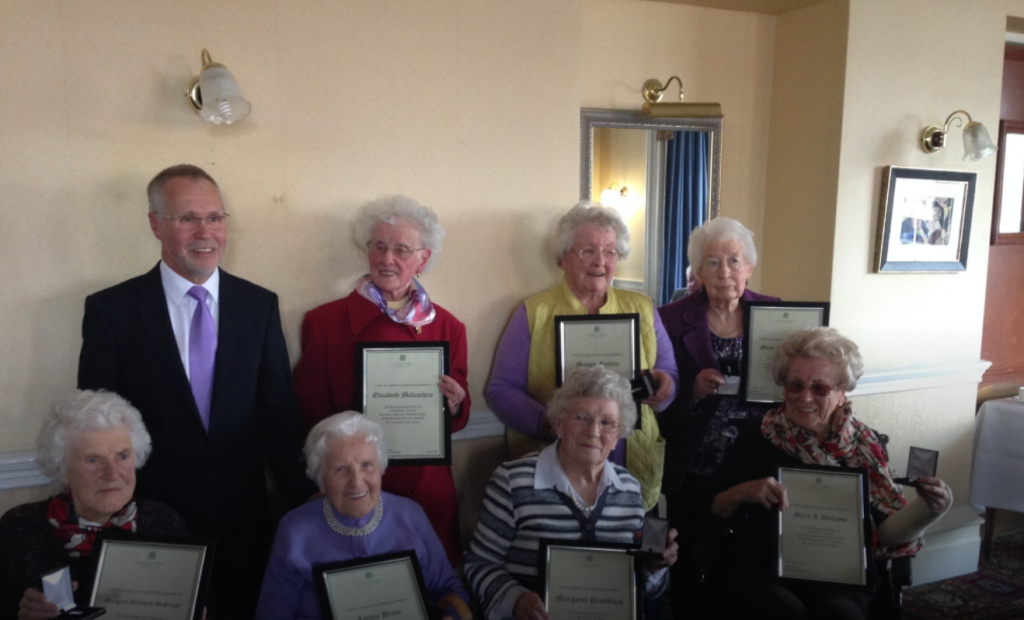
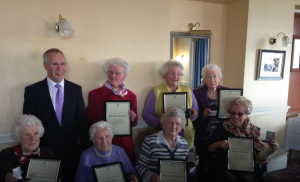
Seven of the eleven surviving munitions workers who lived in Dumfries and Galloway attended the event along with 24 families of deceased munitions workers who worked during the first and second World Wars, they were given a certificate and a brooch with a canary on a shell made by a local jeweller from Balmaclellan. Russell also set up a campaign to raise £100,000 to build a lasting memorial to munitions workers at the National Memorial Arboretum.

The couple have loaned us a photograph of Elizabeth along with a framed certificate awarded to her from the Houses of Parliament and a beautiful brooch in the shape of a shell with a Canary on it (as the girls were often named the Canary Girls). They were called the Canary girls as when mixing the cordite in the factory they had to mix it by hand which meant that the chemicals would mix with the melanin in the skin which would cause a yellow pigmentation and would stain the skin, although unpleasant, this was not dangerous and the discolouration eventually faded over time with no long term health defects.

Our visitors told us that Elizabeth had visited our Museum several times and thought it was a fitting place for her items to be. We agree and have now put them on display in the Object of the Month. Thanks Colin and Jean for making this loan happen and for speaking with members of the Museum staff when you visited.

Mossband Clock

Mossband Clock Restoration

By Archive

Mossband Clock Restoration


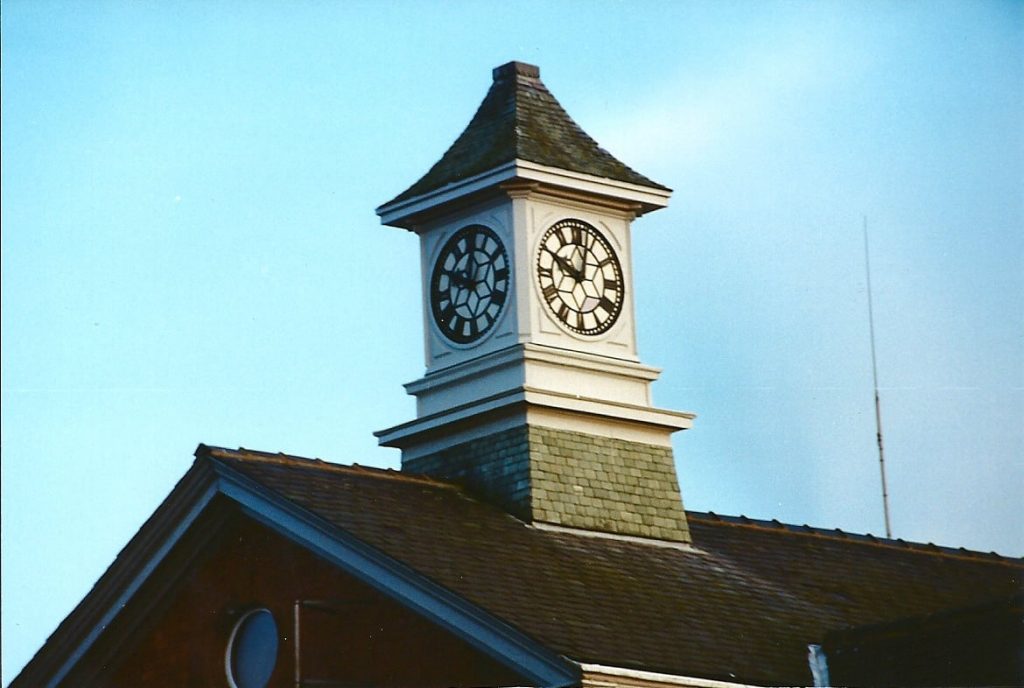
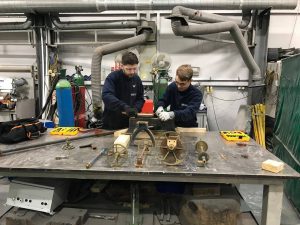
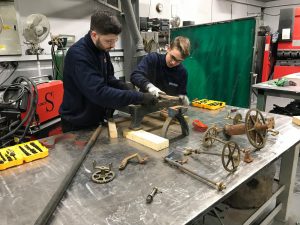
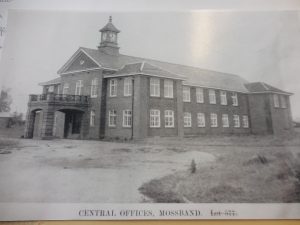
Over a hundred years ago, a clock was installed above Mossband House, one of the key buildings in the Longtown (or Mossband) section of HM Factory Gretna, the greatest factory on earth in World War One (The Devil’s Porridge Museum tells is story).

Mossband Clock

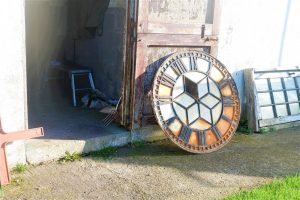
Several years ago, the building was demolished but the clock was saved and put in the care of The Devil’s Porridge Museum.

Now the clock is being restored by the original clockmakers (Smith of Derby) and will be installed within the Museum this year.

Clock Restoration

The clock was collected from us on Wednesday and Smith of Derby have already provided us with this update on the progress of the work.

“…two of our apprentices are currently working on cleaning up the clock movement, and will be stripping out the glazing of the dials later.”

Mossband Clock

We will keep you updated on how this work develops.

If you don’t know this is what it looked like back in the day.

Mossband House in 1916

Thanks to the Association of Independent Museums, Museums Galleries Scotland and Friends of Annandale and Nithsdale Museums for making this project possible.

Fascinating new HM Factory Gretna donation

By Collections blog

Jake Mitchell, a student at Annan Academy, volunteers at The Devil’s Porridge Museum at the weekend as part of his Duke of Edinburgh award.  This weekend, he looked at a recent object donation and wrote this blog for the Museum’s website about it.

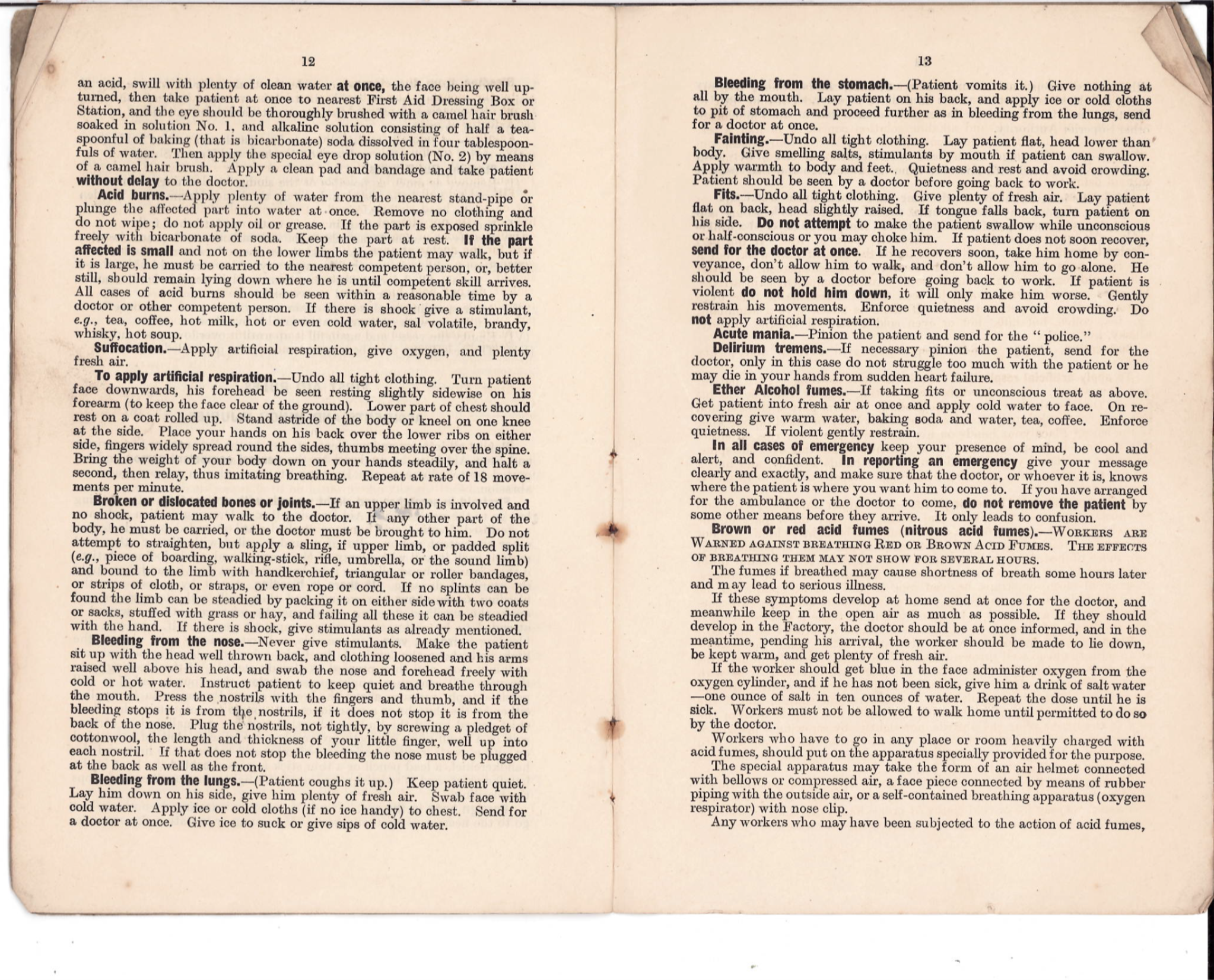
This week we were gifted some very interesting objects from a lady whose grandparents both worked at H.M. Factory, Gretna. One of the objects was a Factory Rule Book owned by her Grandfather (his name and address in the Mossband section of the Factory can be seen at the top).
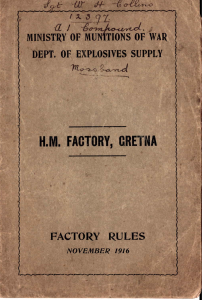
factory rule book


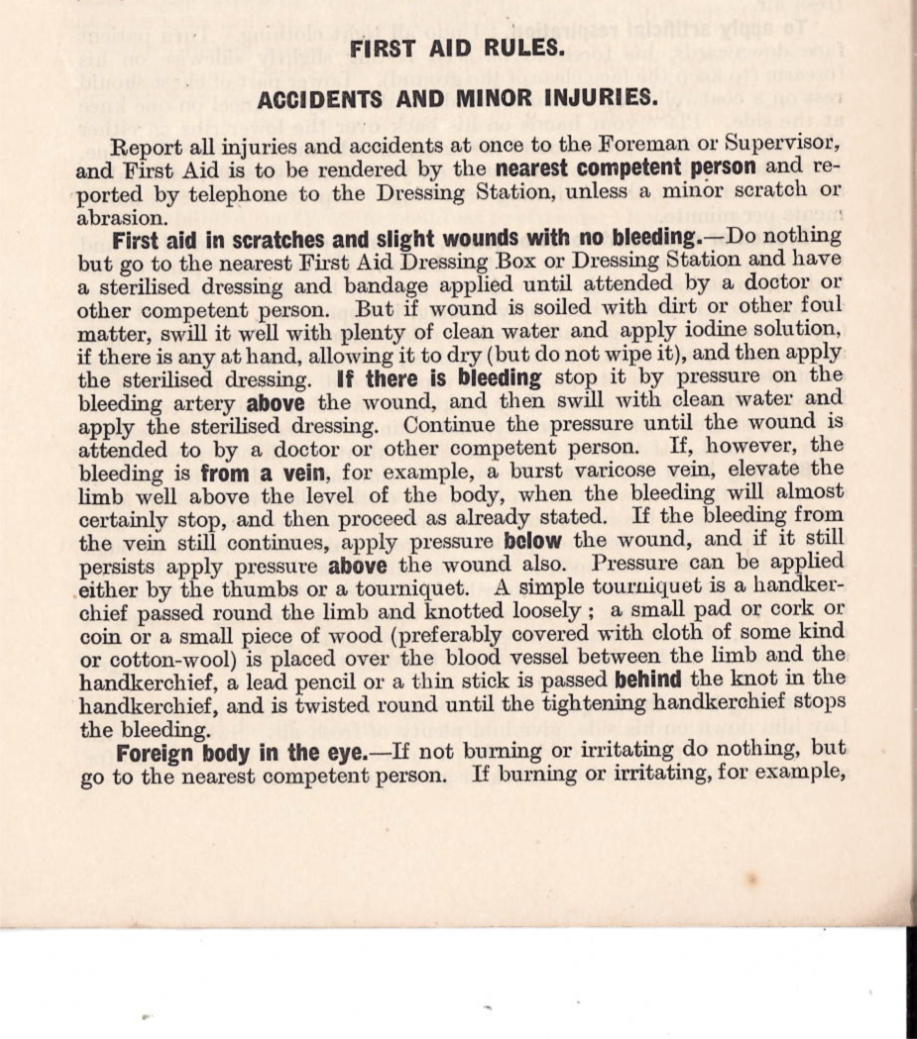
Amongst the general rules is one which states that spitting is banned throughout the Factory!  The First Aid rules are quite comprehensive (as might be expected, this was dangerous work!)
 

Also gifted to the Museum were photographs of the donor’s maternal grandmother and grandfather along with their biographical information.
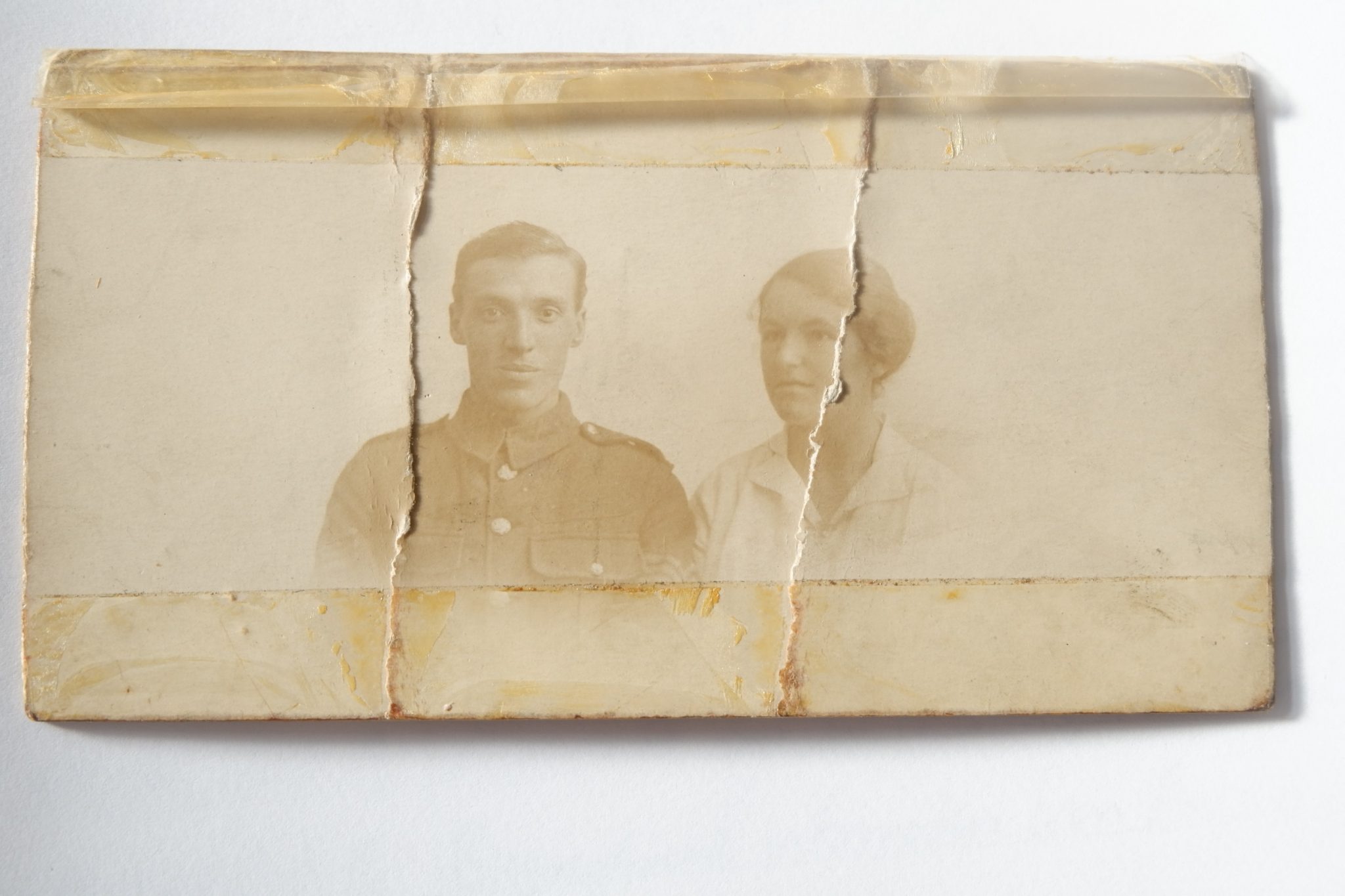
William Henry Collins was born on 24 September 1894 in Colchester, Essex. He joined the Royal Engineers in 1914 and met Anne Smith in 1916 when he was stationed in Gretna. He married Anne Smith on 7 July 1917 in Southsea. They had 4 girls in Colchester  during their marriage. They moved to Beeston, Nottingham where he worked at Wilford Power Station. He died on 26 October 1981 in City Hospital, Nottingham at the age of 87.

Anne Smith was born on 21 December 1898 in Fraserburgh, Aberdeenshire. Her mother died in 1909 and she went to live with her father’s parents in Buckie. She met William Collins in Gretna where she was working at the munitions factory. She married William Henry Collins on 7 July 1917. They had four children during their marriage, moving from Colchester to Beeston where she lived until she died on 4 January 1997 at the age of 98.

We are so grateful for this generous donation which helps us to understand more about what happened here in World War One.

Translate »
BOOK NOW