All Posts By

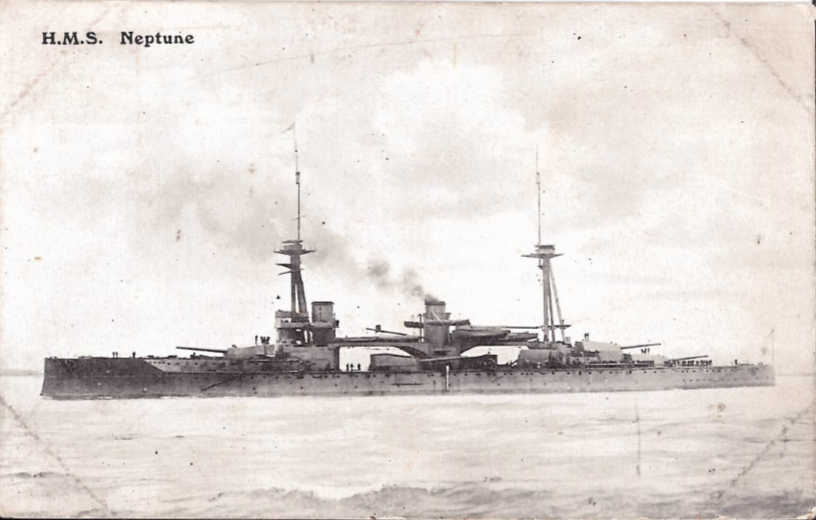
Postcard of a ship, HMS Neptune.

HMS Indomitable & HMS Neptune

By Collections blog

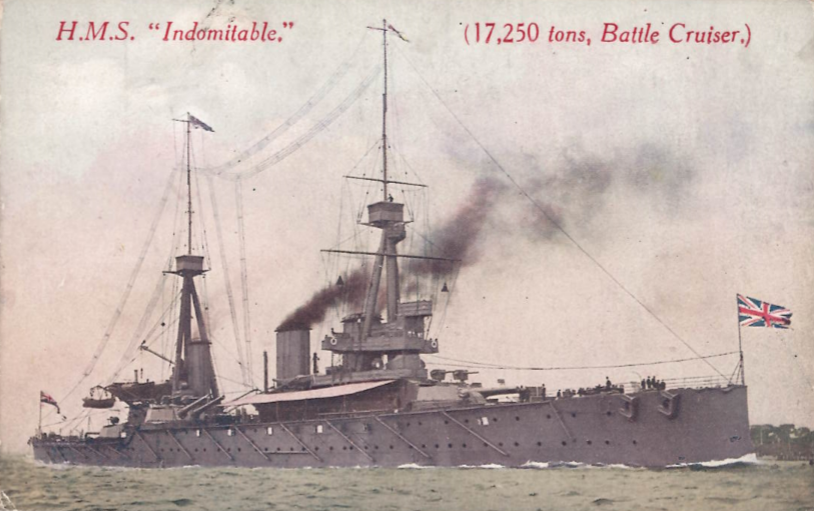
In the Museums store we have postcards with images of these two WW1 Warships and thought we would do some research about them to see what impact they had in the First World War.

HMS Indomitable was one of three invincible-class battlecruisers built for the Royal Navy before World War One and had and active career during the war. She tried to hunt down the German ships Goeben and Breslau in the Mediterranean when war broke out and bombarded Turkish fortifications protecting the Dardenelles even before the British declared war on Turkey. She helped sink the German armoured battlecruiser Blücher during the Battle of Dogger Bank in 1915 and towed the damaged HMS Lion to safety after the battle. She damaged the German battlecruisers Seydlitz and Derfflinger during the Battle of Jutland in mid 1916 and watched her sister ship HMS Invincible explode. She was then deemed obsolete after the war and was sold for scrap in 1921.

HMS Neptune was a dreadnaught Battleship built for the Royal Navy in the first decade of the twentieth century, the sole ship of her class. She was the first British Battleship to be built with superfiring guns. Shortly after her completion in 1911, she carried out trials of an experimental fire control director and then became flagship of the Home Fleet. Neptune became a private ship in 1914 and was assigned to the 1st Battle Squadron.


The ship became part of the Grand Fleet when it was formed shortly after the beginning of the First World War in August 1914. Aside from participating in the Battle of Jutland in May 1916, and the inconclusive Action of 19 August several months later, her service during the war generally consisted of routine patrols and training in the North Sea. Neptune was deemed obsolete after the war and was reduced to reserve before being sold for scrap in 1922 and subsequently broken up.

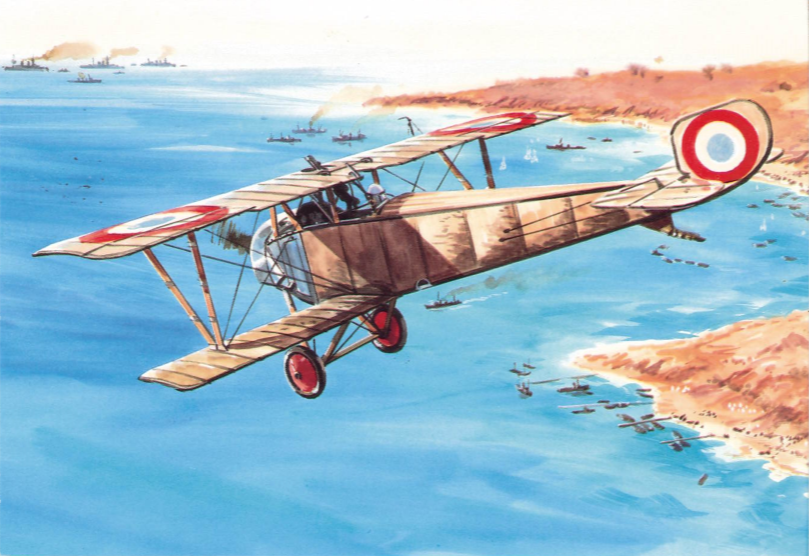
An illustration of Nieuport 10 plane.

WW1 Plane Postcards

By Collections blog

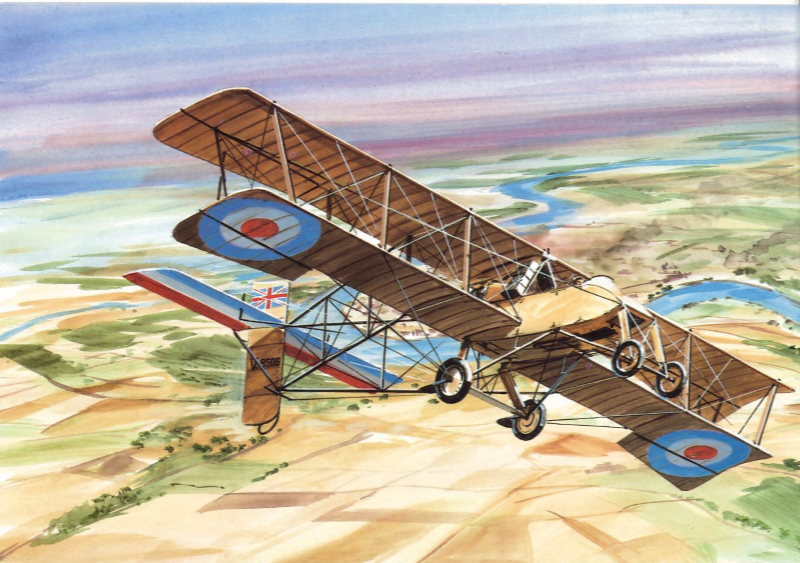
Voisin LA

The Steel-framed Voisin pusher biplane was in service with the French Army at the outbreak of war. A batch of the Voisin LA (Type 3) with 120hp Canton Unne (Salmson) engines was even waiting to be delivered to Russia. Escadrilles VB1, 2 and 3 with 18 Voisins formed the first French Groupe de Bombardment in November 1914 and carried out some very successful raids until September 1915 when day-bombing was stopped because of the superior German fighter aircraft, and Voisins changed to night-bombing. 37 Voisin LAs with 200hp Hispano-Suiza engines were obtained by the RNAS and used in the Aegean, Africa and Mesopotamia. British and French built Voisins were used on the Western front by Nos. 4, 5, 6, 7 and 16 Squadrons RFC and in Italy, this machine formed the operational establishment of five squadriglia.


Nieuport 10

The Nieuport 10 two-seater biplane was the earliest line of the famous French fighter aircraft which came to be used by France, Britain and Italy. It was operated by the RNAS in the Dardenelles where some of the Mk. 10s were converted to single seaters armed with a Lewis Gun. It was replaced by a larger and stronger Nieuport 12 which was used by Nos. 1, 4, 5, and 46 Squadrons RFC and by Nos. 1, 2, 3, 4, 7, and 10 Squadrons RNAS.


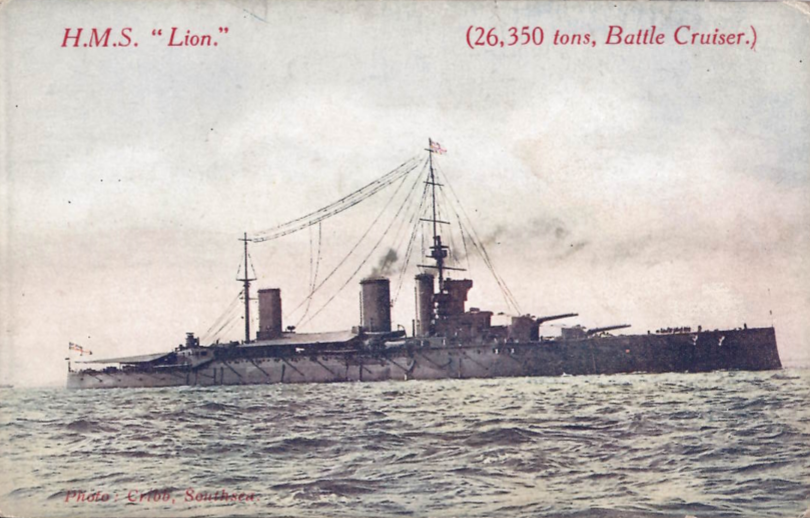
Postcard of a ship HMS Lion.

HMS Lion Postcard

By Collections blog

HMS Lion was a Battlecruiser built for the Royal Navy in 1910. She was the lead ship of her class, which was nicknamed the ‘Splendid Cats’. They were significant improvements over their predecessors of the indefatigable class in terms of speed, armament and armour. This was in response to the first battlecruisers, the Moltke class, which were very much larger and more powerful than the first British Battlecruisers, the Invincible class.


Lion served as the flagship of the Grand Fleet battlecruisers throughout World War One, except when she was being refitted or under repair. She sank the German light cruiser Cöln during the Battle of Heligoland bight and served as Vice-Admiral Beatty’s flagship at the battles of Dogger Bank and Jutland. She was so badly damaged at the first of these battles that she had to be towed back to port and was under repair for more than two months. During the battle of Jutland she suffered a serious propellant fire that could have destroyed the ship if it had not been for the bravery of Royal Marine Major Francis Harvey, the turret commander, who posthumously received the Victoria Cross for having ordered the magazine flooded. The fire destroyed one gun turret which had to be removed for rebuilding while she was under repair for several months. She spent the rest of the war on uneventful patrols in the North Sea, although she did provide distant cover during the Second Battle of Heligoland Bight in 1917. She was put into reserve in 1920 and sold for scrap in 1924 under the terms of the Washington Naval Treaty.

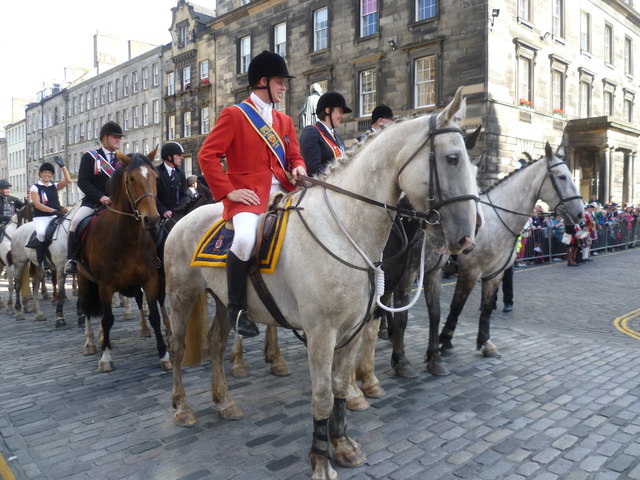
Photo of Annan Riding of the Marches.

Devils Porridge Museum Podcast

By Archive

Welcome to The Devils Porridge Museum Podcast!


The Devils Porridge Museum Podcast has been created as part of an inter-generational oral history project. The project is now available for you to listen to online.


Through conversations and interviews, our volunteers and others from the local community will be sharing their personal stories and memories with The Devils Porridge Podcast team.


This week on our podcast we chat to Sybelle, who is one of our volunteers about the Annan Riding of the Marches and the history of the event.


More episodes will follow over the coming weeks, so please come back and listen to more installments throughout the summer.


If you would like to get involved in the project to share your own stories and memories or if you would like to find out more about joining our production team please contact: Steven@devilsporridge.org.uk.


You can listen to the podcast below:

The logo for The Devil's Porridge Museum podcast.

The Devil’s Porridge Museum Podcast

By Archive

Welcome to the Devil’s Porridge Museum Podcast!

The Devil’s Porridge Museum Podcast has been created as part of an inter-generational oral history project. This project is now available for you to listen to online.

Through conversations and interviews, our volunteers and others from the local community will be sharing their personal stories and memories with the Devil’s Porridge Museum Podcast team.

This week on our podcast we chat with Jade and former young volunteer at the museum who recently included a dedication to the museum in her final year dissertation at the University of Stirling.

More episodes will follow over the coming weeks, so please come back and listen to more instalment throughout the summer.

If you would like to get involved with the project to share your own stories and memories or if you would like to find out more about joining our production team please contact Steven@devilsporridge.org.uk

You can listen to the Podcast below:

The logo for The Devil's Porridge Museum podcast.

The Devil’s Porridge Podcast

By Archive

Welcome to the Devil’s Porridge Museum Podcast!

The Devil’s Porridge Museum Podcast has been created as part of an inter-generational oral history project. This project is now available for you to listen to online.

Through conversations and interviews, our volunteers and others from the local community will be sharing their personal stories and memories with the Devil’s Porridge Museum Podcast team.

This week our Access and Learning Officer, Steven Bogle is in the hot seat discussing his first year at the Devil’s Porridge and the digital plans for the summer ahead.

More episodes will follow over the coming weeks, so please come back and listen to more instalment throughout the summer.

If you would like to get involved with the project to share your own stories and memories or if you would like to find out more about joining our production team please contact Steven@devilsporridge.org.uk

You can listen to the Podcast below:

A Family of Volunteers

By Archive

At the Devil’s Porridge Museum we often like to think of our staff and volunteers as one big family. But in some cases the family bond is more than a shared passion for our local history, it really is a family connection. 

As part of our DPM podcast series our youngest volunteer Maddison interviewed her grandmother Eleanor about growing up in Gretna and today they have written a blog for the museum about their experiences as volunteers. 

Eleanor Oslwad (Grandmother and Volunteer)
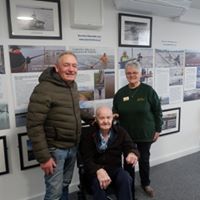
When I retired 10 years ago, I lived on the Yorkshire/Lancashire border. I was a volunteer for the Lancashire Constabulary monitoring CCT tv cameras and out on the road doing speed checks. Interesting work but very time consuming. Moving to the Back of the Hill 7 years ago I thought time to relax and find out what this retirement is all about. That was short lived when a knock on the door one Sunday afternoon changed all that. Richard Brodie stood there wanting a little word. How did I feel about helping at the Devils Porridge it would only be one afternoon a week! So, Stephen and I agreed we would come and see what it was all about. We agreed to do a Tuesday afternoon, which was fine for a couple of weeks, then it was can you do a Sunday afternoon occasionally (like for 6 years).

It was good to see the museum moving to Stansfield, but it was a bit of a culture shock, those Tuesdays turned into almost full time it was so busy. It was great welcoming so many visitors. Meeting people, who like me had moved away from Gretna and had either moved back or were visiting. As they say you can take the girl out of Gretna, but you can’t take Gretna out of the girl.
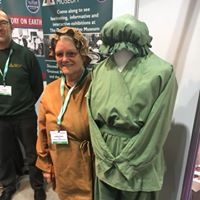
As my Father and his parents were born at Graitney, long before there was a factory there, I was brought up with a good knowledge of the place. My dad always used to say all these incomers they know nowt of the old place. My own memories of Gretna were the huts, the police barracks, the school, where I was born. The neighbours , no paid child minders in those days, just lots of adopted aunt and uncles, who would clip your ear if they caught  you doing anything wrong, fed you if you were hungry and comforted you if you were upset. So, it’s good to pass on the knowledge of the area, help people find friends relations. Being part of the history is a privilege.

It’s good to see young people becoming interested in local history and wanting to part of the team.

Sheila and I also run the Cordite Club which we set up with Sheila Ruddick for the older folk in the community. It’s great meeting up with them every fortnight. It’s very rewarding when you hear them laughing and chatting.

It will be a while before the museum will reopen as we need to keep volunteers and visitors safe, but I look forward to new challenges and events to keep local history alive.


Maddison Wallace (Granddaughter and Volunteer)

Hi
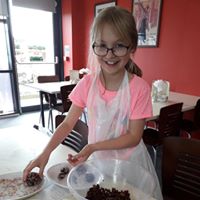
My name is Maddison Wallace I am 10.5 years old and the youngest volunteer at the Devils Porridge.

I first came to The Porridge with my Granny when I was 5 years old, she had to do a shift and had nobody to look after me, for the first few times I sat colouring but soon got bored. Sheila Ruddick gave me the job of folding napkins and making sure the leaflets were all neat and tidy. I helped on the tombola when we had events.

I soon learned to do other jobs like setting out the dining room tables, checking all the machines were working and tidying up the dressing up clothes. I have learned how to welcome people when they come in the door and have even stepped onto the coaches to welcome visitors and introduced Mr Brodie ( who I think is the oldest Volunteer) to give a short talk. I enjoy showing children around.

 My school challenged pupils to host an assembly, so I talked my grandparents to do it with me. We did a presentation to 60 children which went down very well and lots of them have since visit the museum. My next challenge is to do the talk to year 6 and some of the teachers to get them to organise a trip to the museum.

I love helping and learning new skills.

 

Photo of The Devil's Porridge Museum with the words summer clubs moved online.

A whole summer of fun with the Devil’s Porridge Museum

By Archive

The Museum may be closed but that doesn’t me you can’t have fun.

Everyday from now until the end of August, the Devil’s Porridge Museum has a different fun, exciting and engaging activity for you.


Monday: Look out for a new DPM podcast or Young Historians video on our website or YouTube channel.

Tuesday: Get creative with a fun Arts and Crafts activity.

Wednesday: Enjoy a story, song and rhyme at 9:30am as Bookbug takes over our Facebook and goes live.

Thursday: Need a History fix? Check out our Young Historian Fact File with a new topic covered each week.

Friday: Relax with Colour, Draw, Paint! A new activity each week.

Saturday: Find out what is happening in our Dig for Victory garden and see a gardening project you can do at home.

Sunday: Let’s Bake is Back – easy to follow recipes, fun for all the family.


SO ARE YOU READY FOR A SUMMER OF FUN?

The logo for The Devil's Porridge Museum podcast.

The Devil’s Porridge Museum Podcast

By Archive

Welcome to the Devil’s Porridge Museum Podcast!

The Devil’s Porridge Museum Podcast has been created as part of an inter-generational oral history project. This project is now available for you to listen to online.

Through conversations and interviews, our volunteers and others from the local community will be sharing their personal stories and memories with the Devil’s Porridge Museum Podcast team.

This podcast features one of the museum’s newer volunteers Nicola Bogle in conversation with Danny Muir about his experiences as a volunteer across the 3 different sites of the Devil’s Porridge.

More episodes will follow over the coming weeks, so please come back and listen to more instalment throughout the summer.

If you would like to get involved with the project to share your own stories and memories or if you would like to find out more about joining our production team please contact Steven@devilsporridge.org.uk

You can listen to the Podcast below:

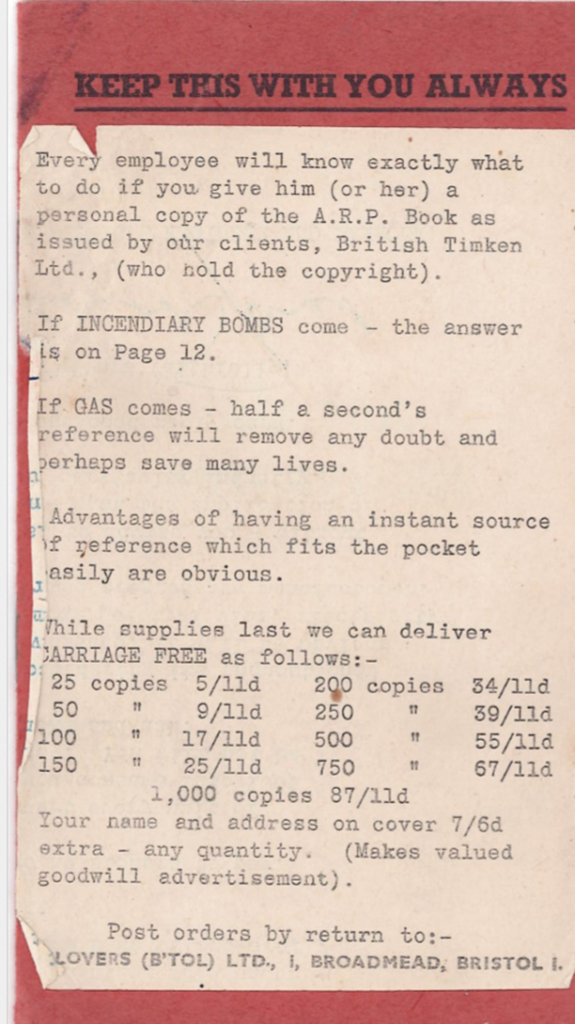
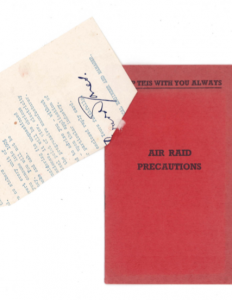
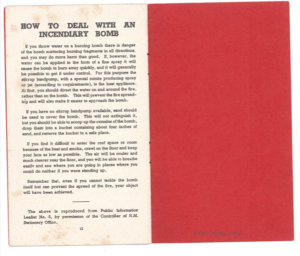
A page from an Air Raid Precautions booklet featuring the words "keep this with you always."

Air Raid Precautions Booklet

By Archive

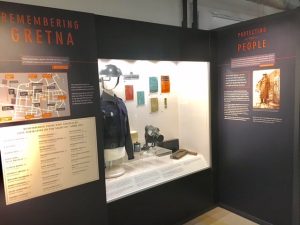
The First Floor of the Museum includes displays looking at the Bombing of Gretna in 1941 and the role of Civil Defence and Air Raid Precaution Wardens in World War Two.

Displays within the Museum focusing on Air Raids in World War Two.

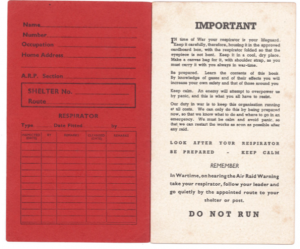
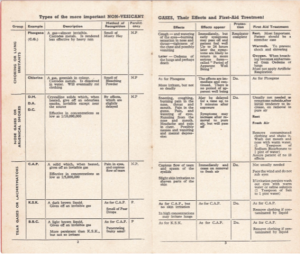
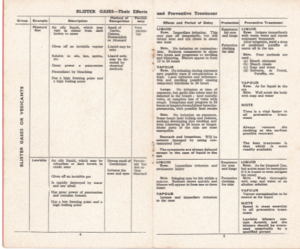
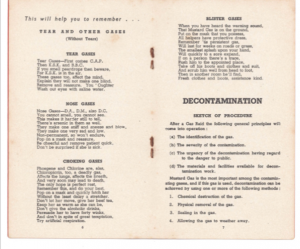
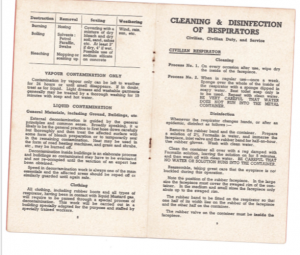
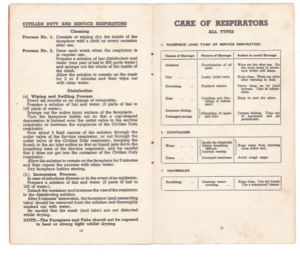
This interesting little booklet is currently stored in the Museum’s object store.  It includes instructions on what to do ‘If Incendiary Bombs come’, ‘If Gas comes’, a rundown of different gases and their effects as well as suggestions on decontamination and the care of respirators.  We’ve copied it here in full.

The Museum has a selection of books available from its online shop which may interest you:

https://www.devilsporridge.org.uk/shop-online

Translate »
BOOK NOW