Ever fancied ago at making a documentary? Love the Devil’s Porridge Museum?
Well we have the challenge for you!
follow the 5 simple steps in the video below and make your own Devil’s Porridge Documentary from home. Then send your film to steven@devilsporridge.org.uk for your film to feature on our YouTube channel and maybe even see it shown in the museum!
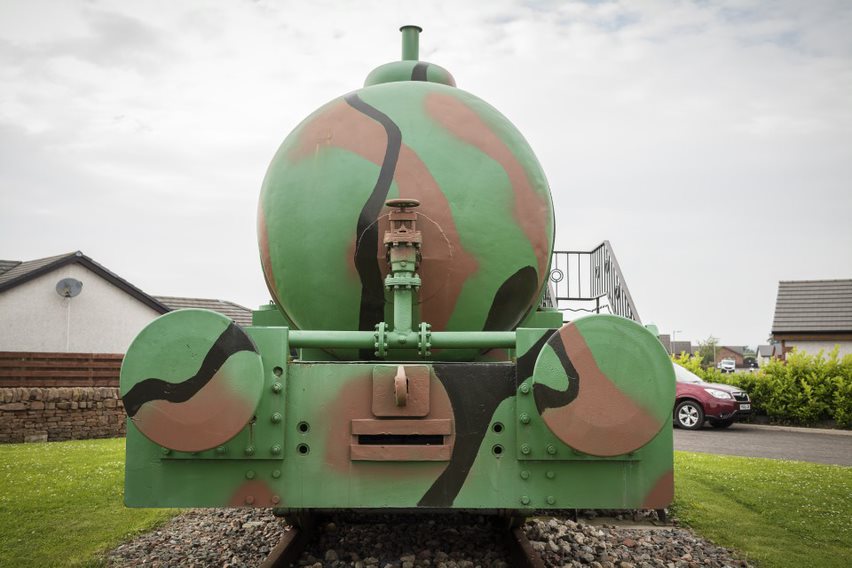
Outside The Devil’s Porridge Museum is a wonderful survival from the World War One factory which used to exist near here. It is a Fireless Locomotive called Sir James, built by Andrew Barclay of Kilmarnock. There were originally fourteen fireless locomotives that moved the volatile ‘devil’s porridge’ across the Factory site (a further 24 locomotives were used to transport cordite from the Factory to shell filling factories). Fireless locos had no fire on board (which caused sparks) and were charged up with steam before setting off and so, were safer.
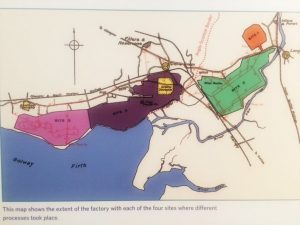
The layout of the original Factory (it spread nine miles from Dornock in Scotland to Longtown in England).
Sir James, the Fireless Locomotive.
In 1924, Sir James was sold to The Metropolitan Electric Power Supply Company at Brimsdown Generating Station.
In 1982, Sir James was transferred to Lakeland and Haverthwaite Railway.
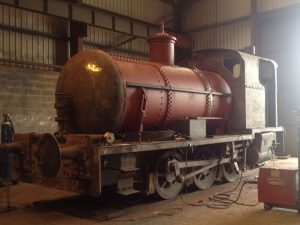
In 2011, the Museum acquired the locomotive and it underwent extensive restoration work.
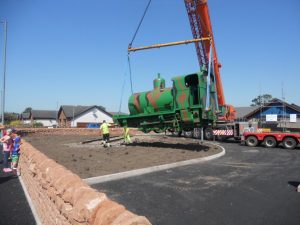
Sir James is delivered to his home at The Devil’s Porridge Museum where he still stands to this day.
It recently came to our attention that there are other Fireless Locomotives in Museum across the UK. The Bo-Ness and Kinneil Railway/The Scottish Railway Preservation Society have one dating from 1931.
Another former HM Factory Gretna locomotive that we know of is at the Buckinghamshire Railway Centre. It was also made by Andrew Barclay and is a 1916 0-4-0 (smaller than ours which is a 1550). They used to have their World War One locomotive running at one time.
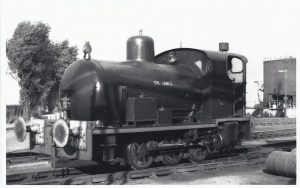
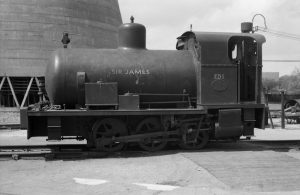
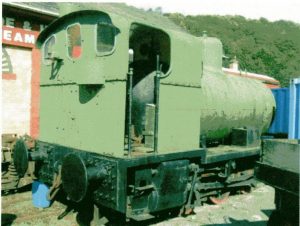
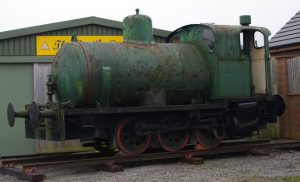
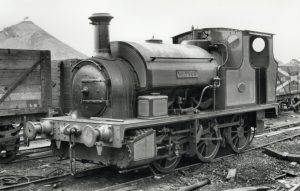
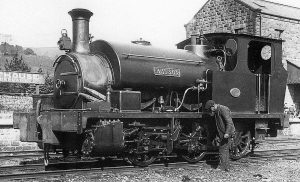
The two pictures below show a steam locomotive which was restored at Skipton. It was photographed sitting at the end of Central Avenue, Gretna and eventually ended up working on the Nidd Valley Light Railway.
With thanks to Davie Wilson for this information and the above photos.
While the Ground Floor of the Museum looks at HM Factory Gretna in World War One, our First Floor galleries consider the impact of conflict on our local area from 1939 onwards. Many (but not all) of these displays look at the life of women and children in the War including a look at evacuees, life on the Home Front and work done by women in munitions and organisations such as the ATS.
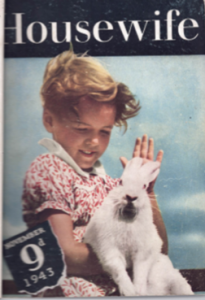
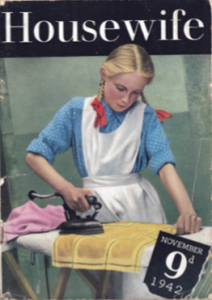
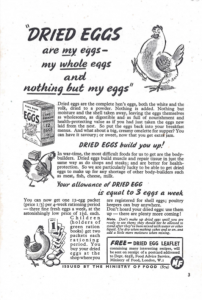
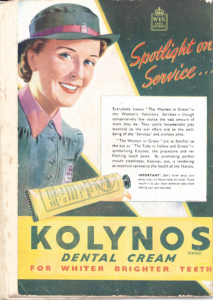
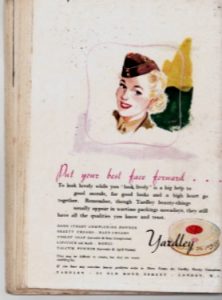
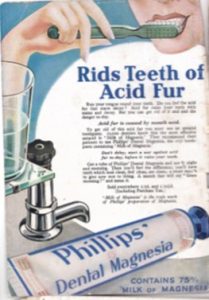
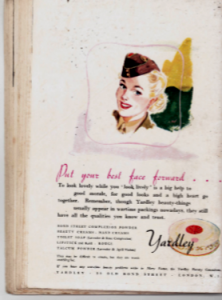
We have many objects in our Museum object store which relate to these topics such as a collection of Housewife Magazine from World War Two. Despite the old fashioned title and imagery, these images have a certain nostalgia charm.
Some of the adverts from within the magazine are also of interest and give one an insight into life during the Second World War.
Come and visit us when it is safe to do so! Here is a photo of a visitor enjoying a look at our 1940s kitchen.
If you’d like to know more about World War Two in our region, the following book may be of interest:
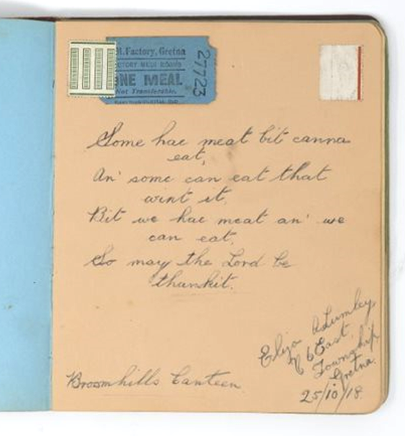
Feeding the 30,000 workers at HM Factory Gretna during World War One must have been a real challenge but they seem to have been well cared for as this page from an autograph book (below), created by a munitions ‘girl’ in 1918 suggests. It includes a transcription of Robert Burns’s famous ‘Selikirk Grace’ (an integral part of any Burns Supper) with a canteen meal ticket stuck next to it.
The signature at the bottom includes the location, Broomhills Canteen, which is shown in the photograph below.
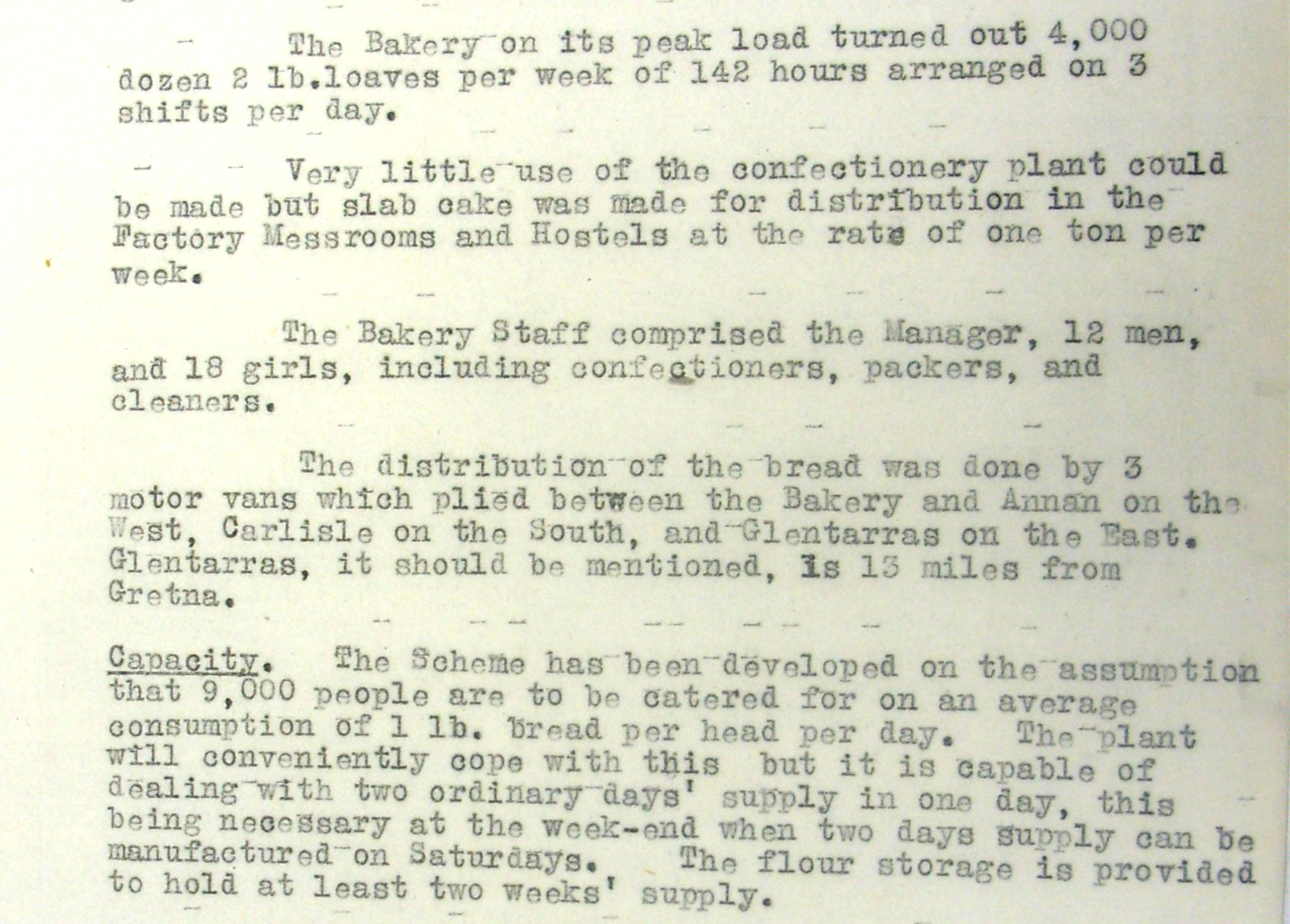
This autograph book is part of the Museum collection but we also have documents and photographs relating to the catering facilities at the Factory. The document below gives an idea of the size of the undertaking, some of the food prepared and the normal of people employed in this work.
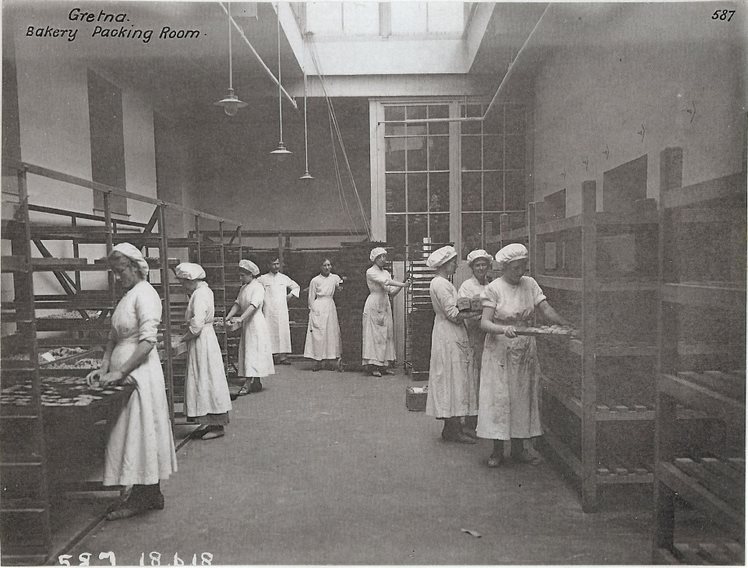
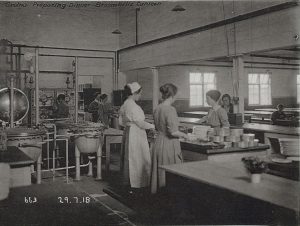
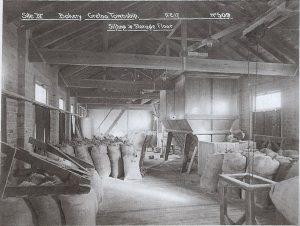
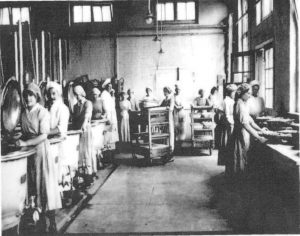
The following photos show the bakery and related processes as organised by the Factory authorities for the workers.
If you would like to know more about life at HM Factory Gretna in World War One, the following items from the Museum shop may be of interest to you:
The Museum was recently contacted by someone with family connections to HM Factory Gretna (the greatest factory on earth in World War One and the main focus of much of The Devil’s Porridge Museum).
30,000 people worked in the Factory and 12,000 of them were women. At present (as far as is known), there is no complete list of all the people who worked there so we are always pleased to know names of workers and see their photographs and hear their stories. Thanks so much to the donor who shared this information with us.
Agnes Calder at HM Factory Gretna
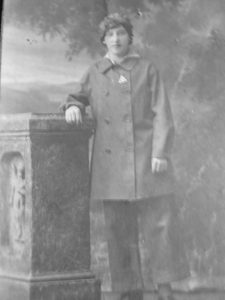
Agnes Calder (maternal grandmother of donor – worked at HM Factory Gretna)
1895–1931
BIRTH 21 JAN 1895
Grahams Court
Ashley Street
Carlisle
DEATH JUNE 1931
Bower Street
Carlisle
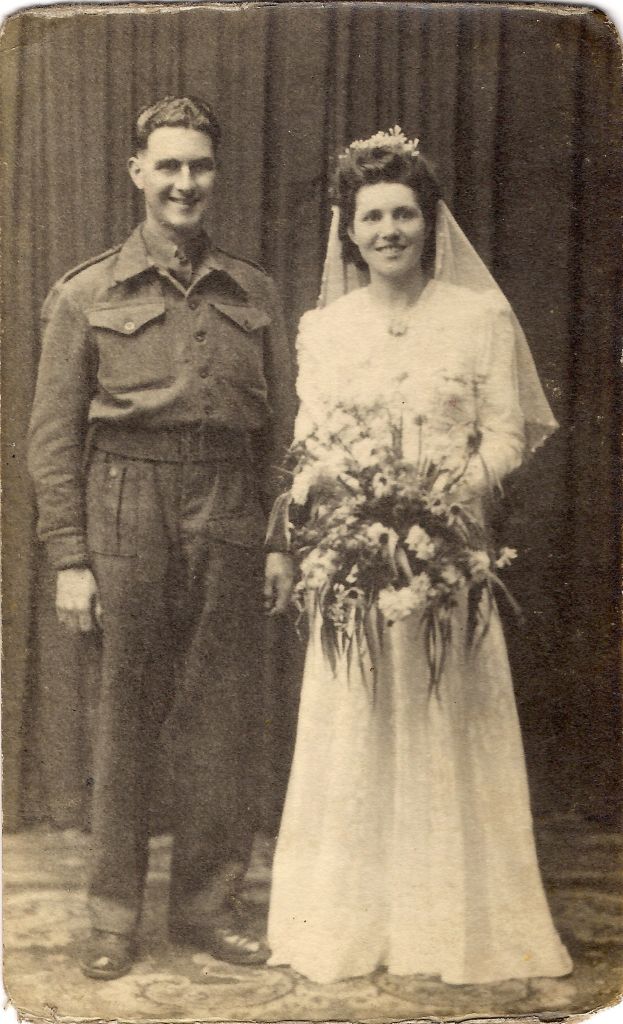
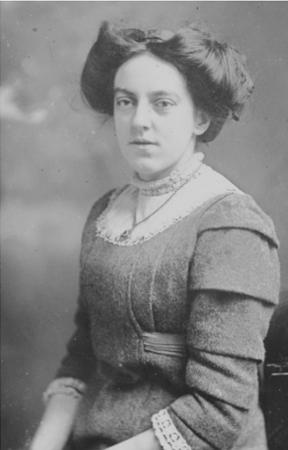
Agnes’s daughter was Joyce Sarginson (née Bisland – photographed above). She became the Mayoress of Carlisle and also served in World War Two in the Auxiliary Territorial Service as a Radar Operator.
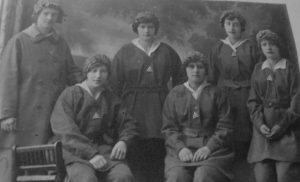
Group photo of female workers from donor’s collection.
Beatrice Calder (sister of Agnes and great aunt of donor, worked at HM Factory Gretna)
1892–1928
BIRTH 1 MAY 1892
Carlisle
DEATH 1928
Carlisle
Both sisters and their father died of TB
Bertha Sarginson
Bertha Sarginson (great aunt of the donor, worked at HM Factory Gretna)
1899–1990
BIRTH 01 APRIL 1899
Potters, Place
Carlisle
DEATH 07 JUNE 1990 Carlisle
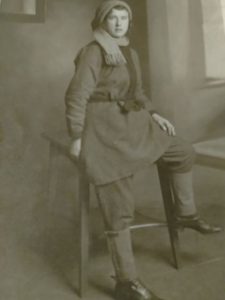
Bertha worked at HM Factory Gretna. Here she learned to drive and in 1917 volunteered as a Ambulance driver and was sent to Boulogne in France. She worked transferring injured soldiers off hospital trains and onto boats back to England.
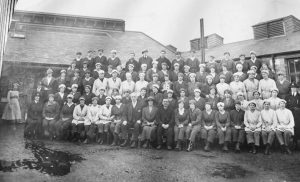
Photograph of workers at HM Factory Gretna. Interestingly, one young woman is holding a symbol of a swastika. This is an ancient symbol of the sun and was a widely use good luck symbol at the start of the 20th century, nothing to do with the Nazis until later.
In 1920, Bertha married Joe Robson (of the 4th Battalion Border Regiment Reserve) from 6 Melbourne Street, Carlisle. Joe got a job at Carr’s Biscuit Factory as a fitter, his father worked there as an engineer. Bertha and Joe got their first home in Brewery Row, Caldewgate. Bertha continued to work in a shop called Sarah Jane’s.
Their first son Joseph was born 22 November 1920. He became an altar boy at St Barnabas Church, Brookside Raffles when the family moved to Brookside. Joe Jr. Joined the Royal Air Force Volunteer Reserve. He was a Sergeant in training to become a pilot when he was killed 5th September 1940.
If you would like to know more about HM Factory Gretna in World War One, the following may be of interest to you:
The Devil’s Porridge Museum joined in the nation’s commemorations of the 75th anniversary of VE Day on Friday. This event (which we participated in digitally) has brought forward some more memories and photos which we wanted to share with you.
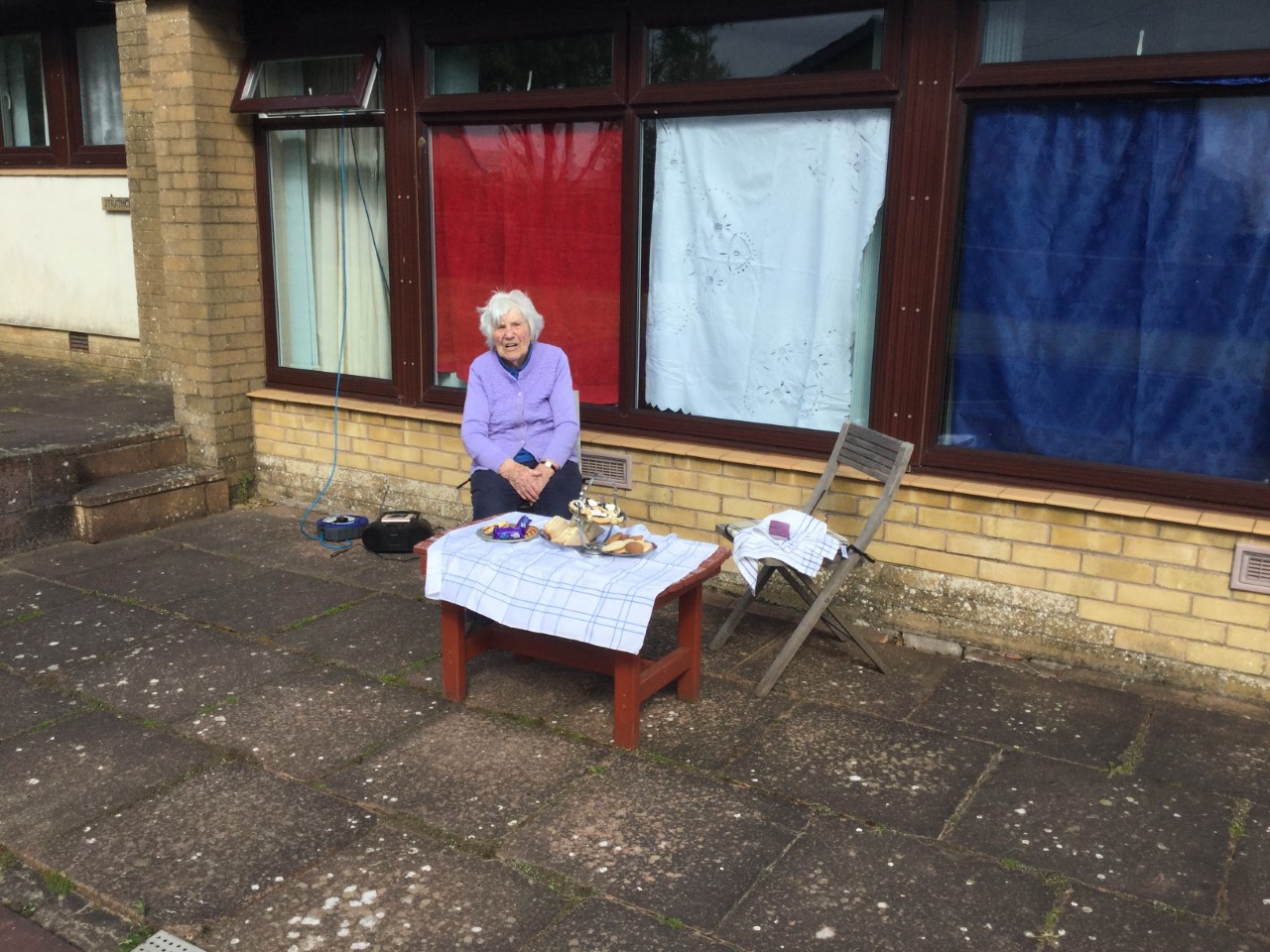
The photograph below shows Ettie Wilsenham celebrating VE Day on Friday at her home in Eastriggs (the windows have been covered with red, white and blue fabric in place of a British flag which they weren’t able to source during lockdown).
Ettie was working in Eastriggs depot when the War ended, she actually took the call from the Brigadier and did a great job going round all the magazines to break the news to everyone that the War was over.
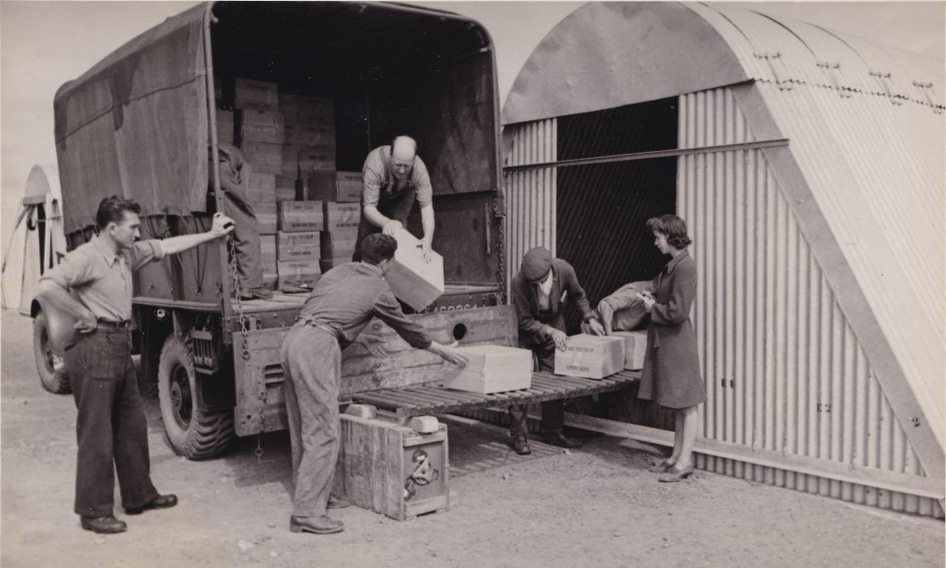
People working in the ammunition storage depot during World War Two.
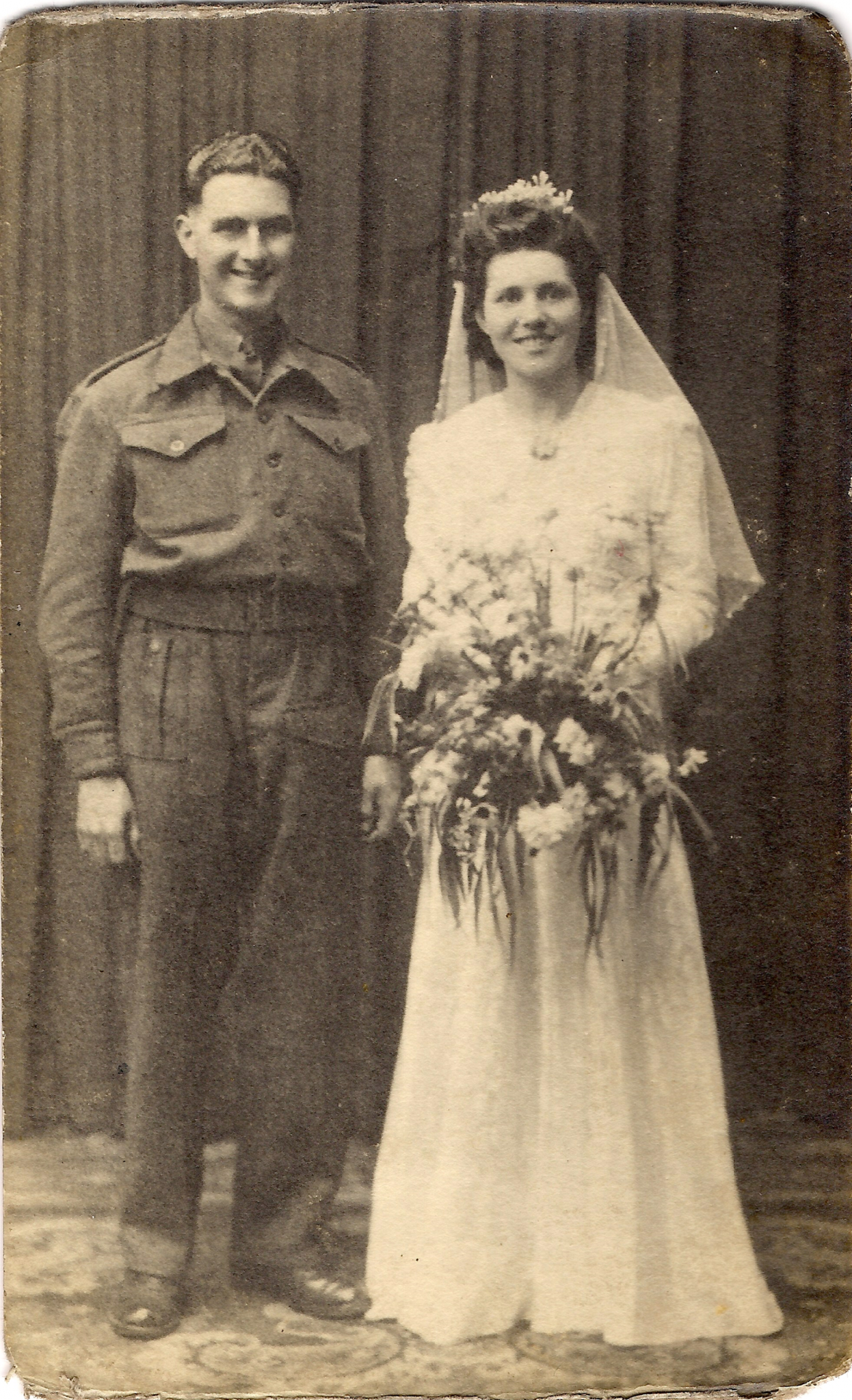
Ettie has a lot of connections to the Museum: she was once one of our volunteers and she features in our display about the Eastriggs depot. The story of her marriage also featured in our ‘Love in Wartime’ exhibition as recounted below.
Ettie joined the war effort aged 16 when she secured a job in Eastriggs Depot in 1942. While she was there, she met Arthur who was a soldier in the Ordnance Corps, assigned to guard the Grade 4 stores.
“Every so often when I was working at those stores, Arthur would slip me a bar of chocolate. What with the rationing and chocolate being so scarce, I was won over! We married in 1945 [on June 7th] after the war with Germany was ended.”
Thanks so much to Ettie and Ann for sharing this account and to Dot for organising for it to be shared with the Museum.
If you would like to know more about World War Two in this region, the following book from our online shop may be of interest to you:
The Devil’s Porridge Museum Podcast has been created as part of an inter-generational oral history project. This project is now available for you to listen to online.
Through conversations and interviews, our volunteers and others from the local community will be sharing their personal stories and memories with the Devil’s Porridge Museum Podcast team.
This podcast features museum volunteer Eleanor Oswald in conversation with her granddaughter Maddison, as she reminisces about life in Gretna just after the end of the Second World War . More episodes will follow over the coming weeks, so please come back and listen to more instalment throughout the summer.
If you would like to get involved with the project to share your own stories and memories or if you would like to find out more about joining our production team please contact Steven@devilsporridge.org.uk
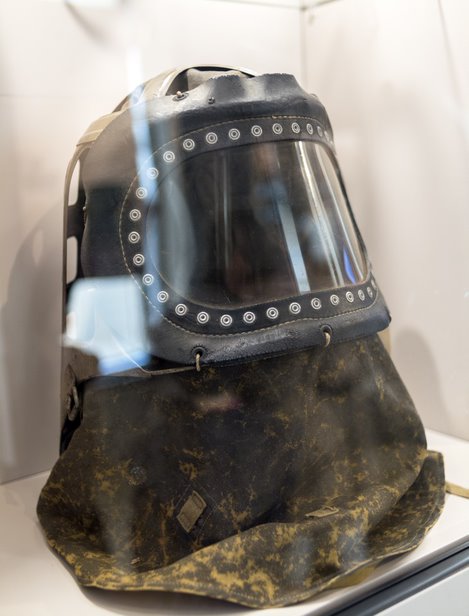
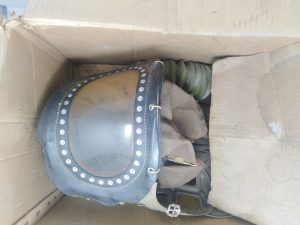
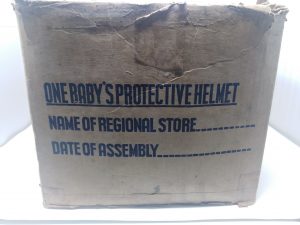
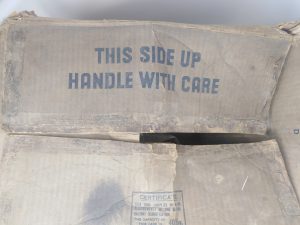
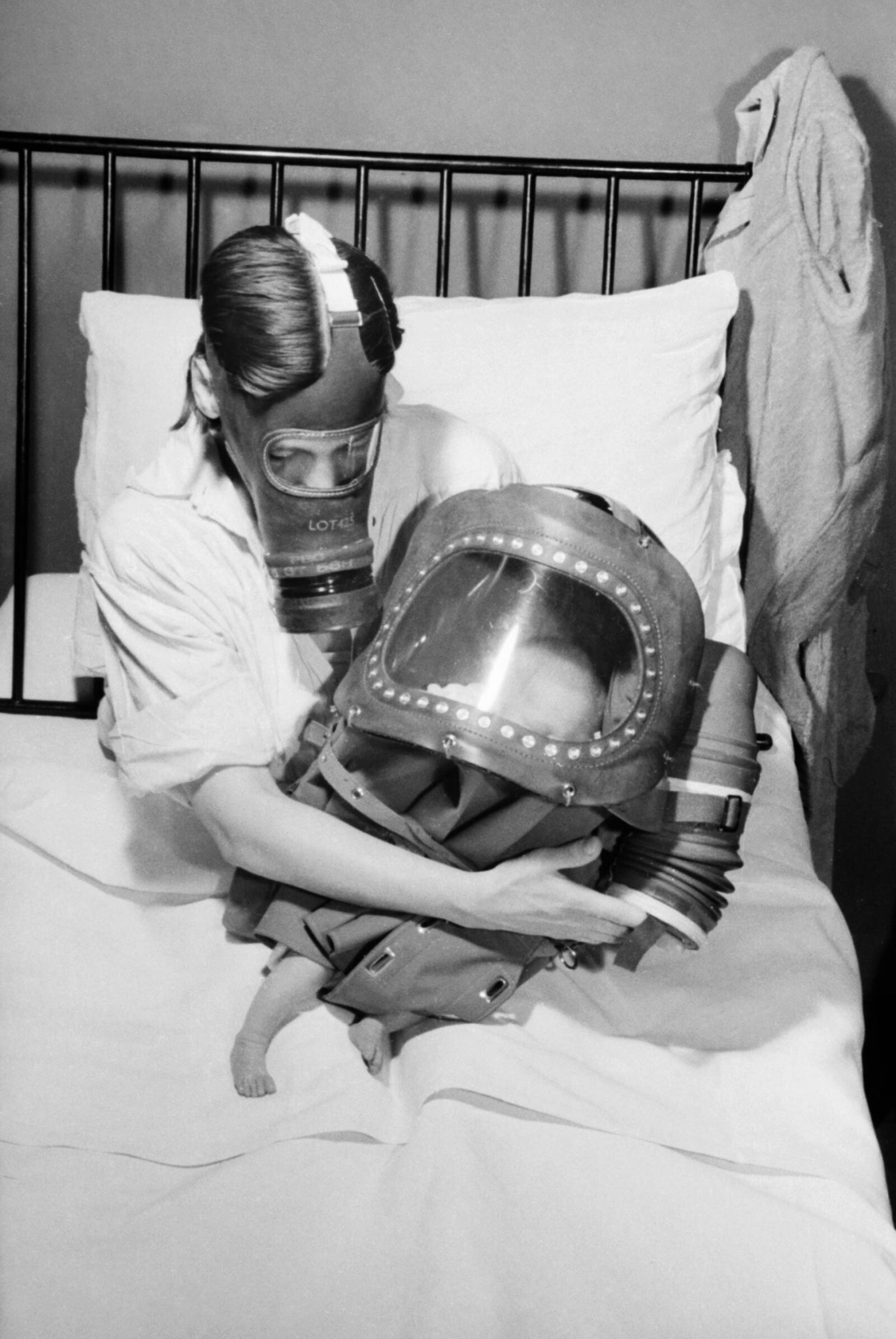
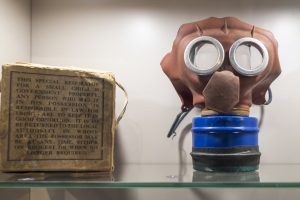
The Devil’s Porridge Museum has several gas masks in its collection, some date from World War One but the majority were made during World War Two. We have two ‘baby’ gas masks. One is on display in the Museum’s First Floor Second World War galleries and the other is in our object store (it was recently donated to the Museum and is unusual in that it came in its original box).
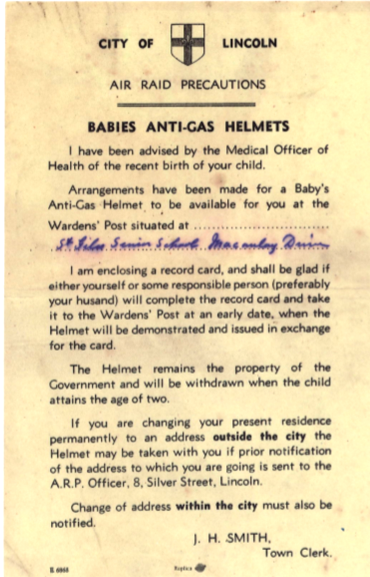
We are also fortunate to have a document in the Museum collection which went with gas masks such as these when they were issued. It provides lots of interesting information such as:
-they were issued to the mother on the birth of a child
-the gas mask was issued by he local council and was government property
-it was expected that it would be returned (obviously some weren’t)
-masks such as this were meant to be used for children up to the age of two
Poisoned gas was widely used in World War One and, although its use was banned under the terms of a 1925 Geneva Protocol, both sides in World War Two anticipated its use by their enemies and prepared accordingly. Changes to aerial warfare meant that civilians could have been targeted and poison gas could have had a devastating impact had it been used on a large urban area. Fortunately, neither Britain or Germany used poisoned gas on one another during the War (although its possible use was discussed by both sides).
It is estimated that nearly 40 million gas masks were issued during World War Two. During a recent oral history project, the Museum spoke with a lady from Carlisle, who is now in her 90s. She remembered getting in trouble for dragging her gas mask along the ground on the way to school. Her treatment of this piece of (potentially) lifesaving equipment was so careless that she had to have it replaced several times.
The Museum has another gas mask specifically aimed at children on display, this is the ‘Mickey Mouse’ gas mask. Thankfully gas masks were not used in Britain in World War Two but serve as a grim reminder of the possible horrors of war and the amazing gift of peace in Europe which was achieved on VE Day 75 years ago.
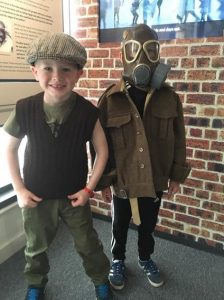
Young visitors (photos above) enjoy putting on replica gas masks (these are completely safe, some World War Two ones have asbestos in them and should not be worn or handled without testing/careful controls).
If you’re interested in the experiences of children in World War Two, the following may be of interest to you:
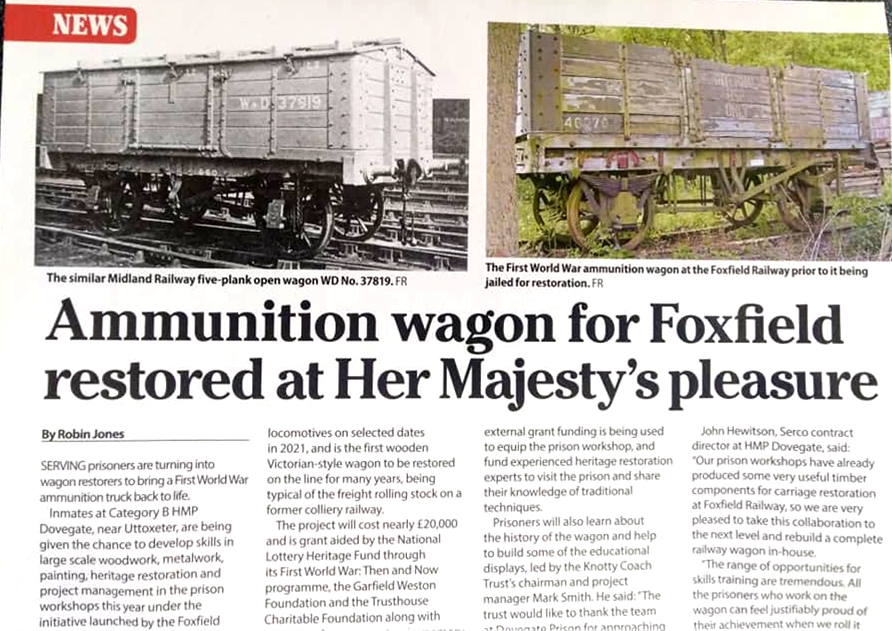
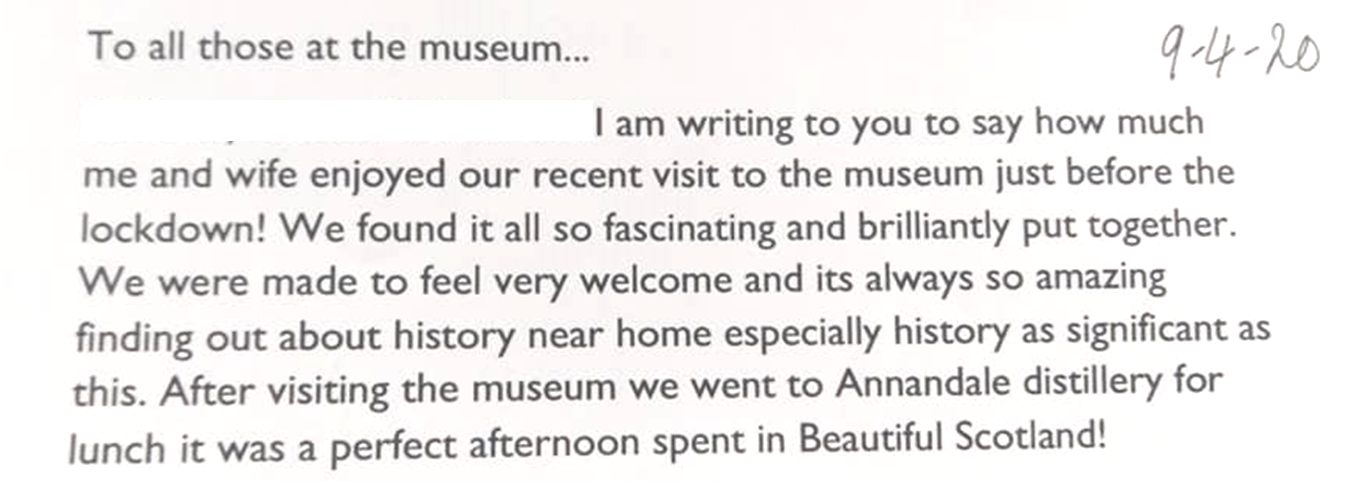
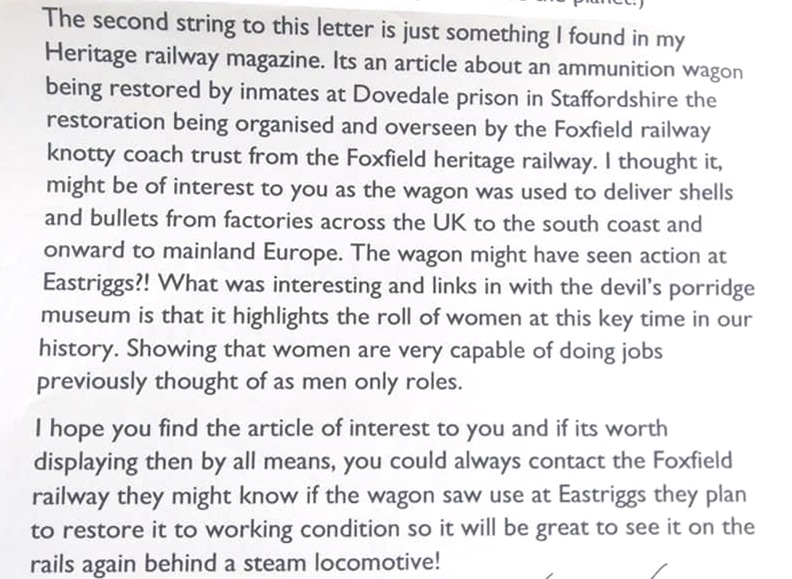
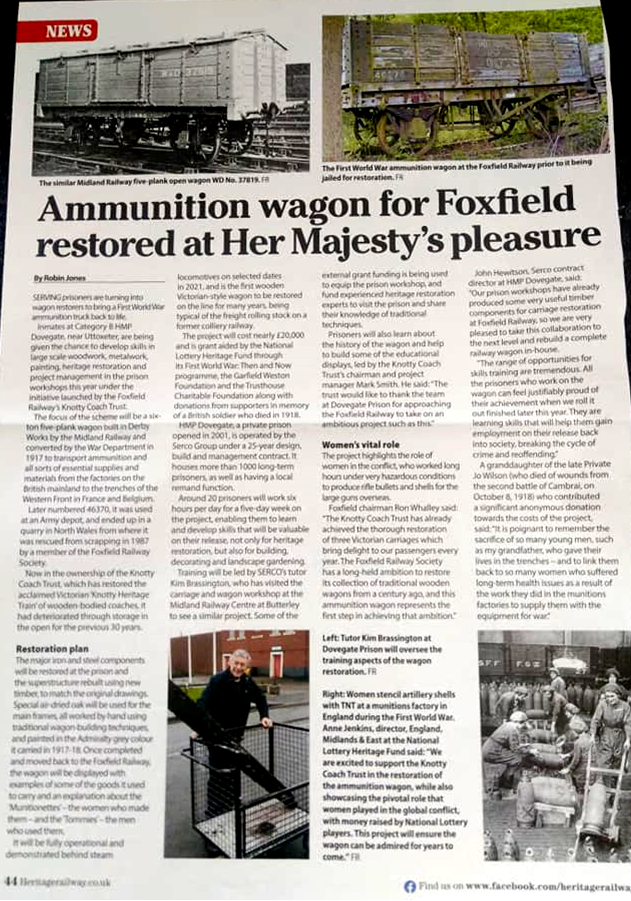
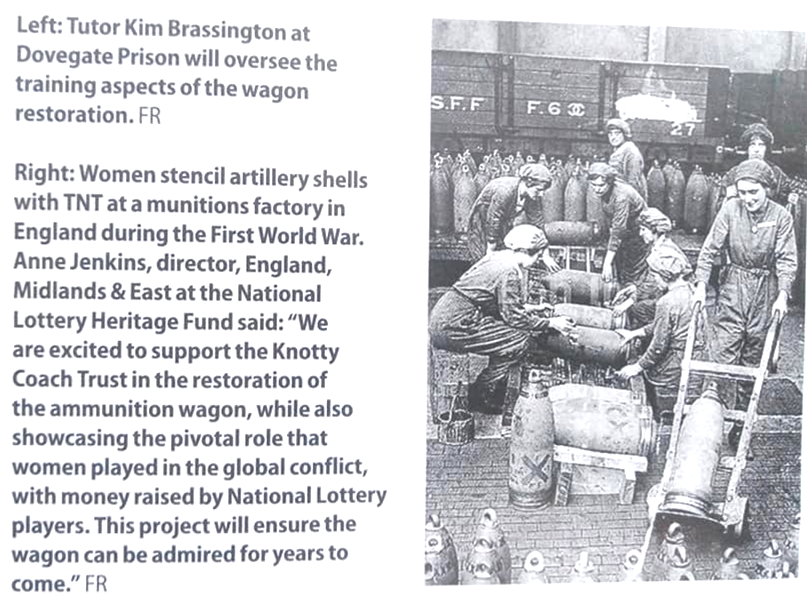
We were very pleased to receive this letter to the Museum recently. It came from a couple who live in Cumbria. The letter expressed their appreciation for the Museum (which is always nice to hear) and they also included an interesting article about a World War One ammunition wagon.
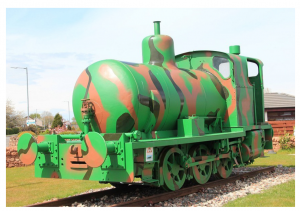
Sir James, the Fireless Locomotive outside the Museum.
The Museum has a World War One fireless locomotive outside which our visitor referenced in their letter. This loco is called Sir James. It was used at HM Factory Gretna in World War One. Some of the Museum displays focus on the use of railways within the Factory site – over 120 miles of railway track were laid and 16 stations were built within a complex which was nine miles in length.
Excerpts from the letter below…
And, below, the article which was shared (which also includes a look at female munitions workers, The Devil’s Porridge Museum also considers the lives and experiences of 12,000 women workers).
We are always happy to know more about munitions work in World War One and the actions taken by different heritage sites and groups to preserve anything relating to this work. Thanks so much to our kind visitor for donating this article to our archive.
The following books from the Museum’s online shop may be of interest to you:
12,000 young women were employed to work at HM Factory Gretna during World War One (The Devil’s Porridge Museum tells the story of this amazing factory and the people who worked there). Over 150 police women were also employed to help supervise the female workforce.
We don’t always know very much about the women who worked at HM Factory Gretna (sometimes we don’t even know their names) but we do know a little more about the members of the Women’s Police Service (WPS). They signed a letter/petition to Winston Churchill so we have many of their names (more on this in a future blog), we have some good photographs of them, we know where they stayed and we know a little about their training.
One family member also provided us with this invaluable account of Mabel Farrer, who was born at Braithwaite in Cumbria and was a member of the WPS at Gretna during the War.
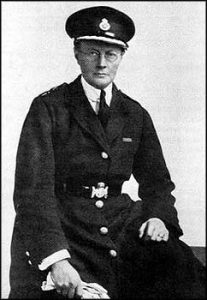
“Auntie Mab was one of the first women appointed to the then new Women Police Service in 1916 by Damer Dawson herself. Her training in London under Dawson and Commandant Mary Allen’s direction comprised ‘a small amount of military drill and a few visits to Police Courts, and we were sent in our sweet innocence to improve the moral tone of Piccadilly Circus and Leicester Square’! Rules were strict though and education and compassion were guiding aims as the Women Police had very little powers other than those conferred under wartime legislation.
By Margaret Damer Dawson(Life time: 1920) – Original publication: Mary S. Allen ‘Lady in Blue’ 1932Immediate source: Mary S. Allen, ‘Lady in Blue’ 1932, Public Domain, https://commons.wikimedia.org/w/index.php?curid=30515234
After this basic training, Mab was sent to Gretna and became the one of the first female policewomen there starting work in January 1917. Her pay was £2 a week and she was provided with all uniform. After one year’s service she was given an addition 1/- a week boot allowance, and at some time during this period, she was promoted by Dawson to the rank of sergeant.
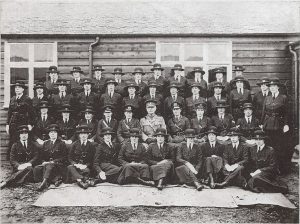
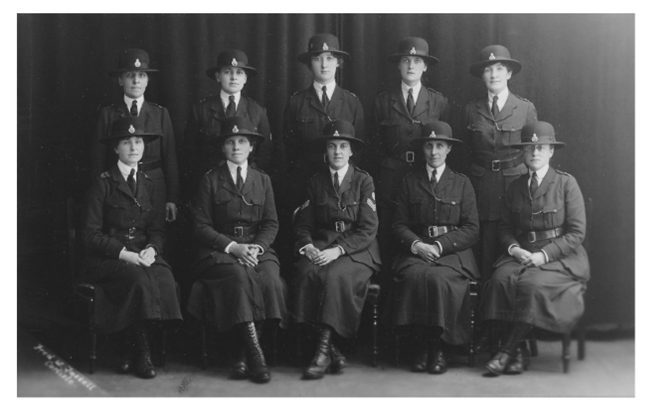
Members of the WPS at HM Factory Gretna,
At the time, Gretna had huge munitions factories and included the new townships of Gretna and Dornock, and there was an enormous female population working in the munitions factories for the war effort. Other women police trainees followed and eventually there were [up to] 170 Women Police there. One group of policewomen had charge of the factory gates and kept up a constant patrol inside the danger areas and in the townships where most of the workers lived. They also escorted the trains full of female workers to and from the factory (mainly from Carlisle) and had to take numbers of sick girls home after their work hours, most of them suffering from ‘the effects of the special nature of their work’. (It was a criminal offence for workers to leave their employment in the munitions factories).
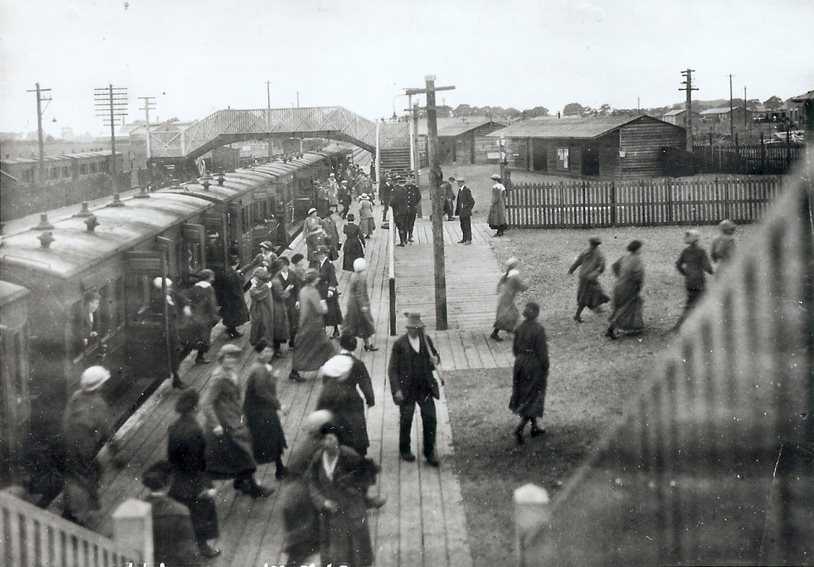
If you look carefully at this photograph of workers at a Factory station, you can see members of the WPS on the platform (they’re wearing long skirts and hats).
The policewomen also searched all workers going in and out of the factory, on entering to ensure they did not take in metal or other articles which could cause an explosion if brought into contact with machinery and on leaving, ‘for any factory property to which they had become attached’!
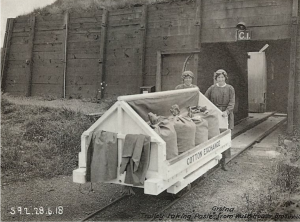
Women working in the Factory. Like many other observers of these young women during the War, Farrer commented on their cheerfulness.
She notes ‘It is surprising how little one remembers of two busy, happy years but one cannot forget those cold still nights walking alone between the buildings where high explosives were being manufactured at top speed. We rarely spoke to anyone except when we met a truck loaded with cordite, gun cotton etc being pushed quickly by two very young girls from one dangerous building to another. These youngsters usually sang at their work and if we greeted them with ‘it’s a rough night for you’ they would reply ‘it’s worse for the boys and they continued to sing of the ‘little grey home in the west.
Mabel Farrer photographed while working at HM Factory Gretna. She is seated in the centre of the front row.
She reported to three people! Although employed by the Women Police Service, she was sworn in as a ‘Special Constable’ for Dumfrieshire, Cumberland and the City of Carlisle. Part of the time she was in Carlisle itself in charge of a group working there and when there she reported to the Chief Constable. But she also reported to the Women Police Service office in Gretna. However she was paid by the Ministry of Munitions which had been set up by the Munitions of War Act 1915. She continued to be paid by them until the end of the war.
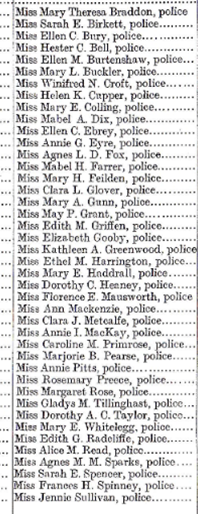
Mabel’s name appears on a valuation roll record from Gretna along with the names of other female police officers.
At the end of the war, British Police were just beginning to appoint women to their ranks and in October 1918, Northampton Police Force appointed its first two female police officers and Auntie Mab became the fourth to be appointed in December 1918 with the rank of ‘Police Constable’ with Powers of Arrest and her name placed on the roll of Court Officers.
Uniform was provided and comprised navy serge tunic and skirt over riding breeches and a military type navy overcoat. No shirts, ties, or gloves were supplied until some years later. Hours of duty were generally 8 and pay was £2 a week and no additional pay given for overtime. Policewomen were employed almost exclusively working with women and children and this included ‘women found wandering, neglected children, suicides, searching female prisoners, attending court, taking statements, indecency complaints, escorting female prisoners to jails etc’ and she also notes taking them to Dover and Holyhead for deportation. She also had to visit cinemas and read the synopses of films reporting to the Watch Committee suggesting a private viewing if considered too explicit.
She served at Northampton for 28½ years retiring in June 1947 with the rank of Sergeant and with a pension of £182 per annum. You no doubt remember she then lived with Auntie Flo and Uncle Maurice at 24 First St, Chelsea. After Uncle Maurice died, they moved to Newcastle.”
Our next article on the Women’s Police Service at HM Factory Gretna in World War One is coming soon.
If you would like to know more about women’s work at HM Factory Gretna in World War One, the following books from our online shop might interest you:
This website uses cookies to improve your experience. We'll assume you're ok with this, but you can opt-out if you wish.AcceptRead More
Privacy & Cookies Policy
Privacy Overview
This website uses cookies to improve your experience while you navigate through the website. Out of these cookies, the cookies that are categorized as necessary are stored on your browser as they are essential for the working of basic functionalities of the website. We also use third-party cookies that help us analyze and understand how you use this website. These cookies will be stored in your browser only with your consent. You also have the option to opt-out of these cookies. But opting out of some of these cookies may have an effect on your browsing experience.
Necessary cookies are absolutely essential for the website to function properly. This category only includes cookies that ensures basic functionalities and security features of the website. These cookies do not store any personal information.
Any cookies that may not be particularly necessary for the website to function and is used specifically to collect user personal data via analytics, ads, other embedded contents are termed as non-necessary cookies. It is mandatory to procure user consent prior to running these cookies on your website.


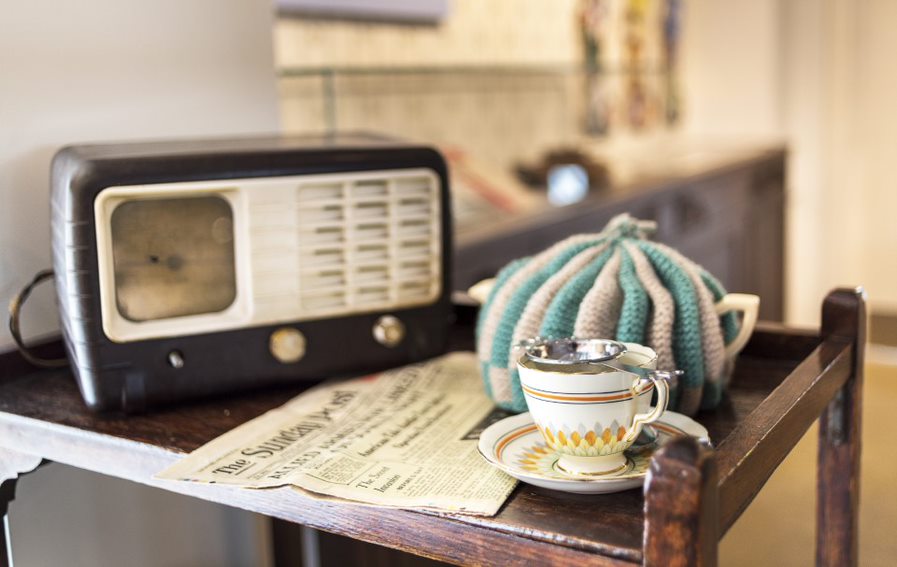
 Come and visit us when it is safe to do so! Here is a photo of a visitor enjoying a look at our 1940s kitchen.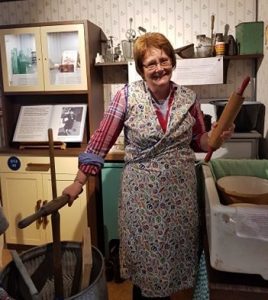
 The signature at the bottom includes the location, Broomhills Canteen, which is shown in the photograph below.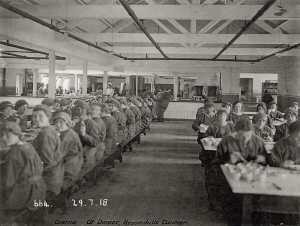
 If you would like to know more about life at HM Factory Gretna in World War One, the following items from the Museum shop may be of interest to you: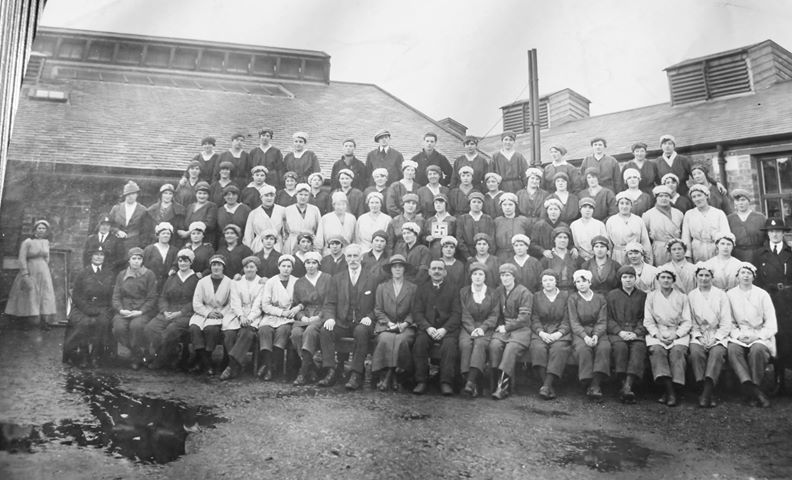
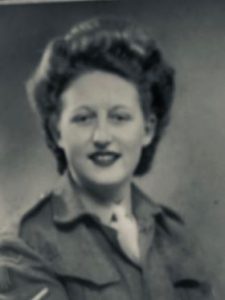 Agnes’s daughter was Joyce Sarginson (née Bisland – photographed above). She became the Mayoress of Carlisle and also served in World War Two in the Auxiliary Territorial Service as a Radar Operator.