All Posts By

A black and white photo of Isabella Kennedy and a triangle shaped on War Service badge.

Worker of the Week: Isabella Kennedy

By Collections blog

Worker of the Week is a series of blog posts which highlights the workers at H.M. Factory Gretna that our volunteers researched for The Miracle Workers Project. This project aimed to centralise all of the 30,000 people who worked at Gretna during World War One and, although it may be over, our amazing research volunteers are continuing to uncover more stories about H.M. Factory Gretna workers to be added to this database. We are always looking to learn more about H.M. Factory Gretna workers. If you know anything about a H.M. Factory Gretna worker please feel free to get in touch with us by contacting info@devilsporridge.org.uk  A massive thank you to all our research volunteers for making this possible.

This week’s Worker of the Week is Isabelle Kennedy, who was involved in a corn beef theft at Gretna shop during her time working at the factory. 

Early Life

  • On 29th December 1899 Isabella was born in Workington, Cumberland.
  • Her parents were  James and Margaret Jane [Jean] Kennedy.
  • Isabella was the 2nd of 11 children.
Isabella Kennedy in a black and white photo from the past.

Photo of Isabella Kennedy from Ancestry Public Member Tree.

  • According to the 1901 census, the family were continuing to live in Workington and her father was working as a driver fireman at a steel works.
  • After this, the 1911 census, shows them still be living in Workington, although they have changed address.


  • Next in 1912, Isabella was enrolled to Workington Higher Standard Girls’ School.

H.M. Factory Gretna

  • Although we don’t know exactly when Isabella started working at H.M. Factory Gretna, we know she must have been working there in February 1917.
  • Why? Well, according to the local newspaper she was involved in a theft from a shop in Gretna. [1]
  • One Sunday afternoon, a group of munitions workers from the factory blew out the light in the Gretna “fried fish” shop. [1]
  • The next day, shop owner, Baldi Toni, found several items missing from his shop stock. These were:
  1. 9 cheese plates;
  2. 2 cans of corned beef;
  3. 6 boxes honey;
  4. and 3 bottles of Worcester sauce.
  • Isabella was accused alongside a group of five factory workers who all plead guilty according to the local newspaper.
  • Consequently:

“The accused were charged with theft, and they all admitted it. Mr I. F. Edgar, solicitor, made a statement on behalf of the accused, and the Sheriff deferred sentence until May.”

– The Dumfries and Galloway Standard, Wednesday 21st February 1917. [1]

Graphic of Worcester sauce, corned beef, honey and cheese.


  • Previously, we’ve touched on this theft in more detail in Minnie Turnbull’s Worker of the Week blog (you can find the link to this at the end of this blog post if you would like to read more.) [2]

Further Travels and Life After the Factory

  • Later, by the 1921 census, Isabelle was living in Bolton, Lancashire.


  • Following this, in 1933 she emigrated to Canada.
  • It was here, in Ontario on 9th October 1937, that she married Thomas David Allingham.
  • At this point, Isabelle was working as a nurse.


  • Lastly, 21st March 1959, Isabelle died in Ontario, Canada.

Sources and Further Reading

  1. ‘Thefts BY GRETNA GIRLS,’ ‘The Dumfries and Galloway Standard newspaper, Wednesday 21st February 1917.
  2. Worker of the Week: Minnie Turnbull – https://www.devilsporridge.org.uk/worker-of-the-week-minnie-turnbull

Photo source: Ancestry Public Member Tree.

Read Isabella Kennedy’s online database entry by clicking here>

Do you have a relative who worked at H.M. Factory Gretna? We would love to hear from you! Please feel free to contact us by emailing info@devilsporridge.org.uk. You never know maybe your relative will feature in a future Worker of the Week blog post! You can also have a look at some more H.M. Factory Gretna workers on our online database here>

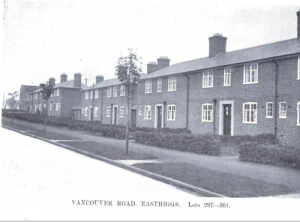
Vancouver Road, Eastriggs as shown in an Auction Book from 1924.

Worker of the Week: Herbert Sharp Greenough

By Collections blog

Worker of the Week is a series of blog posts which highlights the workers at H.M. Factory Gretna that our volunteers researched for The Miracle Workers Project. This project aimed to centralise all of the 30,000 people who worked at Gretna during World War One and, although it may be over, our amazing research volunteers are continuing to uncover more stories about H.M. Factory Gretna workers to be added to this database. We are always looking to learn more about H.M. Factory Gretna workers. If you know anything about a H.M. Factory Gretna worker please feel free to get in touch with us by contacting info@devilsporridge.org.uk  

This week’s Worker of the Week is Herbert Sharp Greenough, who worked as a chemist at H.M. Factory Gretna.

Early Life

  • On 23rd June1890, Herbert was born in Newcastle.
  • His parents were Mary Hannah Sharp and Edwin Greenough.
  • Sadly, Edwin, who worked a doctor, died when Herbert was very young.


  • Following this, Mary and Hebert appear to have moved to the Eccleshill, Bradford, Yorkshire according to the 1901 census.
  • Mary does not appear to have ever remarried.

Studies

  • Herbert attended Edinburgh university, seemingly training as an analytical chemist.
  • In 1884, he graduated university.


  • Following that, he proceeded to work as an analyst in 1911.

Active Service

  • On 13th February 1915, Herbert enlisted into the Army.
  • In fact, his enlistment papers were one of a few that survived a fire.
  • Firstly, he is in the 2nd Bradford Pals battalion, or as it officially know, the 18th (Service) Battalion, Prince of Wales West Yorkshire Regiment.
  • Secondly, on 6th September 1915, Herbert was transferred to the Royal Engineers and sent to France.


  • However, on the 13th September 1916 he was designated as a class “W” Army Reserve.
  • In other words, his analytical chemist training was spotted and clearly in demand.
  • The ministry of munitions needed chemists to help with the production of munitions.
  • You’ll never guess were he worked next!
A triangle shaped, brass On War Service badge. There is a crown inside the triangle with 1916 underneath it.

H.M. Factory Gretna workers would have been given an On War Service badge during their time working at the factory.


H.M. Factory Gretna

  • Yes, Hebert was employed as a chemist working at H.M. Factory Gretna.
  • Significantly, Herbert was  far from the only chemist to be re-directed to work at the factory.
  • One example is Cyril Callister who was sent to work at H.M. Factory Gretna after signing up to the Australian Imperial Force, but that’s far from the only one. [2]


Vancouver Road, Eastriggs as shown in an Auction Book from 1924.

Vancouver Road as shown in an Auction Book from 1924 (when the Factory and townships were sold).


  • Of course, the rural site of H.M. Factory Gretna stretched all the way from Dornock in Scotland to Longtown in Scotland.
  • Where exactly did Herbert work? Well, we think he worked in the Dornock section of H.M. Factory Gretna.
  • During his time working there he lived in one of the two townships built to serve the factory, Eastriggs (the other being Gretna).
  • More specifically the electoral roll lists him as living at “100 – 102 Vancouver Road.”
  • According to the Factory Manual at the time Eastriggs provided for the “accommodation of those workers chiefly engaged on the Dornock section.” [3]


Greenough, Herbert S, chemist, 100-102 Vancouver Road.

The electoral roll record in question.

Married Life

  • In June 1920, Herbert married Christine Muriel Meredyth Renny in Horsforth, Leeds.
  • Following this they seem to have had two children.


  • In 1939 the family moved to Essex.
  • At this point, Herbert was working as a Works Manager in Accumulator Manufacture.


  • Lastly, Herbert died in Essex in December 1979.


Sources and Further Information

  1. Bradford and the Battle of the Somme, 1st July 1916, Bradford District Museum and Galleries –  https://bradfordmuseums.org/bradford-and-the-battle-of-the-somme-1st-of-july-1916/

  2. Worker of the Week: Cyril Callister – https://www.devilsporridge.org.uk/cyrilcallister
  3.  H.M. Factory Gretna Manual from The Devil’s Porridge Museum’s archives.

Find Herbert Sharp Greenough’s online database entry by clicking here>

Do you have a relative who worked at H.M. Factory Gretna? We would love to hear from you! Please feel free to contact us by emailing info@devilsporridge.org.uk. You never know maybe your relative could feature in a future Worker of the Week blog post! You can also have a look at some more H.M. Factory Gretna workers on our online database here>

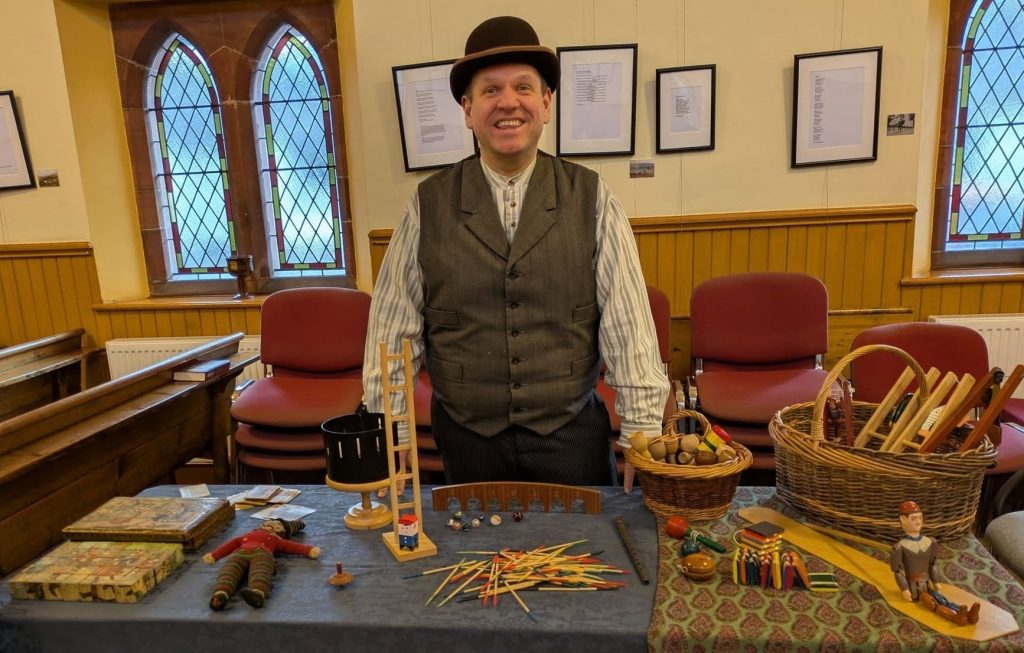
A table full of traditional toys, such as Jacob's Ladder and pick up sticks. The Devil's Porridge Museum's Youth and Community Engagement Officer, Tom, is stood behind the table. He looks happy.

Old Fashioned Fun

By Archive

Join us for some FREE Old Fashioned Fun at The Devil’s Porridge Museum

When is Old Fashioned Fun?

This is happening on Friday 20th February 2026.

Morning Session 11am to 12:30pm

Afternoon Session 2pm to 3.30pm

What is Old Fashioned Fun?

Come and play with a range of traditional toys from the 19th and 20th centuries and make your own cup-and-ball to take away.

This free activity for families will take place in the education room at the museum, just drop in to take part in either the morning or afternoon session.  These games and crafts are free, usual admission price applies to explore the museum.


You might also be interested in…

A bagpiper stood playing in The Devil's Porridge Museum's education room. Some people sit around the room listening.

The Piper’s Tale

By Archive

Join us to commemorate International Bagpipe Day with history, folklore and music at The Devil’s Porridge Museum!

When is The Piper’s Tale?

This is happening on Tuesday 10th March 2026 at 3pm.

A carving of a pig playing the bagpipes.

Join us for The Piper’s Tale, a special presentation on International Bagpipe Day when we’ll explore the history and folklore of bagpipes.  This event will include the First World War story of Pipe Major Robert McKenzie of Annan whose memorial is in the museum.  You can also discover some historic bagpipe carvings including examples from Dumfries and Galloway, and enjoy performances from pipers in The Devil’s Porridge Museum’s team.

This talk is free, though donations to the museum would be welcome.  No need to book, just turn up on the day.

Please be aware that usual admission prices do apply for anyone wishing to explore The Devil’s Porridge Museum.

Black and white photo of Wilfred Edmondson sat wearing a suit.

Worker of the Week: Wilfred Manson Edmondson.

By Collections blog

Worker of the Week is a series of blog posts which highlights the workers at H.M. Factory Gretna that our volunteers researched for The Miracle Workers Project. This project aimed to centralise all of the 30,000 people who worked at Gretna during World War One and, although it may be over, our amazing research volunteers are continuing to uncover more stories about H.M. Factory Gretna workers to be added to this database. We are always looking to learn more about H.M. Factory Gretna workers. If you know anything about a H.M. Factory Gretna worker please feel free to get in touch with us by contacting info@devilsporridge.org.uk  A huge thank you to our research volunteers and Wilfred’s relative for kindly getting in touch with us. 

This week’s Worker of the Week, is Wilfred Manson Edmonson. 

Early Life

  • Wilfred Manson Edmondson was born on 22nd January 1885.
  • His parents were Alfred Edmondson and Mary Cunnington.
  • Additionally, Wilfred was the oldest of six children.


  • According to census records, Wilfred grew up living in Yorkshire, although the family did move to different towns in the region.

Marriage

  • After this, our next record of Wilfred is his marriage.
  • Seemingly, in 1913 in the Skipton District, William married Alice Dixon.

Time in the Army

  • Next, on 12th August 1914 Wilfred enlisted into the Army according to his service record.
  • Shortly after, on 23rd September 1914, Wilfred entered ‘the theatre of war’ and he served in the Amy Service Corps.
  • Wilfred’s army service number was MS/1924.


  • As Wilfred’s relative kindly took the time to share with us in an email:

“He was in the army from 1914-15 but was then dismissed as no longer physically fit for military service.”

  • On 3rd January 1915, Wilfred was described as wounded, whilst his duty location was France and Flaunders.
  • By the 12th July 1915, Wilfred was discharged from the army.
  • The reason for his discharge is given on his service records as “permanently physically unfit.”
  • Additionally, he is listed as being entitled to a “wounded stripe.”

H.M. Factory Gretna

A group of ten men sat and stood for a photo wearing suits.

Photo kindly donated by Wilfred Edmondson’s relative. [1] Wilfred is seated on the left front in this photo.

  • Although, we don’t know exactly when Wilfred started working at H.M. Factory Gretna a relative of his has kindly shared photos of him with some people who worked there in 1918. [1]
  • As the relative took the time to share with us:

“Having visited the museum we realise that the reason Wilfred never spoke about his time at Gretna was that he would have had to sign the Official Secrets’ Act.”

  • However, they have kindly shared with us some photos which features Wilfred with some of his colleagues from “April 1918,” which was taken in Frank Holbrook, Alexander Studios, Dumfries and Annan. [1]
  • On the back of the picture was a list which includes the following names and occupations in addition to Wilfred:
  1. W Falconer, foreman;
  2. Tom Harris dips;
  3. W D Macrae blower;
  4. W Graunt foreman;
  5. C Franks chargehand;
  6. Reginald Keen (farmer) fireman;
  7. J Simmons shift chemist;
  8. J Scully charger;
  9. And J Maxwell blower.


A group of ten men, including Wilfred Manson Edmondson wearing suits.

Photo kindly donated by Wilfred Edmondson’s relative. [1] Wilfred is on the far right of this photo.

  • Several of these were found by Wilfred’s relatives supposed to have found the Electoral Rolls as living in Eastriggs and working as munitions workers.
  • For example, could the J Maxwell, blower be ‘Joseph Maxwell, munitions worker, C 4 Hostel, Eastriggs’  on the electoral roll, W Falconer, foreman be ‘William Falconer, munitions worker, F2, Eastriggs,’ or W D Macrae match up with ‘William Daniel Macrae, munitions worker Newfoundland House, Eastriggs.’
  • Although it’s impossible to know for sure, it does seem likely to us. What do you think?

Life After World War One

  • We know that Wilfred and Alice returned to Skipton by 1920, as their first child was born and sadly died there that same year.
  • Following this, Alice and Wilfred must have moved to Conway Bay, Wales at some point prior to or at the start of 1923.
  • They had a further two children while they lived there.


  • Later, it seems that the family moved to Preston in Lancashire.
  • This is where Alice died in 1954.
  • At some point after this, Wilfred went to live with one of his children in Cornwall.


  • On 10th May 1967 William died.
  • Lastly, is buried in the church yard at St Martin by Looe Church, Cornwall.


Sources and Further Reading

  1. Digital copy of photos kindly donated by Wilfred’s relative.
  2. J Scully online database entry – https://www.devilsporridge.org.uk/hm-factory-gretna-workers-database/name/j-scully
  3. J Simmons online database entry – https://www.devilsporridge.org.uk/hm-factory-gretna-workers-database/name/j-simmons
  4. Reginald Keen online database entry – https://www.devilsporridge.org.uk/hm-factory-gretna-workers-database/name/reginald-keen
  5. C Franks online database entry – https://www.devilsporridge.org.uk/hm-factory-gretna-workers-database/name/c-franks
  6. William Daniel Macrae online database entry – https://www.devilsporridge.org.uk/hm-factory-gretna-workers-database/name/william-macrae
  7. Tom Harris online database entry – https://www.devilsporridge.org.uk/hm-factory-gretna-workers-database/name/tom-harris
  8. William Falconer online database entry – https://www.devilsporridge.org.uk/hm-factory-gretna-workers-database/name/william-falconer

Find Wilfred Manson Edmonson’s online database entry here>

Do you have a relative who worked at H.M. Factory Gretna? We would love to hear from you! So far we have not come across a full list of factory workers and we’re always hoping to learn more. Please feel free to contact us by emailing info@devilsporridge.org.uk. You never know maybe your relative feature in a future Worker of the Week blog post! You can also have a look at some more H.M. Factory Gretna workers on our online database here>

A collage of photos including an On War Service Badge, some newspapers, a person holding a newspaper and some fire.

Worker of the Week: James Auld

By Collections blog

Worker of the Week is a series of blog posts which highlights the workers at H.M. Factory Gretna that our volunteers researched for The Miracle Workers Project. This project aimed to centralise all of the 30,000 people who worked at Gretna during World War One and, although it may be over, our amazing research volunteers are continuing to uncover more stories about H.M. Factory Gretna workers to be added to this database. We are always looking to learn more about H.M. Factory Gretna workers. If you know anything about a H.M. Factory Gretna worker please feel free to get in touch with us by contacting info@devilsporridge.org.uk  Thank you to all our excellent research volunteers!

This week’s Worker of the Week is James Auld. During his time at H.M. Factory Gretna he was threatened, appears in a newspaper article about “Unbusiness-Like Methods” there and later went on to set fire to some things. Read on to find out more.

Early Life

  • Firstly, on the 9th January 1891, James Cecil William Auld was born in Lanarkshire.
  • James was the only child of William and Emily Auld.


  • According to the the 1891 census, the family are recorded as living at The Manse, Carnock, Fife.
  • Perhaps, unsurprisingly given this address, William worked as a Reverend.


  • Seemingly, James would have attended Dunfermline High School.
  • However, we do not know the exact dates he attended.


  • After this, in 1909, James joined the Seaforth Highlanders.

Married Life

  • Following this, on 14th September 1912, James married Mary Hillhowas Gowans in Glasgow.
  • At this time James was working is an engine fitter.
  • Later, they went on to have nine children.

Life at H.M. Factory Gretna

  • We know that James Auld worked as a engineer at H.M. Factory Gretna from at least 1917.
  • Whilst working at the factory he appears to have lived in G 10, Eastriggs.


  • James and Mary’s first son was born in Dornok in April 1917.
  • On the record for this James is described as a mechanical engineer of G10, Eastriggs.


A triangle shaped, brass On War Service badge. There is a crown inside the triangle with 1916 underneath it.

H.M. Factory Gretna workers would have been given an On War Service badge during their time working at the factory.


  • However, this is far from the only trace we have found of James at the factory.
  • He appears in an account of a Dornock robbery in the local newspaper. [1]
  • Seemingly, on 26th May 1917 a Robert Douglas Gibson Henderson from Back Lowthertown, Dornock was accused of stealing a purse. [1]
  • How is relevant to James? Well, after the theft Robert was then accused of heading to “cemetery, and in a field adjoining the cemetery” where he was accused of having:

“assaulted James Cecil Wallace Auld, foreman engineer, G 10, Eastriggs, Dornock and Robert Wotherspoon, engineer, Jutland House, Eastriggs and threatened to stab them with a knife.”

– The Dumfries and Galloway Standard Newspsaper, 2nd June 1917. [1]

  • Although, we don’t know any further details of what happened in the cemetery, it does seem likely that James and Robert [2] would have worked together at the factory.
  • Additionally, they both lived in Eastriggs, one of the two vital townships (the other being Gretna) built to help accommodate and facilitate those that worked there.

(Meanwhile, the rural site of the factory actually stretched from from Longtown in England to Dornock in Scotland, despite what the name assigned to it by the government at the time suggests. Although the central administration buildings were located in Gretna, according to the factory manual, the name ‘H.M. Factory Gretna’ could have been a deliberate bit of misdirection. Would anyone want their enemies to know the exact location of their munitions factories, after all?)

  • Notably, Robert Wotherspoon [2] must have left quite an impression on James Auld as named his son after him!
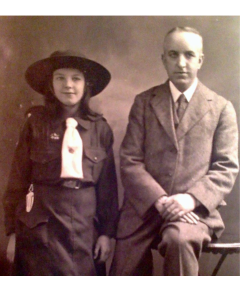
Robert Wotherspoon wearing a suit stood next a girl, who is most probably his daughter. This is an archive photo from the past.

Robert Womesly, friend of James Auld, is on the right of this photo.

“Unbusiness Like Methods” at the Factory

  • Seemingly, this was not the only time James appeared in the newspaper whilst working at H.M. Factory Gretna.
  • Apparently, he may have been involved in some “unbuisness-like methods” in at the factory. [3]


  • According to the Dumfries and Galloway standard newspaper, it all kicked of with fellow Eastriggs resident, Harry Ainsworth [4], clocking into his shift at H.M. Factory Gretna early.
  • The newspaper recounts how Harry was charged “with having defrauded the Ministry of Munitions of the sum of 14s 6d” after clocking in at 11.23am on 21st February 1918, only to actually start his shift at 6pm. [3]
  • After receiving his calling up notice, Harry went to Gretna to make the military authorities aware of his protection certificate (presumably from working at H.M. Factory Gretna) with permission of his supervisor.
  • Before heading off to Gretna though he clocked in at the factory, leaving him with a 19 hour long shift!
  • However the :

“accused pleaded not guilty”

– ‘Unbusiness-Like Methods” at Gretna’, The Dumfries and Galloway Standard newspaper, Wednesday 20th March 1918. [3]

  • In fact the defence argued that it was was custom for men to go to Gretna in the Ministry’s time after they were called up and it was done with the knowledge of superior officials!
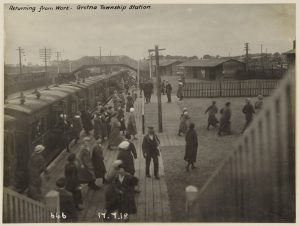
 

Munition girls going off duty Gretna township station. This photo is from the museum's archive. Some text at the top read "returning form work- Gretna Township station."

The train station at Gretna township. Could Harry have been here while he had clocked on at the factory?


  • What does this have to do with James? Well, by this time it turns out that “the engineer in charge of the section in which the accused was employed” and indeed Harry’s supervisor was named “Mr Auld.”
  • Could this be James? We think it is highly likely, don’t you?
  • So what did he have to say about Harry’s claims? Seemingly, Mr Auld gave Harry a train ticket to go to Gretna, but he had not given Harry permission to do this in the Ministry’s time and did not agree with him having done so.


  • Unfortunately, for Mr Auld the defence was able to provide some evidence on the point.
  • Ultimately, the Sheriff Champion found the case not proven and concluded:

“He was afraid very casual customs might prevail at Gretna. Probably they would be better of revision: but bringing up any particular individual and charging him with an offence under the regulations was not the fairest way to institute reform. Anything more unbusiness-like than this practice one could scarcely imagine, and it was little wonder that expenses ran up at Gretna if this was the way they did business.”

– ‘”Unbusiness-Like Methods” at Gretna’, The Dumfries and Galloway Standard newspaper, Wednesday 20th March 1918.[3]

  • We don’t know if James faced any repercussions in response to this case, but it was reported that an inquiry should be made into business methods at the Factory, in response to these comments.[3]
  • Naturally, it is highly possible that James Auld was not even involved in these “unbusiness-like methods” at the factory, but it does look as though he could have been in charge of the section where it happened. What do you think?

Travels

  • Next we find James on 6th May 1918, when he travelled to New York from Glasgow on the ship ‘City of Exeter.’
  • Although it doesn’t seem that he was traveling for leisure, as he was working as a ships engineer.

“Careless” Driving

  • After this James returned to Scotland.
  • In fact we precede to find him in several newspaper articles. Unfortunately, it doesn’t seem that any of these were for best behaviour.
  • Firstly, in February 1936:

“James Cecil Wallace Auld, motor car dealer, St Ronans, Mill Road, Yorker, Dumbarton, was fined £10 with an alternative of 30 days imprisonment.”

– “Motor Car Dealer Fined,” The Scotsman, 28th February 1936. [5]

  • The day before, The Edinburgh Evening News records how James Cecil Wallace Auld, a “Fife road offence motor cyclist who fell off his machine” was “fined £10” and plead guilty to the charge. [6]
  • Meanwhile, The Dundee Evening Telegraph records James as having been “drunk in charge of a motor cycle.” [7]


  • Later in 1937, James was fined for his driving again.

On this occasion, James:

“pleaded not guiltily to driving his car carelessly on 17th July.”

– Kilmarnock Herald and North Ayrshire Gazette, Friday 24th September 1937. [8]

Ultimately, though:

“A fine of £3 was imposed. The accused was disqualified from driving for a year.”

– Kilmarnock Herald and North Ayrshire Gazette, Friday 24th September 1937. [8]

“Fire-Raising At Three Farms”

  • This wasn’t the last time that James Cecil Wallace Auld appears in the newspaper for wrongdoing.
  • On the 2nd February 1941 he appears to have set fire to some things.
  • More specifically, The Dundee Courier records James as having:

“pleaded guilty to setting fire to eight stacks at three neighbouring Fife farms. Damage caused was estimated at £479”

– The Dundee Courier newspaper, Friday 14th February 1941. [9]

  • Similar accounts of the incident can be found in The Scotsman [10] and The Dundee Evening Telegraph. [11]
  • As a consequence of this actions James was “sentenced to nine months imprisonment.”
  • We haven’t found any more rule-breaking exploits from James in any newspapers after this. Perhaps this final imprisonment was enough to put him off. What do you think?


  • Lastly,  James died in September 1972.

Sources and Further Reading

  1. “Robbery at Dornock, ” The Dumfries and Galloway Standard newspaper, Saturday 2nd June 1917.
  2. Worker of the Week: Robert Wortherspoon – https://www.devilsporridge.org.uk/worker-of-the-week-robert-wotherspoon
  3. ‘Unbusiness-Like Methods” at Gretna, The Dumfries and Galloway Standard newspaper, Wednesday 202th March 1918.
  4. Worker of the Week: Harry Ainsworth – https://www.devilsporridge.org.uk/worker-of-the-week-harry-ainsworth
  5. “Motor Car Dealer Fined,” The Scotsman Newspaper, Friday 28th February 1936.
  6. “Fife Road Offence Motor Cyclist Who Fell off His Machine Yorker Man Fined £10,” The Edinburgh Evening New Newspaper, Thursday 27th February 1936.
  7.  “Drunk in Charge of a Motor Cycle,” The Dundee Evening Standard Newspaper, Thursday 27th February 1936.
  8. Kilmarnock Herald and North Ayrshire Gazette Newspaper, Friday 24th September 1937.
  9. “Set Fire to Stacks at Fife Farms,” The Dundee Courier Newspaper, Friday 14th February 1941.
  10. “Set Fire to Stacks at Farms,” The Scotsman Newspaper, Friday 14th February 1941.
  11. Dundee Evening Standard Newspaper, Thursday 13th February 1941.

Find James Auld’s online database entry by clicking here>


Do you have a relative who worked at H.M. Factory Gretna? We would love to hear from you! Please feel free to contact us by emailing info@devilsporridge.org.uk. You never know, maybe your relative could feature in a future Worker of the Week blog post! You can also have a look at some more H.M. Factory Gretna workers on our online database here>

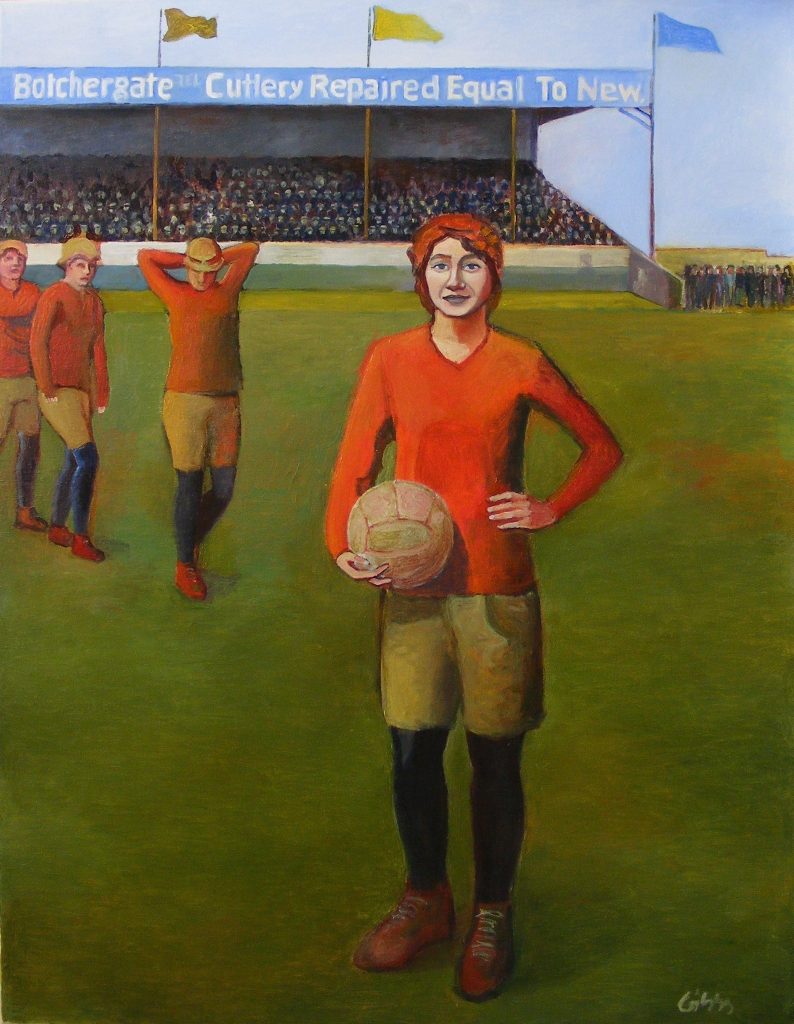
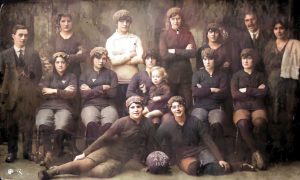
A painting featuring Mary Annie Anderson holding a football with some fellow members of the Mossband Swifts team in the background.

Worker of the Week: Mary Annie Anderson

By Collections blog

Worker of the Week is a series of blog posts which highlights the workers at H.M. Factory Gretna that our volunteers researched for The Miracle Workers Project. This project aimed to centralise all of the 30,000 people who worked at Gretna during World War One and, although it may be over, our amazing research volunteers are continuing to uncover more stories about H.M. Factory Gretna workers to be added to this database. We are always looking to learn more about H.M. Factory Gretna workers. If you know anything about a H.M. Factory Gretna worker please feel free to get in touch with us by contacting info@devilsporridge.org.uk  A huge thank you to our research volunteer’s and the person who donated the beautiful painting which is featured in this blog.

This week’s Worker of the Week is Mary Annie Anderson appears to have been a member of the women’s football team, The Mossband Swifts.

Early Life

  • On the 20th October 1899 Mary Annie Anderson was born in Kirkpatrick Fleming.
  • Her parents were Thomas Anderson and Mary Baty.
  • Additionally, her father was a land labourer.


  • According to census records, Mary appears to have spent her childhood in Kirkpatrick Flemming, followed by Buckland, Dalston in Cumbria.

Time at H.M. Factory Gretna

  • After this, Mary Annie Anderson seems to have started working at H.M. Factory Gretna when she was 16 years old.
  • At the time it seems as though she was referred to as Annie.
Possibly a photo of Mary Annie Anderson.

Possible photo of Mary Annie Anderson.

  • Annie worked in the Mossband section of H.M. Factory Gretna.
  • The rural factory site stretched from Longtown in England (where Annie would have worked) to Dornock in Scotland.
  • Additionally, the two townships of Eastriggs and Gretna were built to help house and facilitate the factory workers.


  • During her time at the factory, it seems that Annie was involved in some sports. [1]

The Mossband Swifts

  • The Mossband Swifts were a women’s football team that appears to be mostly made up of factory workers from A Shift. [2]
  • A “Miss Anderson” appears in a newspaper article about one of The Mossband Swifts matches. [1]
  • Accordingly, we think this could be Mary Annie Anderson.
  • However, it is important to note that this appears as “Miss R. Anderson” is used when listing the names of the team members of the Mossband Swifts earlier in this same article. [2]
  • Could this be a typo with the R supposed to be an A for Annie? What do you think?
A painting featuring Mary Annie Anderson holding a football with some fellow members of the Mossband Swifts team in the background.

We’re proud to have had this painting featuring Mary Annie Anderson in the foreground our collection.

  • Miss Anderson’s actions during a match in September 1915 is mentioned in the local newspaper when:

“Miss Anderson then broke away cleverly for Mossband and from her centre Miss McAdoe equalised.”

– The Carlisle Journal newspaper, 10th September 1917. [1]

  • At the time, The Mossband Swifts were up against a team of local Cumberland works at Brunton Park, the home of Carlisle United.
  • After the Carlisle team scored in the first half, Miss Anderson helped The Mossband Swifts equalise.


Colourised photo of the Mossband Swifts football team from 1917.

Above is a colourised photo of The Mossband Swifts from 1917.

  • Determined, Miss Anderson’s team mate, Miss McAdoe:

“found the net again shortly after, but the point was disallowed for offside. The Mossband goal had one or two narrow escapes after this, and just on time one of the Mossband girls had a fine chance of winning the game for her side, but she missed the leather right in front of an open goal.”

– The Carlisle Journal newspaper, September 1917. [1]

  • Conaquently, this left the match as a draw, but it sounds like it was an eventful game!
  • Although this game is the only one where we found mention of Miss Anderson so far, this was far from the only match The Mossband Swifts had. [2]


A leather football.

A leather football from The Devil’s Porridge Museum’s collection. Could this be similar to the “leather” referred to in the newspaper article extract above?

Life After the Factory

  • Next, Mary Annie Anderson married Joseph Irving Lightfoot in 1921.
  • This followed Joseph being discharged from the army in 1917.


  • Later, the 1939 census shows Mary and Joseph to be living in Carlisle.
  • By this point Mary was employed in unpaid domestic work, whilst Joseph was a railway goods guard.


  • Joseph died in 1964.
  • Lastly, Mary Annie Anderson died in 1974.

Sources and Further Reading

[1] ‘Carlisle v Mossband Swifts,’ ‘Local Ladies Football Matches’ from The Carlisle Journal newspaper, 10th September 1917.

[2] ‘Women’s Football at Gretna’ – https://www.devilsporridge.org.uk/womens-football-at-gretna

Find Mary Annie Anderson’s online database entry by clicking here>

Do you have a relative who worked at H.M. Factory Gretna? We would love to hear from you! Please feel free to contact us by emailing info@devilsporridge.org.uk. You never know maybe your relative could feature in a future Worker of the Week blog post! You can also have a look at some more H.M. Factory Gretna workers on our online database here>

A Christmas tree, The Devil's Porridge Museum from outside, a table set up to build Warhammer figures and some text, which reads "Monthly Roundup 22nd December 2025 to 18th January 2026."

Monthly Roundup 22nd December 2025 to 18th January 2026

By Archive

Here comes our first Monthly Roundup of 2026!

To begin with, we would like to wish everyone a very Happy New Year! (Believe it or not we actually marked Hogmanay with a pre-arranged group visit to The Devil’s Porridge Museum, while we were closed to the public. How did you celebrate?)

Rest assured there’s bound to be lots happening at The Devil’s Porridge Museum in 2026 (we have a few plans, so keep your eye on our social media platforms)! Find out about all that’s happened so far this year below.

***

Saturday 10th January 2026

We re-opened for 2026 in on Saturday 10th January 2026!

The Devil's Porridge Museum from outside.

It was exciting to have our volunteers back after the festive season. We were delighted to be welcoming visitors back into The Devil’s Porridge Museum and our Café again too!

Hears a quick heads up that our Café will only be serving homemade cakes, scones, drinks and biscuits on Fridays for the now. Thank you for your understanding and we hope to be able to serve our main menu on Fridays again soon! Every other day of the week we will be continuing to serve our main menu from 10.30 to 2pm with cakes, scones, drinks and biscuits served to 4pm (3pm on Sundays). Remember to check our food and drink page by clicking here for the latest updates>

If your planning to visit us check, remember to check our opening hours by clicking here>

***

Tuesday 13th January 2026

Warhammer Club returned for 2026 today!

If you fancy joining us you would be more then welcome. Just drop-in and come along. You can have as a little or as much Warhammer experience as you would like to join us and all materials are provided for you at The Devil’s Porridge Museum.

Find out more about our Warhammer Club by clicking here>

Below are some Warhammer themed photos.

***


Conclusion

That’s the end of our Monthly Roundup 22nd December 2025 to 18th January 2026! Time travel back to last month’s Monthly Roundup by clicking here>

Here’s some things to look forward to in 2026:


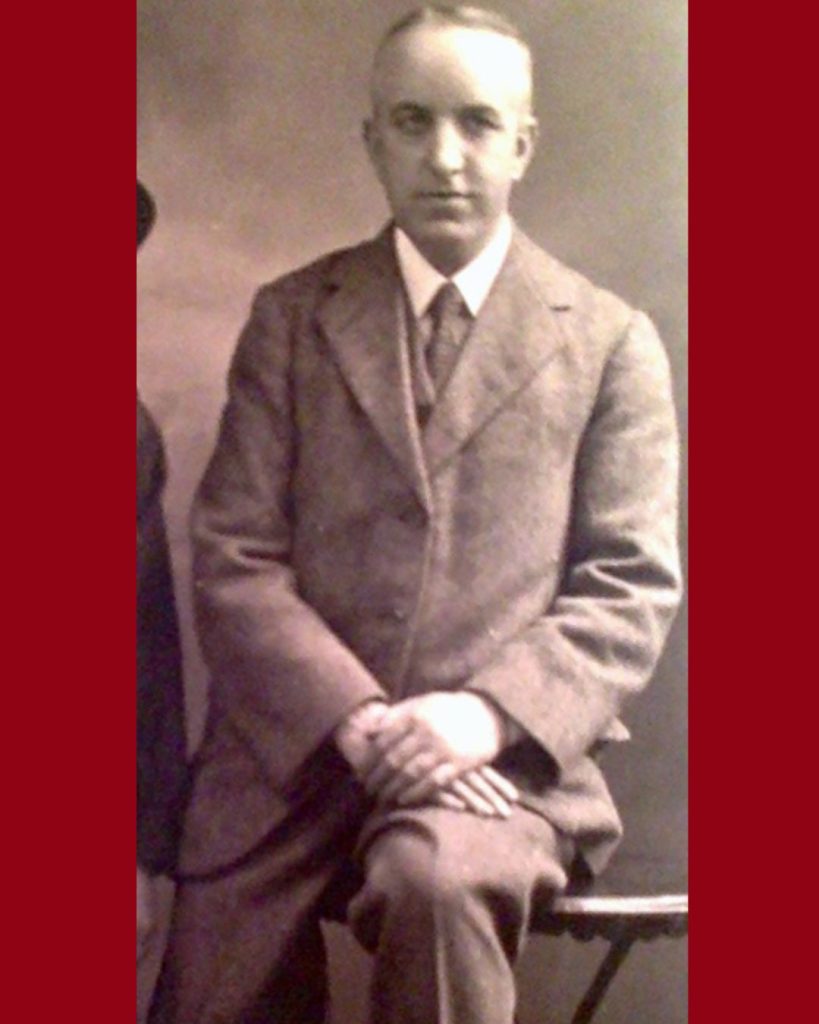
Robert Wotherspoon wearing a suit. This is a black and white photo from the past.

Worker of the Week: Robert Wotherspoon

By Collections blog

Worker of the Week is a series of blog posts which highlights the workers at H.M. Factory Gretna that our volunteers researched for The Miracle Workers Project. This project aimed to centralise all of the 30,000 people who worked at Gretna during World War One and, although it may be over, our amazing research volunteers are continuing to uncover more stories about H.M. Factory Gretna workers to be added to this database. We are always looking to learn more about H.M. Factory Gretna workers. If you know anything about a H.M. Factory Gretna worker please feel free to get in touch with us by contacting info@devilsporridge.org.uk  A huge thank you to our research volunteers!

This week’s Worker of the Week, is Robert Wotherspoon, who worked as a engineer at the factory and appears in an account of a dangerous situation involving a robbery at Dornock!

Early Life

  • On 6th July 1878, Robert was born in Ralston, Renfrewshire.
  • His parent’s were Jane and Robert Wetherspoon and he was the youngest of eight children.


  • According to the 1881 census, the family were living in Paisley.
  • Additionally, Robert’s father was a letter press printer.
  • Similarly, the 1891 census shows they had moved to another address in Paisley and his father was still a letter press printer.


  • Following this, Robert has moved to Barrow in Furness, as shown by the 1901 census.
  • At this point Robert was employed as an iron turner at the shipyard works.

Travels

  • In May 1903 Robert emigrated to Boston via New York.
  • After this he sailed from New York to Glasgow in 1905.

Married Life

  • Next, we come across Robert on the 30th December 1907 when he married Eva Barton Nelson in Renton, Dunbartonshire.
  • At this point, Robert was working as an engineer journeyman.
  • Meanwhile, Eva was a domestic servant.


  • However Robert continued to travel, now with Eva.
  • In 1908 they emigrated to America via Canada.
  • Notably, Robert appears to have been a shipyard worker in Boston Massachusetts in that very same year.

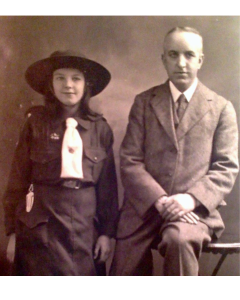
Robert Wotherspoon wearing a suit next a girl, who we presume to be his daughter. This is a black and white photo from the past.

  • Despite this, Robert and Eva must have returned to Glasgow, as their daughter was born there in 1912.
  • Additionally, we know that Robert was an engineer journeyman at this point.


  • Sadly, in November 1915 Eva died in Paisley.

Life at H.M. Factory Gretna

  • We know that during World War One Robert worked as an engineer at H.M. Factory Gretna. [1]
  • During his time working at the factory we know he lived at Jutland House in Eastriggs. [1]


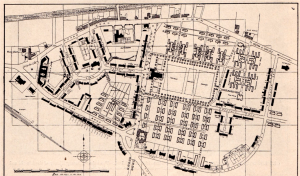
An archive map of Eastriggs.


  • Eastriggs was one of the two townships (the other being Gretna) built to house and facilitate those that came to work at H.M. Factory Gretna, like Robert.
  • The nine-mile rural site of the factory actually stretched from Longtown in England to Dornock in Scotland, although the administrative buildings for the factory site were in Gretna. [2]
  • H.M. Factory Gretna was the name given to the factory by the government at that time, despite its vital connections to Eastriggs, Dornock and Longtown as well as, the township which serves as its namesake.


  • Admittedly, we don’t know when Robert moved to Eastriggs, or how long he worked at the factory.
  • However, we do know that he must have been working at the factory in May 1917. [1]
  • This is thanks to the local newspaper’s account of a very seems to have been a rather dangerous situation involving a robbery. [1]


  • Seemingly, Robert Douglas Gibson Henderson of Back Lowthertown, Dornock was accused of stealing a purse with 20s from Eastriggs housekeeper Margaret Barton on 26th May 1917.[1]
  • If that wasn’t enough, Robert Henderson then went on to the “cemetery, and in a field adjoining the cemetery” and was accursed more bad behaviour. [1]
  • As the local newspaper puts it this was where Robert Henderson was accused of having:

“assulted James Cecil Wallace Auld, foreman engineer, G 10, Eastriggs, Dornock and Robert Wotherspoon, engineer, Jutland House, Eastriggs and threatened to stab them with a knife.”

– The Dumfries and Galloway Standard Newspsaper, 2nd June 1917. [1]

  • Who now knows the full version of what exactly happened in that cemetery on 26th May 1917?
  • What we do know is that James Auld also worked at H.M. Factory Gretna and it seems probable that Robert would have worked with him.
  •  It seems that Robert left a lasting impression on James.
  • How do we know? Well, John went on to name his son Robert Wotherspoon Auld. [3]

Later Life

  • After World War One, on the 18th January 1921, Robert moved to Toronto.


  • By 1950 he has returned to Scotland once more and is living in Aberdeenshire.


  • Robert Wortherspoon died on the 14th August 1964.

Sources and Further Information

  1.  The Dumfries and Galloway Standard newspaper, Saturday 2nd June 1917, ‘Robbery at Dornock’.
  2.  ‘The Factory Manual’, From H.M. Factory Gretna from The Devil’s Porridge Museum’s archive.
  3.  Online Database Entry: James Cecil William Auld – https://www.devilsporridge.org.uk/hm-factory-gretna-workers-database/name/james-auld

You can explore some past photos of Eastriggs, where Robert lived in our history pin created by young volunteers many year ago here – https://www.historypin.org/en/eastriggs-the-town-that-world-war-one-built-2/geo/54.985551,-3.169917,11/bounds/54.802919,-3.379001,55.167356,-2.960833/paging/1/pin/1128318

Find Robert Wotherspoon’s online database entry by clicking here>

Do you have a relative who worked at H.M. Factory Gretna? We would love to hear from you! Please feel free to contact us by emailing info@devilsporridge.org.uk. You never know maybe your relative feature in a future Worker of the Week blog post! You can also have a look at some more H.M. Factory Gretna workers on our online database here>

Poster for Burns Supper at The Devil's Porridge Museum on Friday 23rd January 2026. Booking is essential and tickets are £20 per person.

Burns Supper 2026

By Archive

When is Our Burns Supper?

6pm to 8pm

Friday 23rd January 2026.


What to Expect from our Burns Supper

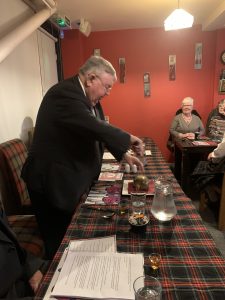
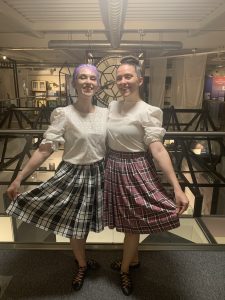
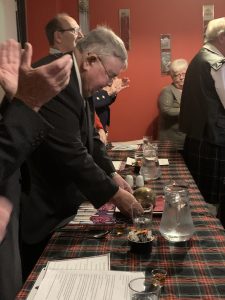
Join us for a night of traditional Scottish food and entertainment at The Devil’s Porridge Museum for our Burns Supper 2026. We will have a bagpiper, highland dancers, plus all the traditional poems and speeches you can usually expect from a Burns Supper!

There will be a freshly prepared, three course meal made from local produce to enjoy. Take a look at the menu below.

Menu for The Devil's Porridge Museum's Burns Supper which is happening on 23rd January 2026 from 6pm to 8pm. The menu includes soup, haggis, a cheese board and tea or coffee. Tickets are £20 per person and booking is essential.

Booking is essential and places are limited.

***

Things to be Aware of…

  • Please make us aware of any dietary requirements, allergies or if you would prefer a vegetarian haggis when booking.
  • If you are attending our Burn’s Supper with a group, but are booking your places individually please contact The Devil’s Porridge Museum prior to this event to let us know. This will help us to allocate seating on the night. Thank you.
  • Booking is essential to secure your place and places are limited.

A bagpiper.

Photographs

Please be aware that photos will be taken at this event, which will appear on The Devil’s Porridge Museum’s website and social media platforms. If you would rather not appear in photos please politely make us aware on the night of the event. Thank you.

***

How to book

Tickets are £20 per person. Booking is essential.

Tickets are now available to purchase online, but please do be aware that there is a small booking fee for online bookings. To book online please click on the “book now” tab at the side of the screen and choose ‘Burns Supper 2026.’

You can also contact The Devil’s Porridge Museum on 01461 700021, but you will need to pay prior to the event to secure your place.

If you would prefer to avoid the booking fee, please feel free to pop into The Devil’s Porridge Museum from the 10th January 2026, but please be aware that places are limited.

Contact Us

If you have any further questions please feel free to contact us by calling 01461 700021

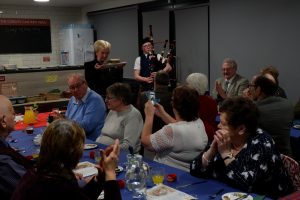
Burns Supper at The Devil's Porridge Museum in 2019.

Translate »
BOOK NOW