All Posts By

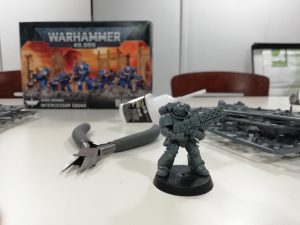
An arrangement of Warhammer miniatures on a table.

Warhammer Club 2026

By Events

When is Warhammer Club?

Tuesday evenings starting on Tuesday 13th January 2026.

6pm to 8pm.

Who Can Come to Warhammer Club?

This club is for everyone who has an interest in Warhammer, whether you’re new to the game or a seasoned player.

 (The minimum recommended age for this club is 8 years old.)

A Warhammer rule book next to some dice with some miniatures in the background.

What to Expect from Warhammer Club

Have you ever wanted to try Warhammer? Or are you looking to play Warhammer with more people?

Join us to paint, build and battle at The Devil’s Porridge Museum’s Warhammer Club.

Currently, we are focusing on Warhammer 40,000 and Warhammer Age of Sigmar, but we may add more themes in the future depending on demand and interest.

It is free to join us for Warhammer Club and all materials are provided at The Devil’s Porridge Museum. If you would like to bring your own Warhammer supplies you would be welcome to do so.

Any Questions?

If you have any questions about this activity you are welcome to contact us.

You can do this by calling 01461 700021 or emailing education@devilsporridge.org.uk

Please be aware that The Devil’s Porridge Museum is closed for the festive season until 10th January 2026, when contacting us. Thank you.

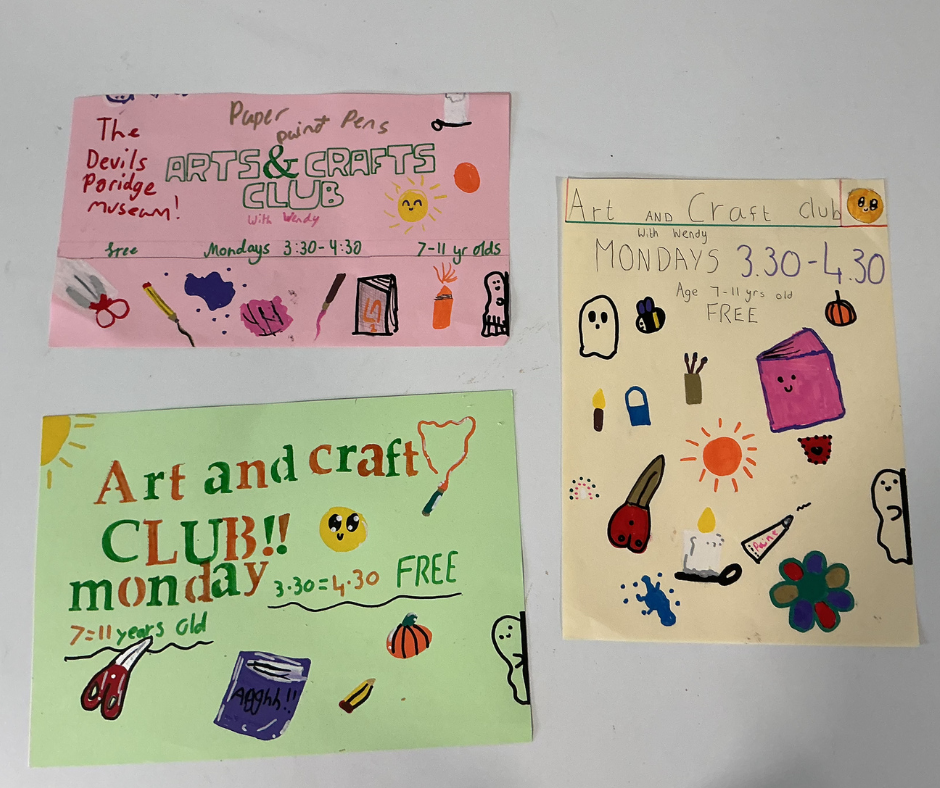
Three handmade posters for Arts and Crafts Club. These all explain that Arts and Crafts Club is on Mondays from 3.30pm to 4.30pm is for 7 to 11 year olds and is free. The posters are decorated with hand drawn illustrations.

Arts and Crafts Club 2026

By Events

When is Arts and Crafts Club?

Arts and Crafts Club will return on Monday 7th September 2026.

This activity will then run on term time Mondays from 3.30pm to 4.30pm.


What is Arts and Crafts Club?

Arts and Crafts Club is for  7 to 11 year olds. It’s a free club!

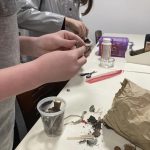
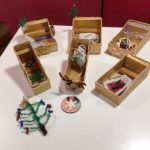
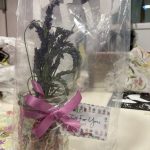
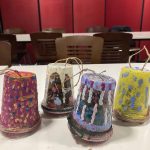
Join us to make, create, decorate and craft! From painting decorations, to decorating photo frames and much more, you never know what you’ll have the chance to create at our Arts and Crafts Club. We have all the materials you’ll need at The Devil’s Porridge Museum and you’ll normally be able to take what you make home with you.

Plus, you’d be welcome to use your imagination to create something new from the materials we have too!

New members welcome. All we ask is that attendees sign up in advance with a parent or guardian.

If you have any questions you’d be welcome to get in touch by emailing eduacation@devilsporridge.org.uk or 01461 700021.

What Can You Expect at Arts And Crafts Club?

Below are some photos from previous sessions of Arts and Crafts Club. We hope to have lots more creative fun at The Devil’s Porridge Museum in Arts and Crafts club this year!


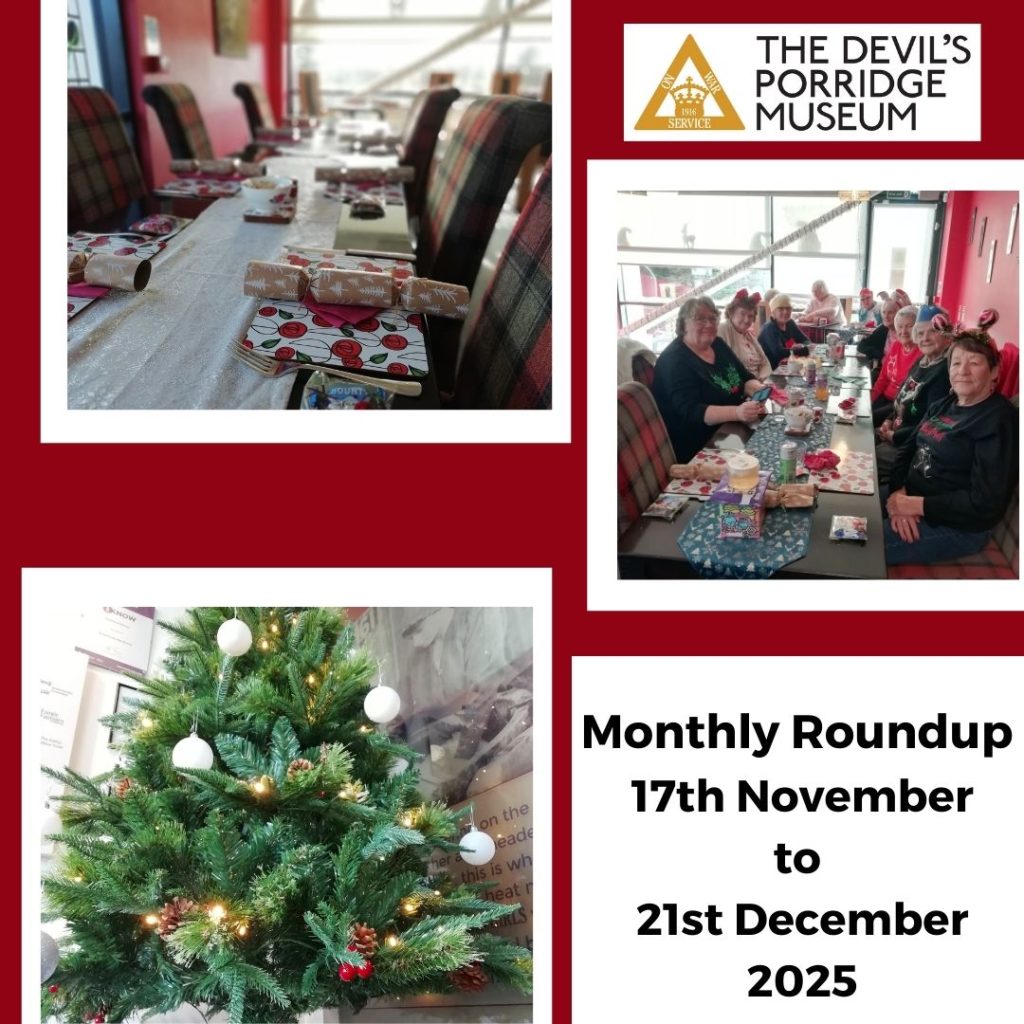
Monthly Roundup 17th November to 21st December 2025

By Archive

Time for our last Monthly Roundup of 2025! The Devil’s Porridge Museum and Café is currently closed until Saturday 10th January 2026, but there’s still lots to catch up on.  Read on discover all that has been happening in our Monthly Roundup 17th November to 21st December 2025.

***

Monday 17th November

We’re launching this week’s Monthly Roundup with our Arts and Crafts Club! It’s always brilliant to have the young people who come along to our free, afterschool, Arts and Crafts Club in The Devil’s Porridge Museum.

***

Friday 21st November

Fantastic to have a school visit to The Devil’s Porridge Museum today. We hope you all enjoyed your visit!

Find out more about school visits to The Devil’s Porridge Museum by clicking here>

***

Monday 24th November

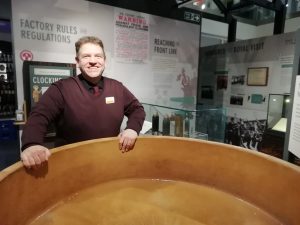
Our new Youth and Community Engagement Officer, Tom started at The Devil’s Porridge Museum today. It was a very busy day for him to start on!

Tom, The Devil's Porridge Museum's Youth and Community Engagement Officer stood next to a nitrating pan inside The Devil's Porridge Museum.

Tom, The Devil’s Porridge Museum’s new Youth and Community Engagement Officer.

Firstly, it was was brilliant to have another school visit.

Our Cordite Club for local retirees also took place in the afternoon. This week they enjoyed pie and baked beans. There was also a wee St Andrew’s Day quiz.

The last activity of the day was our Arts and Crafts Club. A huge thank you to our amazing volunteer Wendy for making this possible and all those who joined us for this club in 2025! Arts and Crafts Club will return in 2026.

***

Thursday 4th December

Today we had our last group visit of the year. It was excellent to have them at The Devil’s Porridge Museum and we hope they enjoyed their visit!

If your interested in arranging a group visit for next year you can learn more about this by clicking here>

***

Sunday 7th December

Sunday 7th December was our last day open to the public for visitors in 2025. This is so our volunteers can have a very well deserved break over the festive season.

We would like to take the opportunity to say a huge thank you to all our visitors, supporters and volunteers! We hope to see you again in 2026, as The Devil’s Porridge Museum and our Café will be re-opening on Saturday 10th January 2026.

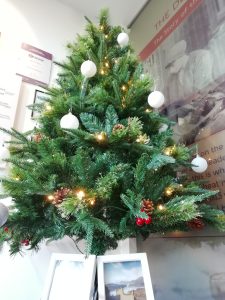
A Christmas tree decorated with lights and babbles inside The Devil's Porridge Museum.

***

Monday 8th December

The Devil’s Porridge Museum may now be closed to the public, but that doesn’t mean there isn’t anything happening!

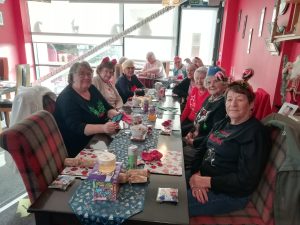
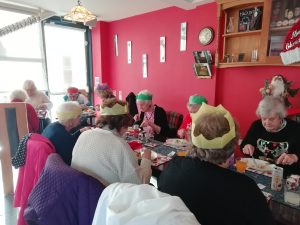
Today marked a festive edition of Cordite Club. The attendees where treated to Christmas dinner, followed by a dessert. There was also singing, dancing and a festive short story!

Thank you to everyone has joined us for Cordite Club this year, and all those who have participated or helped to make this fortnightly lunchtime club possible. Cordite Club will be returning on 19th January 2026.

Below are a couple of photos from this festive Cordite Club.

***

Thursday 11th December

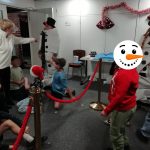
Our last event of 2025 is our Children’s Christmas Party.

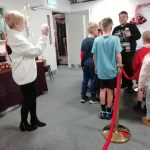
There was lots of fun activities including a snowman dressing up game. Santa took the time to pop in a deliver hand out some presents too!

Below are some photos of this.

A huge thank you goes to Tesco’s Annan for their kind donation for our Children’s Christmas Party.

Another gigantic thank you goes to The Holywood Trust, Young Start The National Lottery Fund for their generous support of our events, activities and more for young people again this year, including our Children’s Christmas Party.

***

Conclusion

Thank you for joining us for our Monthly Roundup this year! If you want to step back in time, you can enjoy last month’s roundup by clicking here>

Remember we’re currently closed for winter, but will be re-opening  on Saturday 10th January 2026! In the meantime stay safe, and we would like to wish everyone who celebrates a Merry Christmas and a Happy New Year!


See you in 2026 for our next Monthly Roundup!


Inside The Border Hall in Gretna. This is an archive photo.

Worker of the Week: The Gretna Choral and Operatic Society

By Collections blog

Worker of the Week is a series of blog posts which highlights the workers at H.M. Factory Gretna that our volunteers researched for The Miracle Workers Project. This project aimed to centralise all of the 30,000 people who worked at Gretna during World War One and, although it may be over, our amazing research volunteers are continuing to uncover more stories about H.M. Factory Gretna workers to be added to this database. We are always looking to learn more about H.M. Factory Gretna workers. If you know anything about a H.M. Factory Gretna worker please feel free to get in touch with us by contacting info@devilsporridge.org.uk  Thank you to all our research volunteers and everyone who has helped with this.

This Worker of the Week blog post is the last that we will be sharing in 2025, so who better to celebrate with than with some members of The Gretna Choral and Operatic Society? Rest assured that our Worker of the Week posts will be returning in 2026, but for now keep reading for a compilation of information about members of The Gretna Choral and Operatic Society.

Introduction

  • The Gretna Choral and Operatic Society was one of the many activities or groups factory workers could be involved in.
  • They gave performances at The Border Hall in Gretna. [8] [9]
  • Their first performance was  ‘HMS Pinafore’ in April 1917. [8]
  • However, we know they also had productions of ‘Les Cloches de Cornville’ and ‘Paul Jones the Solway Mariner.’ [8]


Exterior of the Border Hall. This is a archive photo from the past.

Exterior of the Border Hall.


  • In The Devil’s Porridge Museum’s archive we have a programme for the Gretna Choral and Operatic Society’s last performance.
  • This was for the Gondoliers.
  • Below we explore the stories of some of the people listed in the programme (and music teacher, Ivy Herbet’s connection to the society).
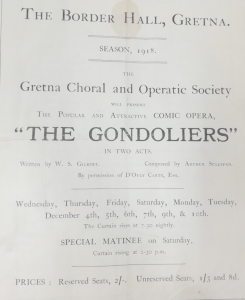
Front cover of a programme for the Gretna Choral and Operatic Society at The Border Hall Gretna in 1918.

The front of The Gondoliers programme.

Alexander McKenzie Lupton

  • Alexander was born in April 1872  at New Luce, Wigtown.
  • Apparently, Alexander was one of the founding members of the Gretna Choral and Operatic Society. [8]
  • In the Gondoliers programme from 1918 Alexander leads the cast list as  “The Duke of Plazo-Toro (a Grandee of Spain)” and was the stage manger too.[9]


Chess boards and pieces in a collage of four photos.

Alexander seems to have liked chess.

  • Prior to his time at H.M. Factory Gretna, Alexander lived in Stirling.
  • According to the The Great War Theatre website, A. M. Lupton (presumably Alexander) was an engineer and well known in the amateur performance community in Stirling. [8]
  • He is described as having “full toned baritone voice” in an article in the British Newspaper archive.


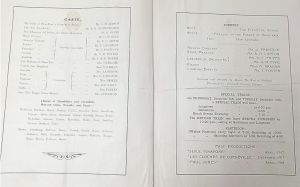
Paper programme for a performance of The Gondoliers at The Border Hall, Gretna in December 1918. A.M. Lupton appears as stage manager and in the cast list. There is also information about the special trains for the performance.


  • During his time at H.M. Factory Gretna he worked as a draughtsman.
  • After this he continued to preform and went on to lease his own theatre.
  • Alexander died in 1946.

James Prentice

  • James was born in June 1855 at Dalziel, Lanarkshire, Scotland.
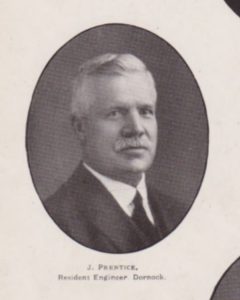
  • Significantly, James is the “Musical Director” in the Gondoliers programme from 1918.[9]
Portrait of Resident Engineer in Dornock, J. Prentice from the Dornock Souvenir Magazine.

James Prentice’s photo appears in the Dornock Farewell Magazine.

  • Before this we know he spent some time living in South Africa.


  • During his time at H.M. Factory Gretna, James worked as a resident engineer in the Dornock section of the factory. [11]
  • Additionally, James was on the factory Social and Athletic Committee, as the “director of all musical organisations at the committee.”[11]
  • The Social and Athletic Committee helped to decide what recreational activities went on at the factory.
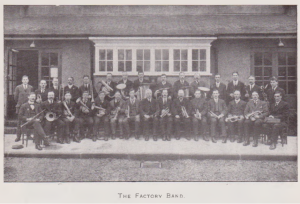
  • In his role in the Committee James was integral in helping to establish the Factory Band from workers in the Dornock section of H.M. Factory Gretna. [11]
Group of people holding musical instruments sitting in front of a building. This is the Factory Band.

J Prentice sat in the middle of the factory band.

  •  Following this, James returned to South Africa.
  • He died there in August 1931.


Ivy Herbert

  • Ivy Herbert was born in June 1893.
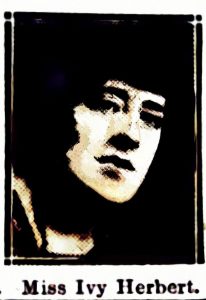
  • Although, Ivy does not appear on 1918 the Gondoliers programme, it seems highly likely that she was involved helping to train those for the Orchestral Society initially.


Ivy Herbert picture taken from an article published in the Western Mail in 1928

Ivy Herbert picture taken from an article published in the Western Mail in 1928

  • This Orchestral Society was established to support the productions of The Choral and Operatic Society.
  • Both of these were set up by The Social and Recreational Committee, who were trying to provide factory workers with recreational activities and keep them safely on site as much as possible.
  • As part of this Ivy held classes in an upper floor room of the Gretna Institute.


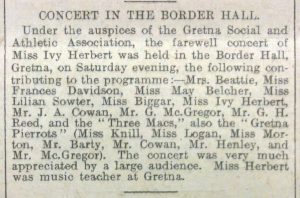
  • After her role as a music teacher for the workers at H.M. Factory Gretna came to an end in early spring 1917, a Farewell Concert was held for her in the Border Hall in Gretna.


An newspaper article titled 'Concert in the Border Hall."

Ivy Herbert Carlisle Journal account of her farewell concert at the Border Hall in March 1917

  • Later she continued to teach (initially for the Royal Academy, first as a tutor and then promoted to professor of pianoforte and bestowed the title Associate of the Royal Academy), published music she had composed and appeared in many concerts, including preforming with the National Orchestra of Wales in 1928.
  • Continuing with her educational work she had weekly educational radio broadcast for schools which went out on the Cardiff channel.
  • Additionally, she featured regularly on radio in concerts and  broadcast on the World Service in 1937 performing a series of short recitals which went out on All India Radio.


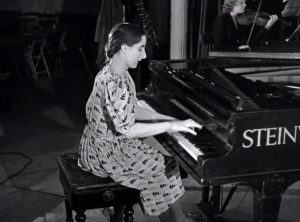
Ivy Herbert taking part in a CEMA organised concert in 1942

Ivy Herbert taking part in a CEMA organised concert in 1942

  • During World War Two she was involved in Council for the Encouragement of Music and Arts (CEMA).
  • Her interest in music seems to have continued for all Ivy’s life and if you would like to learn about everything she was involved in (or indeed any of the people mentioned in this post) head to the sources and further reading section of this blog below.


  • She died in November 1993, a few months after her 100 year birthday.


Thomas George Dippie

  • Firstly, Thomas was born in 1884 in  Collingwood, Victoria, Australia.
  • In the Gondoliers programme from 1918 Stewart is playing “Giuseppe Palmieri,” who was one of the “Venetian Gondoilers.” [9]


Mrs Mary Dippie's and Thomas George Dippie's names on the Electoral Roll for Gretna 1918 to 1919. They both lived at 9 T West in Gretna. Thomas is described as a clerical assistant.

Thomas George Dippe and his wife’s records in the Electoral Role for Gretna in 1918.

  • During World War One, we know Thomas worked as a clerical assistant living at Gretna.
  • In addition to The Gretna Choral and Operatic Society, we know Thomas took part four concerts locally in 1917.
  • These include one in aid of Gretna School & Athletic Association Benevolent Fund and one for France’s Day, were Thomas also patriated in a mounted wrestling competition!


  • Later, Thomas appears in a promotional content in a newspaper for something that  is advertised as curing indigestion, ‘Bisurated Magnesia.’
  • Thomas died in 1955.

Egerton Sayer

  • Firstly, Egerton was born in 1864 at Clifton in Bristol.
  • Notably, he played “Don Albambra del Bolero (the Grand Inquisitor)” in the 1918 performance of the Gondoliers. [9]


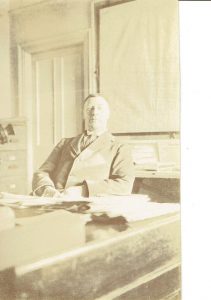
Egerton Sayer at his desk during his time at H.M. Factory Gretna.

  • Initially, James worked as Assistant Chief Electrical Engineer for the Hampstead Electric Lighting committee.
  • After this he worked as an electrical engineer in the Mossband (a codename for Longtown) section of H.M. Factory Gretna.


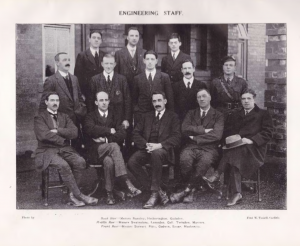
The engineering staff at H.M. Factory Gretna from the Mossband Farewell Magazine.

Egerton Sayer can be seen in this photo of the Engineering Staff from the Mossband Farwell Magazine. He is second from the right on the front row.

  • Lastly, Egerton died in April 1927 at London.


Stewart Clifford Phipps

  • Stewart was born in February 1880 in Birkenhead, Merseyside.
  • In the Gondoliers programme from 1918, Stewart is one of the “Leaders of the orchestra.” [9]


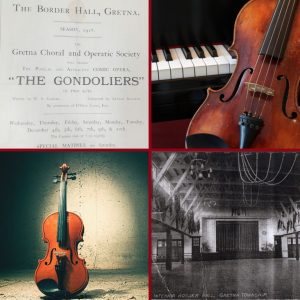
Front cover of "The Gondoliers" programme from performances at The Border Hall of Gretna, a violin in front of a piano, a spotlighted violin and the inside of The Border Hall in Gretna with a stage curtain at the other end of a large hall in a collage of four photos.


  • Before working at H.M. Factory Gretna he was a violinist and then a musical director.
  • After this, he worked as a Clerk for the factory.
  • Additionally, Stewart was the Leader of the Orchestra and violinist in a performance of Cheerio Gretna in 1917. [10]


  • Later, Stewart became a music teacher.
  • Stewart died in 1977.

Other Performances at the Factory

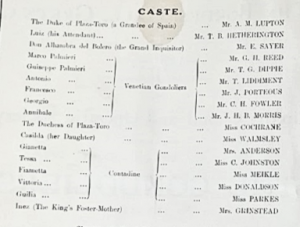
Cast list for the Gondoliers' featuring Mr A. M. Lupton.

  • Naturally, The Gretna Choral and Operatic Society weren’t the only ones to preform during their time working at the factory.
  • Additionally, The Choral and Operatic Society didn’t only include men.
  • know Miss Graham played the piano, while Miss Cochrane, Miss Walmsley, Mrs Anderson, Miss C. Johnston, Miss Meikle, Miss Donaldson, Miss Parkes and Mrs Grinstead appear to have played parts in this performance Gondoliers, but unfortunately, we have not managed to track all them down so far. [9]
  • The fact that we have the Gondoliers programme in our collection, makes it easier to discover members of The Gretna Choral and Operatic Society, as well as know what their part was in their performance, but unfortunately we haven’t identified everyone in the programme so far.


  • Excitingly, earlier this year we were kindly donated a programme for a Concert and Dance put on by The Social and Athletic Association, so there is plenty more for us to dig into soon!


  • Importantly, we should also note that the rural site of H.M. Factory Gretna actually stretched Longtown in England to Dornock in Scotland.
  • Significantly, the townships of Eastriggs and Gretna were both built for all those who came to work at the factory and were vital.
  • As well as providing resources for recreational activities such as dances in The Central Hall in Eastriggs, there were shops, schools, housing and tennis courts; providing a community for all those who worked at the factory with the Women’s Police Force helping to ensure the safety of many young girls on what would have been their first time living away from home.

Social and Recreational Department

  • Additionally, The factory had it’s own Social and Recreational Department, which supervised all amusements and recreational activities.
  • Not only was it thought that activities could increase productivity, but they would also help to keep munitions workers out of mischief and happy.
  • Undeniably, performances at The Border Hall in Gretna was one of the many amusements, which helped them to achieve this.
  • One more notable performance at The Border Hall was Cheerio Gretna and you can read about someone who was integral to this production below.


Mary Hermione Feildon

  • Firstly, in April 1886, Mary Hermione Feildon was born in Mugginton, Derbyshire.
  • It appears that she went by her middle name Hermione.


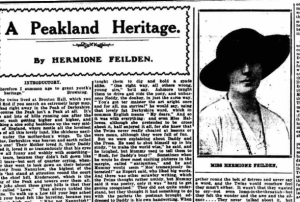
Miss Hermione Feildon wearing a large hat. This photo is from the Derbyshire Advertiser on Saturday 11th January 1924.


  • Notably, Hermione was a member of the Women’s Police Force at H.M. Factory Gretna.
  • However, Hermione also wrote and appeared in a performance of “Cheerio Gretna.” [10]
  • This took place in May 1917 at The Border Hall in Gretna.
  • Hermione played a Duke and preformed alongside some of her colleges in the Women’s Police Force (including Choral and Operatic Society member, Stewart Clifford Phipps).


  • Following this, Hermione moved and became involved in her local armature dramatic group “The Heckington Strolling Players.”
  • As well as performing as part of this group, Hermione wrote some of their performances and also appears to have helped train the armature dramatics group.
  • Additionally, in 1924, The Derbyshire Advertiser newspaper printed a story written by Hermione, which was serialised in to 11 parts.


Miss Hermione Feildon wearing a large hat. This photo is from the Derbyshire Advertiser on Saturday 11th January 1924 and is next to the first instalment of her story 'A Peakland Heritage.'

The first instalment of Miss Hermine Feildon’s story in The Derbyshire Advertiser, January 1924.

  • She died in May 1977.


Sources and Further Reading

  1.  Alexander McKenzie Lupton – Worker of the Week: Alexander McKenzie Lupton – https://www.devilsporridge.org.uk/worker-of-the-week-alexander-mckenzie-lupton
  2. James Prentice – Worker of the Week: James Prentice – https://www.devilsporridge.org.uk/worker-of-the-week-james-prentice
  3. Ivy Herbert – Ivy Herbert – Gretna’s Music Teacher – https://www.devilsporridge.org.uk/ivy-herbert-gretnas-music-teacher
  4. Thomas Geroge Dippie – Worker of the Week: Thomas George Dippie – https://www.devilsporridge.org.uk/worker-of-the-week-thomas-geroge-dippie
  5.  Egerton Sayer – Worker of the Week: Egerton Sayer – https://www.devilsporridge.org.uk/worker-of-the-week-egerton-sayer
  6. Stewart Clifford Phipps – Worker of the Week: Stewart Clifford Phipps – https://www.devilsporridge.org.uk/worker-of-the-week-stewart-clifford-phipps
  7. Mary Hermione Feildon – Worker of the Week: Mary Hermione Feildon – https://www.devilsporridge.org.uk/worker-of-the-week-mary-hermione-feildon
  8.  Cheerio Gretna: Theatre at the Factory by Stuart Gibbs (7th March 2018), The Great War Theatre’s website – https://www.greatwartheatre.org.uk/2018/03/406/
  9.  The Gretna Choral and Operatic Society, The Gondoliers programme, December 1918 from The Devil’s Porridge Museum’s archive.
  10. Armature Theatricals in Gretna from the Dumfries and Galloway Standard newspaper, 12th May 1917, page 5.
  11. “Factory Band,” Page 24 – 25, The Dornock Souvenir Magazine.


Do you have a relative who worked at H.M. Factory Gretna? We would love to hear from you! Please feel free to contact us by emailing info@devilsporridge.org.uk. You never know maybe your relative feature in a future Worker of the Week blog post! You can also have a look at some more H.M. Factory Gretna workers on our online database here>

A triangle shaped, brass On War Service badge. There is a crown inside the triangle with 1916 underneath it.

Worker of the Week: Maria Clennett

By Collections blog

Worker of the Week is a series of blog posts which highlights the workers at H.M. Factory Gretna that our volunteers researched for The Miracle Workers Project. This project aimed to centralise all of the 30,000 people who worked at Gretna during World War One and, although it may be over, our amazing research volunteers are continuing to uncover more stories about H.M. Factory Gretna workers to be added to this database. We are always looking to learn more about H.M. Factory Gretna workers. If you know anything about a H.M. Factory Gretna worker please feel free to get in touch with us by contacting info@devilsporridge.org.uk  Thank you to all our research volunteers for making this possible.

This week’s Worker of the Week is Maria Clennett. We know she worked at H.M. Factory Gretna and later went on to become a laundry maid.

*** Please be aware this blog post will contain a historic quote referring to possible learning disabilities.  ‘Shell shock’ is also referenced separately in this blog post.***

Early Life

  • On 14th June 1895, Maria was born in Middlesbrough.
  • Her parents were Jane and William G Clennett.
  • At this time, we know his father was working as a tailor.


  • Following this, by the 1901 census the family our still living in Middlesbrough and Maria has three brothers.
  • Unfortunately, Maria’s mother is listed as a widow in the census.
  • Additionally, Jane was working as a charwoman.


  • After this the 1911 shows Maria to have moved to North Riding with her mother and three brothers.
  • In this census record Maria is also listed as “deaf and dumb” from birth. [1]
  • From the description in ‘The Health of the Munition Worker,’ historically this phrase was used:

“As a catch-all for people who were hearing impaired and may have had intellectual disabilities, so we don’t know what her  diagnosis would be today.”

– The Health of the Munition Worker by Emma Gilliland, Ellie Musgrave and Dr Laura Noakes. [2]

***

  • Similarly,  mental health conditions were perceived differently during the First World War.
  • This is exemplified by how ‘shell shock’ was often wrongly mistaken for cowardice during World War One. [4]
  • Previously, we have shared the story of brother to factory Women’s Police, Frederick Thomas McLintic, who was discharged in 1918, due to ‘shell shock’ through a Worker of the Week blog centred on his sister’s connection to the factory. [3]
  • If you would like to explore this further you can find the Worker of the Week blog for Winifred Maud McLintic by clicking here>

Life During World War One

  • From records indicated by the 1921 census we know that Maria worked at H.M. Factory Gretna during World War One.
  • We don’t know exactly what she did at the factory.
  • It is possible that she was a munition worker, or she could have worked in the laundry as suggested by her later employment. What do you think?


The laundry at H.M. Factory Gretna. Three women are washing clothes inside. This is an archive photo from the past.

Could Maria have worked in the laundry at the factory as shown in this photo? Or could she have been a munitions worker?


After H.M. Factory Gretna

  • Next, we find Maria living in Middlesbrough in the 1921 census.
  • She is listed as previously having worked at H.M. Factory Gretna.


A triangle shaped, brass On War Service badge. There is a crown inside the triangle with 1916 underneath it.

H.M. Factory Gretna workers like Maria would have been given an On War Service badge during their time working at the factory.

(Despite the factory’s name, the rural site of H.M. Factory Gretna stretched Longtown in England to Dornock in Scotland. The townships of Eastriggs and Gretna were built to help house and facilitate those who came to work at the factory. There were also some administration buildings for the factory located in Gretna.)


  • Following this by 1939, Maria is living at another address in Middlesbrough with her mother Jane.
  • By this point Maria is working as a laundry maid.


  • Maria died in January 1977 in Scarborough.

Sources and Further Information

[1] 1911 census records.

[2] Page 31, ‘The Health of the Munition Worker’ by Emma Gilliland, Ellie Musgrave and Dr Laura Noakes. –

[3] Worker of the Week: Winifred Maud McLintic – https://www.devilsporridge.org.uk/worker-of-the-week-winifred-maud-mclintic

[4] Voices of the First World War: Shell Shock, Imperial War Museum website – https://www.iwm.org.uk/history/voices-of-the-first-world-war-shell-shock

Find Maria Clennett’s online database entry by clicking here>

Do you have a relative who worked at H.M. Factory Gretna? We would love to hear from you! Please feel free to contact us by emailing info@devilsporridge.org.uk. You never know maybe your relative feature in a future Worker of the Week blog post! You can also have a look at some more H.M. Factory Gretna workers on our online database here>

Poster for a Free Children's Christmas Party happening at The Devil's Porridge Museum on Thursday 11th December 2025 from 6.30pm to 8pm. This is for 5 to 11 year olds and booking is essential. You can book on The Devil's Porridge Museum's website or by calling 01461 700021.

Children’s Christmas Party 2025

By Archive

When is the Children’s Christmas Party 2025?

Thursday 11th December 2025

6.30pm to 8pm.

Tickets are FREE, but booking is essential. To book your place please press ‘Book Now’ and select Children’s Christmas Party.

If you need help booking please contact 01461 700021


Who Can Come to the Children’s Christmas Party?

This is a FREE Children’s Christmas Party for 5 to 11 years old. 

Parents and / or guardians are welcome to stay and watch this party for free (places only need to be booked for the young people attending). The parents and / or guardians will even have the opportunity to help the young attendees with a best dressed Snowperson competition activity!

We do ask for a parent or guardian of any child under 6 years old to stay for the duration of the party.


What to Expect at the Children’s Christmas Party

Join us for traditional party games and to meet Santa at our FREE Children’s Christmas Party!

At this years Children’s Christmas party young attendees can enjoy:

  • Traditional party games;
  • Some snacks;
  • The chance to meet Santa;
  • And a small gift from Santa.

There’s sure to be plenty of festive fun!

Things to be aware of…

At our Children’s Christmas Party there will be:

  • Flashing lights;
  • And there may be some loud noises.

The Devil’s Porridge Museum is closed to visitors for the public for the festive season, but will be opening for this event. We will be to the public for museum and Café visitors in January 2026. You will not be able to look around The Devil’s Porridge Museum during this event.

A photo taken behind three children wearing Santa hats. Some more children, festive decorations and members of our museum team can be seen in front of them.

How to Book

Tickets are FREE for our Children’s Christmas Party 2025.

To book your place please press the book now button on the right of this page and select Children’s Christmas Party 2025.

If you need help booking your place please contact 01461 700021.


Some children sat on the floor at a Christmas Party. Some are wearing festive hats.

Thank you to Tesco’s, Annan for their support of our Children’s Christmas Party.

A huge thank you to our funders The Holywood Trust and Young Start, The National Lottery Fund for their support of our activities for young people again in 2025!


Frederick Murray Trotter wearing a suit and his eyepatch. Photo source: The British The British Geology Survey Heritage website.

Worker of the Week: Frederick Murray Trotter

By Collections blog

Worker of the Week is a series of blog posts which highlights the workers at H.M. Factory Gretna that our volunteers researched for The Miracle Workers Project. This project aimed to centralise all of the 30,000 people who worked at Gretna during World War One and, although it may be over, our amazing research volunteers are continuing to uncover more stories about H.M. Factory Gretna workers to be added to this database. We are always looking to learn more about H.M. Factory Gretna workers. If you know anything about a H.M. Factory Gretna worker please feel free to get in touch with us by contacting info@devilsporridge.org.uk  A huge thank you goes to our research volunteers!

This Week’s Worker of the Week blog is Frederick Murray Trotter, who was recognised for his geology work after working at H.M. Factory Gretna. Read more about him below.

Early Life

  • Frederick was born on 19th April 1897 in Gateshead, Durham.
  • His parents were John and Mary Trotter.
  • Additionally, Frederick had one younger brother.


  • Following this, in the 1901 census, the family were still living in Durham and John was a foreman-iron steel turner.
  • However, by the 1911 census, they have moved to live in Newcastle on Tyne and his father is now described as foreman turner ordnance.

Life During World War One

  • After this, Frederick Murray Trotter started at Armstrong College, Newcastle University to study chemistry and geology. [1]
  • Interrupting his studies, 18 year old Frederick joined the Royal Engineers in 1916.[1]
  • Resultingly, Frederick was sent to the Western Front as a dispatch Rider.[1]


Frederick Murray Trotter in a suit.

Photo source: http://earthwise.bgs.ac.uk/index.php?curid=21408


  • In 1918 Frederick lost one eye and part of his skull, as result of a shrapnel wound near Vimy.[1]
  • Consequently, he was discharged on 15th August 1918.[1]


  • Next it appears that he went on to work at H.M. Factory Gretna.
  • This is because, the 1921 census lists Frederick as ex worker for the factory and living in Carlisle.
  • At some point around this time, Frederick also seems to have completed his studies at Armstrong College, as he was awarded a BSc in 1920.[1]

Marriage and More

  • Shortly after the 1921 census it appears that Frederick moved to Whitehaven.
  • On 14th June 1921, Fredrick joined the Freemasons in Whitehaven.[1]


  • In October 1922, Frederick married Evaline Carruthers in Whitehaven.

Life During World War Two

  • As of the 1939 census, Frederick was living in Glamorgan in South Wales and is described as being a Government Geologist.
  • It appears that he went there to work on a coalfield.[1]
  • Following this, near the end of 1941, Frederick was promoted.[1]
  • Accordingly, he became the District Geologist for North West England.[1]

Geology and Later Life

  • Later, in 1955, Frederick was promoted to Assistant Director (Deputy Chief Scientific Officer).[1]
  • Due to his contribution to Geology, Fredrick was awarded the Murchison medal in 1956. [2]
  • In 1963, Frederick retired.[1]
  • Across his career, Frederick had released over 50 publications, which are now in the charge of The British Geological Society.[1]


  • On 24th July 1968, Frederick died in Gloucestershire.


Sources and Further Information

[1] Frederick Murray Trotter, The British Geology Survey Heritage website – https://earthwise.bgs.ac.uk/index.php/Frederick_Murray_Trotter_Dr.

[2] Murchison Medal, Wikipedia Page – https://en.wikipedia.org/wiki/Murchison_Medal

[3] Frederick Murray Trotter, Wikipedia Page – https://en.wikipedia.org/wiki/Frederick_Murray_Trotter

[4]  The Health of the Munition Worker By Emma Gilliland, Ellie Musgrave and Dr Laura Noakes, 2022. – https://www.devilsporridge.org.uk/product/the-health-of-the-munition-worker


Photo and illustration of Frederick Murray Trotter used in this blog are all from The British Geology Survey Heritage website – https://earthwise.bgs.ac.uk/index.php/Frederick_Murray_Trotter_Dr.

Find Frederick Murray Trotter’s online database entry by clicking here>


Do you have a relative who worked at H.M. Factory Gretna? We would love to hear from you! Please feel free to contact us by emailing info@devilsporridge.org.uk. You never know, maybe your relative feature in a future Worker of the Week blog post! You can also have a look at some more H.M. Factory Gretna workers on our online database here>

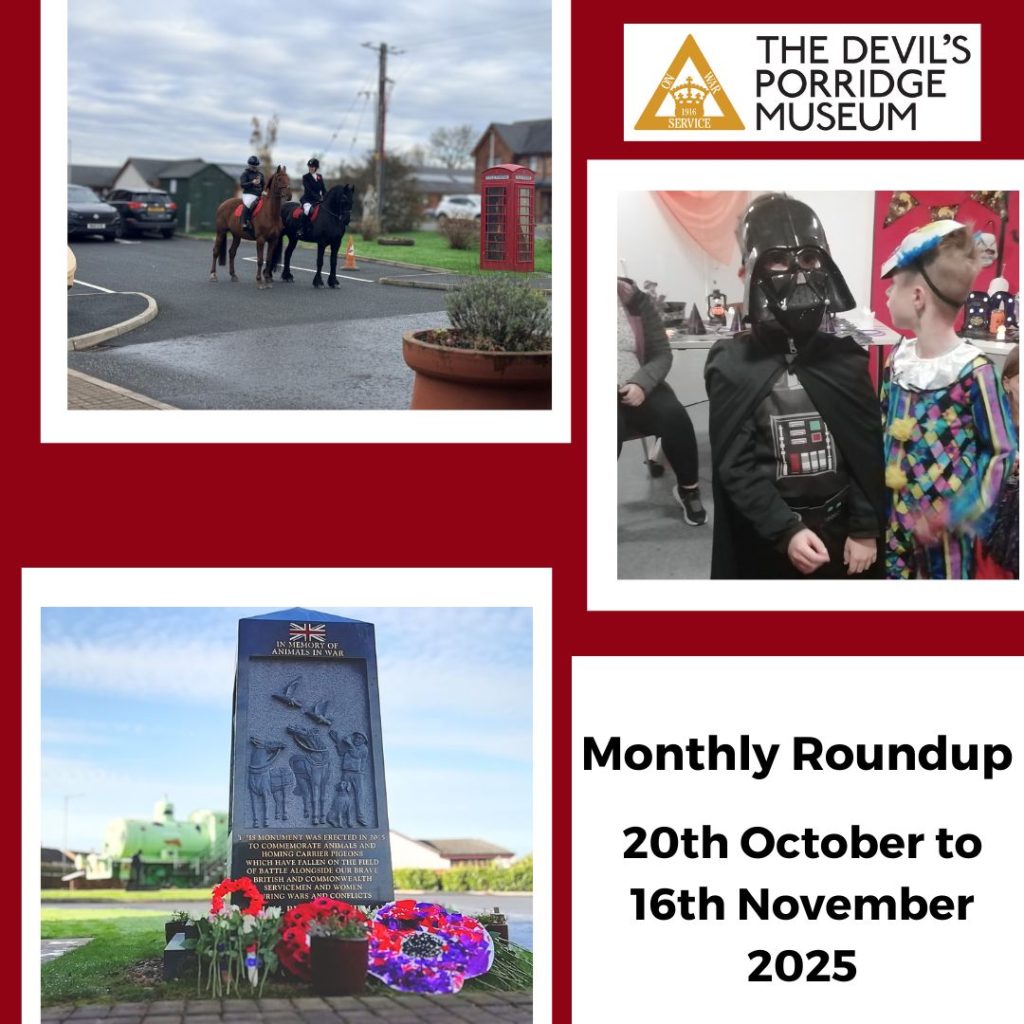
Graphic which reads "Monthly Roundup 20th October to 16th November 2025." It features a photo of two horses and riders in The Devil's Porridge Museum's Car Park, a child dressed as Darth Vader at a Halloween party and our Animals in War Memorial outside The Devil's Porridge Museum.

Monthly Roundup 20th October to 16th November 2025

By Archive

Can you believe it’s already November? From Halloween to our Animals in War Remembrance Service, catch up on what’s been happening at The Devil’s Porridge Museum in Monthly Roundup 20th October to 16th November 2025.

Monday 20th October 2025

We’re starting our Monthly Roundup with Arts and Crafts club. This year it even continued during the school holidays! A huge thank you to our amazing volunteer, Wendy for making this possible.

***

Tuesday 21st October 2025

Fantastic to have a group visit to The Devils’ Porridge Museum today. Remember that it is essential for you to book your group visits in advance! This helps us to make sure we have availability and helps to reduce the stress levels of our volunteers and staff; letting us know what to expect and helping us ensure we have enough people on shift to help you enjoy your visit.

Find out more about booking your group visit by clicking here>

***

Wednesday 22nd October 2025

Today we had a drop-in Feathers With Stories workshop, which was running as part of the Wild Goose Festival organised by The Stove Network. Thanks to anyone who popped in to be creative during their visit to The Devil’s Porridge Museum.

***

Thursday 23rd October 2025

On Thursday 23rd October we had a Halloween workshop, were the young attendees made their own spook-tacular Halloween animation! A huge thank you to volunteer trustee Alice for running the workshop. Another huge thank you to everyone who joined us and helped with this workshop!

***

Friday 24th October 2025

At our Children’s Halloween Party there was lots of treats and games! Thank you to everyone who joined us for this and we hope that you all had a spook-tacular time!

Below are some photos from the Children’s Halloween Party.

***

Saturday 25th October 2025

One of our last Gardening Clubs of 2025 took place today.

Below are some photos from Gardening Club this year.

***

Monday 27th October 2025

Our Halloween edition of Cordite Club took place today. Cordite Club is a fortnightly lunchtime club for retirees, where there is food, an activity and the opportunity for a good natter or catch up.

This week there was soup, spooky cupcake and shortbread to enjoy. Plus there was Card Bingo and chair aerobics to a selection of Halloween music including the Time Warp.

In the afternoon our free afterschool club for young people was back in The Devil’s Porridge Museum. This week they got creative with some Halloween themed crafts!

Below are some photos from this.

***

Saturday 1st November 2025

The first day in November was the last day of our Gardening Club for 2025.

We would like to say a huge thank you to everyone who has joined us for Gardening Club!

An extra special thank you goes to our volunteer, Wendy, who has been running the Gardening Club this year and has done for many previous years too! 2025 may be the last year that she will be helping with Gardening Club and taking charge of our Dig For Victory Garden, but we are very proud to have had her help with this. Rest assured, Wendy will still be helping with our Arts and Crafts Club and some school holiday activities, so fortunately you will still be able to see her at The Devil’s Porridge Museum!

***

Monday 3rd November 2025

Brilliant to have a school visit to The Devil’s Porridge Museum today.

If you would like to learn more about school visits please click here>

***

Friday 7th November 2025

Our Animals in War Remembrance Service took place today. Thank you to everyone who joined us to mark the occasion and remember with us as we lay down a wreath at our Animals in War Memorial.

Below are some photos of this event. A huge thank you to Zoe for taking them!

***

Sunday 9th November 2025

This year Sunday 9th November 2025, marked Remembrance Sunday. At The Devil’s Porridge Museum we asked our visitors to join us in observing a 2 minutes silence at The Devil’s Porridge Museum.

We were also proud to have representatives laying down a wreath at the local war memorial.

The animals in war memorial with some wreaths around it.

***

Monday 10th November 2025

Cordite Club were back at The Devil’s Porridge Museum again today. This week they enjoyed some board games. If you would like to find out more about our Cordite Club please click here>

***

Tuesday 11th November 2025

To mark Armistice Day we took part in the nation 2 minutes silence at The Devil’s Porridge Museum and invited our visitors to join us in this.

We are proud to remember all those who have served and lost so much past and present.

Animals in war memorial outside The Devil's Porridge Museum with flowers and wreaths.

***

Wednesday 12th November 2025

The last thing in this month’s Monthly Roundup is a group visit to The Devil’s Porridge Museum. It was lovely to have them at The Devil’s Porridge Museum.

Find out more about group visits by clicking here>

***

Conclusion

That’s it for this Monthly Roundup. Believe it or not, our next Monthly Roundup will not be until December!

In the meantime you can catch up with our last roundup. Find our Monthly Roundup 22nd September to 19th October 2025 by clicking here> 

 

Mary Braddon in uniform as a police sub-inspector. Photo is from Ancestry, Public Member Tree.

Worker of the Week: Mary Theresa Braddon

By Collections blog

Worker of the Week is a series of blog posts which highlights the workers at H.M. Factory Gretna that our volunteers researched for The Miracle Workers Project. This project aimed to centralise all of the 30,000 people who worked at Gretna during World War One and, although it may be over, our amazing research volunteers are continuing to uncover more stories about H.M. Factory Gretna workers to be added to this database. We are always looking to learn more about H.M. Factory Gretna workers. If you know anything about a H.M. Factory Gretna worker please feel free to get in touch with us by contacting info@devilsporridge.org.uk  

This week’s Worker of the Week, is a member of the Women’s Police Force at the factory, Mary Theresa Braddon. This information has been researched through a research project led by Nigel. A huge thank you to Nigel, everyone involved in this and all our research volunteers for all their help!

Early Life

  • On 25th November 1875, Mary was born in Koromiko, Marlborough, New Zealand.
  • In total Mary had five siblings.
  • Her parents were James & Hannah (nee Blaymires) McIntosh.

Marriage

  • Next, we come across Mary’s marriage to Edward George Braddon 1900.
  • This took place in Sydney Australia.
  • Notably, Edward’s father was Sir Edward Nicholas Coventry Braddon, who served within the Australian Parliament and as the Premier of Tasmania. [5]


  • Edward George Braddon was a specialist mining engineer and it appears he often travelled for his work.
  • Following their marriage, they travelled to the West Indies and South America for Edward’s occupation.

Life in World War One and H.M. Factory Gretna

  • After this, we know Mary worked in the women’s police force at H.M. Factory Gretna.
  • This is because she appears in the Gretna Valuation Role from the time, described as a “policewoman” living in “Women’s Police Barracks Number 1” in Gretna.
  • Below is a photo of some members of the women’s police force, but we don’t know if Mary features!


ome of H.M. Factory Gretna's Women's Police Force in front of one of the hostels.


  • Meanwhile, Edward had signed up, joining the Royal Fusiliers.
  • Although, he joined as a private he progressed to a sergeant.
  • Sadly, he died on 4th February 1917 after a fever.
  • He was serving with the 25th Battalion Royal Fusiliers at the time.


Womens Police badge.

Ministry of Munitions Women’s Police Service badge from the Museum collection. This would have been used at H.M. Factory Gretna.

  •  Mary’s address at the Gretna Women’s Police Barracks is also shown on Edward’s pension card.

(During her time working at the factory, Mary lived in one of the two townships – Gretna, with the other referred to being Eastriggs – built for all the munitions workers who came to work there. H.M. Factory Gretna’s rural site stretched from Longtown in England to Dornock in Scotland, despite what it’s name suggests!)

Police Work

  • After her time at Gretna, Mary appears to have continued in policing until 1919.
  • She also worked as a police woman in London and achieved the rank of sub inspector.
  • Notably, we can’t be sure if she achieved this at the factory or in London.


Mary Braddon in uniform as a police sub-inspector. Photo is from ancestry, public member tree.

Mary in her sub-inspector uniform. This photo is from Ancestry Public Member tree.

  • By the 1921 census, Mary is still living in London.
  • Significantly, she is no longer a police woman by this point.

Travels

  • Next, on  4th June 1927, Mary left London aboard the SS Minnetonka, which was bound for New York.
  • As indicated by her arrival documents, Mary was in New York from 13th June 1927.
  • However, these same arrival documents indicate she remained in America for a few weeks, because she was soon to leave for Wellington, New Zealand.

Time in New Zealand

  • During her time living in New Zealand, Mary featured in serval newspaper articles. [2] [3] [4]
  • Many of these appear to have been in connection to her work in the Women’s Police previously. [3] [4]
  • One example from 1935 highlights Mary giving a talk to the Ngaio branch of the League of Mothers, where she is described as: [2]

“The speaker of the afternoon was Mrs. Braddon (an ex-member of the Women’s Police Force in England), who traced circumstances and conditions in England during the war which led to the forming of the Women’s Police Force, making special mention of two pioneer women, Miss Mary Allen O.B.E and Miss Damer Dawson O.B.E., who trained a splendid band of women for this work.”

– ‘Ngario Branch’, The Evening Post newspaper, 16th May 1935. [2]

  • It appears that she lived in Wellington, New Zealand for some time, before moving to Glenbrook, Penrith, New South Wales by the electoral registers for 1943.


  • On 4th November 1949, Mary died in Kingswood, New South Wales. [1]
  • Mary was buried in Kingswood Cemetery, now Penrith General Cemetery.

Sources and Further Reading

[1] ‘Late Mrs. M. Braddon. Served in London Women’s Police Force,’ page 9, The Nepean Times Newspaper, 24th November 1949. (Published in Penrith, New South Wales).

[2]’Ngario Branch,’ page 21, The Evening Post Newspaper, 16th May 1935. (Published in Wellington, New Zealand).

[3]’Women’s Police. Good Work in Birmingham,’ page 15, The Evening Post Newspaper, 6th December 1935. (Published in Wellington, New Zealand).

[4]’Sub-Inspector M. T. Braddon, who says the public should be educated to the necessity for women police,’ page 20, NZ Truth, 23rd January 1930. (Published in Wellington, New Zealand but sold nationally).

[5] Edward Bradon, Wikipedia Entry – https://en.wikipedia.org/wiki/Edward_Braddon (Please note that this page is for Mary’s husband’s father.)

Photo source: The image of Mary in her sub-inspector uniform is from Ancestry, Public Member Tree.

Find Mary Theresa Braddon’s online database entry here>

Do you have a relative who worked at H.M. Factory Gretna? We would love to hear from you! Please feel free to contact us by emailing info@devilsporridge.org.uk. You never know maybe your relative could feature in a future Worker of the Week blog post! You can also have a look at some more H.M. Factory Gretna workers on our online database here>

Potatoes, some corn beef, a box of matches and a replica munitions workers uniform from H.M. Factory Gretna.

Worker of the Week: Thefts at the Factory

By Collections blog

Worker of the Week is a series of blog posts which highlights the workers at H.M. Factory Gretna that our volunteers researched for The Miracle Workers Project. This project aimed to centralise all of the 30,000 people who worked at Gretna during World War One and, although it may be over, our amazing research volunteers are continuing to uncover more stories about H.M. Factory Gretna workers to be added to this database. We are always looking to learn more about H.M. Factory Gretna workers. If you know anything about a H.M. Factory Gretna worker please feel free to get in touch with us by contacting info@devilsporridge.org.uk  A huge thank you goes to our amazing research volunteers, as always!

First, we must admit that this week’s Worker of the Week blog is a wee bit different to usual, because instead of focusing on one person connected to the H.M. Factory Gretna we are sharing a compilation of stories we’ve uncovered about thefts at the factory.  Naturally, this compilation is far from conclusive, but it will feature hats, corn beef and potatoes stolen by people who worked at H.M. Factory Gretna! Notably, they all faced consequences for their actions, so read on to find out more!


1. The Gretna “Fried Fish” Shop Heist.

  • One Winter Sunday evening, a local shop in Springfield, Gretna was busy with girls who worked at the factory.
  • This wasn’t unusual, but this time something was different.
  • Suddenly, the lamp was blown out leaving the shop in darkness.
  • After this, the next morning in fact, Baldi Toni, the owner of the shop, found some of his stock had disappeared!
  • The items which had vanished were:
  1.   9 cheese plates;
  2.    2 cans of corned beef;
  3.    6 boxes honey;
  4.    and 3 bottles of Worcester sauce


Graphic of Worcester sauce, corned beef, honey and cheese.

  • Fast forward, “five or six weeks” and we come to a court case in Dumfries.
  • Five munitions workers from the nearby factory, Lily Brown (20), Ellen Doran (19), Christina Langan (19) Minnie Turnbull (18) and Isabella Kennedy (19) were accused of theft.
  • As a result they all admitted to their part in what we have titled here ‘The Gretna “Fried Fish” Shop Heist and were charged with the crime.
  • Notably, solicitor Mr I. F. Edgar made a statement on their behalf. (Look out for him popping up a few times in this blog!)[1]

(Recently, someone has suggested that the food they stole could have been ingredients for Welsh Rarebit. What do you think?)

2. Disappearing Potatoes.

  • For some time food had been mysteriously disappearing from the factory central kitchen.
  • To find the reason for this unexplained mystery, a keen watch was started.


  • Then, one morning, just as all the people in the kitchen were tucking in to breakfast, a bag of around 10 stones of potatoes was taken from the kitchen.
  • Suspiciously, Bertha and George Bradly were seen to be entering the stable after just being in the kitchen at around this time…
  • After this, John Irving found a mysterious bag of around 10 stones of potatoes in a lorry and took it to the stable.
  • Seemingly, John claimed he thought it contained carrots and had no intention of taking the potatoes for his own use. Could John have just been in the wrong place at the wrong time?


Lots of potatoes. This photo is from Canva.

  • Resultingly, George, Bertha and John all ended up in court accused of pinching:
  1. Approximately 10 stones of potatoes;
  2. About 3 stones of carrots;
  3. Around 3 lbs of beetroot;
  4. 3 leeks;
  5. and the small straw bag.
  • We know that George and John “pleaded guilty to taking ten stones of potatoes, but the female accused pleased not guilty.” “The Fiscal accepted this plea, and deserted the diet against the female accused.” Bertha Bradly was innocent.
  • Meanwhile, George and John, who both worked as carters at the factory, were charged with “each pay[ing] a fine with the alternative of fourteen days imprisonment.”


3. The Hostel Heist.

  • Munitions worker Annie Nailas (referred to as Annie Nailes in The Dumfries and Galloway Standard) was found to have stolen items from  at “Hostel N, East 2, Gretna”.
  • Between the 9pm on the 4th January and 4pm on 5th January 1917, Annie was alleged to have stolen:
  1.  A leather purse with 8s in from Agnes Wright’s coat pocket;
  2. A blue serge skirt, a lady’s tweed coat, a leather lunch case, another leather purse with 10s 8d, belonging to Isabelle Alexander from a locked cupboard;
  3. A camisole, an underskirt, a silk blouse and a lady’s hat from Ina Scoon’s locked cupboard;
  4. And a white silk scarf belonging to Emma Holman from another locked cupboard.


Illustrations of coins, a leather purse, a blue skirt, a lady's hat and a white silk scarf with a photo of an on War Service Badge. There is some lined paper in the background,

Could Annie have stolen items similar to the ones illustrated in this photo?

  • Significantly, all the people stolen from were munition workers living at Hostel N, East 2
  • At the time of the theft in  1917 “the total value of the articles was between £3 and £4.”
  • However, Annie was found out.
  • She was defended by solicitor Mr I. F. Edgar at court, but she pled guilty and had three other convictions from prior to her time at the factory.
  • Ultimately, “The Sheriff said it seemed to be a determined case of stealing and passed sentence of thirty days imprisonment.” [3]


4. A Hat Trick.

  • If only we knew why munitions worker Sarah Carter stole another munitions workers hat.
  • Alas, may never know why for sure, but we do know that Sarah pled guilty to stealing the hat at court in Dumfries.
  • Consequently, she was given 10 days in prison.


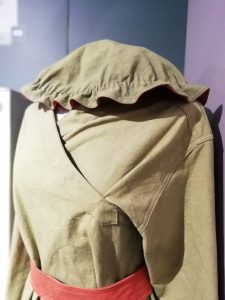
Replica munitions workers uniform and hat on display in The Devil's Porridge Museum.

Could Sarah Carter have stolen a hat like this one?

  • The sheriff at the time reflected “they must put a stop to these thefts at Gretna if possible.” [4]

(We do not know for sure where this hat theft took place, or exactly what happened. Despite H.M. Factory Gretna’s name, it is significant to note that the nine-mile rural site of the factory stretched from Longtown in England to Dornock in Scotland. The townships of both Eastriggs and Gretna were also vital; both were built to house and facilitate all those who came to work at the factory. Often the factory location is referred to simply as “Gretna” in past newspaper articles, perhaps as they did not want to risk telling everyone publicly exactly where it was during World War One, so do you think the Sherriff’s reflection refers to the factory as a whole or just Gretna township?)

5. Matches in a Munitions Factory?!

  • Although this is technically not a theft, there were very strict rules regarding what people could bring on to the factory site.
  • According to the ‘Regulations Governing Employment:

““No person shall bring within the Factory, or have in his possession, whilst in the factory, any match or apparatus for producing light, or any lamp, light or fire of any description.”

– The Regulations Governing Employment for H.M. Factory Gretna.

  • Additionally, the Women’s Police Force used to search munitions workers on the way into the factory site.
  • If any contraband such as matches, or metal items like hairpins, buttons or knitting needles were found they would be removed (yes, that does include cutting metal buttons off clothing too!) and the culprit fined.


Florence Annie Tinkler in her munitions worker uniform.

Florence Tinkler. This photo is from Ancestry Public Members tree.

  • One example is Florence Tinkler, who was fined £2 for bringing matches into the factory grounds, who:

“Immediately after paying the fine the accused collapsed in her seat and had to be carried out of the courtroom by a police officer.”

  • Dumfries and Galloway Standard newspaper, 8th December 1917
  • Additionally, another factory worker found to have matches on the way into the factory was Reginald Ezra Parry.
  • Reginald worked as a chemist and he plead guilty to having a box of matches within the factory fence in, similarly in late 1917.
  • However, Reginald’s charges were dismissed with an admonition!


Reginald Ezra Parry M.Sc., University of Melbourne

Reginald Ezra Parry M.Sc., University of Melbourne, 1915

  • Obviously, these were far form the only two munitions workers who were found to have contraband inside the factory grounds.
  • Significantly, members of the Women’s Police Force at the factory would also search munitions workers on the way back out to check they hadn’t stolen anything from inside.


Sources and Further Reading

[1] Account of ‘The Gretna “Fried Fish” Shop Crime’ is based upon The Dumfries and Galloway Standard newspaper article, “THEFTS BY GRETNA GIRLS” from Wednesday 21st February 1917.

[2] Account of ‘Disappearing Potatoes’ is based upon The Dumfries and Galloway Standard newspaper article, “POTATO STEALERS FINED” from Saturday 2nd June 1917.

[3] Account of ‘The Hostel Heist’ is based upon an article from The Dumfries and Galloway Standard newspaper, Wednesday 24th January 1917.

[4] Account of ‘A Hat Trick’ is based upon The Dumfries and Galloway Standard newspaper article, “THEFTS BY GRETNA GIRLS” from Saturday 10th March 1917.

[5] ‘Matches in a Munitions Factory?!” sources follow:


Do you have a relative who worked at H.M. Factory Gretna? If so, we would love to hear from you! Please feel free to contact us by emailing info@devilsporridge.org.uk. You never know maybe your relative feature in a future Worker of the Week blog post! As well as this you can also have a look at some more H.M. Factory Gretna workers on our online database here>

Translate »
BOOK NOW