All Posts By

Poster for an Animals in War Remembrance Service happening at The Devil's Porridge Museum on 7th November 2025 at 11am. Please arrive by 10:45am.

Animals in War Remembrance Service 2025

By Archive

When is the Animals in War Memorial Service?

Friday 7th November 2025

11am

(Please arrive by 10:45am as the service will start promptly)

What to Expect at The Animals in War Memorial Service

The Devil’s Porridge Museum will be commemorating Remembrance Day by laying a wreath down at our memorial to animals in war.  We would like to invite everyone and their pets to the museum on Friday 7th November 2025 to mark this event. 

This event will happen outside The Devil’s Porridge Museum. For anyone going inside The Devil’s Porridge Museum, please be advised that our usual admission prices and rules will apply.


What Else is Happening for Remembrance Sunday and Armistice Day at The Devil’s Porridge Museum?

On Sunday 9th November and Tuesday 11th November we would like to invite our visitors to join us in a two minutes silence to mark Remembrance Sunday and Armistice Day at 11am.

Representatives of The Devil’s Porridge Museum are proud to be laying wreaths at Eastriggs and Dornock war memorial on Remembrance Sunday.

Last Year’s Event

Below are some photos from last year’s Animal’s in War Memorial Service.
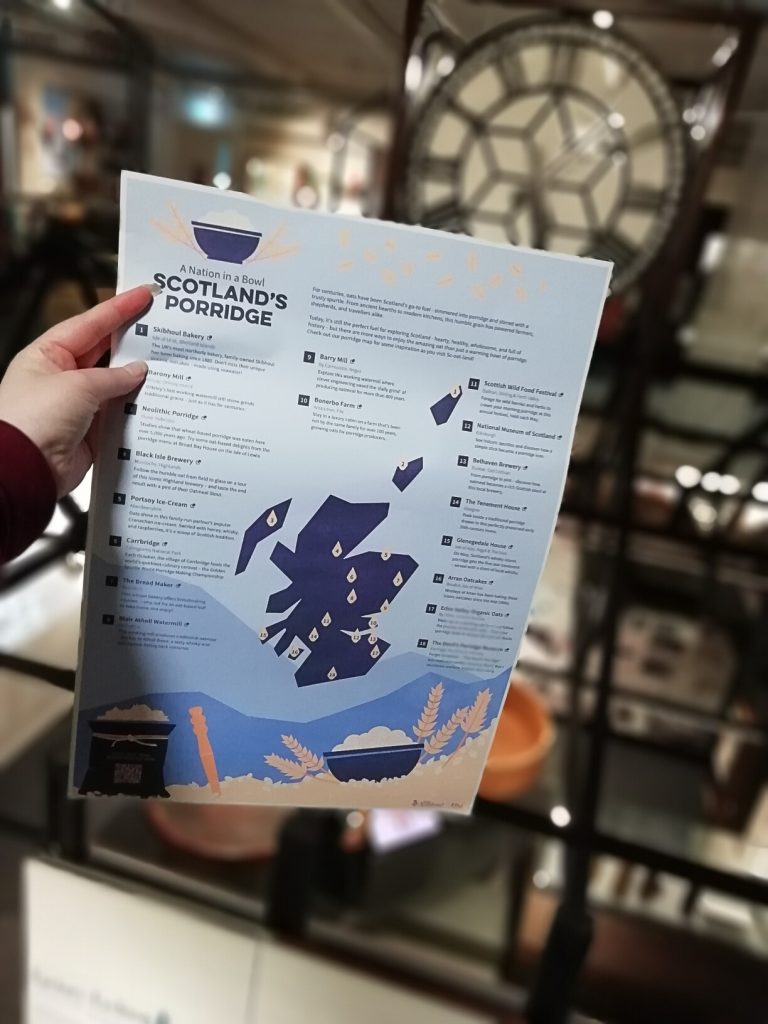
A map for Scotland's Porridge Tour held up inside The Devil's Porridge Museum. A large clock, the Mossband clock can be seen in the background.

Porridge Map of Scotland

By Archive
Fancy going on a porridge tour of Scotland? 🥣
 
We’re proud to be featured in Visit Scotland’s Porridge Map of Scotland!
 
Our ‘devil’s porridge’ may be too explosive for breakfast (Sir Arthur Conan Doyle described the dangerous materials he saw World War One munitions workers mixing in large pans to make cordite as ‘devil’s porridge’), but you’ll find some interesting places on this map were you can find a
perfectly non-explosive, bowl of porridge oats to tuck into too.
 
A table with doorways into a bedroom. This is inside a hostel for H.M. Factory Gretna in the past.

Worker of the Week: Georgina Little

By Collections blog

Worker of the Week is a series of blog posts which highlights the workers at H.M. Factory Gretna that our volunteers researched for The Miracle Workers Project. This project aimed to centralise all of the 30,000 people who worked at Gretna during World War One and, although it may be over, our amazing research volunteers are continuing to uncover more stories about H.M. Factory Gretna workers to be added to this database. We are always looking to learn more about H.M. Factory Gretna workers. If you know anything about a H.M. Factory Gretna worker please feel free to get in touch with us by contacting info@devilsporridge.org.uk  We would like to thank our research volunteers and the relatives of this week’s Worker of the Week, who kindly shared some information.

This our Worker of the Week is Georgina Little, who was a maid at one of the factory hostels.

Early Life

  • On 3rd January 1897, in Asprita, Cumberland.
  • Georgina was the youngest of seven children to George and Mary Little.
  • Additionally, her father George worked in coal mines according to census records.
  • A relative has kindly shared with us that was “known as Ina.”


  • Following this, the 1901 census shows the family to be living in West End, Asprita.
  • At this point, Georgina would have been 4 years old.


  • Later, the 1911 census shows Georgina to be living at the same address with her parents.
  • However, some of her siblings have moved out, as only one of her brothers and her nephew appear on the census.

H.M. Factory Gretna

  • We first came across Ina’s connection to the factory, due to one of her relatives who kindly contacted us, thinking they had worked at the factory.
  • As well as this, they kindly shared that thought that “she was a maid for a manager Miss Tom.”
  • Christina Muddie Thom was a matron of one of the hostels at the factory [1]. Could it be that Ina worked with her?
  • Yes! The electoral register and the valuation rolls for Eastriggs in 1918 to 1919, show us that she worked as a maid at this hostel with Christina Muddie Thom.[1]


  • For many of the young munitions workers who lived in hostels it would have been there first time living away from home.
  • Matrons like Christina Muddie Thom would have helped look after them and we think it is likely that Ina assisted with this.[1]
  • Hostels also provided food for lodgers. Perhaps, Ina would have even helped to serve food in the messrooms and clean up afterwards. What do you think?


Messroom inside one of the hostels at Gretna from the past. Some people are sitting at tables.

Messroom inside a Hostel.

  • Ina worked as a maid at Drake house hostel, 47 -61 Dunedin Road, Eastriggs.

(Many of the hostels for the factory were named after real people, such as Edith Cavell and Florence Nightingale. The hostel that Christina worked in was named after Sir Francis Drake, who is often recognized for circumnavigating the globe and his role in defeating the invading Spanish Armada. However, Drake was involved in piracy, colonialism and slave trade.[2] [3])

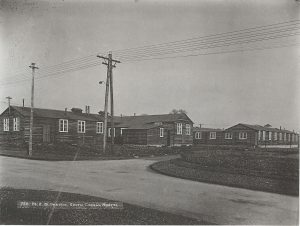
Here's a photograph of Edith Cavell Hostel in Gretna.

Edith Cavell Hostel in Gretna from our archive. The buildings here would have been similar to Drake’s Hostel in Eastriggs.

Married Life

  • It seems that Ina returned to Asprita after her time working in Eastriggs.
  • In 1936 she married John Thomas Metcalfe.


  • Following this, the 1939 census shows Ina and John living at a cottage in Asprita.
  • John appears to be working as a horse man on a nearby farm.

Later

  • On 24th February 1954, John died.
  • At this point John and Ina were still living at the same farm as the 1939 census.


  • Ina died in February 1988.

Sources and Further Reading

[1] Worker of the Week: Christina Muddie Thom – https://www.devilsporridge.org.uk/worker-of-the-week-christina-muddie-thom

[2] Sir Francis Drake Information and Blog Post, The Golden Hind – https://www.goldenhinde.co.uk/discover/sir-francis-drake and  https://www.goldenhinde.co.uk/blog/278-drake-was-a-slave-trader

[3] Sir Francis Drake, History of England Historic UK – https://www.historic-uk.com/HistoryUK/HistoryofEngland/Sir-Francis-Drake/ 


Read Georgina Little’s Online Database Entry by clicking here>

Do you have a relative who worked at H.M. Factory Gretna? We would love to hear from you! Please feel free to contact us by emailing info@devilsporridge.org.uk. You never know maybe your relative could feature in a future Worker of the Week blog post! You can also have a look at some more H.M. Factory Gretna workers on our online database here>

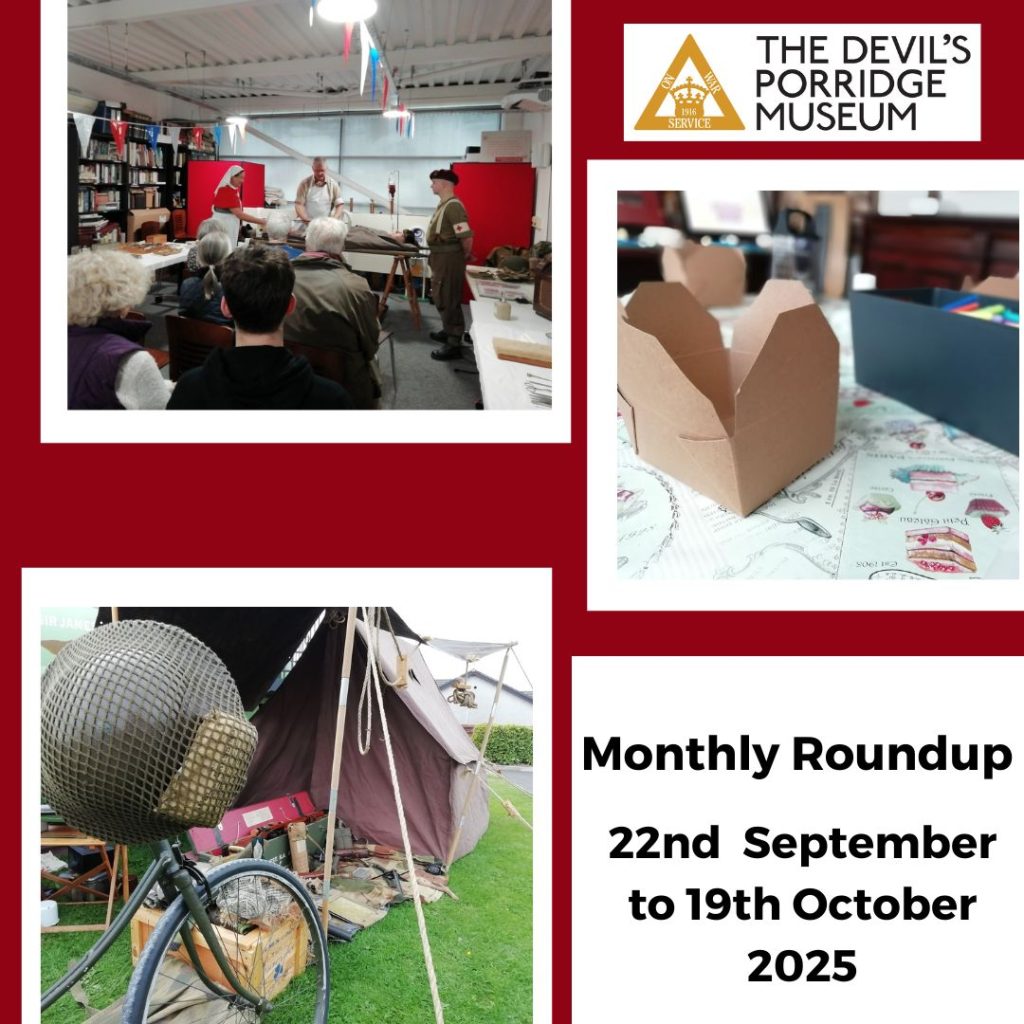
A collage of three photos from The Devil's Porridge Museum's Living History Weekend and a craft workshop. Shop. Some text reads, "Monthly Roundup 22nd September to 19th October 2025."

Monthly Roundup 22nd September to 19th October 2025

By Archive

Here’s our latest Monthly Roundup 22nd September to 19th October 2025. Read more about what happened with our Living History Weekend 2025, Cordite Club, The South of Scotland Reginal Finals and more below!

***

Monday 22nd October

At our Cordite Club for retirees we were delighted to be joined by a representative from Marie Curie, who gave them a fascinating talk. A huge thank you to her for joining us!

Later on we had our Arts and Crafts Club from 3.30pm to 4.30pm. It’s perfect for 7 to 11 year olds and it’s free with all materials provided! If you know someone who would like to join Arts and Crafts Club you can find out more by clicking here>

***

Saturday 27th October

Excitingly, our 1940s Living History Weekend started today!

Outside The Devil’s Porridge Museum we were proud to have the fascinating 303 Living History Association with living history reenactors and a display of items.


In the morning we also had a free baking workshop where the young people who came along had a chance to make their own carrot biscuits from a rationing recipe. We’ve heard the results were delicious!

Meanwhile, Gardening Club was also on during the morning. A huge thank you to Wendy and everyone who joins us for this!

Inside The Devil’s Porridge Museum we were also delighted to have the Military Medical Living History Group with World War Two living history reenactors.


In the afternoon we were delighted to be joined by Cindy Holton for a beautiful musical performance outside The Devil’s Porridge Museum. She sang some wonderful songs from the 1940s and a few more recent ones too! A huge thank you to her for joining us!

Sunday 28th October

Our Living History Weekend continued on Sunday.

Today we still had 303 Living History Association outside The Devil’s Porridge Museum.

Meanwhile, inside The Devil’s Porridge Museum, The Military Medical Living History Group with World War Two medical living history reenactors, continued to give some fascinating demonstrations throughout the day. On Saturday one of our volunteers even bravely helped out with a demonstration involving the application of a splint! Check out some photos of this below.

We would like to say a huge thank you to everyone who made our amazing 1940s Living History Weekend possible across both days! From the fantastic living history reenactors to our dedicated volunteers and more you all helped us host an amazing weekend to celebrate the 1940s!

***

Monday 29th September

Arts and Crafts Club poster. This Club will be happening every Mondays from 3.30pm to 4.30pm. It is perfect for 7 to 11 year olds and booking is essential. To book please contact 01461 700021.


Fancy joining us to get creative? Every Monday we have our Arts and Crafts Club for 7 to 11 year olds. It’s free and all materials are provided, so why not come along.

Learn more about Arts and Crafts Club and find out how to book here>

***

Thursday 2nd October

It was lovely to have a school visit to The Devil’s Porridge Museum today. They were learning about World War Two and we hope they all enjoyed their visit! Find out more about school visits to The Devil’s Porridge Museum by clicking here>

***


This evening marked the South of Scotland Thistle Awards Reginal Final.

We were very proud to have been shortlisted for an Inclusion Award in the South of Scotland Thistle Awards this year.  Those that went along to represent The Devil’s Porridge Museum had a fantastic night at GG’s Yard in Laggan. A huge congratulations goes to The Great Tapestry of Scotland for winning the Inclusion Award!

Another huge congratulations goes to all those who won an award, including Mostly Ghostly (who we worked with for Halloween events last year) and thank you to GG’s Yard in Laggan for such a brilliant night!

***

Saturday 4th October

Saturday morning’s at The Devil’s Porridge Museum are for Gardening Club. If you would like to learn more about growing your own fruit and vegetables, why not join us?

Find out how to book your space and learn more about Gardening Club here>

***

Monday 6th October

Our Cordite Club for retirees were treated to a chicken roast dinner today. Every week those who join us for this have a meal, play card bingo and have another activity to get involved with this can range from a talk to a game, or craft. There’s always chance to have a natter too. Find out more about our Cordite Club by clicking here>

Arts and Crafts Club was on again this afternoon. It’s always amazing to see how creative the young artists who come along are!

***

Monday 13th October

This year our Arts and Crafts Club is continuing during the school October holidays! Our first holiday session was on today, but it will be on again next week.

Even you know a young person aged 7 to 11 years old, who loves crafts why not bring them along. Arts and Crafts Club is free and all materials are provided. Just give us a quick call on 01461 700021 to let us know your joining us and book your space! Thank you.

***

Saturday 18th October

We end this month’s Roundup with Gardening Club. Don’t you think our Dig For Victory Garden looks good?

Below are some photos of our garden.

***

Conclusion

We come to the end of our Monthly Roundup 22nd September to 19th October 2025, but there’s still lots left to come this year at The Devil’s Porridge Museum.

We have some very exciting events coming up soon including:

Wondering what happened in our last Monthly Roundup? Why not check out what has been happened in our Monthly Roundup 18th August to 21st September 2025 by clicking here> 

Thanks for reading and see you in November!

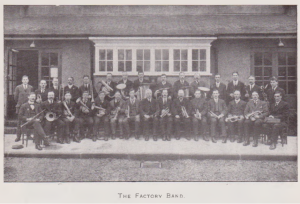
Group of people holding musical instruments in the factory band for H.M. Factory Gretna with a portrait of James Prentice underneath it. Both these photos are from the Dornock Farewell Magazine.

Worker of the Week: James Prentice

By Collections blog

Worker of the Week is a series of blog posts which highlights the workers at H.M. Factory Gretna that our volunteers researched for The Miracle Workers Project. This project aimed to centralise all of the 30,000 people who worked at Gretna during World War One and, although it may be over, our amazing research volunteers are continuing to uncover more stories about H.M. Factory Gretna workers to be added to this database. We are always looking to learn more about H.M. Factory Gretna workers. If you know anything about a H.M. Factory Gretna worker please feel free to get in touch with us by contacting info@devilsporridge.org.uk  Thanks goes to all our research volunteers.

This week’s Worker of the Week is James Prenctice who was in the factory band. 

Early Life

  • On 27th June 1855, in Dalziel, Lanarkshire, Scotland, James Prentice was born.
  • James became the eldest in a large family with ten other siblings.
  • Additionally, James parents were Harriet and Joseph Prentice.

First Marriage

  • Some time after this, in appears that James married Margaret (Maggie) Carlder.
  • Together they had 6 children.
  • According to the 1891 census they lived in Harriettville, West Calder, Midothian, Scotland.

***

  • Strikingly, many years later, one of James children, also named James Prentice, joined the Royal Flying Corps.[3]
  • Unfortunately, he was flying aeroplane in Ayr, when he collided with another plane and died.[3]
  • As this is likely to happen during World War One, do you think that his father could have been working at H.M. Factory Gretna at this time?

Travels

  • Following this first marriage, James left Scotland for South Africa in 1893, which was heading for Cape Town according to Outward passenger lists.


  • Whilst in South Africa, on 6th June 1911, he married Margaret Ross Phipps.
  • Presumably, James first wife had died, as he is described as widower on his marriage register.


  • Next, we found James returning to UK, on board the ‘Saxon’ ship with his wife and children. It seems that he would have arrived at London.

H.M. Factory Gretna

  • Apparently, it seems that James Prentice came back to the UK to work at H.M. Factory Gretna.
  • From what we have found, James appears to have worked at the Resident Engineer at the Dornock section.
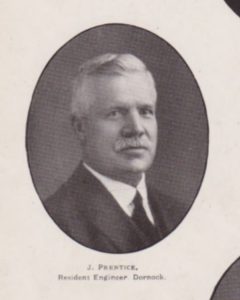
Portrait of Resident Engineer in Dornock, J. Prentice from the Dornock Souvenir Magazine.

James Prentice’s photo appears in the Dornock Farewell Magazine.

(Notably, the rural site of the factory actually stretched from Dornock in Scotland – where James worked – all the way to Longtown in England, unlike Gretna as the name suggests. However, Gretna and Eastriggs did play a vital part, as both were built to house and facilitate the people who moved into the area to work at H.M. Factory Gretna. Many of the administration buildings were also located in Gretna. However, James is more likely to have lived in Eastriggs, as according to The Factory Manual at the time, Eastriggs “provides for the accommodation of those workers chiefly engaged on the Dornock section,” or so was the initial intention from what the Manual suggests.)

  • James also appears to have been involved in more than one recreational activity at the factory.
  • It appears as though he was a member of the Factory Social and Athletic Committee too.
  • The Factory Social and Athletic Committee controlled the recreational activities and facilities at H.M. Factory Gretna.

Dornock Band

  • According to the Dornock Farewell Magazine, the Dornock area of the factory had its own band made up from workers from that section.
  • Although, the Factory Social and Athletic Committee seemed initially reluctant to allow this.

“Some two years ago the workers on the Dornock area of the Factory thought they would like to start their own Band and the purposal was put before the Factory Social and Athletic Committee, but after consideration turned it down. However, the failure of the promoters only increased the desire of Dornock workers to have at least one musical organisation…”

– Factory Band, Page 24, The Dornock Farewell Magazine. [1]


Group of people holding musical instruments sitting in front of a building. This is the Factory Band.

J Prentice sat in the middle of the factory band.


  • It appears that James was apart of the factory band and, more than that was an integral in helping to get the band up and running.
  • As described in The Dornock Farewell Magazine:

“The transfer of Mr Prentice to Dornock as resident engineer gave great support of the purposal for the band, he being Director of all musical organisations under the Committee. When the purposal was put before him he at once prepared a scheme for the formation of a Band (brass and reed instruments), and submitted to the Committee personally.”

– Factory Band, Page 24, The Dornock Farewell Magazine.[1]

  • Significantly, he Dornock Farewell magazine appears to be very complimentary to James Prentice, noting the “skilful and patient tuition” [1] he gave and how he was “appointed Musical Director by the Commitee.” [1]
  • However, it is important to note that the author of this article seems to be a certain J. P. Could it be possible that James Prentice himself wrote it?


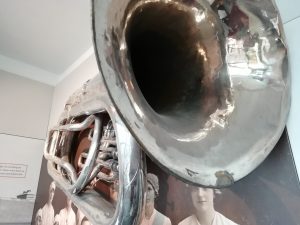
Tuba used by the factory band on display on a wall in The Devil's Porridge Museum.

Today we have a Tuba used by the Factory Band on display in The Devil’s Porridge Museum.


  • Either way, there still seem to have been many successful performances from The Factory Band, most notably when:

“The first call upon the services of the Band was on Armistice Day, when on short notice, they turned out and headed the procession round the two Factory Townships [Eastriggs and Gretna], and also provided dance music for the large number of munition workers assembled to rejoice on such an important occasion. The playing of the Band was a great surprise and a source of pleasure to all.”

– “Factory Band”, Page 25, The Dornock Farewell Magazine. [1]

The Gondoliers

  • Perhaps unsurprisingly, given James apparent Social and Athletic Committee standing, he was also involved in at least one performance given by The Gretna Choral and Operatic Society.
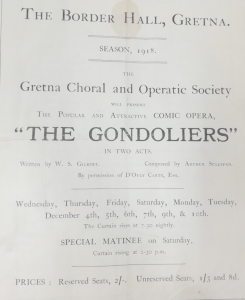
  • In December 1918, The Gretna Choral and Operatic society gave a performance of The Gondoliers at the Border Hall in Gretna. [2]
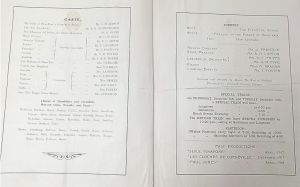
  • “MR J. PRENTICE” is listed as the “MUSUCAL DIRECTOR” for this performance. [2]


Front cover of a programme for the Gretna Choral and Operatic Society at The Border Hall Gretna in 1918.

The front of The Gondoliers programme.

  • In this position he would have worked alongside stage manager and performer for this production Alexander Lupton, who helped to instigate the society.
  • Although, Stewart Clifford Phipps was a violinist and therefore, unlikely to be in the brass and reed instrument factory band, he appears in the programme as one of the leaders of the orchestra, which means James was likely to have worked with him for this show.
  • Additionally, Egerton Sayer and Thomas George Dippie would have featured in the performance.


Paper programme for a performance of The Gondoliers at The Border Hall, Gretna in December 1918. A.M. Lupton appears as stage manager and in the cast list. There is also information about the special trains for the performance.


  • Do you think that James Prentice would have been involved in any of the other performances given by The Gretna Choral and Operatic Society?
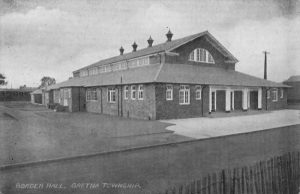
  • As a member of the Social and Athletic Committee could James have even been involved in other performances at The Border Hall in Gretna, such as Cheerio Gretna (this was preformed by members of the Women’s Police Force in 1917)? [9
  • So far we have found no further evidence either way, so what do you think?


A large, wide, hall building with two rows of windows. In front of the building is a road. A driveway encircles the building. Text on the photo reads 'Border Hall, Gretna Township.' This photo is in black and white.


  • What we do know is that is that James Prentice is mentioned in a poem in The Dornock Farewell magazine:

“There’s worthy Prentice, King o’ reeds.
Weel may his callants hing their heids,
Nae mair they’ll chord his canty screeds
At Dornock.”

– “At Dornock,” Page 37, The Dornock Farewell Magazine. [8]

  • Consequently, it seems he must have been well known at the factory.
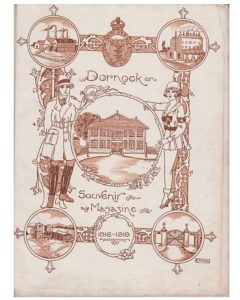
Illustrated page from the Dornock Souvenir Magazine. Two people stand either side of a circle with a house inside a a border featuring circle illustrations of different buildings in each corner.

An illustrated page from the Dornock Souvenir Magazine.

Later Life

  • Following this it seems that James returned to South Africa.
  • Accordingly, in the Dornock, Farewell magazine he left his forwarding address as Pretoria, South Africa. [9]


  • Lastly, James died in August 1931 in Pretoria, South Africa.


Sources and Further Information

[1] “Factory Band,” Page 24 – 25, The Dornock Souvenir Magazine.

[2] Gretna Choral and Operatic Society, The Gondoliers programme, December 1918 from The Devil’s Porridge Museum’s archive.

[3] “Young Aviator’s Death” newspaper article, The British Newspaper Archive.

[4] Worker of the Week: Alexander McKenzie Lupton – https://www.devilsporridge.org.uk/worker-of-the-week-alexander-mckenzie-lupton

[5] Worker of the Week: Stewart Clifford Phipps – https://www.devilsporridge.org.uk/worker-of-the-week-stewart-clifford-phipps

[6] Worker of the Week: Egerton Sayer – https://www.devilsporridge.org.uk/worker-of-the-week-egerton-sayer

[7] Worker of the Week: George Thomas Dippie – https://www.devilsporridge.org.uk/worker-of-the-week-thomas-geroge-dippie

[8] “At Dornock” Poem, Page 37, The Dornock Souvenir Magazine.

[9] Page 68, The Dornock Souvenir Magazine.

Read James Prentice’s online database entry by clicking here>

Do you have a relative who worked at H.M. Factory Gretna? We would love to hear from you! Please feel free to contact us by emailing info@devilsporridge.org.uk. You never know maybe your relative could feature in a future Worker of the Week blog post! You can also have a look at some more H.M. Factory Gretna workers on our online database here>

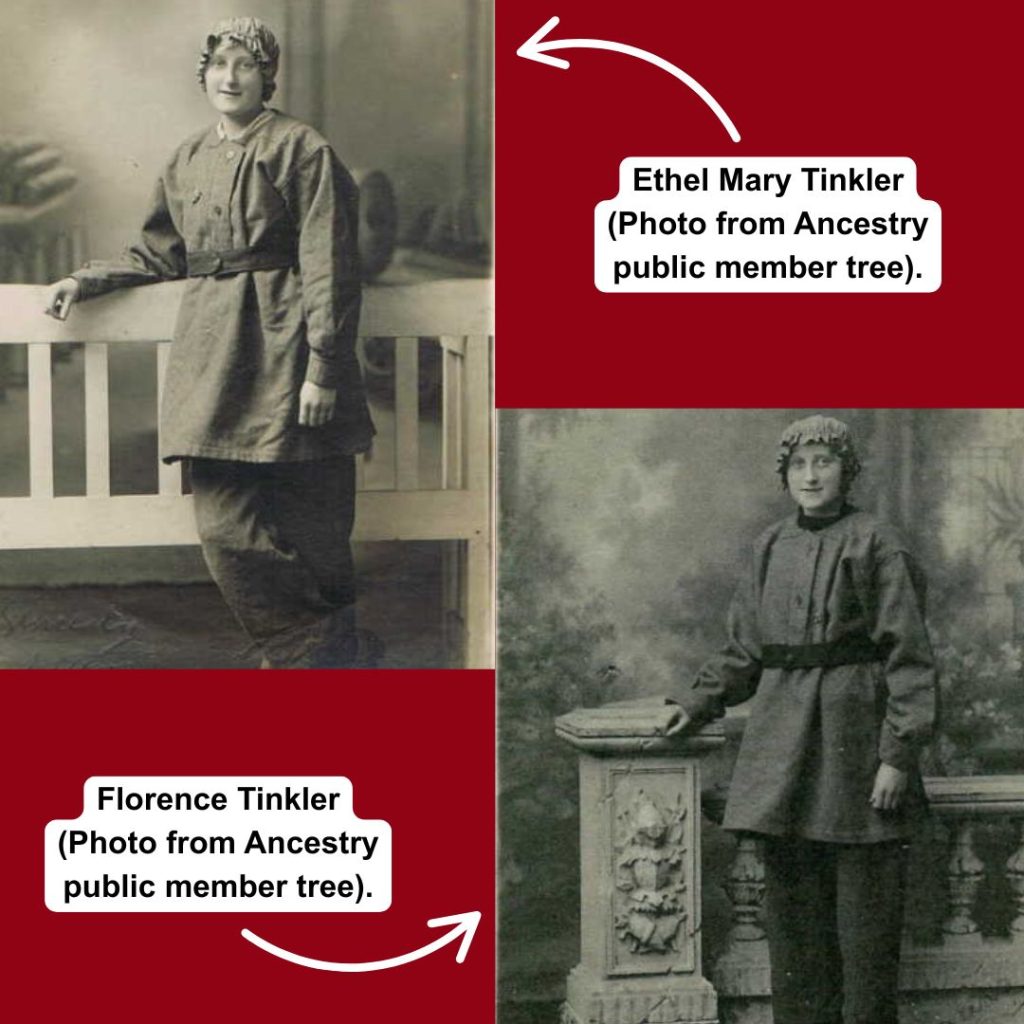
Ethel and Florence in their munitions workers uniforms.

Worker of the Week: Ethel and Florence Tinkler

By Collections blog

Worker of the Week is a series of blog posts which highlights the workers at H.M. Factory Gretna that our volunteers researched for The Miracle Workers Project. This project aimed to centralise all of the 30,000 people who worked at Gretna during World War One and, although it may be over, our amazing research volunteers are continuing to uncover more stories about H.M. Factory Gretna workers to be added to this database. We are always looking to learn more about H.M. Factory Gretna workers. If you know anything about a H.M. Factory Gretna worker please feel free to get in touch with us by contacting info@devilsporridge.org.uk  Thanks to all our research volunteers!

For this Week’s Worker of the Week we are sharing the story of two sisters, Ethel and Florence Tinkler, both of which worked at H.M. Factory Gretna.

Early Life

  • Ethel Mary Tinkler was born on 25th September 1895 in Penrith, Cumberland.
  • Following this her younger sister Florence was born on 25th March 1985 similarly, Penrith.
  • The sisters had four other siblings.
  • Their parents were Thomas Kendal Tinkler and Isabella nee Alderson.


  • Accordingly, by the 1901 census, the family are still living in Penrith and their father is a joiner.
  • By 1911 the family is still living in Penrith and Thomas is still described as a joiner.

World War One

  • During the World War One, Ethel and Florence’s brother served in the military.
  • Sadly, he was killed in action in France during 1916.
  • We don’t know when Ethel and / or Florence started working at H.M. Factory Gretna, but it is possible that they were working at the factory when this happened.

Time at H.M. Factory Gretna

  • By 1917, we have found evidence of the sisters working at H.M. Factory Gretna.
  • Florence appears on the electoral role living in Annan. It could be possible that Ethel lived there too, although we have found no evidence of this. What do you think?
King George walking past a row of cheering, excited munitions workers. This is a black and white archive photo.

King George visiting H.M. Factory Gretna.

  • Significantly, on the 18th May 1917, King George V & Queen Mary visited H.M. Factory Gretna in recognition of the factory’s exceptional performance.
  • At this time both the sisters would have been working as munitions workers.
  • It seems that Ethel was even presented to Queen Mary during their visit! [1]
  • We can imagine that this must have been very exciting for Ethel and it would be lovely to think that Florence was one of the many munitions workers lining the streets for the royal visit, but alas, we cannot know for sure…
May McIver presents Queen Mary with a bouquet of flowers.

May McIver presents Queen Mary with a bouquet of flowers.

Ethel’s Marriage

  • Next we catch up with the sisters in 1st August 1917 at Ethel’s wedding.
  • Apparently, Ethel married Private Frederick Charles Dobinson of the Durham Light Infantry at St Andrew’s Church in Penrith. [5]
  • Strikingly, Ethel and Frederick both worked at H.M. Factory Gretna. Do you think that they could have met through their work there?
  • According to the local newspaper:

“The bride [Ethel] has for a considerable time been employed at the Gretna factory, and a few months ago had the honour of being presented to the Queen during their Majesties northern tour. The bridegroom has seen service in France, and is now working at munitions factory.”

– Penrith Observer, Tuesday 7th August 1917.

(Although, described in the article as the “Gretna factory” the actual nine-mile rural site, stretched from Longtown in England to Dornock in Scotland. The two vital townships of Gretna and Eastriggs were constructed to house and support the influx of people who came to the area to work at the factory and did not exist prior to this. Perhaps it is possible that this newspaper article and indeed the authorities at the time did not want to give away H.M. Factory Gretna’s exact location! What do you think?)


Ethel Mary Tinkler in her munitions workers uniform.

Ethel Mary Tinkler. This photo is from Ancestry Public Members tree.


  • Notably, it seems that Ethel was well-liked at the factory.
  • Not only did she have the honour of being chosen to present to the Queen, but she received a gift from the munitions workers she worked with.

“Among the many presents was a silver tea service from the girls at the factory, bearing the inscription: ‘Presented to Miss Tinkler by fellow workers and staff on the occasion of her marriage, August 1st 1917.”

– Penrith Observer, Tuesday 7th August 1917.

  • Meanwhile, Florence was a bridesmaid at the wedding, not to be left out she would soon be in newspaper for much less agreeable reasons.

Florence’s Matches

  • Munitions workers were searched on their way in (and out) of the factory site by members of the Women’s Police Force.
  • Importantly, this would stop munitions workers bringing in any contraband, which could potentially trigger an explosion in their dangerous work environment.
  • Contraband included metal items, such as knitting needles, hairpins, buttons and matches, as described in The Regulations Governing Employment for the factory:

“No person shall bring within the Factory, or have in his possession, whilst in the factory, any match or apparatus for producing light, or any lamp, light or fire of any description.”

-The Regulations Governing Employment for H.M. Factory Gretna. [3]

  • If any munitions workers were found with these items they would be confiscated (there’s even a record of metal buttons being cut off a munitions worker’s corset at the factory!) and the worker fined.


Florence Annie Tinkler in her munitions worker uniform.

Florence Tinkler. This photo is from Ancestry Public Members tree.


  • Unfortunately, it seems that Florence fell foul of this rule.
  • She was caught bringing matches into the factory!
  • As a consequence:

“Florence Tinkler, munition factory worker, 41 Johnstone Street, Annan, was fined £2. Immediately after paying the fine the accused collapsed in her seat and had to be carried out of the courtroom by a police officer.”

– Dumfries and Galloway Standard newspaper, 8th December 1917.[2]

  • Although, it may seem dangerous to bring matches into a munitions factory, it did happen!
  • Another, example is Reginald Ezra Parry, who plead guiltily to having matches inside the factory fence. [4]


  • According to The Bank of England’s inflation calculator’s estimate, Florence’s £2 fine in 1917 could have been equivalent to around £120.67, as of July 2025. [6] What do you think of this?

Later Life

  • Following this, we know that Florence had a daughter in 1921.
  • According to the 1939 census Florence was living her daughter and parents in Penrith.
  • At this time Florence was employed as a domestic servant.


  • Meanwhile, Edith was living in Durham.
  • Her husband, Frederick was and electrician and they had three children, one of which was born in 1918.


  • In May 1975, Edith died in Durham.
  • In March 1985 Florence died in Penrith.


Sources and Further Reading.

[1] A Penrith War Worker’s Wedding, Penrith Observer newspaper, Tuesday 7th August 1917.

[2]Dumfries Workers Court, Use of Matches, Dumfries and Galloway Standard newspaper, 8th December 1917.

[3] The Regulations Governing Employment for H.M. Factory Gretna.

[4] Worker of the Week: Reginald Ezra Parry – https://www.devilsporridge.org.uk/reginaldezraparry

[5] Fredrick Charles Dobinson, Miracle Workers Database entry. – https://www.devilsporridge.org.uk/hm-factory-gretna-workers-database/name/frederick-dobinson

[6] Inflation Calculator, Bank of England – https://www.bankofengland.co.uk/monetary-policy/inflation/inflation-calculator

Ethel Mary Tinckler photo source: Ancestry, public member tree.

Florence Tinkler photo source: Ancestry, public member tree.


Read Ethel Mary Tinkler’s online database entry by clicking here>

Read Florence Tinkler’s online database entry by clicking here>

Do you have a relative who worked at H.M. Factory Gretna? We would love to hear from you! Please feel free to contact us by emailing info@devilsporridge.org.uk. You never know maybe your relative could feature in a future Worker of the Week blog post! You can also have a look at some more H.M. Factory Gretna workers on our online database here>

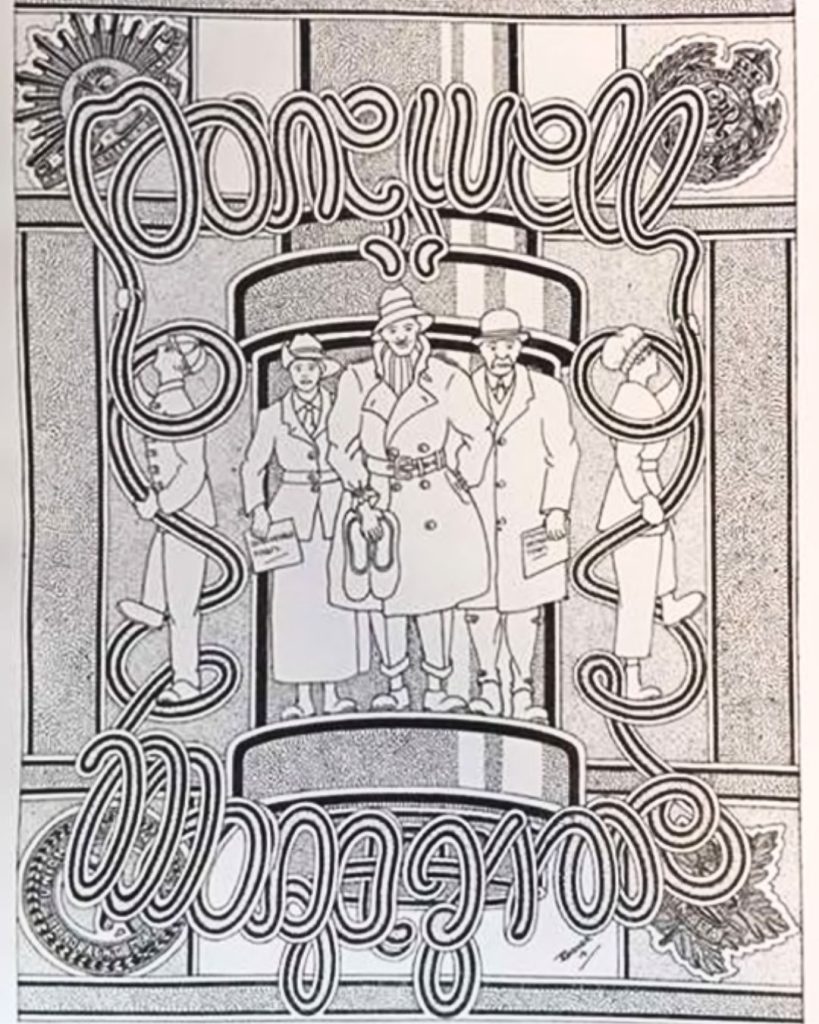
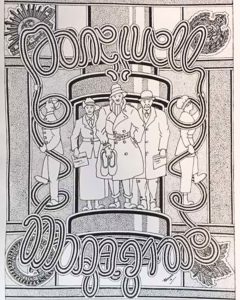
An illustration with three factory workers in the middle and two additional munitions workers either side. A ribbon curls decoratively around the two munitions workers and forms the words "Farewell Mossband."

Worker of the Week: John Benns

By Collections blog

Worker of the Week is a series of blog posts which highlights the workers at H.M. Factory Gretna that our volunteers researched for The Miracle Workers Project. This project aimed to centralise all of the 30,000 people who worked at Gretna during World War One and, although it may be over, our amazing research volunteers are continuing to uncover more stories about H.M. Factory Gretna workers to be added to this database. We are always looking to learn more about H.M. Factory Gretna workers. If you know anything about a H.M. Factory Gretna worker please feel free to get in touch with us by contacting info@devilsporridge.org.uk  A huge thank you as always to our research volunteers.

This week’s Worker of the Week is John Benns, we think he was the manager in the stationary department at H.M. Factory Gretna.

Early Life

  • John Benns was born on 30th November 1872.
  • When he was born, John already had six older siblings.
  • His parents were Robert Benns and Lydia Frances Bowness.
  • Robert worked as a Corn Miller.


  • Following this, census records indicate that 1891 John was working as a Stationer’s clerk.

Marriage

  • After that, John married Ellen Eliza Rees in Woolwhich in 1901.
  • By this point, John was working as a Commercial Stationer’s Traveller, as also indicated on the census records for 1901 and again in 1911.
  • Additionally, We know that John and Ellen had two children.

Time at H.M. Factory Gretna

  • Both John and Ellen are registered as living at 10 S West in Gretna in the Gretna Electoral Roll. [1]
  • John’s occupation is given here simply as “manager”.[1]

(It is worth noting that Gretna, were John and Ellen lived was one of the two townships, with the other being Eastriggs built to house the influx of people who came to work at the factory. Despite it’s namesake with the largest of the two townships, Gretna, the rural site of the factory actually stretched from Longtown in England to Dornock in Scotland).

  • However, this is not the only mention of John.
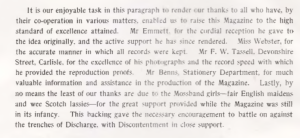
  • He is mentioned in the Mossband Farewell magazine and described as working in the “Stationary Department” amongst some thank yous. [2]
  • Accordingly, we think John could have been the manager of the stationary department at the factory.


It is our enjoyable task in this paragraph to render our thanks to all who have, by their co-operation in various matters, enabled us to raise this Magazine to the high standard of excellence attained. Mr Emmet for the cordial reception he gave to the idea originally, and the active support he has since rendered. Miss Webster, for the accurate manner in which all records were kept. Mr F. W. Tassell, Devonshire Street, Carlisle for the excellence of his photographs and the record speed with which he provided the reproduction proof. Mr Benns, stationary department for much valuable information and assistance in the production of the Magazine. Lastly by so means the least of our thanks are due to the Mossband girls - the English maidens and wee Scotch lassies - for the great support provided while the Magazine was still in its infancy. This backing gave the necessary encouragement to battle on against the trenches of Discharge, with Discontentment in close support.

Mr Benns is mentioned on page six of The Mossband Farewell Magazine [2].

  • The Mossband Farewell magazine was created by those who worked in the Mossband – or Longtown – section of the factory to commemorate their time working there.
  • Similarly, The Dornok Farewell magazine was created by those who worked in the Dornock section of the factory.
  • Although the factory rural site stretched 9-miles, Mossband and Dornock and were the two main sites with many of the buildings spread out to avoid chain-reactions from any possible explosions.


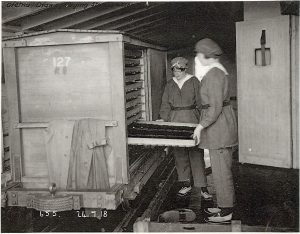
Two munitions workers stood at a drying stove with a draw pulled out in the Mossband section of H.M. Factory Gretna. This is a black and white archive photo.

Two munitions workers at work in the the Mossband section of the factory.


An illustration with three factory workers in the middle and two additional munitions workers either side. A ribbon curls decoratively around the two muntions workers and forms the words "Farewell Mossband."

Illustration from The Mossband Farewell Magazine.

Life After Gretna

  • Next, John appears to have worked as Stockbrokers’ cashier from what the 1939 census indicates.
  • We know that John must have moved back to London at some point after his time at the factory, but we are yet to find out exactly when. If you know more please feel free to get in touch!


  • On 7th October 1947, John died in London.


Sources and Further Information

[1] Page 323 (digital page 32), Parish of Gretna Electoral Roll 1918 to 1919.

[2] Page 6, The Mossband Farewell Magazine from The Devil’s Porridge Museum’s Archive.

[3] Mossband Farewell: Workers’ Writings and the Mossband Farewell Magazine, online talk given by Professor Kristie Blair on The Devil’s Porridge Museum’s YouTube – https://youtu.be/BR2jhKFb86w?si=xo5t3dCwYgue0JtN&t=1061


Find John Benns online database entry by clicking here>

Do you have a relative who worked at H.M. Factory Gretna? We would love to hear from you! Please feel free to contact us by emailing info@devilsporridge.org.uk. You never know, maybe your relative could feature in a future Worker of the Week blog post! If you would like to you can also have a look at some more H.M. Factory Gretna workers on our online database here>

Children's Halloween Party on 24th October 2025 for 6 to 11 year olds. This activity is free, but booking is essential.

Children’s Halloween Party 2025

By Archive

When is our Children’s Halloween Party 2025?

Friday 24th October 2024

6.30pm to 8pm

Tickets are free, but booking is essential. To book your place please press the book now button on the right of this page and select Children’s Halloween Party 2025.

Who Can Come to Our Children’s Halloween Party?

This FREE party is for 6 to 11 year olds. Booking is essential.

Parents and / or guardians are welcome to stay and watch this party (places only need to be booked for the young people attending). The parents and / or guardians will even have the opportunity to help the young attendees with a best dressed Mummy / Daddy competition activity, if they’re brave enough… Prepare to get wrapped up…

What Will Happen at the Party

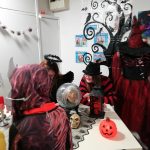
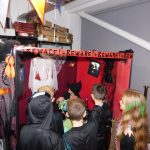
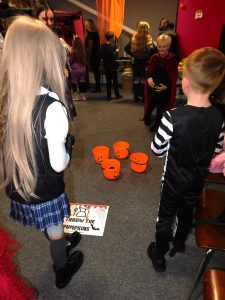
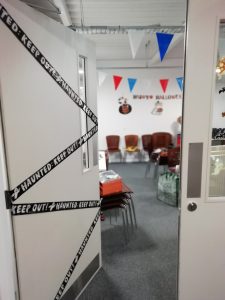
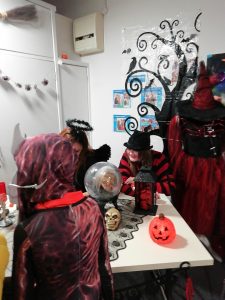
Join us for our FREE spook-tacular Children’s Halloween Party at The Devil’s Porridge Museum! There will be treats, fun and a few prizes up for grabs.

Be sure to come in your Halloween costume, as there will be a Best Halloween Costume Competition for the young attendees!

You can forward to:

  • A variety of games and activities to enjoy;
  • The chance to win some small prizes a  in competitions and / or activities;
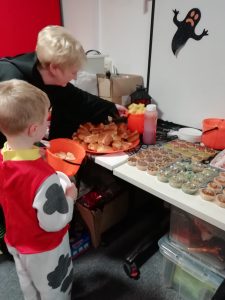
  • Some party food, drinks and juice or water will be provided for young attendees (Please make us aware of any allergies or dietary requirements when you book);
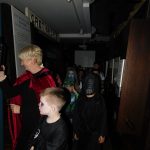
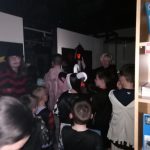
  • And a spooky stroll around the ground floor of The Devil’s Porridge Museum in the dark for young attendees…

Things to Be Aware Of…

At this party there will be:

  • Flashing lights;
  • And there may be some loud noises.

Our annual Children Halloween Party provides plenty of thrills and treats for young attendees.

We are aware that some children can find Halloween scary, but rest assured our experienced team of volunteers and staff will be on hand all night to make sure that everyone is safe. Parents and / or guardians are also welcome to stay in The Devil’s Porridge Museum’s education room throughout the event.

There are some parts of this party that children can find scary. Whilst we do encourage young people to take part in all activities, (as we have found those who are reluctant to do so will often enjoy the activity and be proud of themselves for taking part) we understand that sometimes children may need a break, and we will not force them to take part in a specific activity if they do not want to do so. We intend this party to be a fun experience for all the attendees!

How to Book

Tickets for our children’s Halloween Party 2025 are FREE!

To book your place please press the book now button on the right of this page and select Children’s Halloween Party 2025.

If you need help booking your place please contact 01461 700021.

***


A huge thank you to our funders The Holywood Trust and Young Start, The National Lottery Fund for their support of our activities for young people again in 2025!


Other October Half Term Activities

Looking for more to do during the October school holidays? How about:


Halloween Stop Motion Workshop for 9 to 11 year olds on 23rd October 2025 from 10am to 12pm. Booking is essential, but tickets are free.

Halloween Stop Motion Workshop

By Archive

When is the Halloween Stop Motion Workshop?

Thursday 23rd October 2025

10am to 12pm.

This is a FREE workshop, but booking is essential.

This workshop is now fully booked.

Who is the Halloween Stop Motion Workshop For?

This workshop is for young people aged 9 to 11 year olds.

Booking is essential. To book your place please press ‘Book Now’ at the side or top of this page and choose the Halloween Stop Motion Workshop.

What is our Halloween Stop Motion Workshop?

Join us to make your own stop motion video at The Devil’s Porridge Museum! Why not make it Halloween themed? We will have some fun Halloween themed characters available to use.

Take a photo, move your characters and take another photo until you make your own short video.

This is is similar to the technique used over the course of many years to make the Wallace and Gromit films.

How to Book?

This is a free workshop, but booking is essential.

To book your place please press ‘Book Now’ at the side or top of this page and choose the Halloween Stop Motion Workshop.

If you need help booking your place please contact 01461 700021

This workshop is now fully booked.

Other October Half Term Activities

Looking for more to do during the October school holidays? How about:

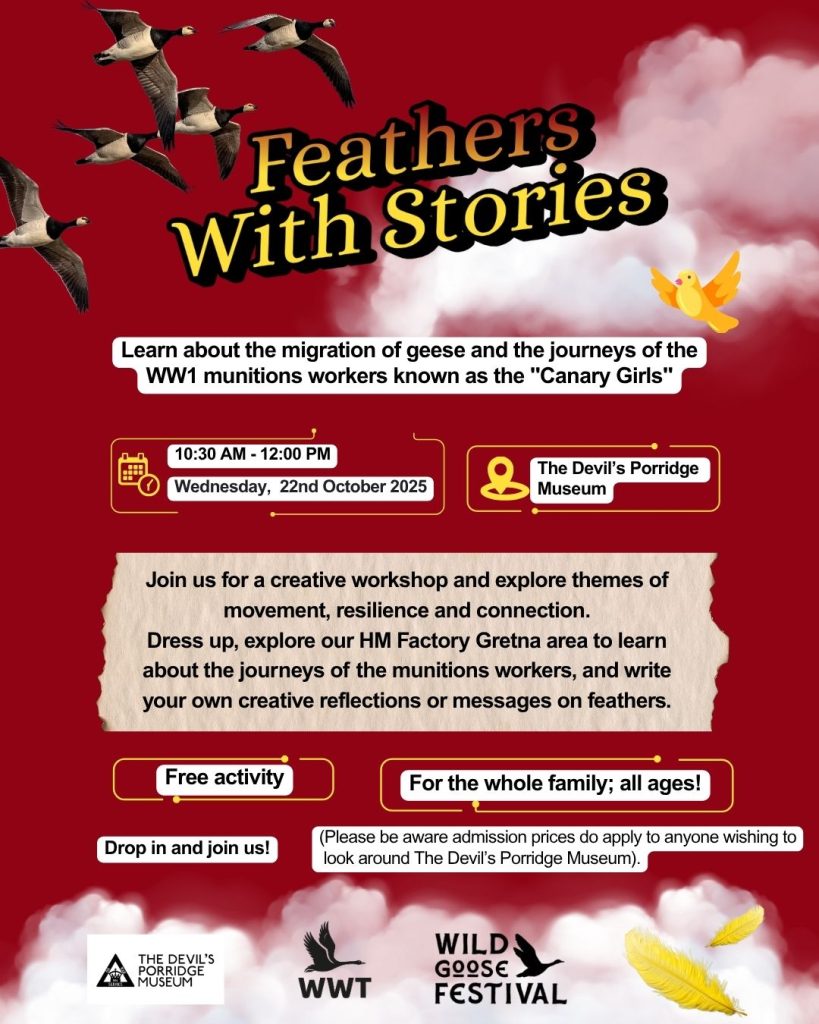
Poster for Free Feathers with Stories event happening at The Devil's Porridge Museum in October 2025. This is a free activity for all the family! Drop in and join us.

Feathers With Stories

By Archive

When is Feathers With Stories:

Wednesday 22nd October 2025

10:30am to 12pm

Who Can Come to Feathers With Stories:

Family-friendly; all ages welcome.

This activity is free! Drop in and join us!

Please be aware entry prices do apply to anyone wishing to look around all of The Devil’s Porridge Museum.

A Brief Overview of Feathers With Stories:

Draw, create and learn in this workshop for all the family. You will learn about migration of geese with specialists from WWT Caerlaverock Wetland Centre and the journeys of munitions workers who were known as ‘Canary Girls’.

We are proud to be working in partnership with WWT Caerlaverock Wetland Centre and The Stove to run this event as part of The Wild Goose Festival.


What you can expect from Feathers With Stories:

One of The Devil’s Porridge Museum’s team will open the workshop by welcoming attendees and introducing the theme: drawing parallels between the migration of geese and the movement of the munition workers, often referred to as the ‘Canary Girls’.

  1. The workshop will begin with a talk by specialists from WWT Caerlaverock Wetland Centre. They will bring along feathers and maps to explain the geese’s migration, how they adapt, and why Dumfries & Galloway is such a significant stop for them.
  2. Following this, our team member will guide the group to the HM Factory Gretna section of the museum. There, a few attendees will have the chance to dress up as munition workers. Our team member will give a short (5–20 minute) presentation on the migration of the munition workers and how the production of cordite shaped their lives, using creative and interactive resources
  3. The group will then return to the Education Room for a reflective, hands-on activity:
  • Attendees will create a short paragraph or thought, accompanied by a small collage or image, reflecting on the parallels between the two types of migration.
  • They will also write a letter or poem, which will be placed in a hand-made origami envelope.

How to Book Feathers With Stories:

We are now running this activity as a free drop-in activity!

Just drop-in and get involed!

Translate »
BOOK NOW